NSDAP Long Service Award in Gold, Stickpin Cross

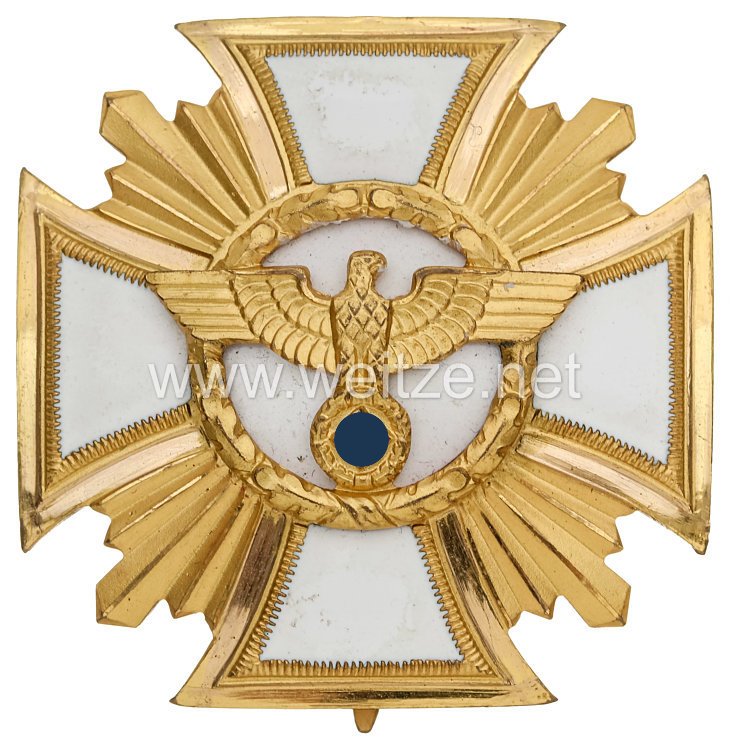
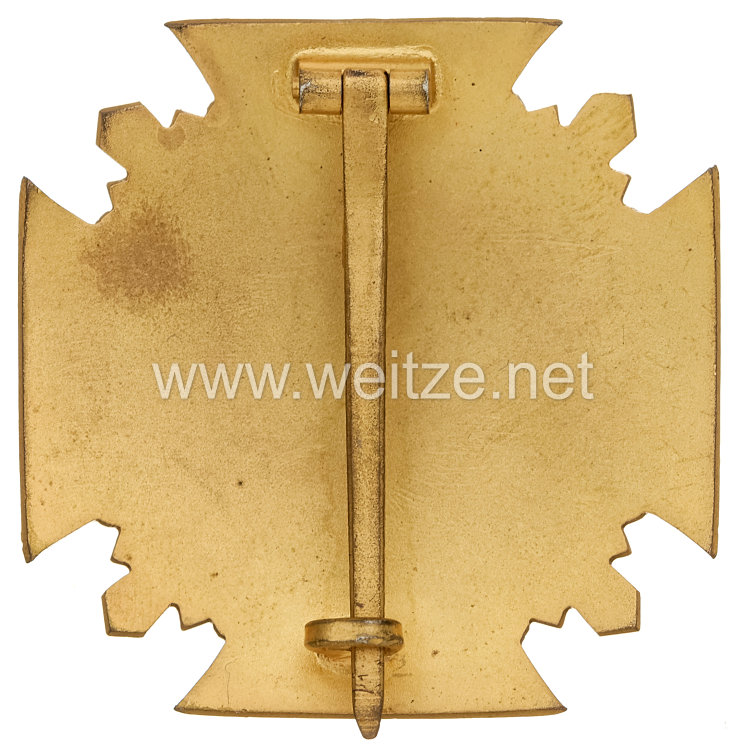
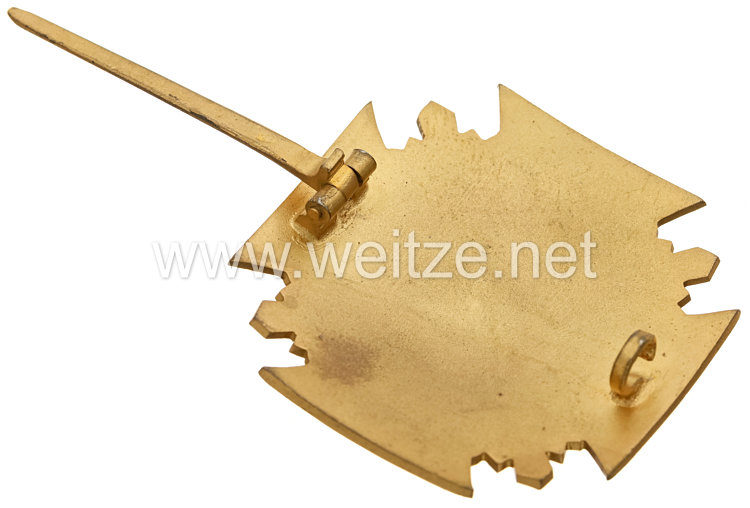
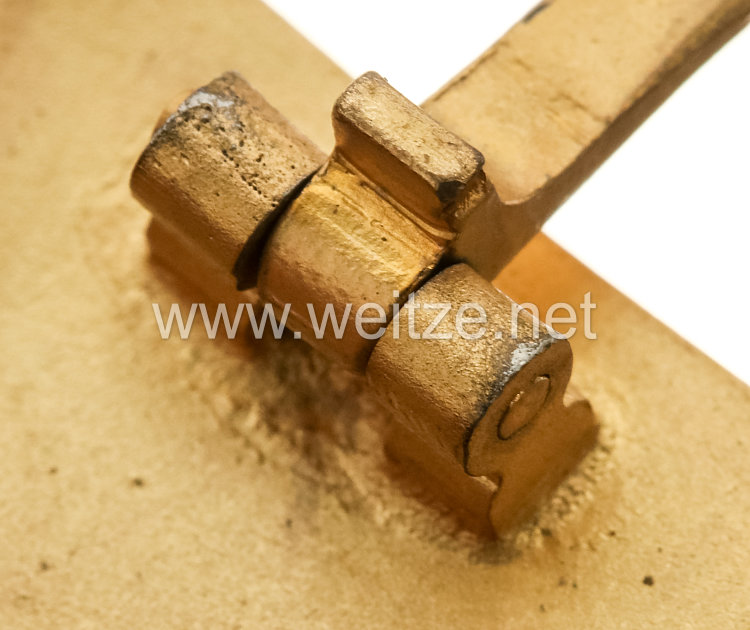
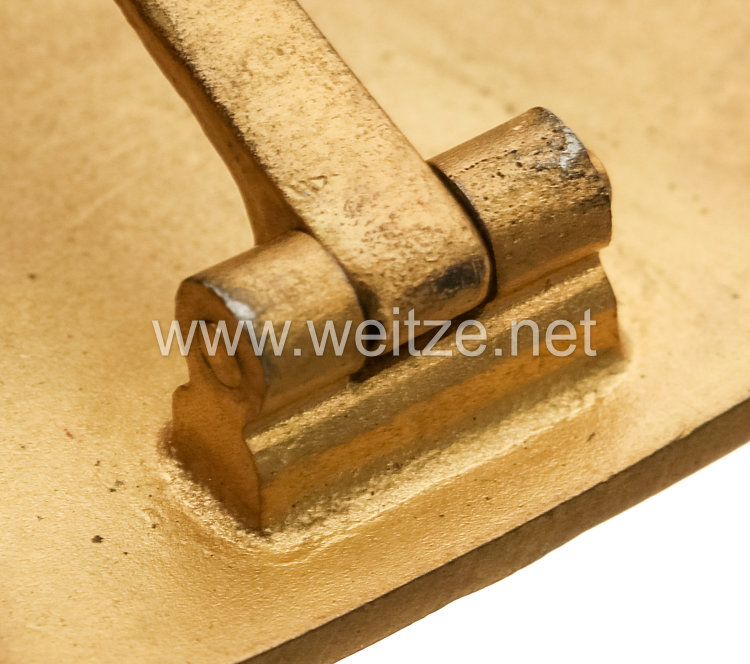
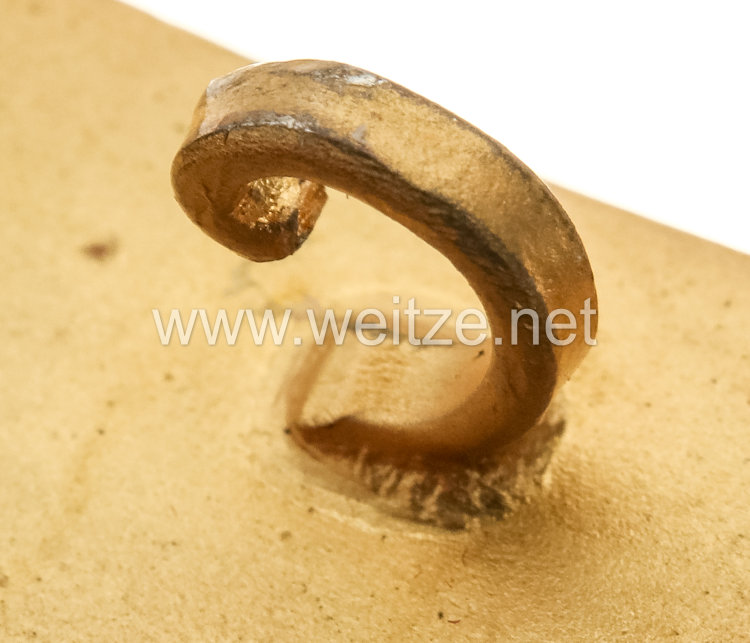
This piece is a prototype that was never awarded. Stickpin cross, slightly convex design. Fire-gilt bronze with polished edges, white enameled. Reverse with wide pin bar. In mint condition.
The cross originates from the former collection of Lothar Hartung, his expert opinions from 1980 and 1987 included. Most likely the award was planned for 30 years of service.
Extremely rare, no other example known to us. Price upon request.
111164

NSDAP Long Service Award in Gold, Stickpin Cross

The NSDAP Long Service Award represents one of the most complex and historically significant aspects of the National Socialist decorations system. While the silver and bronze variants for 10 and 15 years of service were actually awarded, the gold version described here constitutes an extraordinary historical testament – a prototype that never reached official conferment.

The NSDAP Long Service Award was instituted on December 8, 1939, by Adolf Hitler to honor long-serving party members. The official award grades included the bronze decoration for 10 years of party membership and the silver for 15 years. These decorations were worn as pin-backed crosses, consisting of a swastika on a white enameled background, surrounded by a golden or silver oak leaf wreath.

The historical significance of the object described here lies in its nature as a prototype for a never-realized award grade. Originating from the collection of Lothar Hartung, a renowned collector and expert on National Socialist decorations, this piece represents the planning phase of an award presumably intended for 30 years of service. The accompanying expert opinions from 1980 and 1987 document the authenticity and rarity of this piece.

The design follows the established form of the NSDAP Long Service Award: a slightly convex cross made of fire-gilded base metal with polished edges and white enameling. The execution as a pin-backed cross with a broad pin on the reverse corresponds to the standards of the time. The fire-gilding clearly distinguishes this version from the silver and bronze versions and emphasizes its planned significance as the highest grade.

The historical context explains why this decoration was never awarded. When instituted in 1939, the NSDAP had only been in power since 1933, and by 1945, at war's end, only 12 years had passed. A 30-year membership would have affected party members from the Kampfzeit (Time of Struggle) before 1933 – those early followers who had joined the party in the 1910s or early 1920s. The planning of such a decoration shows that the Nazi regime assumed long-term existence and was already designing honors for future decades.

The technical execution of the prototype is remarkable. Fire-gilding was an elaborate process in which gold was applied to the base material through heating. The polished edges demonstrate careful craftsmanship, while the white enameling was precisely applied. The mint condition of the piece confirms that it was never worn and was purely for demonstration or sample purposes.

Such prototypes are of considerable historical and collector significance as they provide insights into planning processes and unrealized aspects of the Nazi decorations system. They document the mentality of a regime that, despite its relatively short existence from 1933 to 1945, sought to establish long-term structures and traditions. The fact that no other known examples exist underscores the uniqueness of this object.

The provenance from the Hartung collection lends the piece additional credibility. Lothar Hartung was known in collector circles for his meticulous documentation and expertise. His expert opinions from the 1980s represent important contemporary assessments that contribute to authentication.

From a museological perspective, this prototype represents a significant testimony to Nazi rule – not because of military merits or combat actions, but as a document of the NSDAP's institutional self-perception and its plans for a future that never came to pass. Such objects are of inestimable value for understanding the history of mentalities and organizational structures of totalitarian systems.