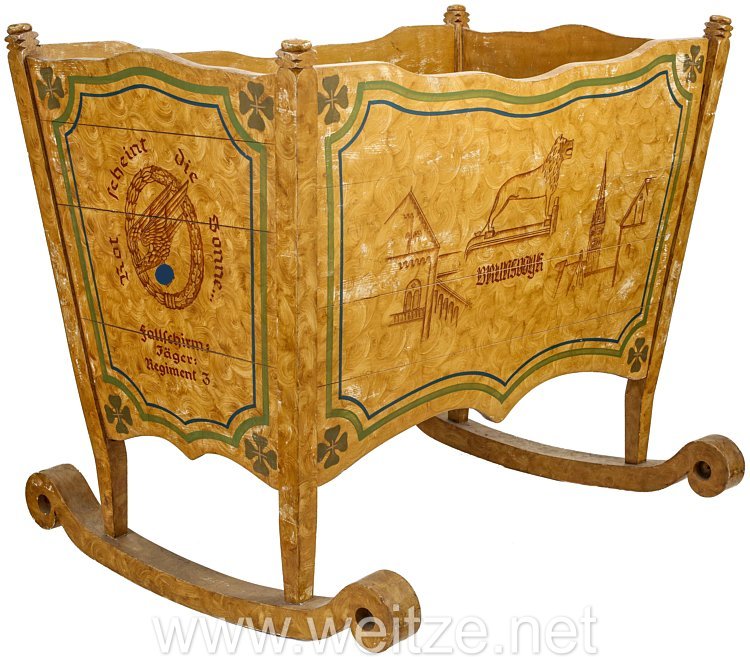
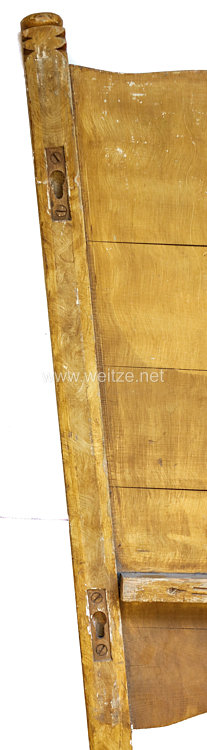
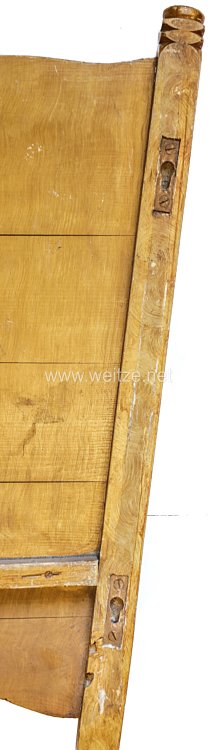
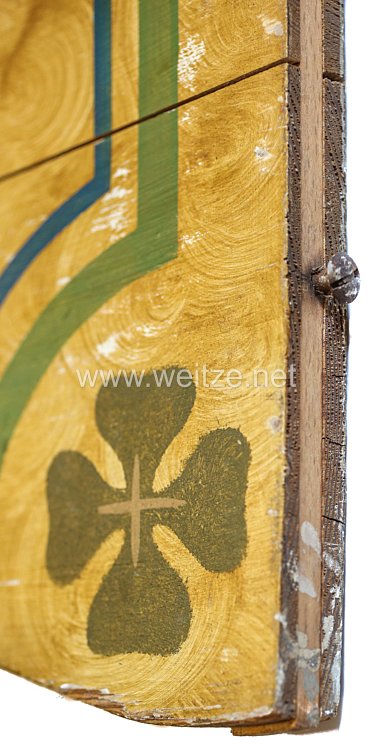
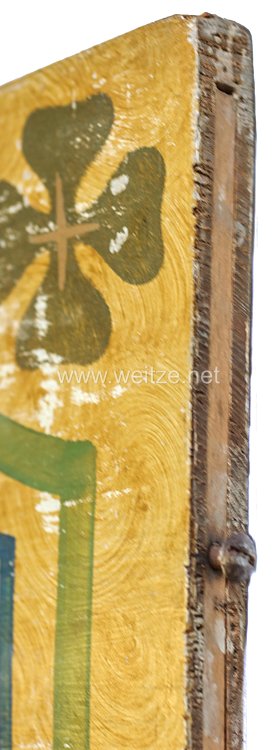
This exceptional commemorative cradle of Fallschirmjäger-Regiment 3 represents a rare testament to the community culture within the German Luftwaffe paratrooper forces during World War II. The cradle was crafted by members of the regiment for the family of a comrade, combining military tradition with a deeply personal event – the birth of a child.
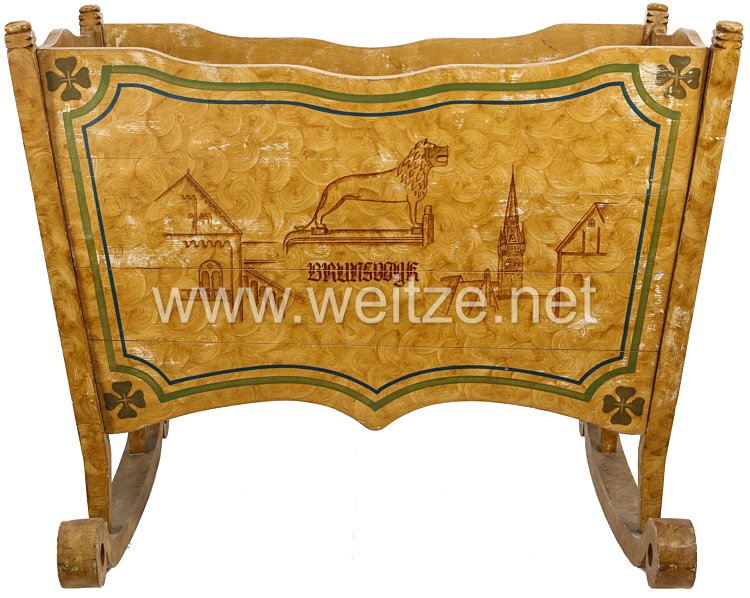
Fallschirmjäger-Regiment 3 was formed in August 1940 from II./Fallschirmjäger-Regiment 1 as the core unit for the 7th Flieger-Division. The regiment headquarters was stationed in Braunschweig (Brunswick), whose symbolic significance is prominently reflected in the cradle's design. The reverse side depicts the Braunschweig Lion with the designation “Brunswyk,” complemented by the town hall and castle Dankwarderode. This local connection underscores the close relationship between the regiment and its garrison city.
The regiment participated in major airborne operations, including the Battle of Crete in May 1941 and deployment at the Neva River on the Eastern Front from October to December 1941. When this cradle was crafted in September 1942, the regiment had returned to Germany after service in France.
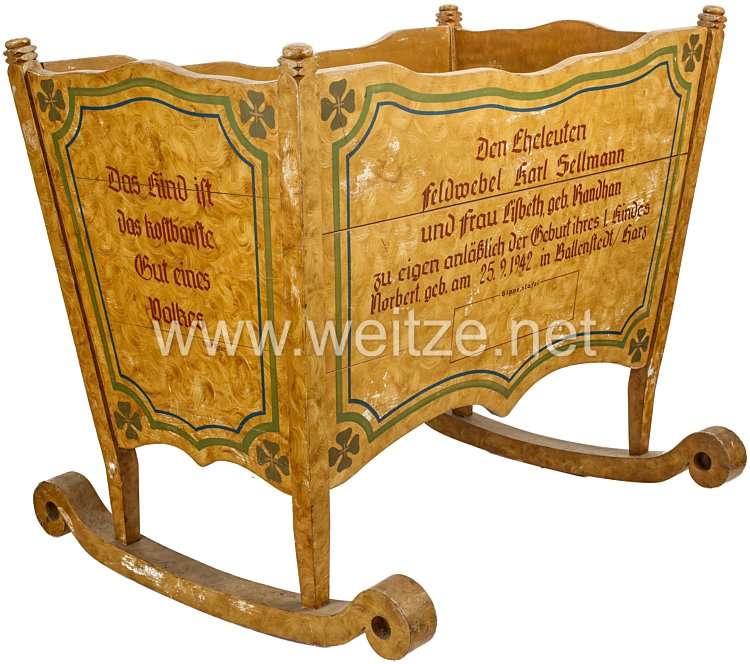
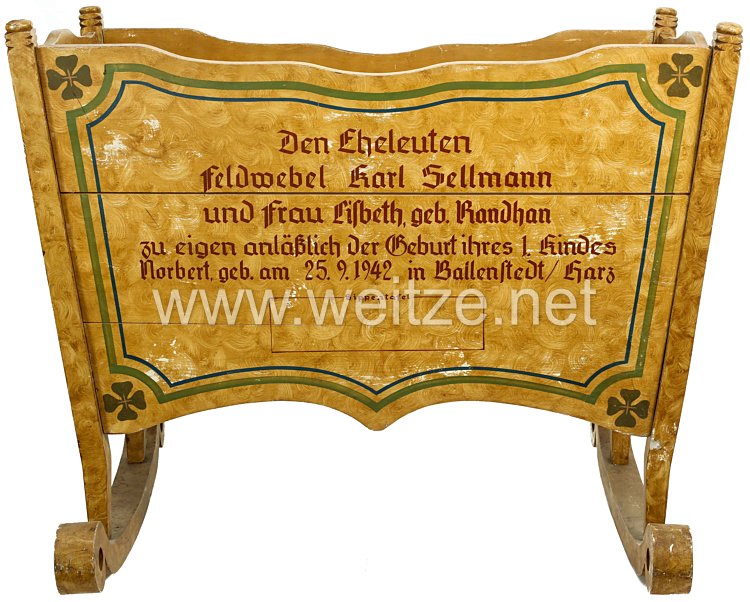
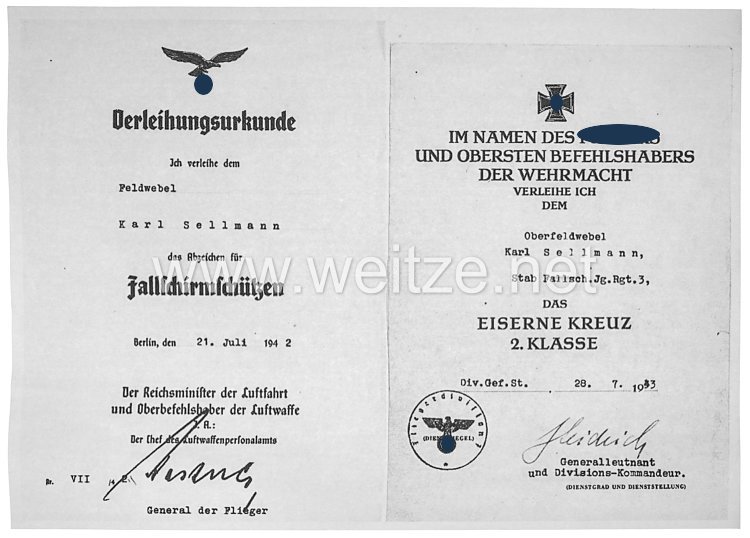
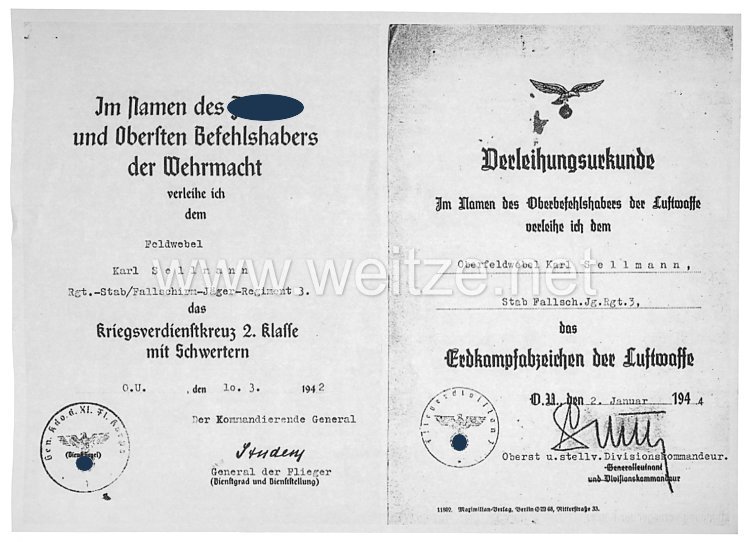
The cradle was presented to Feldwebel Karl Sellmann and his wife Lisbeth, née Randhand, on the occasion of the birth of their first child. Their son Norbert was born on September 25, 1942, in Ballenstedt in the Harz region. This elaborate dedication is inscribed on a side panel of the cradle, with a recess below for the Sippentafel (family tree), reflecting the National Socialist emphasis on genealogical documentation.
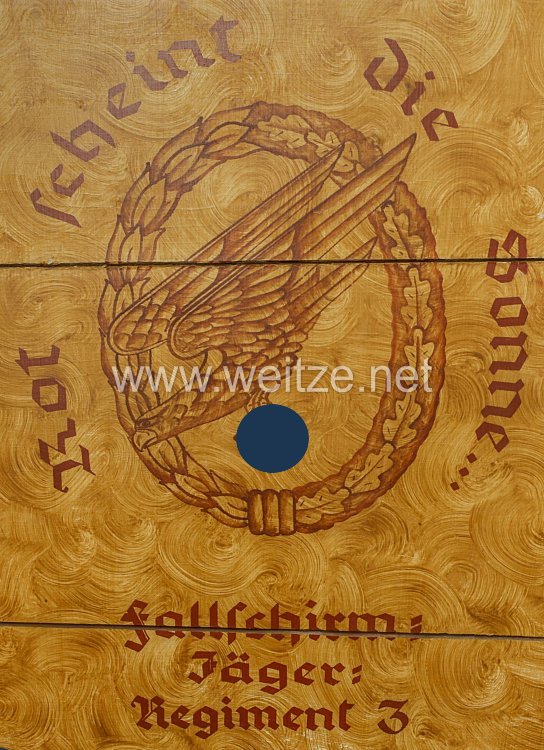
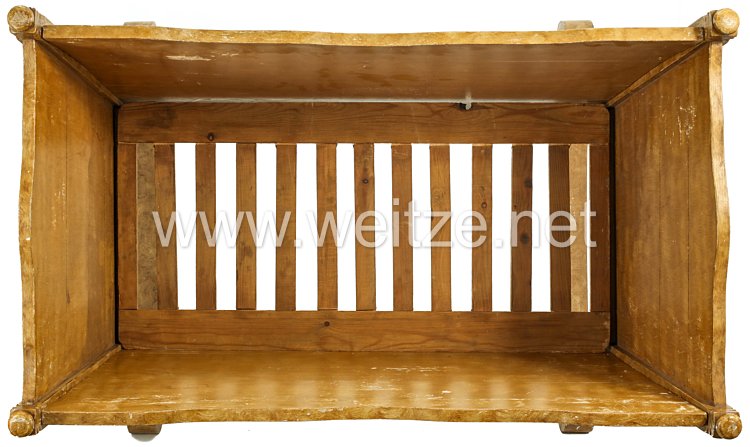
The craftsmanship demonstrates considerable effort and skill. The wooden cradle is designed to be disassembled and features a light base color with multicolored decoration in wiping technique. The front displays the large Fallschirmschützenabzeichen (Paratrooper Badge), the prestigious military insignia of German paratroopers. Below it appears the inscription “Rot scheint die Sonne...” (Red Shines the Sun) from the Fallschirmjäger song, with text and melody by F. Schäfer. Composed in 1938, this song became the unofficial anthem of German paratroopers.
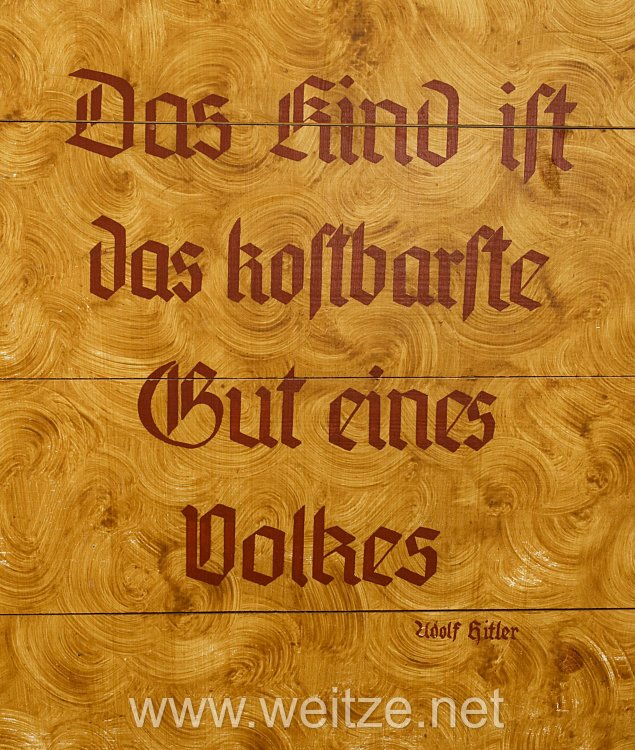
The opposite side bears the motto: “Das Kind ist das kostbarste Gut eines Volkes, Adolf Hitler” (The child is the most precious asset of a people, Adolf Hitler). This quotation reflects Nazi pronatalist ideology emphasizing children as vital to the Volksgemeinschaft (national community). The cradle thus documents not only military comradeship but also the ideological penetration of daily life in the Third Reich.
Such commemorative items represent an extremely rare category of unit-produced personal gifts for regiment families. After World War II, such objects became historical artifacts and collector's items. The historical significance of this specific cradle is underscored by its documentation in specialist literature: it is illustrated in Karl Veltzé's standard reference work “Deutsche Fallschirmjäger, Uniformierung und Ausrüstung 1936-1945 Band 3” on page 359.
The cradle unites several dimensions of historical significance: it serves as testimony to the camaraderie culture of a military elite unit, documents National Socialist family and population policy, exemplifies skilled craftsmanship under wartime conditions, and preserves the personal memory of a soldier's family. Its preservation and documentation provide unique insight into the life world of paratroopers and their families during World War II.