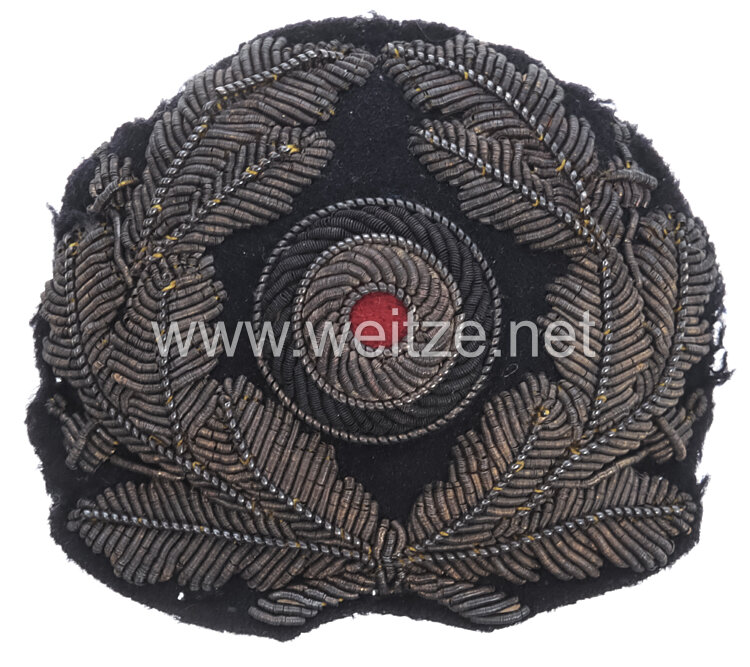
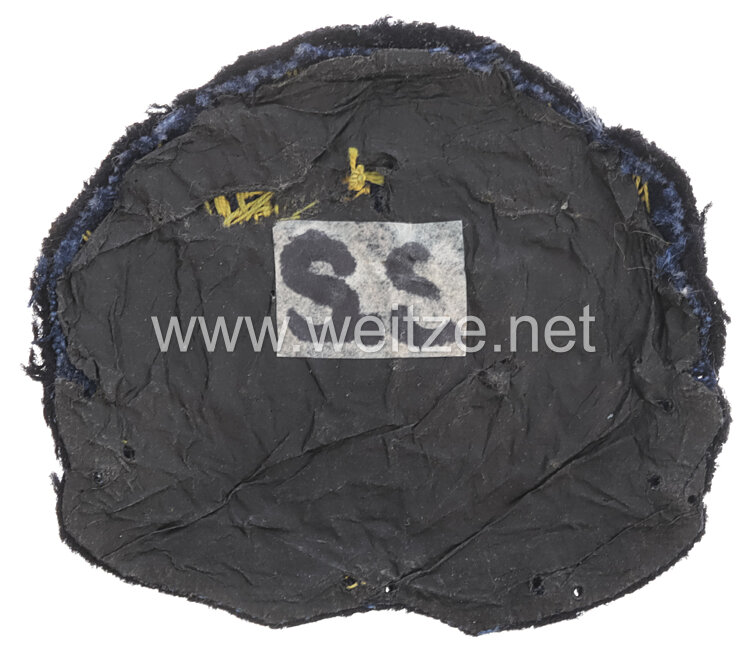
Kriegsmarine Visor Cap Oak Leaf Wreath for Naval Officers
The Kriegsmarine Peaked Cap Oak Leaf Wreath was part of the standardized headgear of German naval officers during World War II and represented an essential distinguishing feature of officer ranks. This cockade with oak leaf wreath was affixed to the peaked cap and served as both a rank insignia and a symbol of maritime tradition.
The historical roots of this insignia trace back to the Imperial Navy, which employed similar oak leaf wreaths as rank insignia as early as the 19th century. Following the establishment of the Kriegsmarine in 1935, when the German Reich shed the restrictions of the Treaty of Versailles, the traditional uniform regulations of the German Navy were largely restored and modernized.
The hand-embroidered metal thread execution described here represents the highest quality level of these insignia. Unlike machine-made or metal-pressed variants intended for non-commissioned officers and enlisted personnel, these elaborately hand-embroidered examples were worn exclusively by officers. The embroidery was typically executed with silver-colored metal thread on a dark, usually black background, creating an elegant contrast.
The oak leaf wreath itself possesses deep symbolic significance in German military tradition. The oak has been regarded for centuries as a symbol of strength, steadfastness, and honor. In Prussian and later German military culture, oak leaves became an integral component of numerous orders and decorations. The circular wreath on the cockade framed the national emblems, thereby emphasizing the official character of the wearer.
The cockade at the center of the oak leaf wreath displayed the Reich colors and the naval ensign of the Kriegsmarine. The hand-embroidered execution required considerable craftsmanship and was correspondingly expensive. Officers typically had to procure their uniforms and insignia themselves, which explains the existence of various quality levels and manufacturer variants.
The production of such insignia was carried out by specialized military equipment manufacturers and embroidery workshops, which often possessed generations of experience in crafting military insignia. Well-known manufacturers included firms such as BEVO (Bandfabrik Ewald Vorsteher), although hand-embroidered examples were frequently produced by smaller, specialized workshops. Quality and execution could therefore vary, with the finest embroideries being particularly sought after.
The peaked cap itself was a central element of the naval uniform and was worn on various service occasions. The cap consisted of dark blue or black cloth with a black patent leather visor. The oak leaf wreath was mounted above the visor, while an additional national emblem was often positioned on the top of the cap.
The uniform regulations of the Kriegsmarine were detailed in various dress regulations. These regulations precisely specified which insignia in which execution were to be worn by which rank groups. Stricter aesthetic standards applied to officers than to lower ranks.
In the military-historical context, such insignia represent not only the rank structure and organizational systems of the era, but also the craft traditions and material culture of the military apparatus. Surviving examples today provide insights into the manufacturing techniques, materials, and aesthetic concepts of the period.
After the end of World War II in 1945, the Kriegsmarine was dissolved, and these uniform components lost their official function. Today they are significant military-historical collectibles preserved by museums, research institutions, and private collectors. They serve historical research and documentation and help understand the organizational structures and visual codes of military hierarchies.
The condition assessment of such historical objects follows established criteria, with worn examples frequently exhibiting authentic traces of use that underscore their historical authenticity. These traces of actual wear make each piece an individual testament to history.