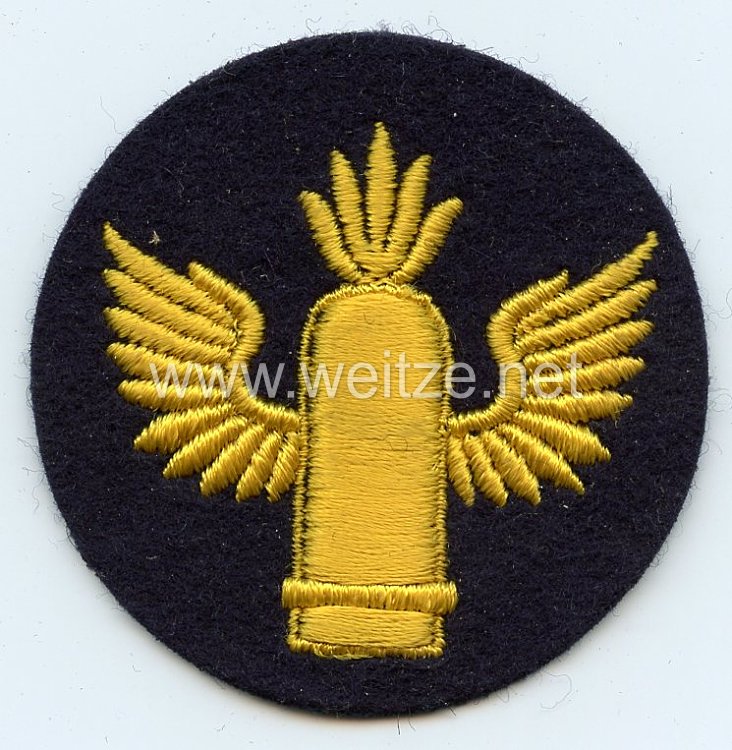
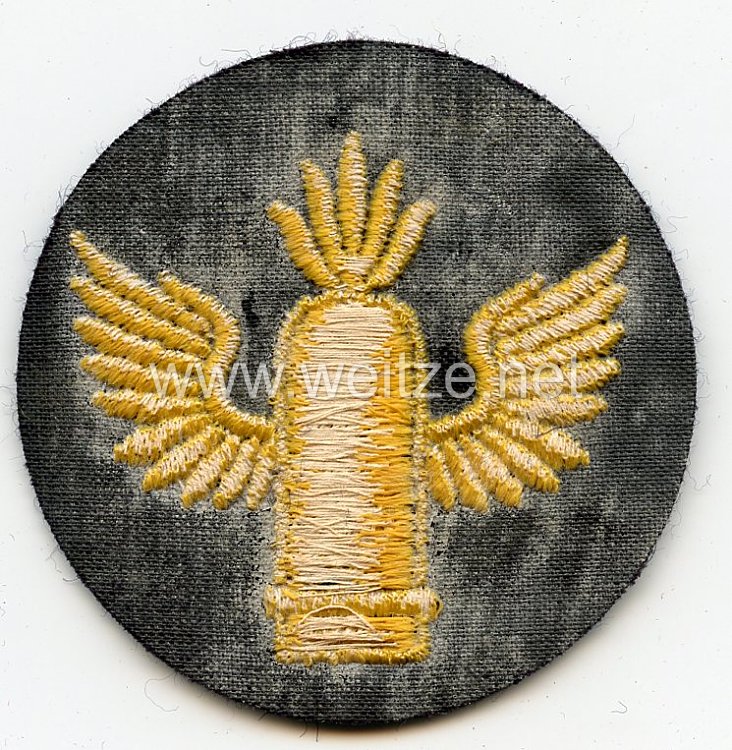
Kriegsmarine Enlisted Ranks Sleeve Insignia for Naval Artillery Career Path

for the blue uniform, machine-embroidered yellow on blue. Worn condition, Grade 2.
376864
15,00

Kriegsmarine Enlisted Ranks Sleeve Insignia for Naval Artillery Career Path

The Kriegsmarine enlisted personnel sleeve insignia for the naval artillery career path represents a significant example of the career badges worn during the Third Reich period from 1935 to 1945 in the German Kriegsmarine. These badges served to immediately identify a naval soldier's specialization and career path within the complex organizational structure of the German naval forces.

The Kriegsmarine was officially established on June 1, 1935, replacing the Reichsmarine of the Weimar Republic. With the rapid expansion of naval forces under Grand Admiral Erich Raeder and later Karl Dönitz, a comprehensive system of uniform regulations and identification markings developed. Career badges were introduced to make visible the various technical and functional specializations within the navy.

This badge for the naval artillery career path was worn on the blue uniform, which served as the walking-out uniform and for daily shore duty. The machine embroidery in yellow on a blue background corresponds to the Kriegsmarine uniform regulations, with yellow traditionally representing the branch color of artillery – a tradition already adopted from the Imperial German Navy.

The naval artillery career path encompassed all enlisted men and petty officers entrusted with operating, maintaining, and employing naval artillery. This included both the heavy guns of battleships and cruisers as well as lighter anti-aircraft guns and medium artillery of various calibers. The training of these specialists was extremely demanding and required technical understanding, precise calculations for ranges and target acquisition, as well as perfect coordination within gun crews.

The sleeve badges were typically worn on the left upper arm and indicated the respective career path through their symbolic representation. The artillery badge was distinguished by specific symbols pointing to its function – frequently stylized representations of crossed gun barrels or other artillery-specific motifs.

The production of these badges was carried out by specialized manufacturers authorized by the Kriegsmarine. Machine embroidery ensured a certain standardization, although quality differences depending on the manufacturer and production period certainly occurred. During the war years, particularly from 1943 onward, material and production shortages led to simplifications in manufacturing.

The wearing system of career badges was part of a differentiated system of rank insignia, grade badges, and specialization markings. In addition to career badges, naval personnel wore shoulder boards to indicate rank as well as various other badges for special qualifications or decorations. The blue uniform on which this badge was worn was the Bordanzug or walking-out uniform, while the darker working uniform was frequently used for shipboard duty at sea.

The historical significance of such badges lies not only in their functional role within the military hierarchy but also in their value as material witnesses to naval history. They document the organizational complexity of the Kriegsmarine and the specialization required for operating modern warships.

After the unconditional surrender on May 8, 1945, the Kriegsmarine was dissolved. All uniforms, badges, and equipment items were confiscated by the Allies or had to be destroyed. Surviving examples such as the described sleeve badge are therefore historical documents today, providing insight into the material culture and organization of the German naval forces during World War II.

For collectors and historians, such badges are of interest as they represent authentic evidence of the uniforming and organization of the Kriegsmarine. Condition, manufacturing quality, and authenticity are important evaluation criteria. The machine-embroidered design on blue cloth backing corresponds to known manufacturing standards of the period and represents a typical item of naval uniforming between 1935 and 1945.

The study of these insignia contributes to understanding the hierarchical structure and functional differentiation within the Kriegsmarine. They reflect the professionalization and technical specialization that characterized modern naval warfare in the mid-20th century, while simultaneously serving as tangible reminders of a significant period in German and world history.