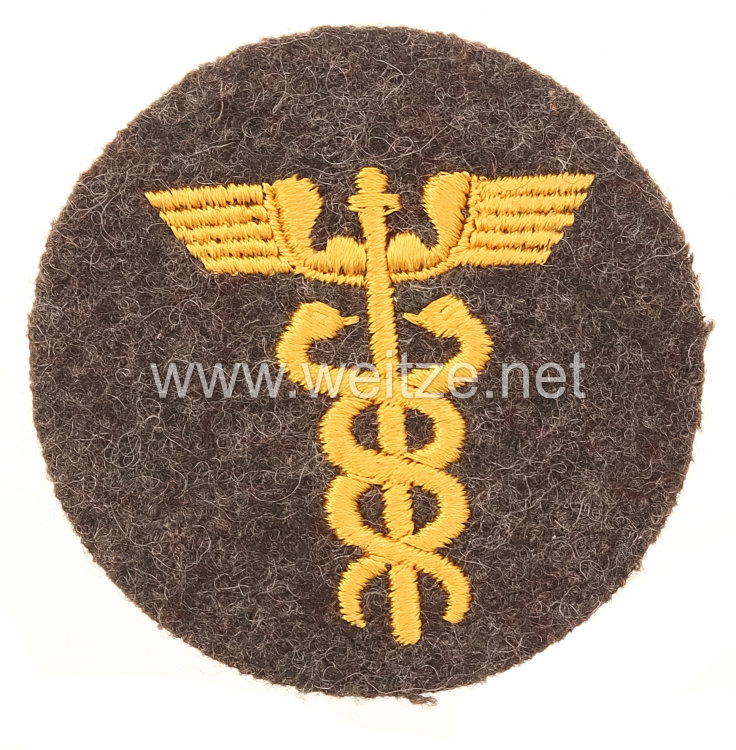
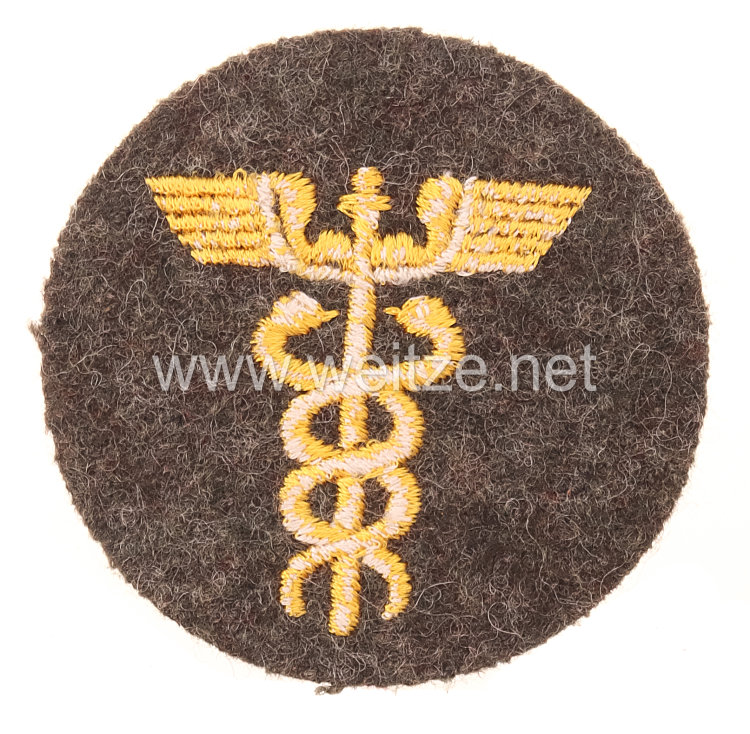
Kriegsmarine Enlisted Ranks Sleeve Insignia Administration Branch for Field-Gray Uniform
The Kriegsmarine sleeve badge for enlisted personnel in the Administration branch represents a significant example of the complex rank insignia and specialization marking system of the German Kriegsmarine during World War II. This particular badge was manufactured for wear on the field-gray uniform, indicating its use with the Coastal Artillery – one of the most important land-based components of the Kriegsmarine.
The Kriegsmarine differed significantly from the Army (Heer) and Air Force (Luftwaffe) in its uniform system. While naval personnel at sea traditionally wore dark blue uniforms, land-based units, particularly coastal artillery and naval landing forces, required field-gray clothing similar to the Army. This practical necessity led to the development of special badges in yellow embroidery on field-gray backing, distinctly different from the usual navy-blue uniform insignia.
The Administration career path (Verwaltung) formed an essential component of the Kriegsmarine organization. Administration enlisted men were responsible for logistical tasks, supply, economic administration, pay, and administrative duties. Without these support functions, the operational activities of the Navy would not have been possible. Career specialization was indicated by specific sleeve badges worn on the left upper arm.
The machine embroidery technique was the standard manufacturing method for uniform insignia from the early 1940s onward. This enabled faster and more cost-effective production compared to hand-embroidered examples, which were mainly used in the pre-war period and for officers. The dating of “circa 1943” corresponds to a phase of the war when coastal defense became increasingly important, particularly after intensified Allied air raids and the growing threat of an invasion in Western Europe.
The Kriegsmarine Coastal Artillery played a central role in defending occupied territories, especially along the Atlantic coast, Channel coast, and Baltic Sea. These units were equipped with heavy guns and were tasked with engaging enemy ships and preventing landing attempts. The construction of the Atlantic Wall from 1942 onward led to a massive expansion of coastal artillery units, creating increased demand for personnel in all career paths, including administration.
The unworn example in condition 2+ indicates high preservation quality. Such pieces may never have been issued, remained as depot stock, or were purchased by soldiers but never sewn onto uniforms. The fact that the badge is unworn allows detailed examination of manufacturing technique, material quality, and coloring without signs of aging or wear.
The yellow color was traditionally assigned to the Kriegsmarine and differed from the branch colors of the Army. This color choice symbolized maritime tradition and established a visual connection to the overall Kriegsmarine organization, even when the basic uniform color was field-gray. The combination of yellow embroidery on field-gray backing created clear identification as a Navy member wearing Army-style uniform.
Regulatorily, these badges were precisely specified in the Kriegsmarine uniform regulations. The various career paths – from Seaman branches to Technical branches to Administration and Medical branches – each had specific badges that made the wearer's specialization immediately recognizable. This system served military order and enabled quick identification of responsibilities.
In historical context, this badge documents the organizational complexity of the Kriegsmarine and the necessity of specialized administrative structures even in combat units. It reminds us of the thousands of soldiers who served in support functions and without whose work the operational units could not have functioned. Today, such badges are important study objects for military historians and collectors researching the uniform history and organization of German forces in World War II.