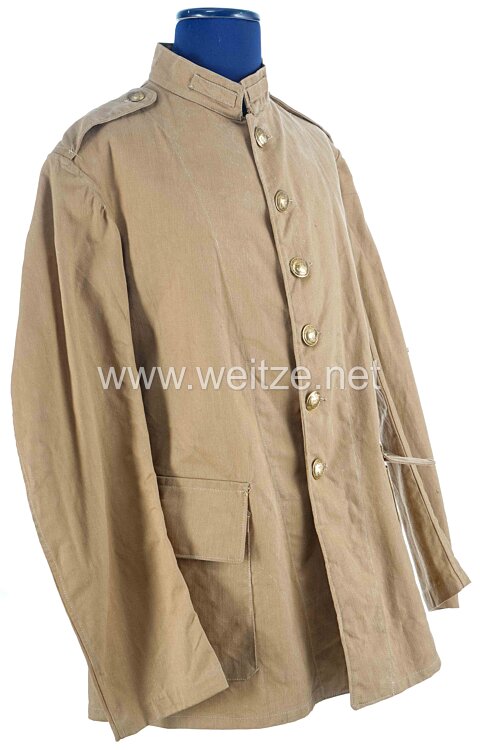
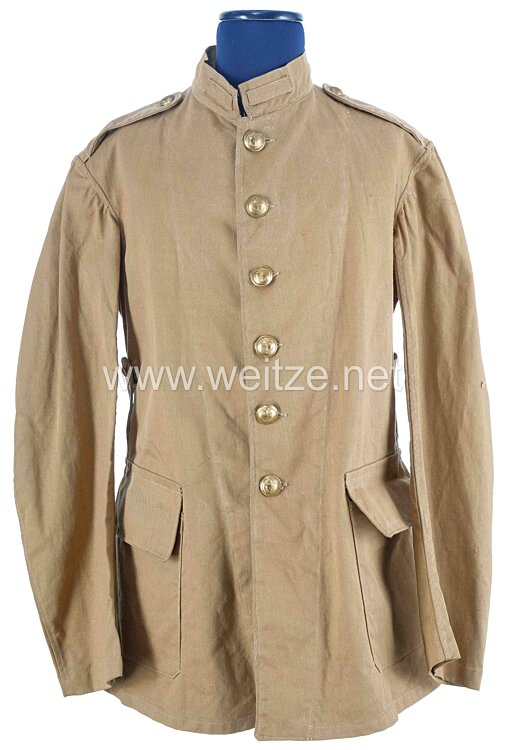
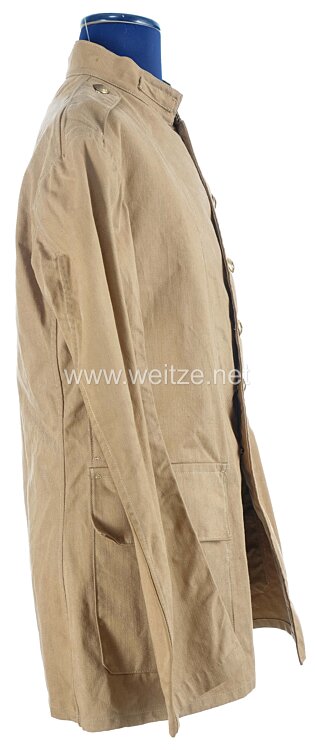
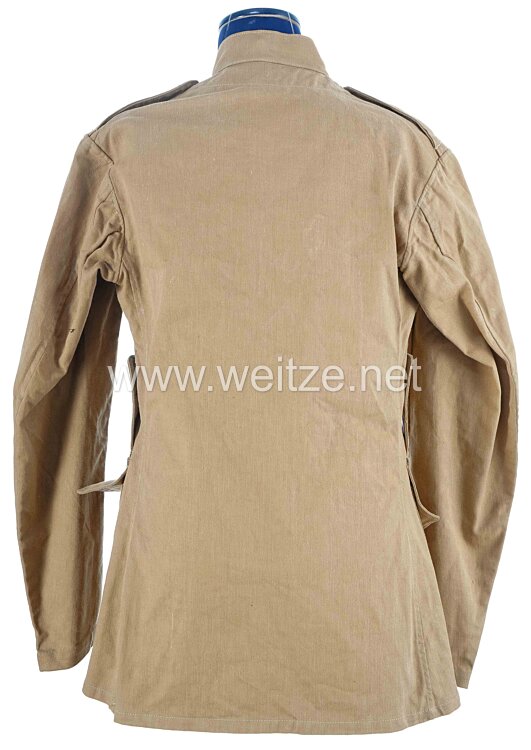
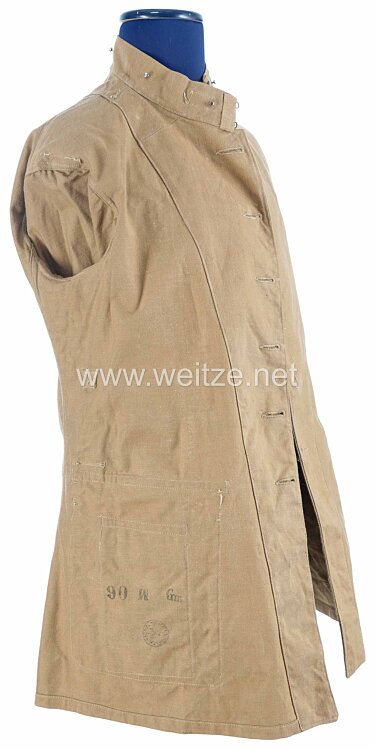
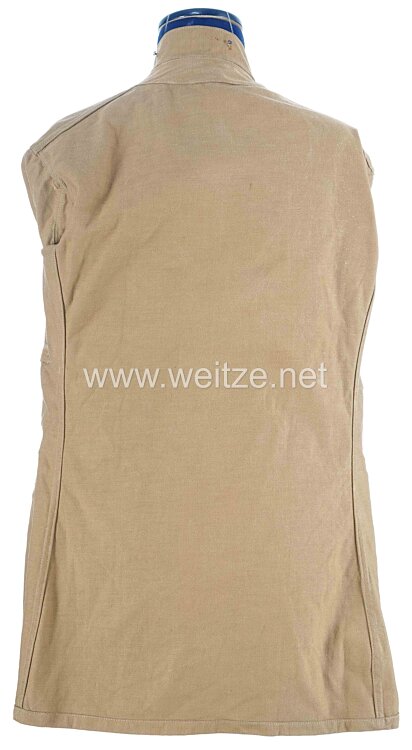
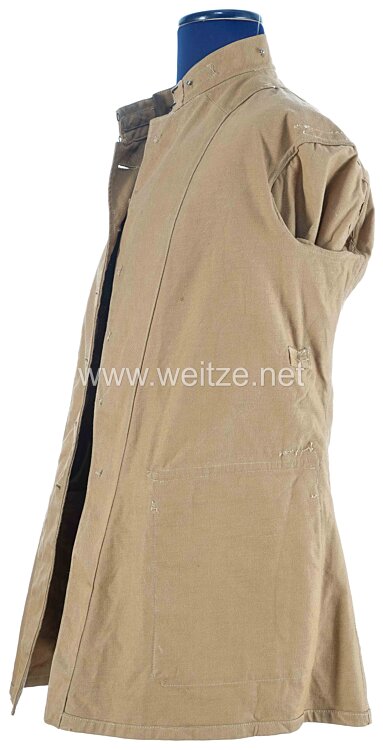
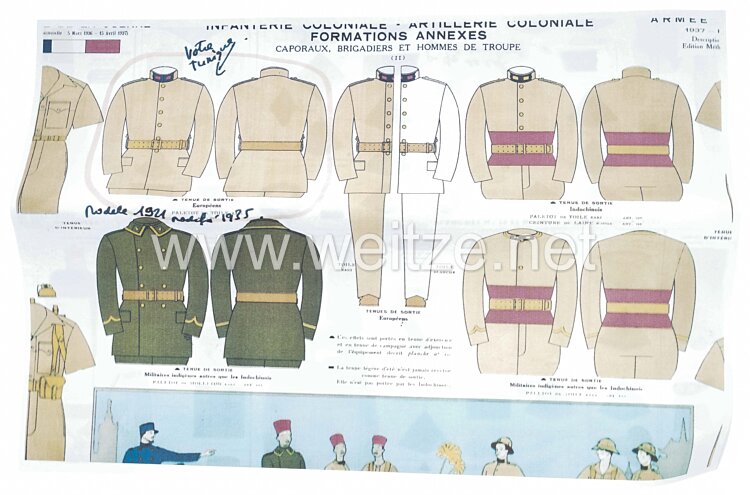
France Tropical Tunic Model 1914 for Enlisted Men of the Marine Infantry
The French Tropical Tunic Model 1914 for enlisted men of the Marine Infantry (Infanterie de Marine) represents an important transition in French military clothing during World War I and the immediate postwar period. This uniform tunic embodies the adaptation of French forces to climatic conditions in overseas colonial territories and reflects the significant role France played as a colonial power in the early 20th century.
The Infanterie de Marine, originally known as Troupes de Marine, had a long and distinguished history dating back to the 17th century. These units were specifically designed for overseas service and played a central role in defending and administering the French colonial empire in Africa, Indochina, and other tropical regions. Despite their name, these troops were not marines in the modern sense, but rather colonial troops under the authority of the Naval Ministry.
The Model 1914 marks an important moment in the development of French military uniforms. With the outbreak of World War I, the need for practical, functional uniforms became evident. Traditional colorful uniforms, such as the famous red trousers of the French infantry, proved completely unsuitable for modern warfare. The introduction of khaki tropical uniforms was part of this broader reform movement.
The khaki-colored fabric of this tunic was a deliberate choice for tropical deployment areas. The color not only provided better camouflage in the various landscapes of colonial territories, but the lightweight fabric also allowed better air circulation in hot and humid climates. The use of lightweight material was crucial for the health and operational capability of soldiers in tropical regions, where heat exhaustion and tropical diseases were constant dangers.
The six brass buttons with anchor symbol are a characteristic feature of the Infanterie de Marine. The anchor symbolized the historical connection of these troops to the French Navy and distinguished them from regular army units. This symbolism was maintained over generations and served as an important identity marker for these elite troops.
The functional aspects of the tunic - the large patch side pockets, the belt loops, and the sewn-in shoulder straps - demonstrate the practical orientation of this uniform. The pockets provided storage space for personal items and small equipment pieces, while the belt loops ensured secure attachment of equipment belts. The shoulder straps served to attach rank insignia and other markings.
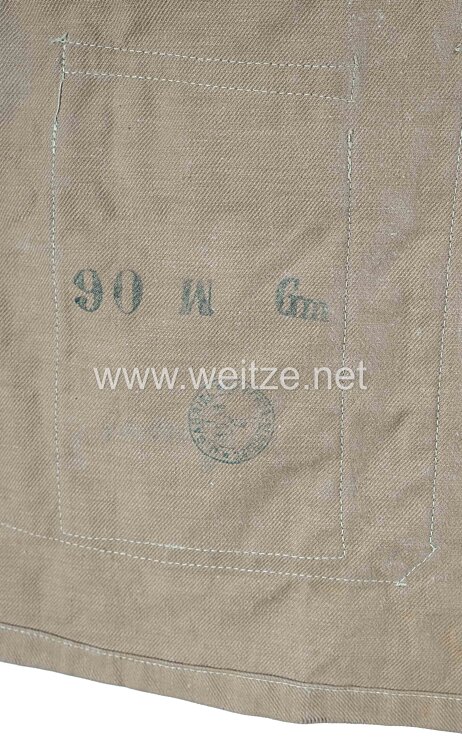
Particularly noteworthy is the internal inspection stamp from 1933. This shows that this uniform tunic was still in use nearly two decades after its original introduction in 1914. This long service life was typical of French military uniforms of this period. The economic difficulties of the interwar period and the conservative attitude of the French military administration meant that many uniform models remained in service for extended periods.
In the 1920s and 1930s, the Troupes Coloniales were stationed in various regions of the French colonial empire. They served in French West Africa, French Equatorial Africa, Indochina, Madagascar, and other territories. These troops played not only a military role but were also involved in the administration and development of these areas.
The 1933 inspection stamp falls during a time of increasing international tensions. Japan had already occupied Manchuria, and in Europe, the shadows of the coming Second World War were beginning to gather. French colonial troops would play an important role in the coming years, both in defending the colonies and later in the liberation of France itself.
This tropical tunic stands as an example of the material culture of the French military in the interwar period. It embodies the continuity of military traditions, the practical requirements of colonial service, and the economic realities of a time of transition. For collectors and historians, it offers valuable insights into the daily reality of French colonial soldiers and the administrative practice of the French armed forces during this significant historical period.