Wehrmacht Large Order, Uniform and Document Estate from the Possession of German Cross in Gold Recipient Lieutenant Vilzmann, III./Grenadier-Regiment Nr. 61

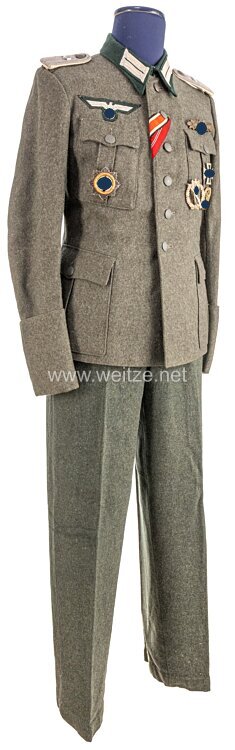
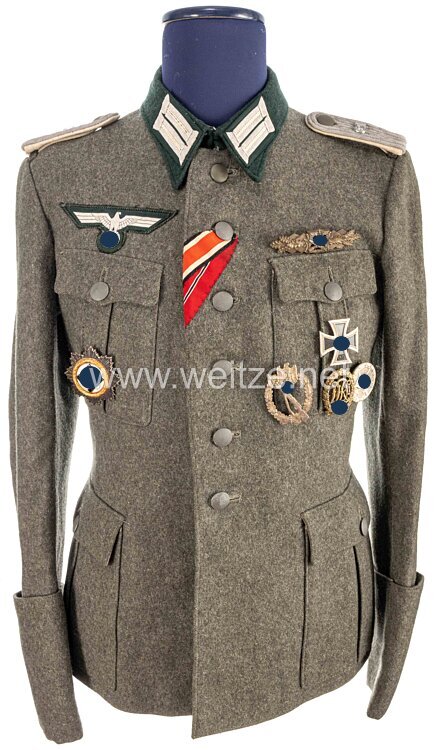
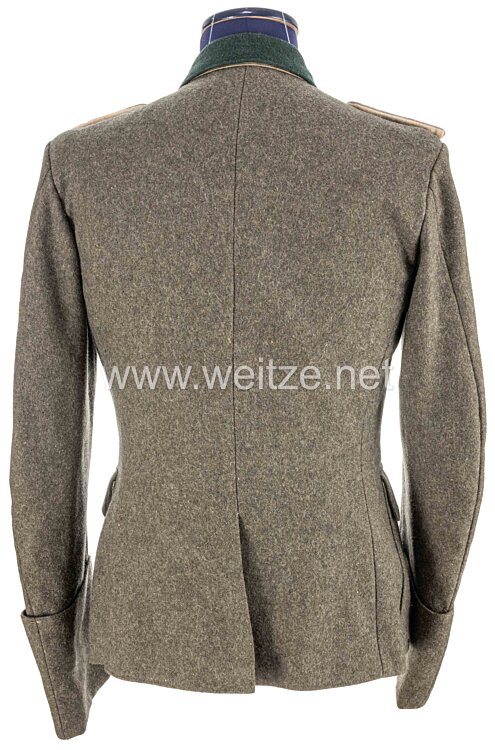
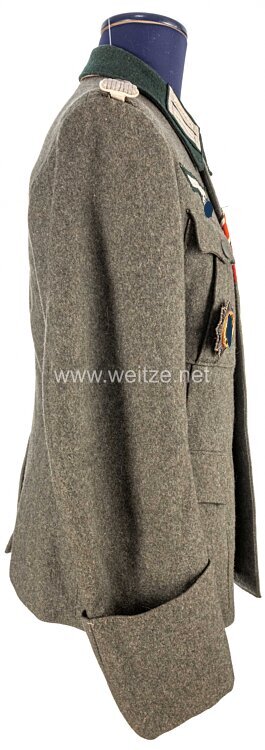
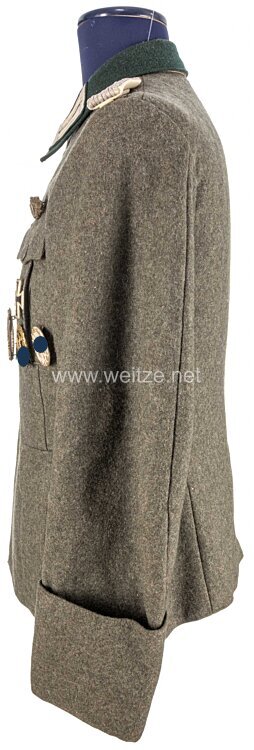
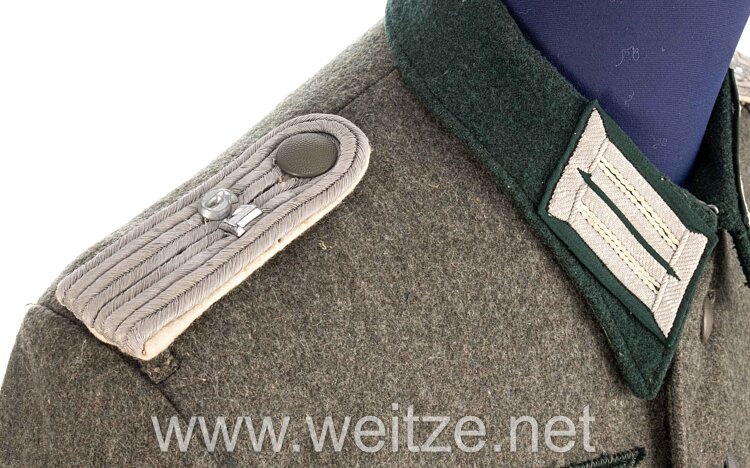
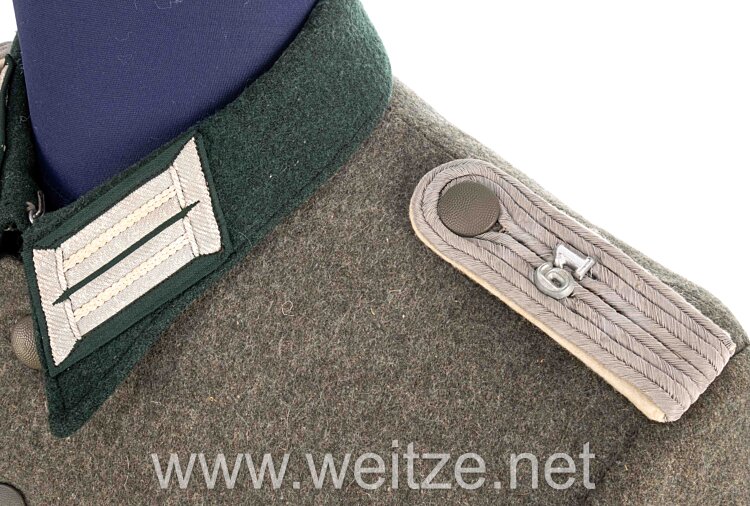
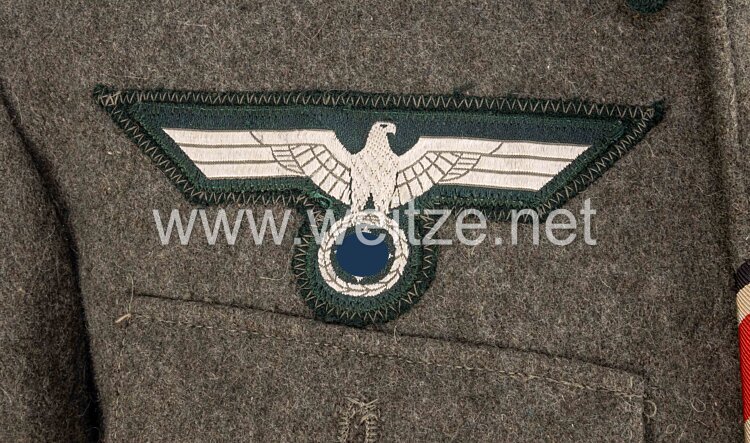
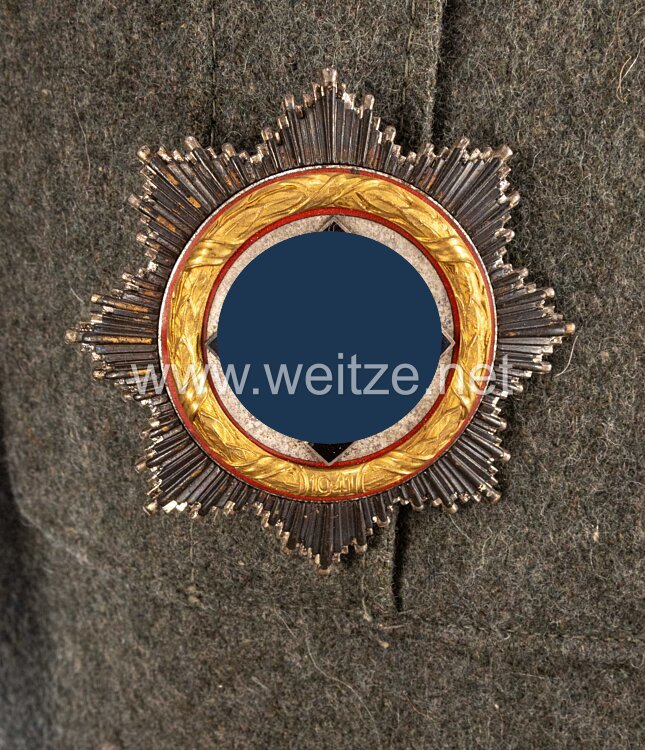
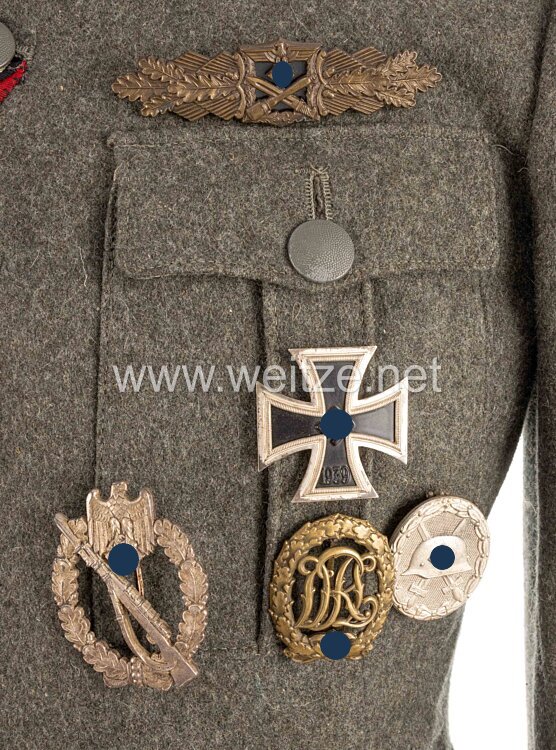
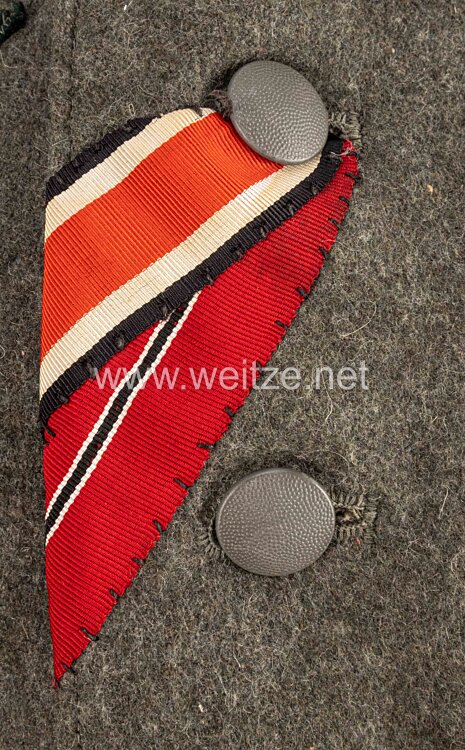
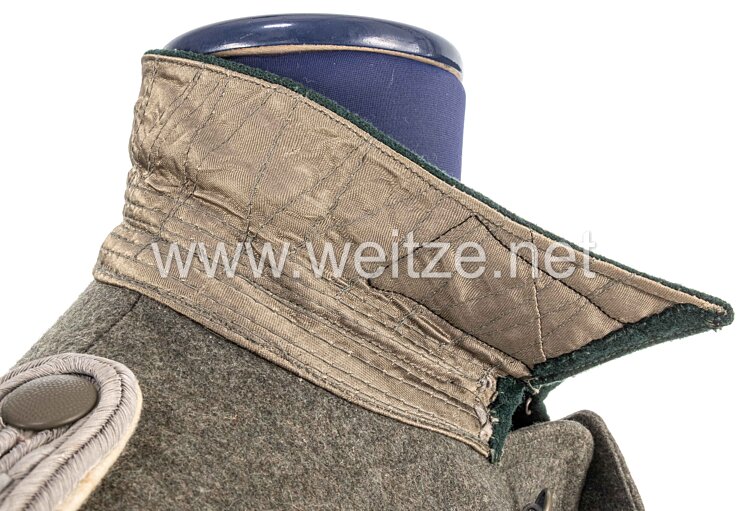
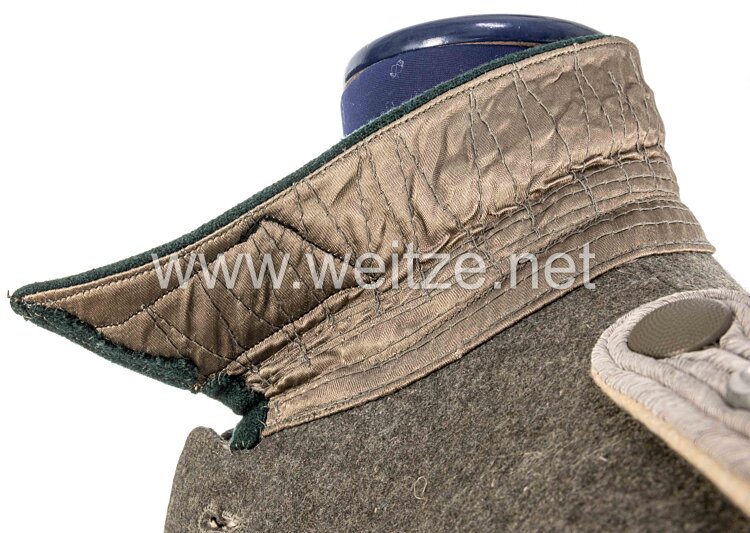
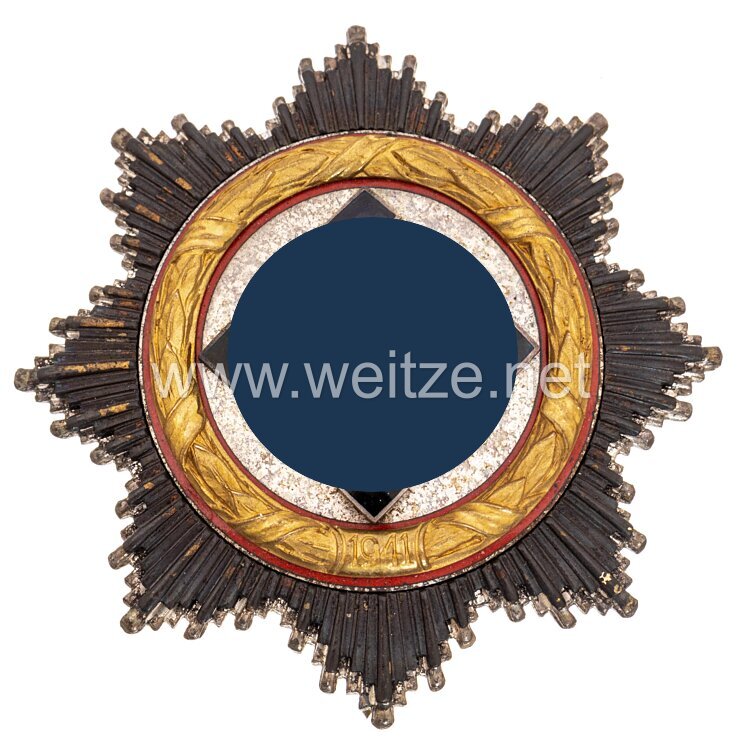
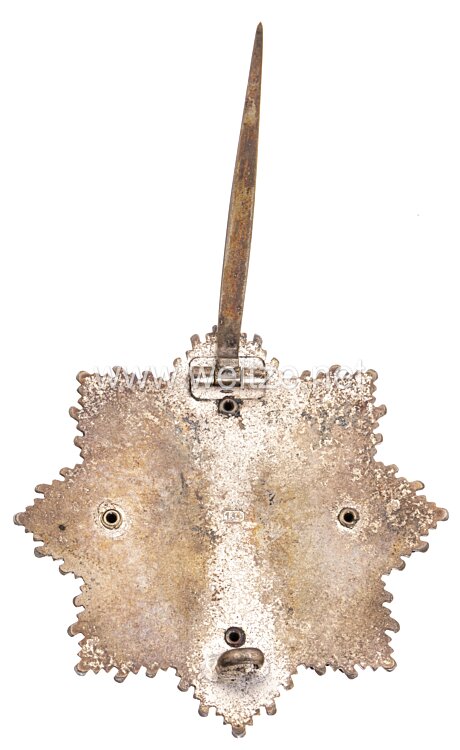
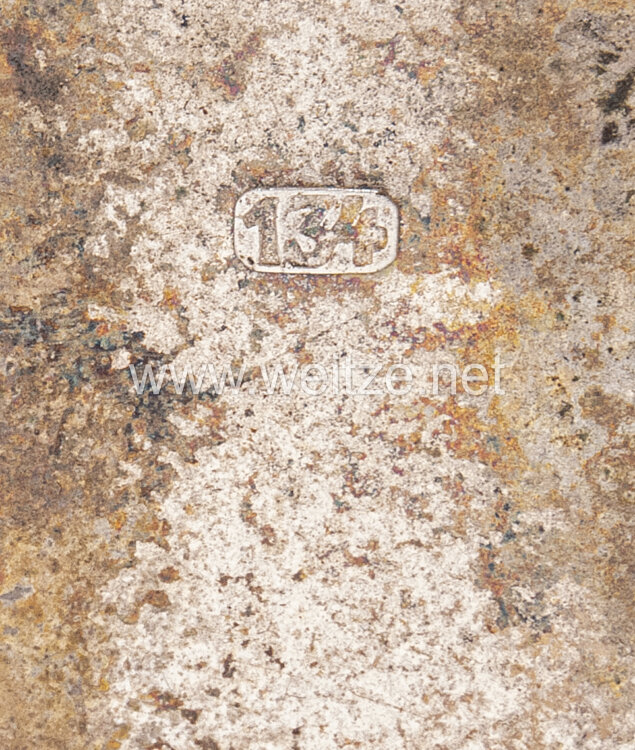
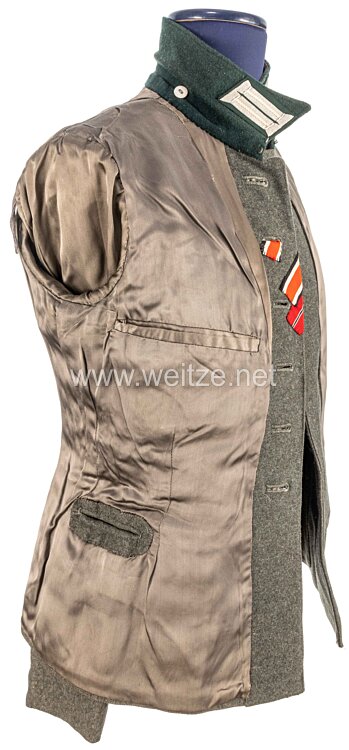
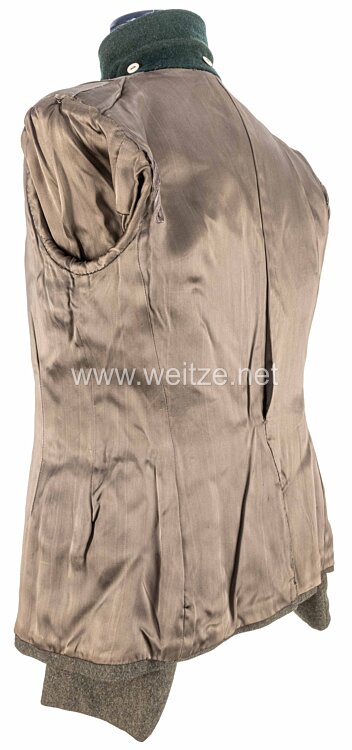
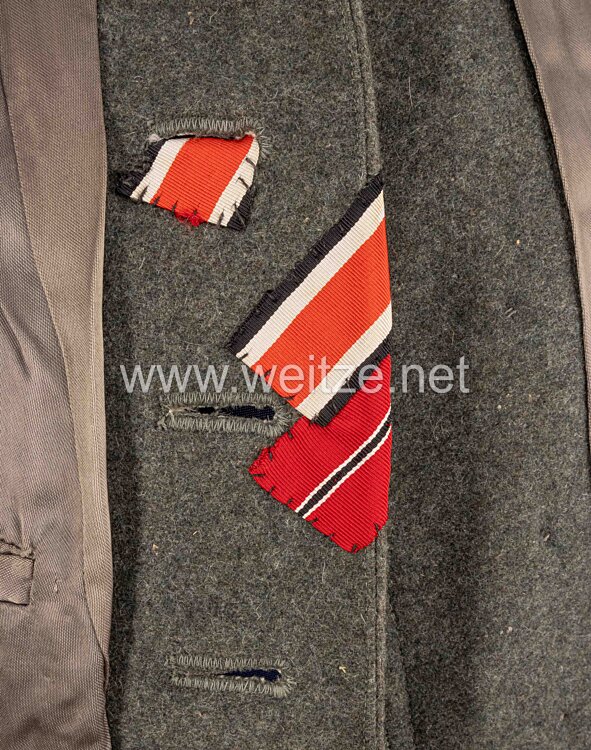
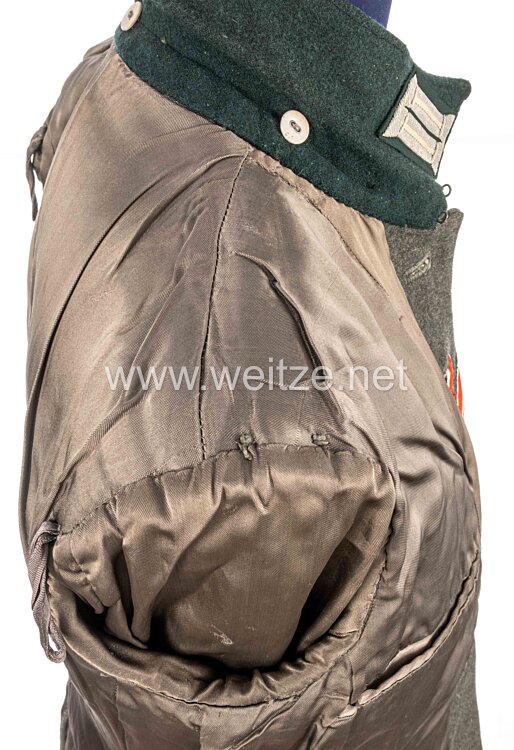
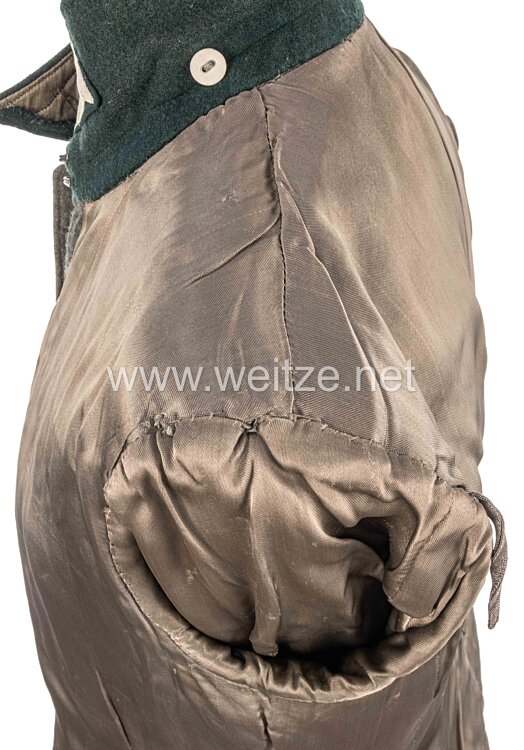
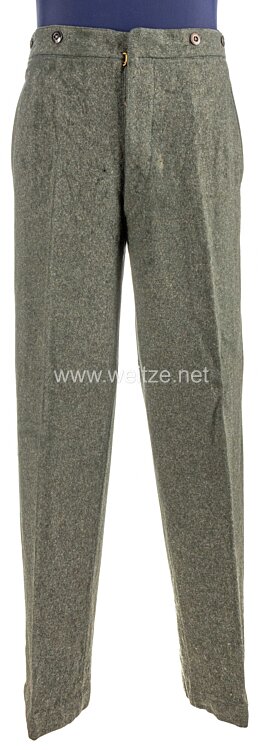
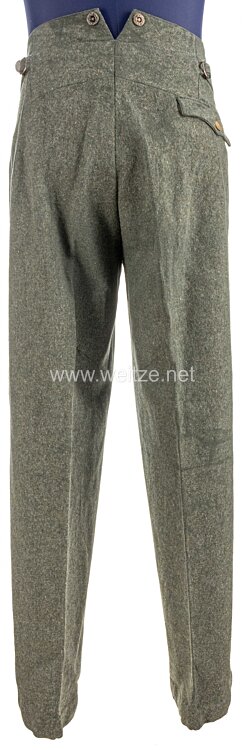
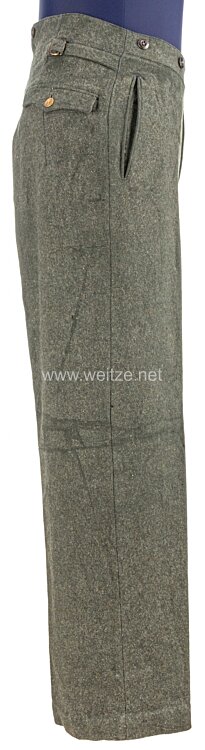
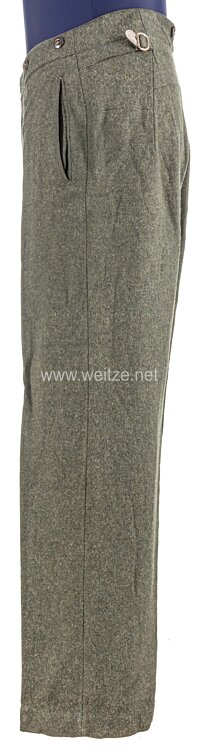
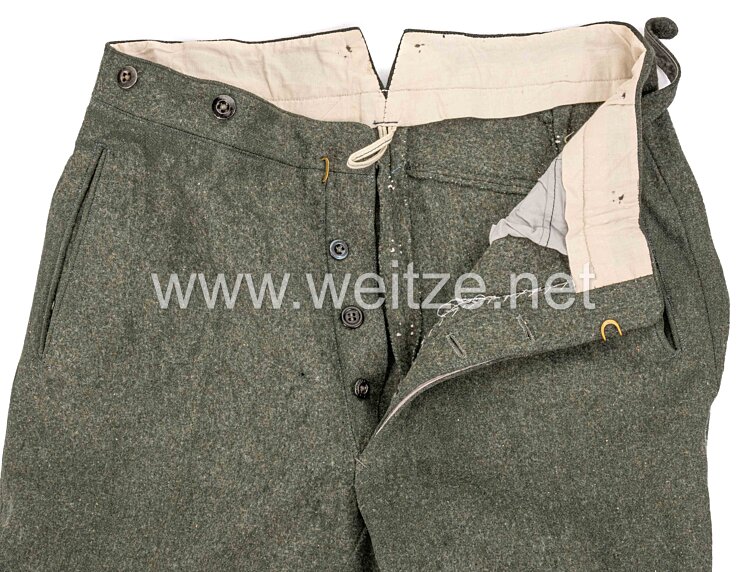
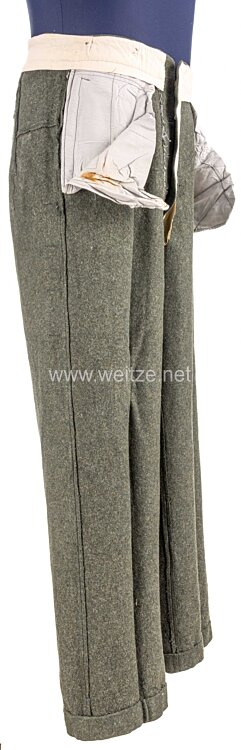
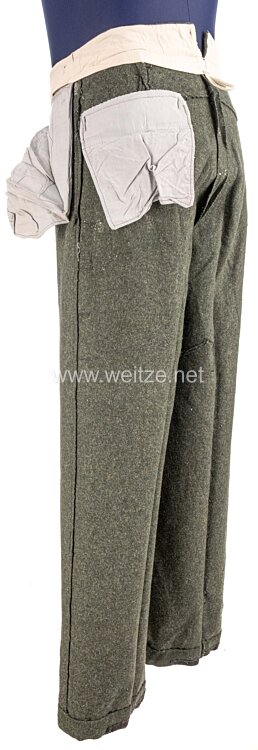
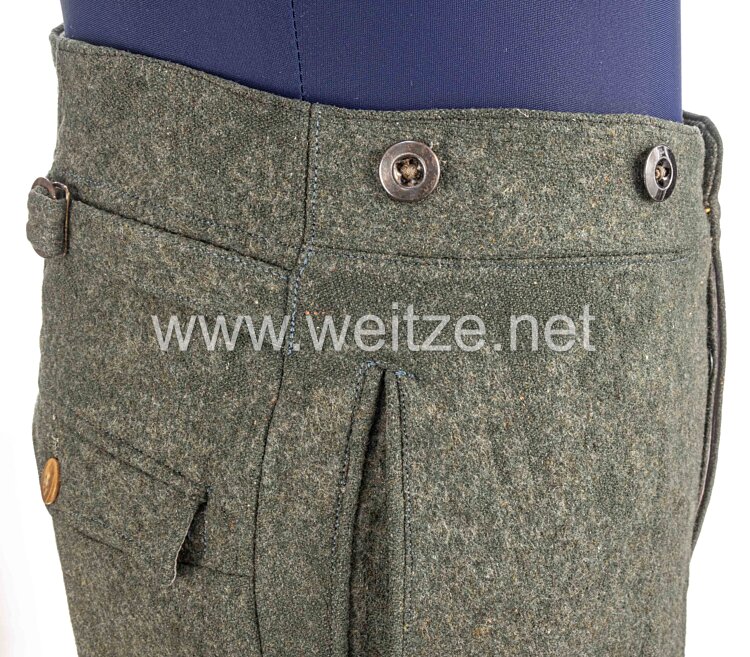
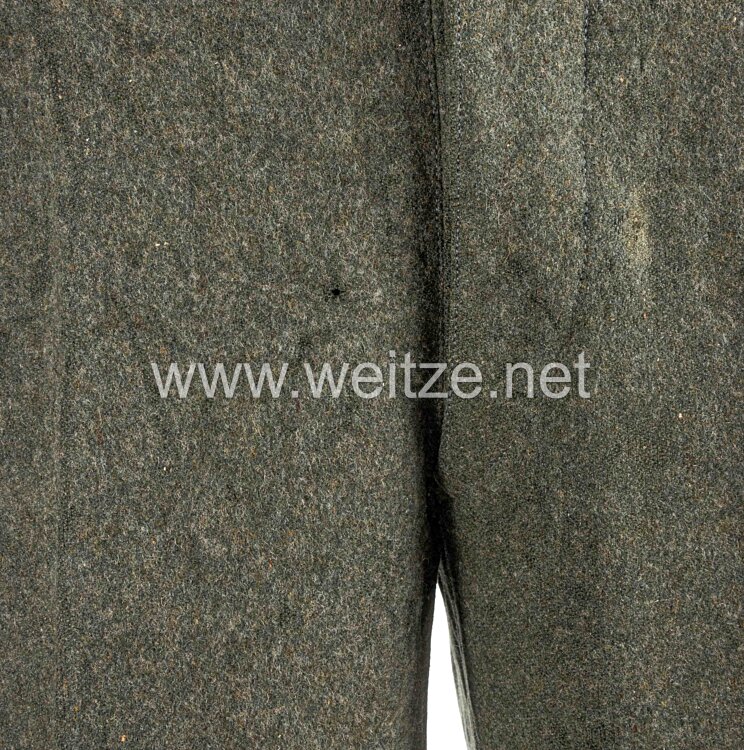
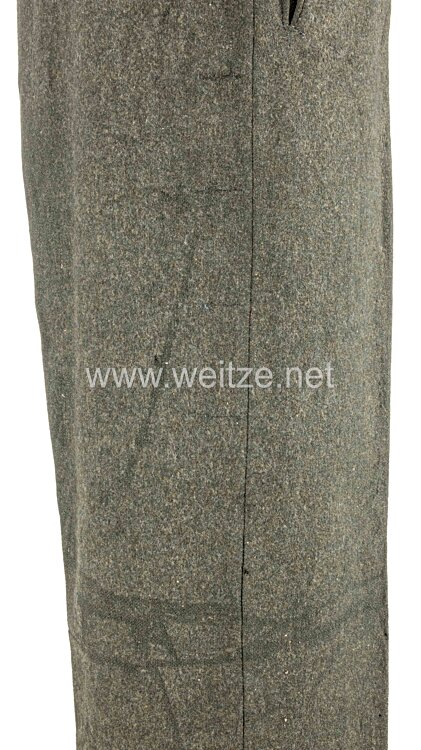
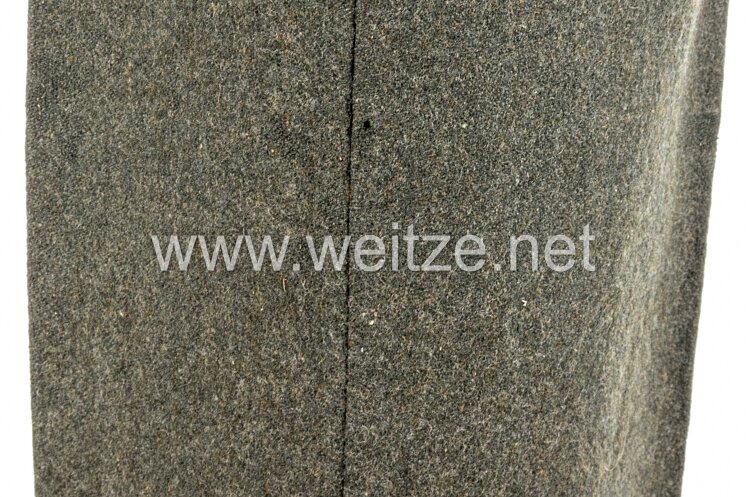
This is the home uniform of Lieutenant Vilzmann, manufactured circa 1944. Field tunic for officers. Late war production in field-gray cloth, dark green collar. Complete with all insignia. Bevo-woven breast eagle, machine-sewn. Woven collar tabs for officers, machine-sewn, matte shoulder boards with applied regimental numerals "61" with loops. Ribbon for Iron Cross 2nd Class and Winter Battle Medal sewn into buttonhole. On the chest the following awards: Close Combat Clasp in Bronze, maker "FEC. W.E. Peekhaus Berlin - A.G.M.u.K. Gablonz". Iron Cross 1939 1st Class, maker "L/11". Infantry Assault Badge in Silver, fine zinc silver-plated. Wound Badge 1939 in Silver, fine zinc silver-plated, maker "107", Reich Sports Badge DRL in Bronze. On the right breast the German Cross in Gold, lightweight version, maker "134". Interior with stone-gray lining, sewn-in slit for wearing the officer's dagger. The field tunic is only lightly worn, condition 2+. Matching field-gray trousers for officers, also a personal piece. The trousers are lightly worn, condition 2.
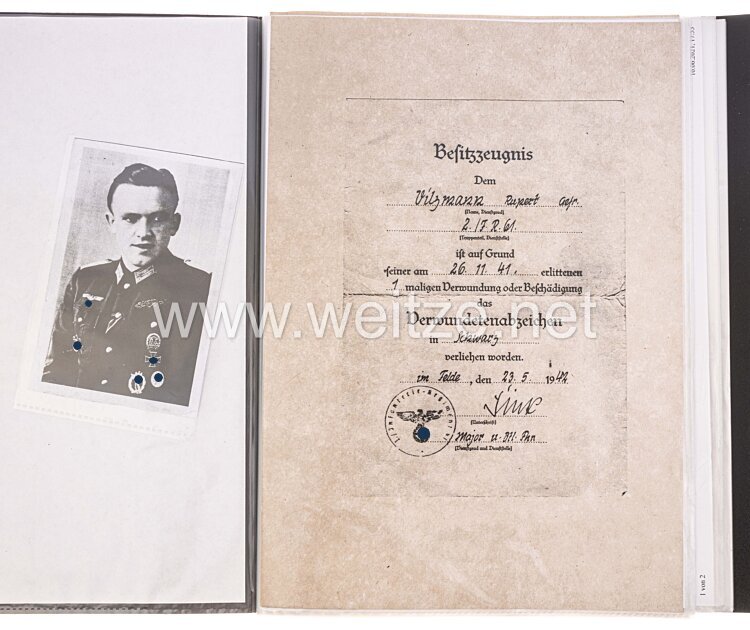
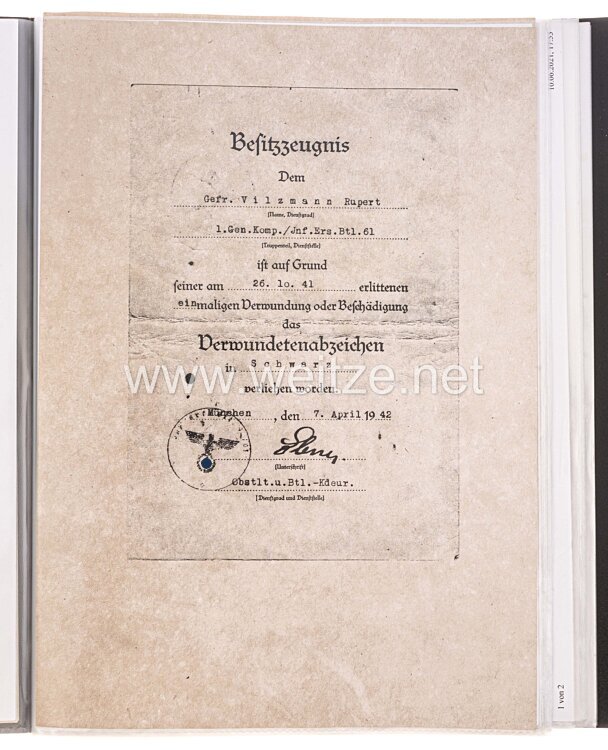
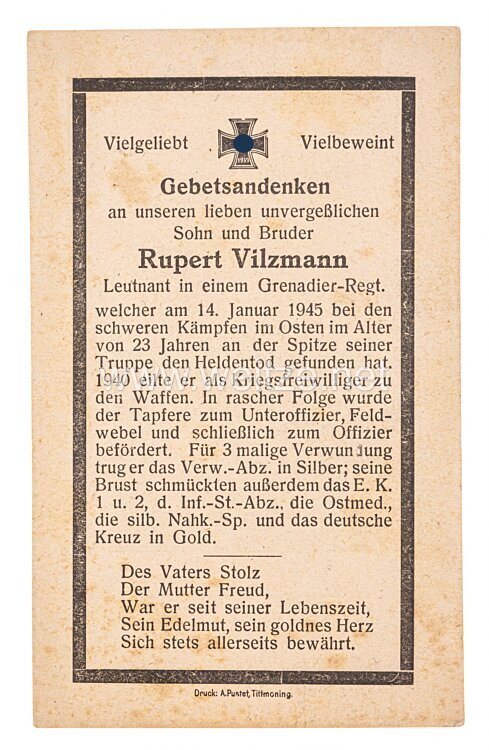
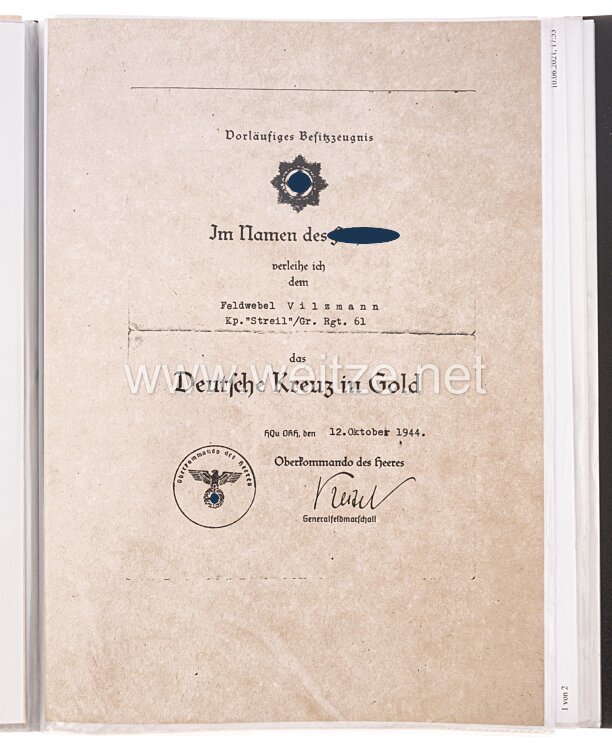
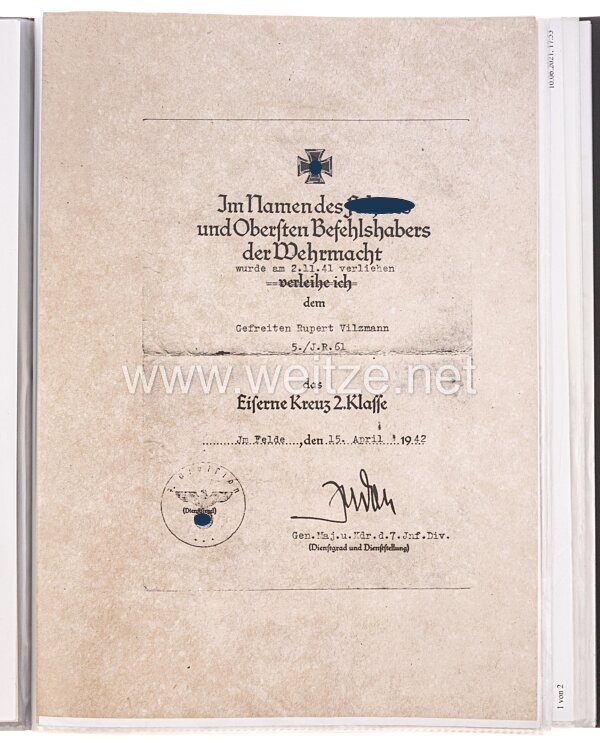
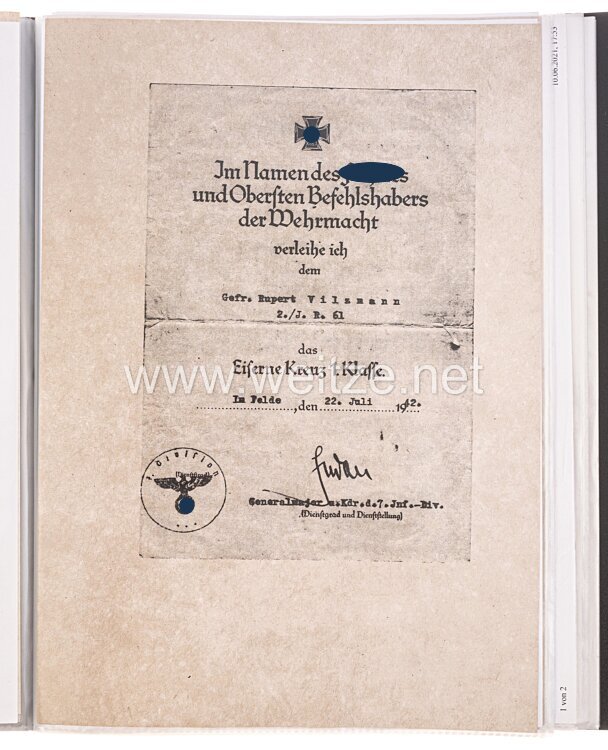
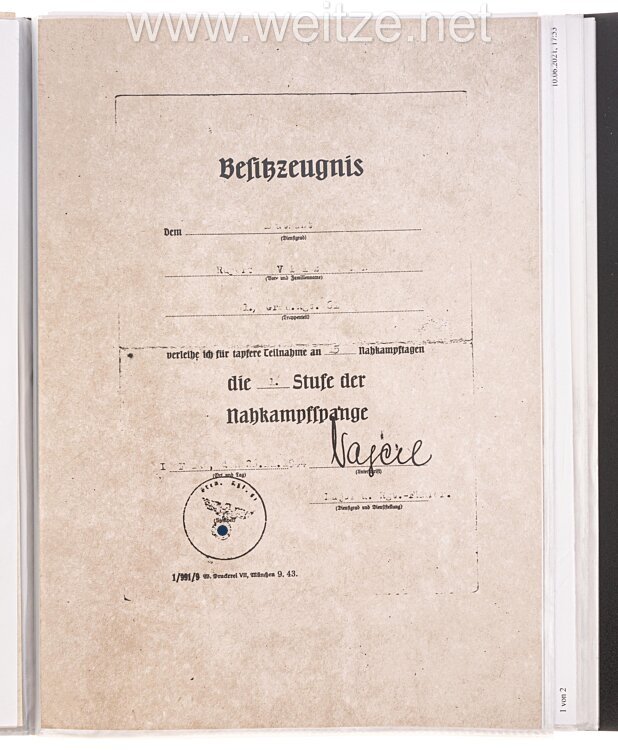
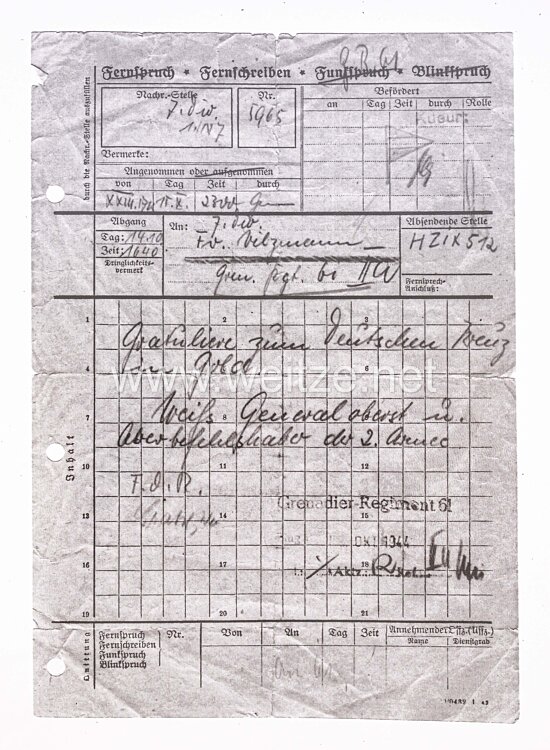
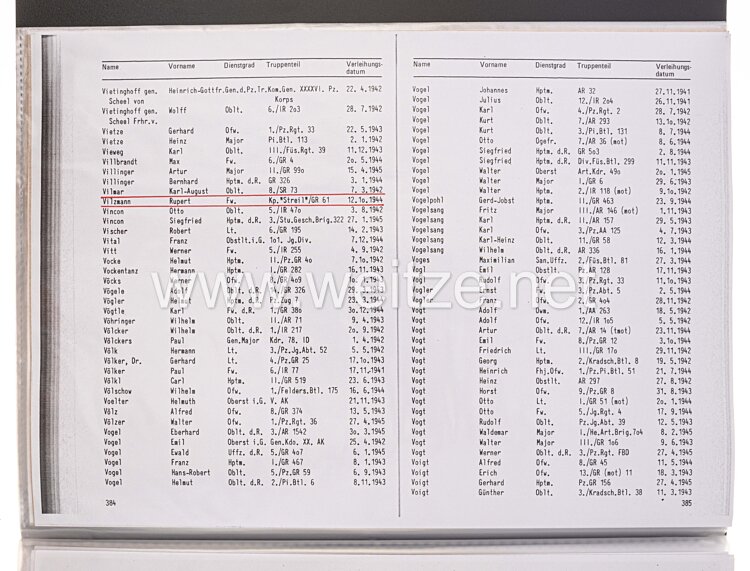
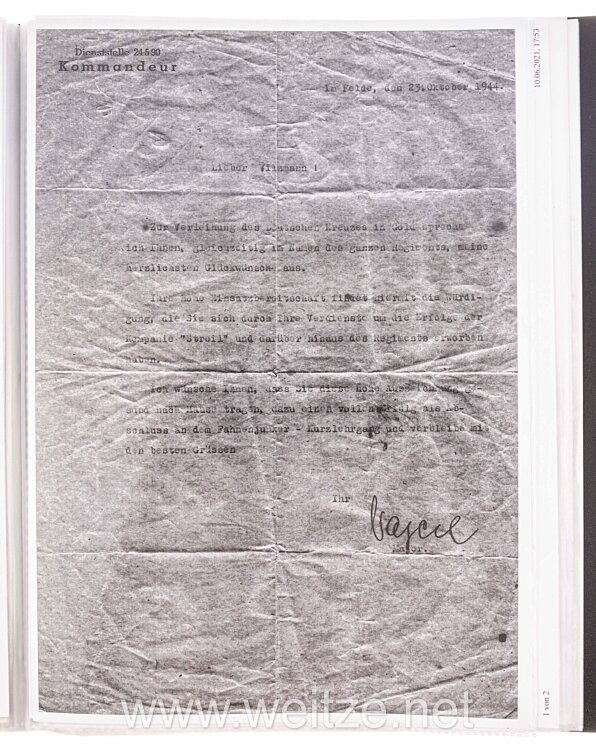
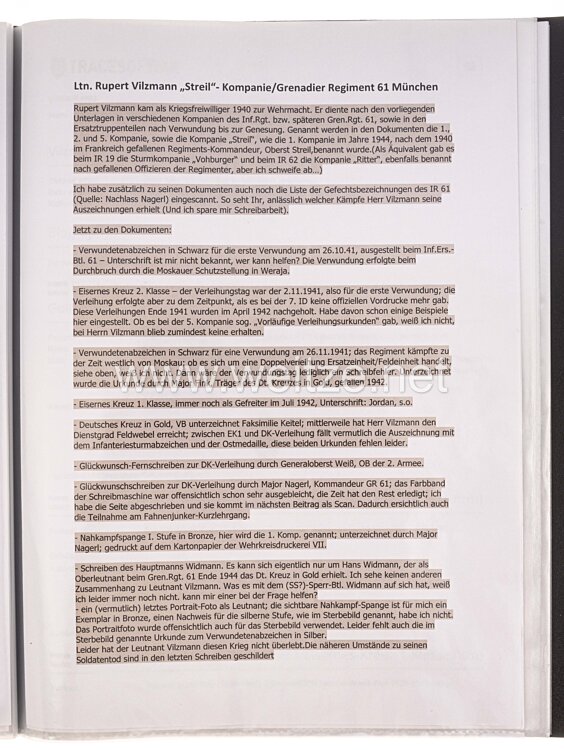
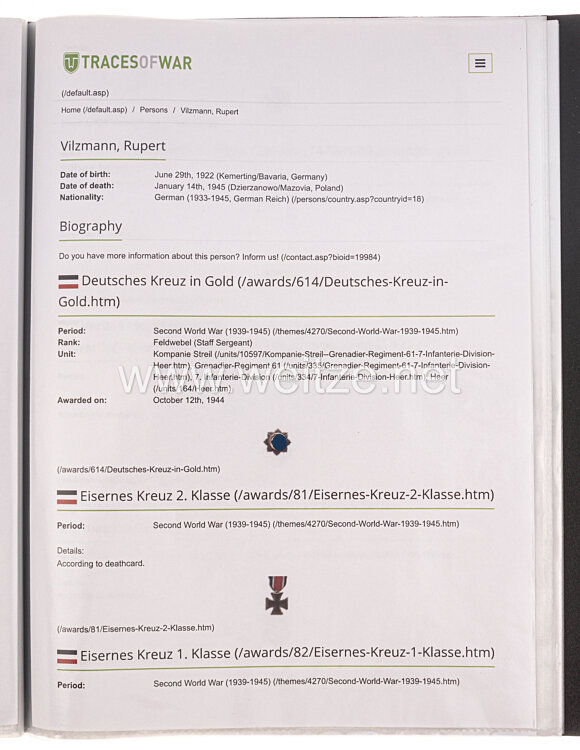
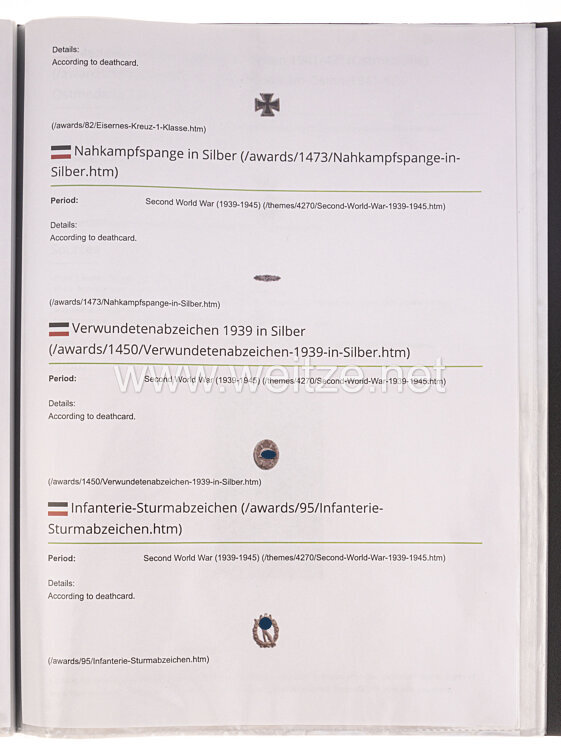
Included are photocopies of all award documents for Vilzmann: Wound Badge 1939 in Black, 23.5.1942, Iron Cross 1939 2nd Class, April 15, 1942, Iron Cross 1939 1st Class, July 22, 1942, 1st Grade of Close Combat Clasp, 23.11.1944, German Cross in Gold, October 12, 1944, congratulatory letter for the award of the German Cross in Gold, letter regarding the death of Vilzmann. Lieutenant Vilzmann was killed on 14.1.1945 by direct artillery hit at Dzierczanowo.
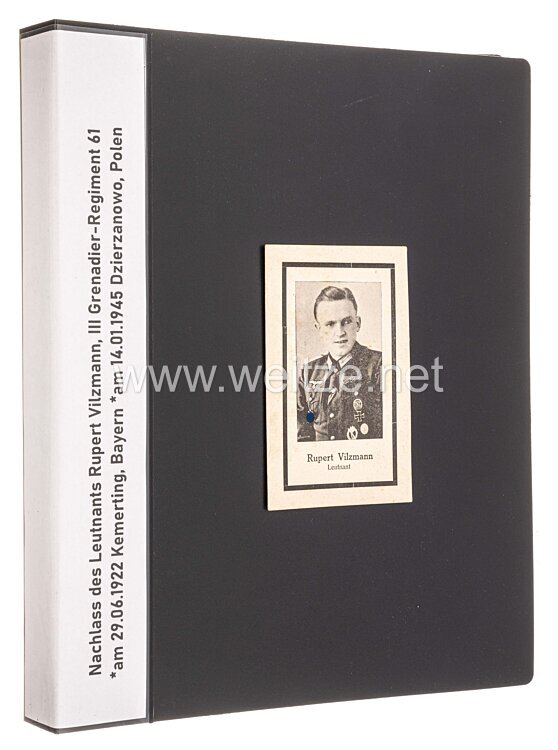
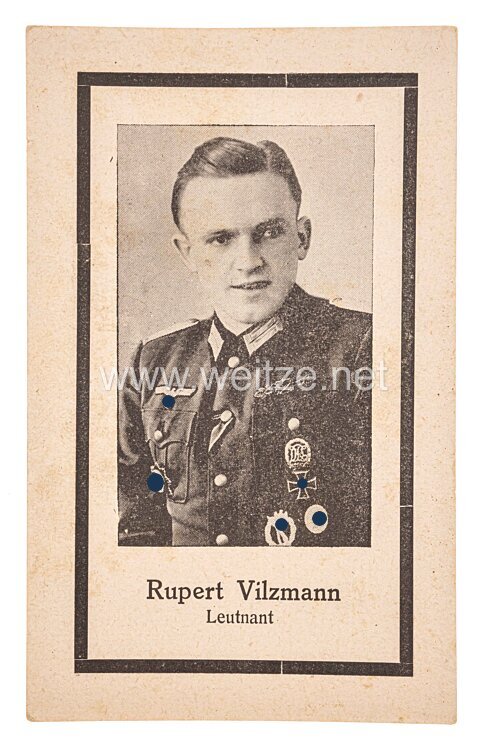
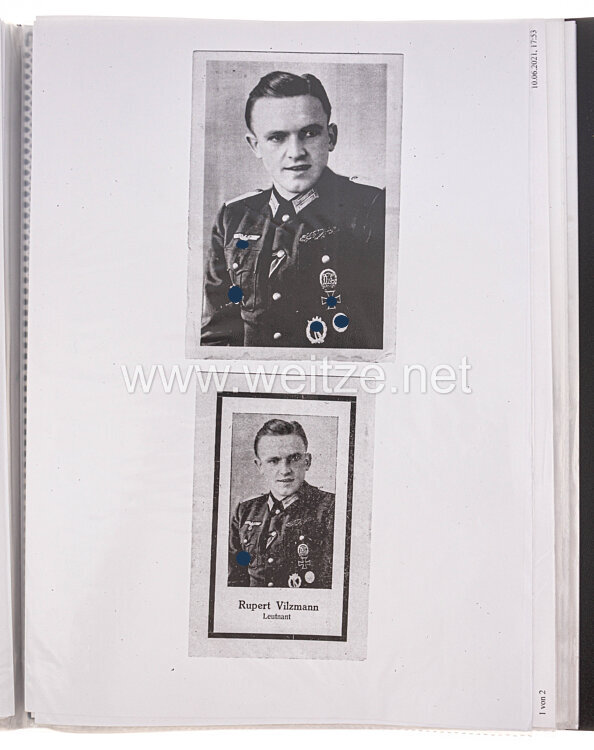
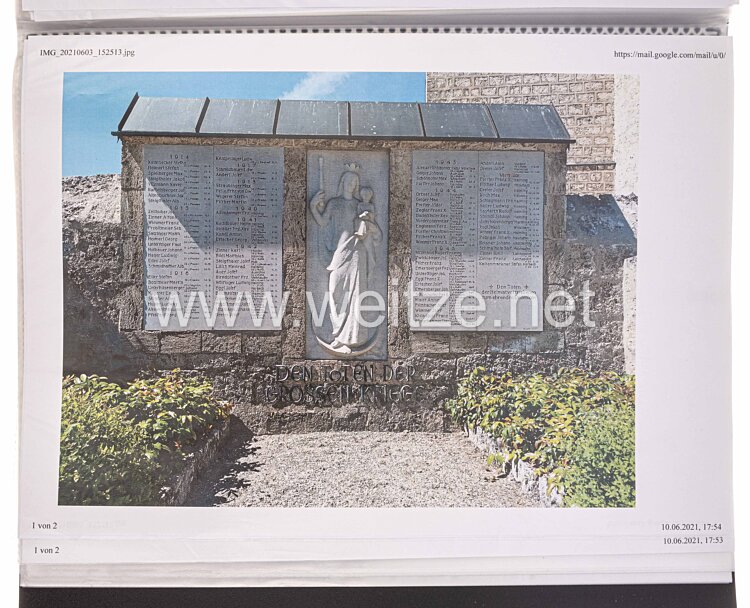
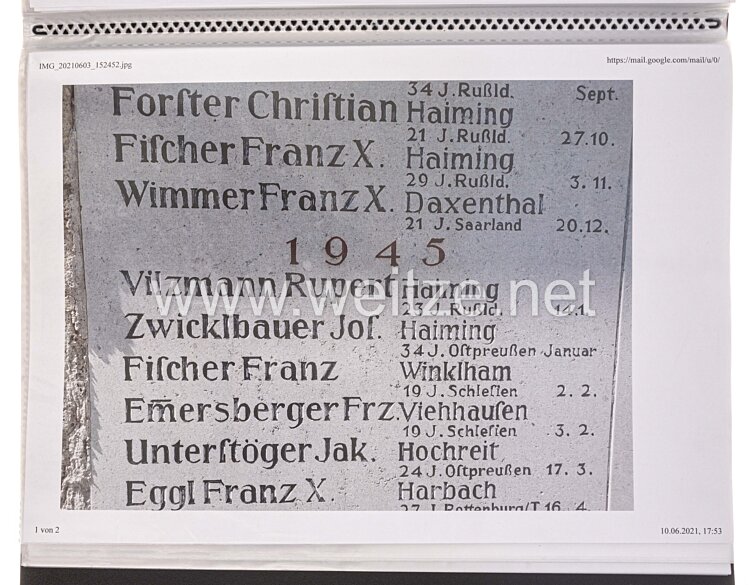
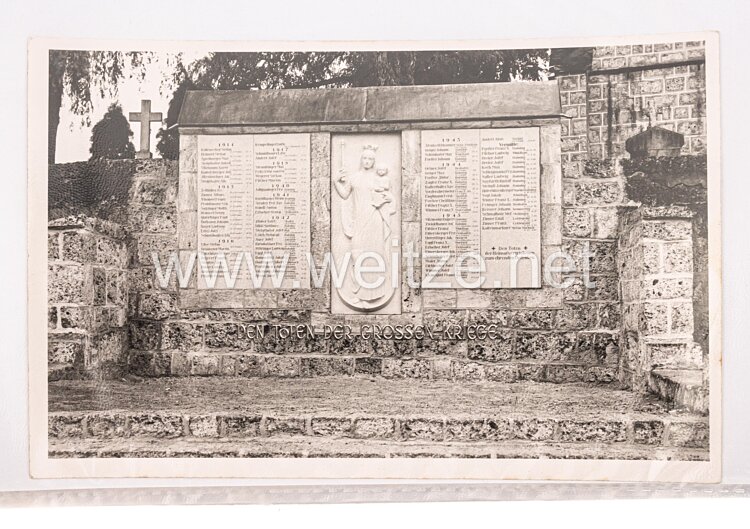
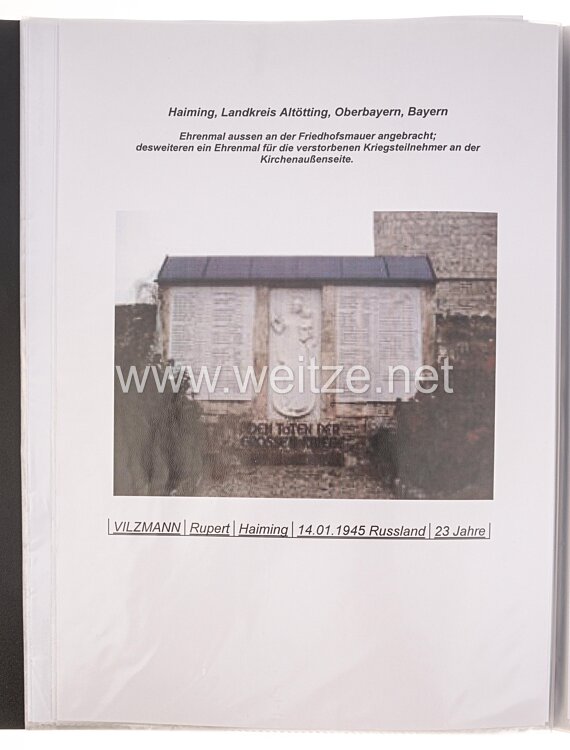
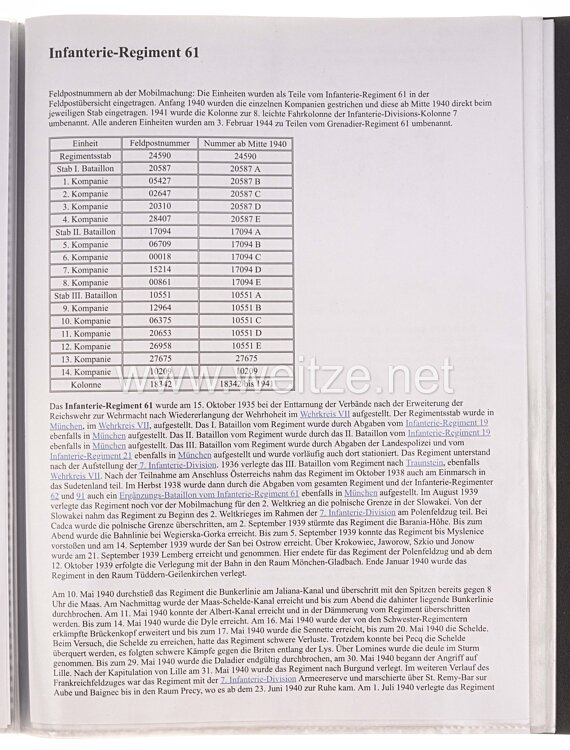
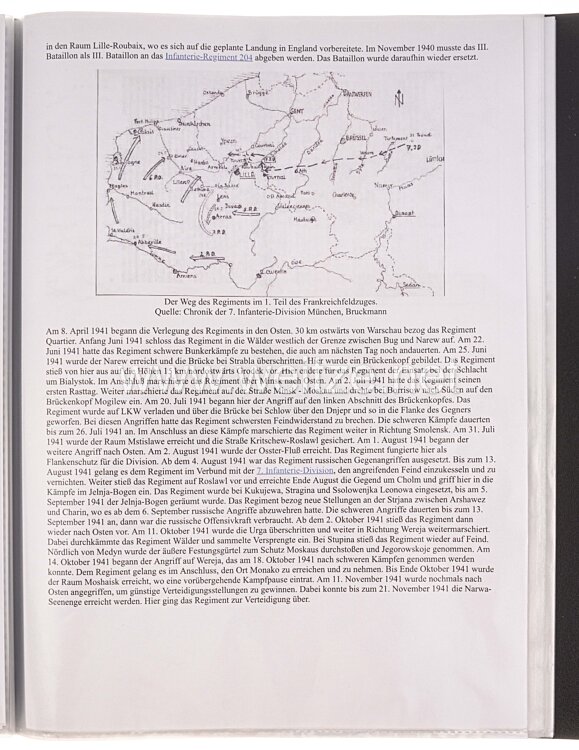
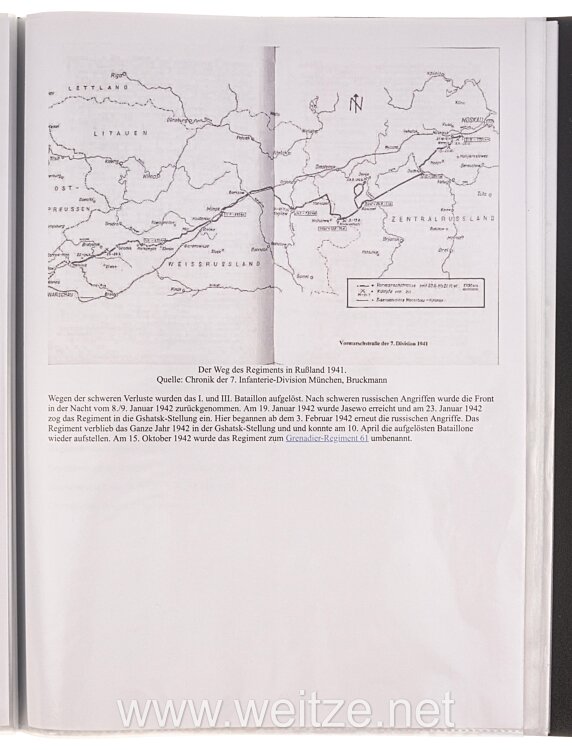
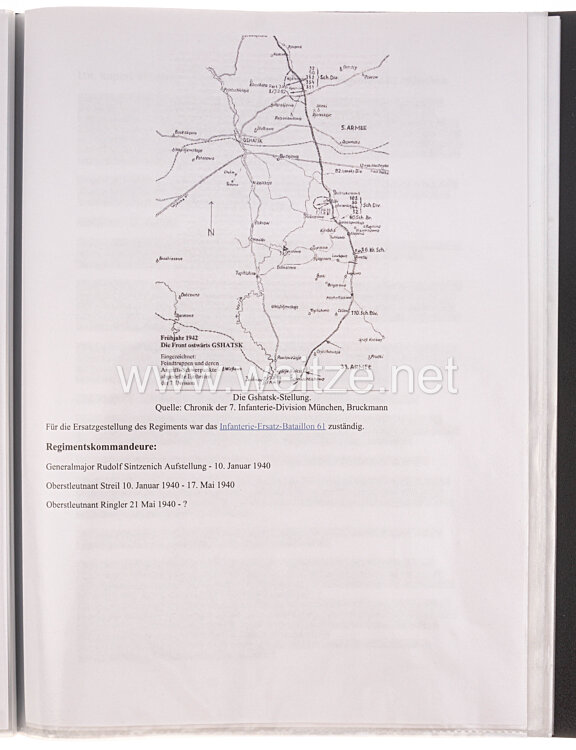
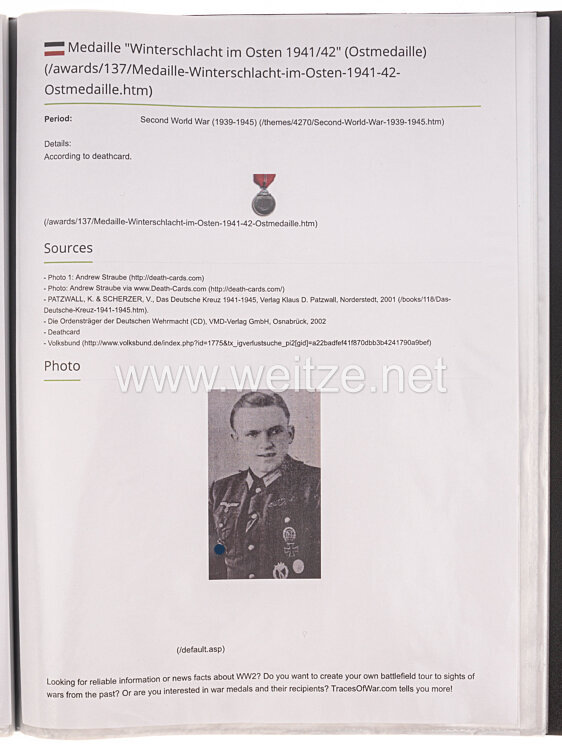
Included is the original death card with portrait photo of Lieutenant Vilzmann. Also modern color photos of the memorial plaque at the home cemetery as well as numerous research printouts about Infanterie-Regiment Nr. 61 as well as about Lieutenant Vilzmann and his awards.

459063

Wehrmacht Large Order, Uniform and Document Estate from the Possession of German Cross in Gold Recipient Lieutenant Vilzmann, III./Grenadier-Regiment Nr. 61

This uniform ensemble represents an exceptional collection of Second World War military decorations belonging to Hauptmann Friedrich Hösl, a highly decorated officer of Grenadier-Regiment 62 within the 7. Infanterie-Division. Born on 9 May 1920 in Füssen am Lech, Hösl served from October 1939 until war's end in this unit, progressing through a remarkable military career from enlisted soldier to Leutnant (1941), Oberleutnant (1943), and finally Hauptmann (1944).

The Feldbluse was manufactured by the renowned Munich military tailor Christian Schwarz & Sohn and bears the date 11 June 1942. It follows Wehrmacht regulations for officer's uniforms of the period, featuring a hand-embroidered breast eagle and hand-embroidered officer's collar tabs, both machine-sewn. The sewn-in shoulder boards display the regimental numbers “62” with white loops indicating the infantry branch color.

The most remarkable element of this uniform is the Deutsches Kreuz in Gold (German Cross in Gold) in cloth version, hand-sewn on the right breast. Instituted by Adolf Hitler on 28 September 1941, this decoration was created to fill the gap between the Iron Cross 1st Class and the Knight's Cross. The cloth version was officially available from June 1942, facilitating easier wear on combat uniforms with field-grey backing for the Army. Hösl received this award on 3 November 1943 for repeated acts of bravery in combat exceeding the Iron Cross 1st Class. Of the estimated 24,204 to 25,964 German Crosses in Gold awarded, Hösl belonged to an extremely exclusive circle.

Even rarer is the Ehrenblattspange des Heeres (Honor Roll Clasp of the Army), worn on the Iron Cross 2nd Class ribbon in the buttonhole. The metallic clasp version was only instituted on 30 January 1944, though the Honor Roll itself had been established in July 1941. Hösl was listed in the Honor Roll on 7 January 1944 and received the clasp on the same date. This decoration required prior possession of the Iron Cross 1st and 2nd Class, as well as an act of bravery above and beyond duty that did not justify a Knight's Cross and for which the German Cross in Gold had not already been awarded. Of all Wehrmacht and Waffen-SS personnel, only 4,556 received this distinction.

The Nahkampfspange in Silber (Close Combat Clasp in Silver) documents Hösl's participation in at least 20 days of close combat (for severely wounded; otherwise 25 days). This decoration, instituted on 25 November 1942 and manufactured by W.E. Peekhaus Berlin with maker mark “FLL”, was awarded on 20 December 1943. Of approximately 18 to 20 million Wehrmacht and Waffen-SS soldiers, only about 9,500 received the silver grade.

Additional decorations include the Eisernes Kreuz 1939 1. Klasse (Iron Cross 1st Class 1939) awarded 12 January 1942, the Infanterie-Sturmabzeichen in Silber (Infantry Assault Badge in Silver) from 30 November 1941 by maker S.H.u.Co. 41, and the Verwundetenabzeichen 1939 in Silber (Wound Badge 1939 in Silver) from 16 August 1943 by maker “100”, later upgraded to Gold on 15 January 1944. The Close Combat Clasp in Bronze was also awarded on 20 December 1943. The Iron Cross 2nd Class was conferred on 24 June 1941, and the Winter Campaign Medal East on 1 August 1942.

Infanterie-Regiment 62 was formed in 1935, mobilized in 1939, and fought in Poland, France, and from June 1941 on the Eastern Front, including the Gshatsk position during winter 1941/42 and Operation Citadel at Kursk in July 1943. On 15 October 1942, all German Army infantry regiments were redesignated “Grenadier-Regiment” by directive, thus the unit became Grenadier-Regiment 62, remaining part of the 7. Infanterie-Division.

Hösl served as company commander and battalion adjutant, identifiable by the aiguillette on the right shoulder. In 1944, his left leg was amputated following severe wounds, after which he was assigned to a tactical instructor position at a war school. He was released from the Wehrmacht on 28 July 1945 by the US XX Artillery Corps.

The ensemble also includes a Wehrmacht Heer Officer's Dagger M1935 by F.W. Höller, Solingen, a weapons manufacturer founded in 1866, registered in 1883, and continuing production until 1974. The uniform features a sewn-in slit for wearing the officer's dagger.

In 1957, the Federal Republic of Germany authorized wearing of de-nazified replacement versions of WWII decorations, with swastikas replaced by alternative symbols. The uniform and decorations in this ensemble were preserved as private property and documented with the Honor Roll certificate dated 7 January 1944, two reproduction photos of Hösl, and photocopies of his US prisoner-of-war questionnaire.

r