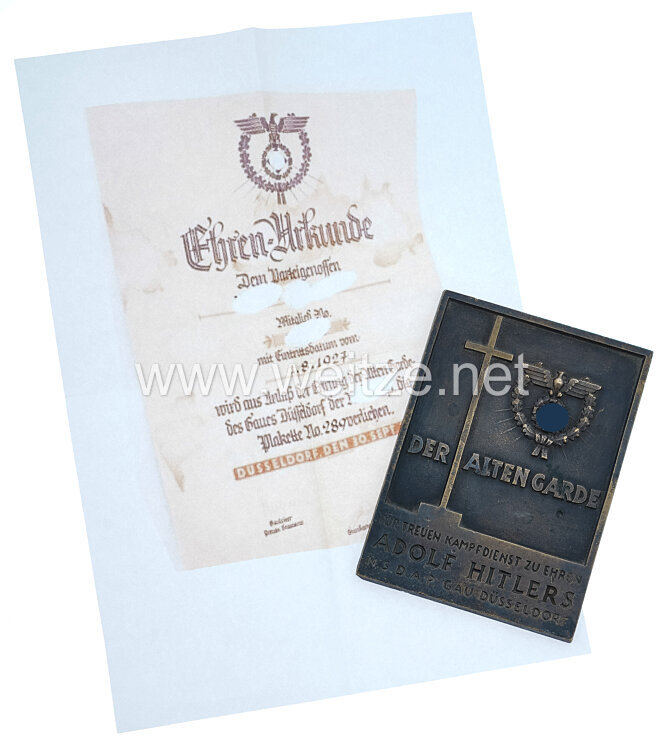
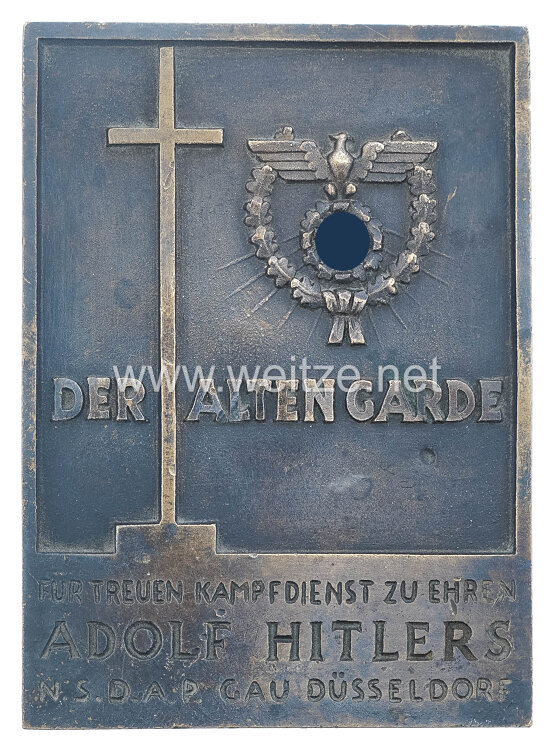
NSDAP Honor Plaque of the Alte Garde Gau Düsseldorf 1933

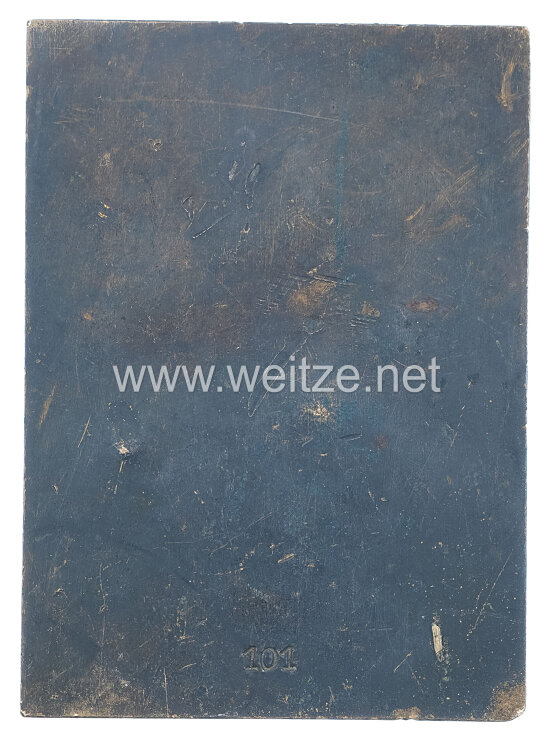
Bronze-toned, approximately 100 x 135 mm, depicting: sovereign eagle within oak leaf wreath and the cross of the Schlageter-National-Denkmal in Düsseldorf-Derendorf, with text “Der Alten Garde - Für treuen Kampfdienst zu Ehren Adolf Hitlers - NSDAP Gau Düsseldorf”, reverse side with stamped award number 101.
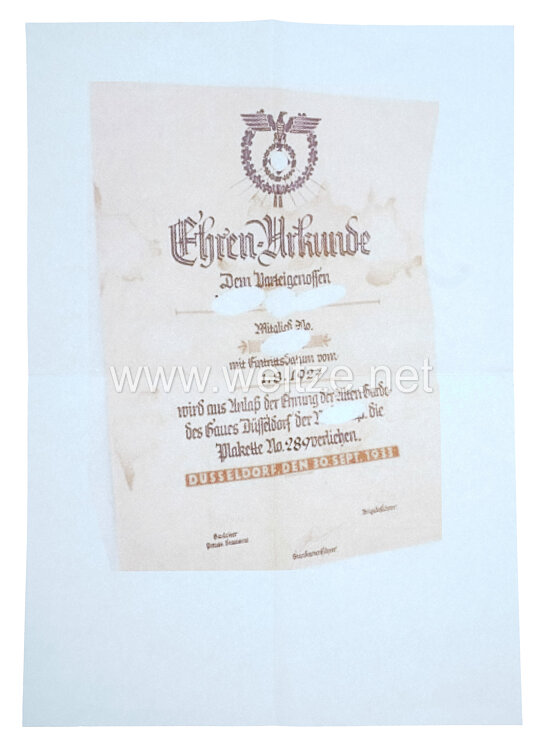
These plaques were presented on September 30, 1933 during a ceremonial event to the Alte Kämpfer of the Gau Düsseldorf of the NSDAP along with an honor certificate. The highest award number known to us at this time is No. 404.


467363
1.850,00

NSDAP Honor Plaque of the Alte Garde Gau Düsseldorf 1933

The NSDAP Honor Plaque of the Old Guard Gau Düsseldorf represents a significant artifact from the early National Socialist Party history in the Rhineland. This bronzed award was presented on September 30, 1933 in a ceremonial gathering to the so-called Old Fighters of the Gau Düsseldorf – those party members who had committed themselves to the movement before the NSDAP's seizure of power in January 1933.

The plaque, measuring approximately 100 x 135 mm, displays on its obverse the sovereign eagle of the NSDAP, framed by an oak leaf wreath, along with the distinctive cross of the Schlageter National Memorial in Düsseldorf-Derendorf. The inscription reads: “To the Old Guard – For Loyal Combat Service in Honor of Adolf Hitler – NSDAP Gau Düsseldorf”. The reverse bears the stamped award number, allowing for individual attribution.

The Schlageter Memorial, referenced on the plaque, commemorates Albert Leo Schlageter, a Freikorps fighter who was executed by French occupation forces in 1923 during the Ruhr occupation. The National Socialists transformed Schlageter into a martyr of their movement and erected the monumental memorial in Düsseldorf in 1931, which became an important pilgrimage site for the NSDAP in the Rhineland.

The term “Old Guard” in National Socialist terminology designated those party members who had joined the NSDAP before January 30, 1933, and frequently participated in the street battles of the Weimar Republic. This group enjoyed special prestige within the party and was honored with various badges and privileges. The conferral of such plaques at the Gau level complemented the Reich-wide awards and strengthened the regional identity of party members.

The Gau Düsseldorf was one of originally 43 Gaue into which the German Reich was organizationally divided after the seizure of power. The Gauleiters exercised far-reaching political and administrative power. The presentation of honor plaques in September 1933 occurred during a phase of intensive “Gleichschaltung” (coordination), in which the NSDAP consolidated its control at all levels of society.

The ceremony of September 30, 1933 was part of a comprehensive NSDAP strategy to honor the loyalty of early supporters through symbolic acts and awards while simultaneously constructing a mythical party history. Each plaque was presented together with a certificate of honor documenting the recipient's merits. The individual numbering – the highest currently known being number 404 – indicates that this award was relatively rare and reserved for only a limited circle of party members.

The craftsmanship of the plaque corresponds to the typical aesthetic of National Socialist awards: monumental symbolism, the combination of party emblems with regional references, and a quality of execution intended to underscore the ceremonial character of the presentation. The use of bronzed metal gave the object a solemn, historicizing character.

From a historical perspective, such plaques document the early consolidation phase of National Socialist rule and the importance the party attached to symbolic recognition of its supporters. Today they are important sources for researching NSDAP organizational history at the regional level and provide insight into the mechanisms of loyalty binding and ideological mobilization.

The rarity of this specific award – due to the limited number of presentations – makes it a significant testament to the history of Gau Düsseldorf and the early Nazi period in the Rhineland. It stands as an example of the numerous regional badges of honor with which the NSDAP consolidated its organizational structure and advanced its ideological penetration of society in the years after 1933.

r