Kriegsmarine - Tablecloth for an Officers' Mess
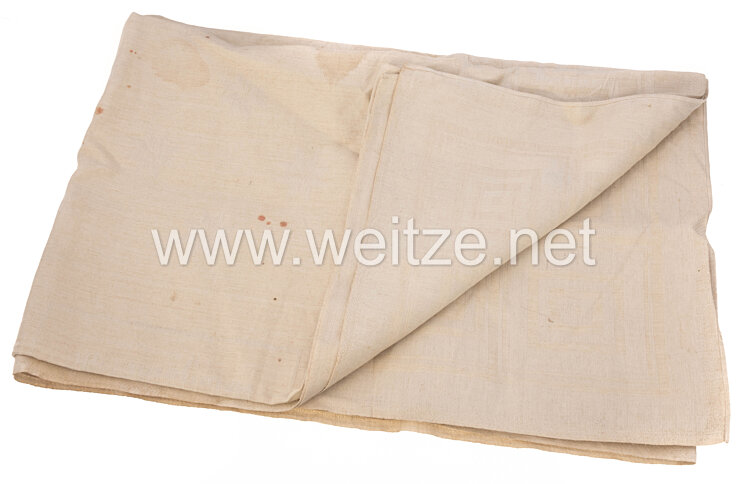
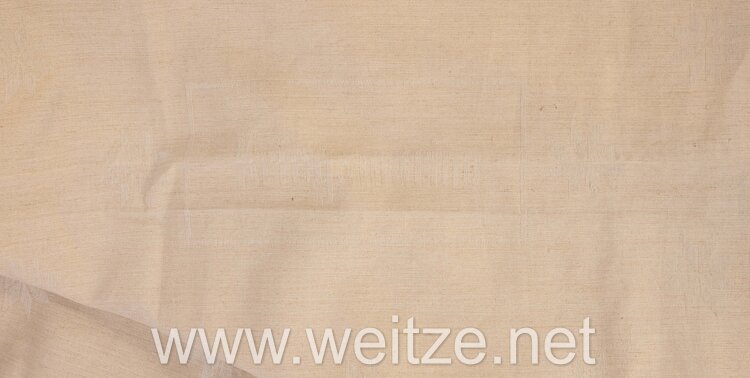
This tablecloth from a Kriegsmarine officers' mess represents a fascinating aspect of maritime military culture during World War II. Made of high-quality linen and measuring approximately 2.5 x 1.6 meters, this object illustrates the importance attached to formal social customs even in military contexts.
The Kriegsmarine, the official designation of the German naval forces from 1935 to 1945, maintained an extensive system of officers' messes both ashore and aboard larger warships. These facilities served not only for dining but fulfilled important social and hierarchical functions within the military community. The officers' mess was a place where strict military etiquette merged with comradely exchange.
The use of linen as a material was by no means a random choice. Linen was traditionally regarded as particularly durable, long-lasting, and representative. In the navy, linen also had a long tradition, as it was used for sails and other maritime purposes. The choice of this material for table linens in the officers' mess underscores the standards of quality and dignity attributed to these spaces.
The mess regulations of the Kriegsmarine detailed the social life of officers. These regulations, based on older imperial traditions of the Kaiserliche Marine (Imperial Navy), prescribed how the facilities were to be furnished, what etiquette was to be observed, and how formal meals were to proceed. Table culture played a central role in this. White linen tablecloths were standard for official meals and representative occasions.
In shore barracks and naval bases such as Kiel, Wilhelmshaven, Cuxhaven, or the naval garrisons on the Baltic Sea, officers' messes were often elaborately furnished. They had separate dining rooms, social rooms, and sometimes even libraries. The furnishings included not only furniture and tableware but also high-quality table linens that were regularly changed and professionally cleaned.
Even on larger warships such as battleships, cruisers, and destroyers, officers' messes existed with corresponding standards. Here, spatial conditions were naturally more confined, yet value was placed on appropriate furnishings. The tablecloths had to meet special requirements on board: they should be non-slip, easy to clean, and despite space limitations provide a dignified setting for meals.
The social function of the officers' mess can hardly be overestimated. Here, officers of different ranks met outside immediate service duties, fostering camaraderie, exchanging information, and integrating new officers. During formal dinners, so-called mess evenings, dining took place in full uniform or dress uniform. Such occasions naturally required appropriately representative table linens.
The care and management of mess furnishings was the responsibility of specially assigned personnel. In larger facilities, there were mess stewards, often non-commissioned officers or civilian employees, who were responsible for proper operations. The laundering and maintenance of textiles was a continuous task, especially under wartime conditions when resources became increasingly scarce.
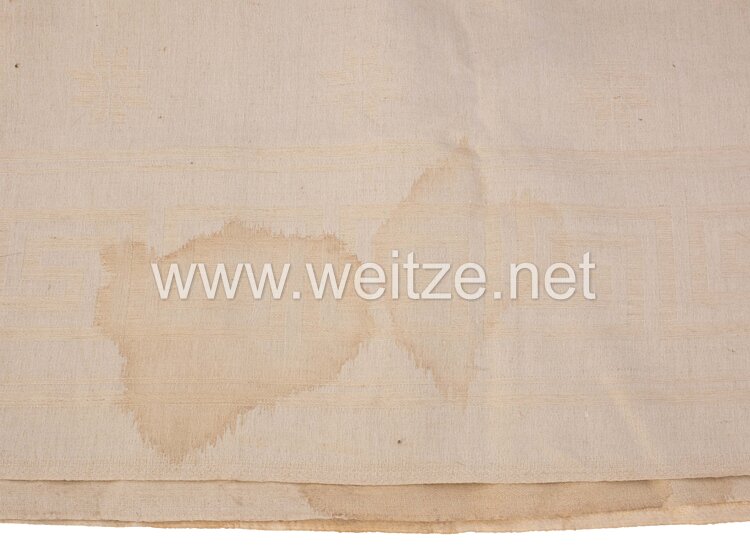
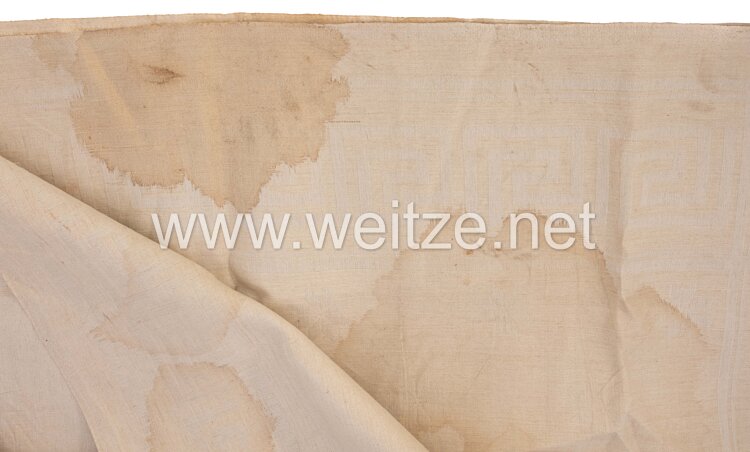
The preserved condition of many such objects often reflects their intensive use. Stains and signs of wear tell of numerous meals, social gatherings, and the daily life of naval officers. After the end of the war in 1945, many messes were dissolved, their furnishings scattered or taken as spoils of war.
Today, such textiles from Kriegsmarine messes are rarely preserved testimonies of a vanished military culture. They document not only material aspects but also social structures and values of the time. As museum objects or collectors' items, they provide insights into daily life beyond combat operations and remind us that even in war, certain forms and traditions were maintained.