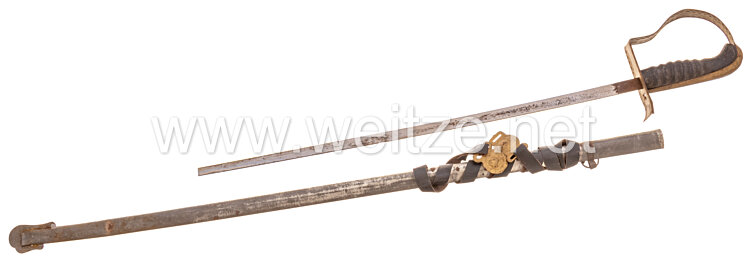
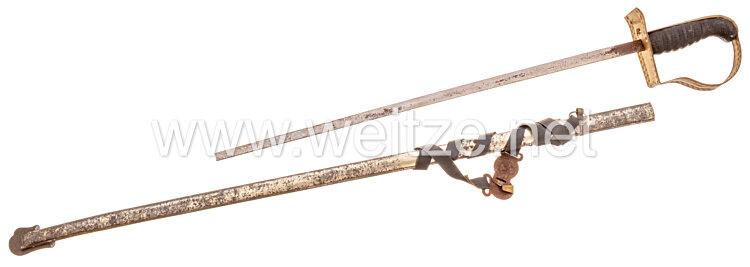
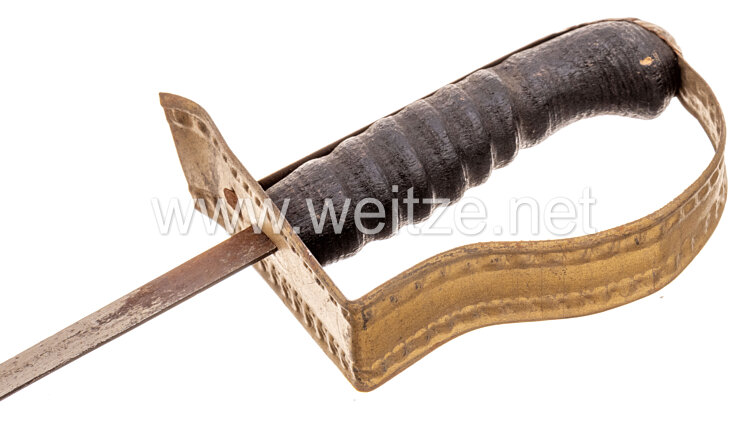
German Empire 1871-1918 “Children's Saber”
Children's Sabre from the German Empire (1871-1918)
This children's sabre from around 1900 represents a fascinating chapter in German military and social history during the German Empire. Such objects were far more than mere toys – they formed an integral part of the militaristic education and socialization of young boys in Wilhelmine society.
Historical Context and Social Significance
The era of the German Empire (1871-1918) was characterized by pronounced militarization of society. After the founding of the Reich in 1871 under Kaiser Wilhelm I and Chancellor Otto von Bismarck, a culture developed in which military values and virtues such as discipline, obedience, and patriotism enjoyed the highest social recognition. This development intensified further under Kaiser Wilhelm II (1888-1918).
In this social climate, children, particularly boys from middle-class and aristocratic families, were introduced to military symbols and behaviors from an early age. Children's sabres, uniforms in children's sizes, and military toys served to prepare them for later military service and their role as future defenders of the fatherland.
Production and Materials
The present specimen shows the typical simple construction from sheet iron, characteristic of mass production of this period. Unlike genuine military sabres, which were forged from high-quality steel, cheaper materials were used for children's sabres. The blades were often stamped or cut from thin sheet iron, making production affordable while providing a certain degree of safety for young wearers.
Production of such children's sabres occurred primarily in traditional blade-manufacturing regions such as Solingen in the Rhineland, but also in other industrial centers of the Reich. Smaller manufactories and workshops produced these items in large quantities, as demand was considerable, especially around the turn of the century and in the years before World War I.
The Field Sash: Symbol of Military Tradition
Of particular significance is the field sash (Feldbinde) belonging to the sabre. This sash or baldric served not only the practical purpose of carrying the sabre but was also an important distinguishing feature. In actual military hierarchy, field sashes identified officers and had different colors and designs depending on the regiment. Children's sabres imitated these details to give young wearers the feeling of being part of military tradition.
Use and Social Function
Children's sabres were worn on various occasions: at patriotic celebrations, the Kaiser's birthday, Sedantag festivities (commemorating the victory at Sedan in 1870), or during parades of youth organizations. Photographs from the period frequently show boys in sailor suits or small uniforms with sabres at their sides – a typical image of the Wilhelmine bourgeoisie.
These objects also served to practice military gestures and postures. Children learned the correct handling of the sabre, saluting according to military custom, and appropriate body posture. This early conditioning was intended to facilitate later integration into the military system when young men had to begin their military service at around 20 years of age.
Condition and Preservation
The described specimen shows typical signs of use and aging. The broken blade tip indicates intensive use – these sabres were actual objects used by children, not purely display pieces. The simple sheet metal construction was naturally susceptible to damage, which underscores the authenticity and historical significance of such pieces.
The End of an Era
With the end of World War I in 1918, the abdication of Kaiser Wilhelm II, and the proclamation of the Weimar Republic, this form of militaristic child education initially lost significance. War experiences had traumatized many families, and the Republic attempted to establish democratic values. Nevertheless, such objects remained preserved in many households – as mementos of a vanished era.
Today, children's sabres from the Imperial period are important cultural-historical witnesses that provide insight into the mentality and educational history of a past epoch. They document how social norms and political systems shaped the socialization of succeeding generations and what role symbols and rituals played in this process.