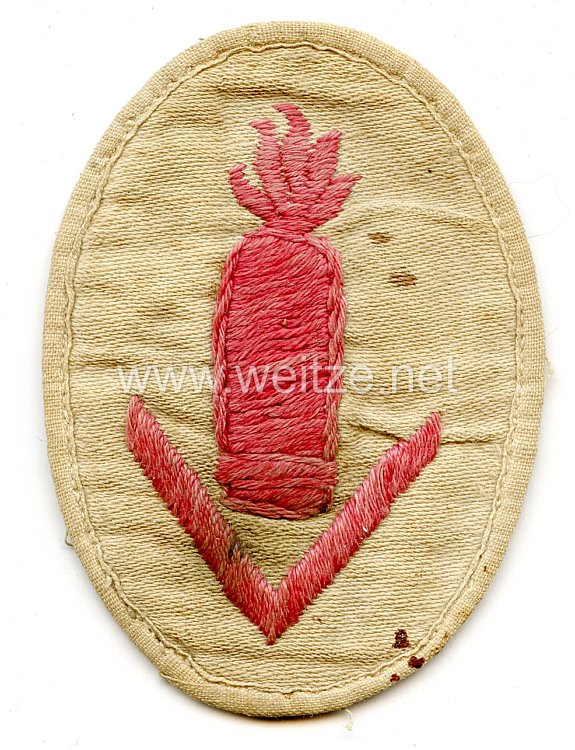
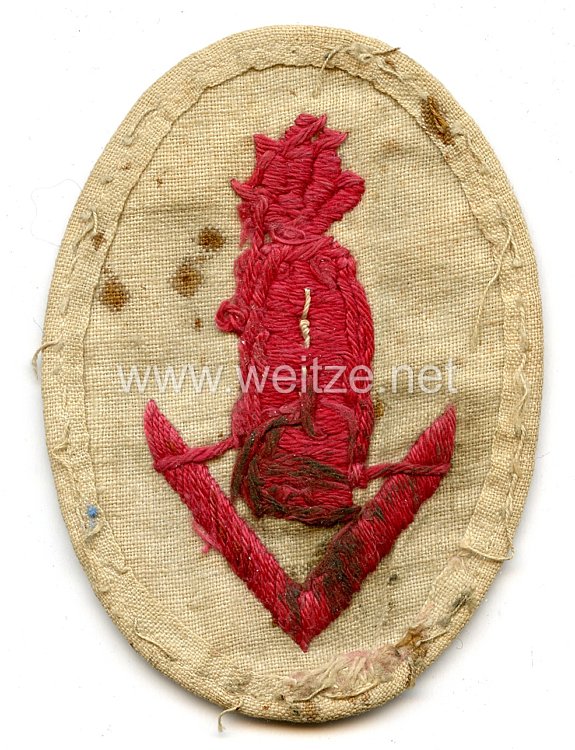
Reichsmarine / Kriegsmarine Sleeve Insignia Gun Director for Naval and Anti-Aircraft Artillery Small Vessels GFIII
The sleeve badge for Gun Captain III (GFIII) of the Reichsmarine and later Kriegsmarine represents a significant example of maritime specialist insignia used during the Weimar Republic and Third Reich to identify specialized functions within the German naval forces.
The Reichsmarine, established in 1921 after World War I, developed a complex system of badges and rank insignia that reflected the various technical specializations aboard warships. Gun captains played a central role in the combat effectiveness of every vessel. With the renaming to Kriegsmarine in 1935, these traditions were continued and further developed.
This badge for surface and anti-aircraft artillery on smaller vessels identified a highly specialized rating. The distinction between different gun captain classes (GFI, GFII, GFIII) was based on the size and type of vessels as well as the complexity of weapons systems. GFIII designated gun captains on smaller units such as fast attack craft, minesweepers, submarine chasers, or other auxiliary vessels.
The hand-embroidered execution of this badge indicates high-quality workmanship, typically used for officers or for the white summer uniform. Hand-embroidered badges were more elaborate to produce than machine-made or woven variants and were often manufactured by specialized military insignia firms. Well-known manufacturers of such badges included companies like BeVo (Bandfabrik Ewald Vorsteher), although hand-embroidered versions were frequently also made by local master tailors.
The designation for the white blouse is an important detail, as the Kriegsmarine possessed various uniform variants. The white summer uniform was worn in warmer climates or during the summer months. The badges for this uniform differed in material and coloring from those for the dark blue service dress.
Training to become a gun captain was demanding and included both theoretical and practical components. Gun captains had to master not only weapons operation but also possess knowledge of ballistics, fire control, target identification and tracking. On smaller vessels, the dual qualification for surface and anti-aircraft artillery held particular importance, as these ships were often equipped with universally deployable guns or had limited crews that had to fulfill multiple tasks.
The Flak artillery (anti-aircraft guns) gained increasing importance during World War II as the threat from enemy air forces continuously grew. Smaller vessels were particularly vulnerable and therefore required well-trained anti-aircraft gun captains. The development of light and medium Flak guns such as the 2-cm-Flak 30/38 or the 3.7-cm-Flak made their deployment possible even on smaller units.
The wearing system of these sleeve badges was precisely regulated in the corresponding service regulations. They were usually worn on the left upper arm, with the exact position depending on the respective uniform type and the wearer's rank. The combination of various badges made it possible to recognize at a glance the qualifications and areas of responsibility of a crew member.
Today, such hand-embroidered sleeve badges are sought-after collector's items that provide important insights into the organization and structure of the Kriegsmarine. They document the high degree of specialization and professionalization of the German naval forces of this period. The indicated condition 3 suggests a used but still well-preserved specimen showing the typical signs of wear from its era.
The study of such military-historical objects contributes to understanding the maritime history of the 20th century and enables us to comprehend the technical and organizational developments of the naval forces of that time. At the same time, they serve as reminders for critical engagement with this chapter of German history.