Mecklenburg-Schwerin Black Parade Plume for the Pickelhaube Enlisted Men in Grenadier-Regiment Nr. 89, I. and III. Battalion or Dragoner-Regiment Nr. 17

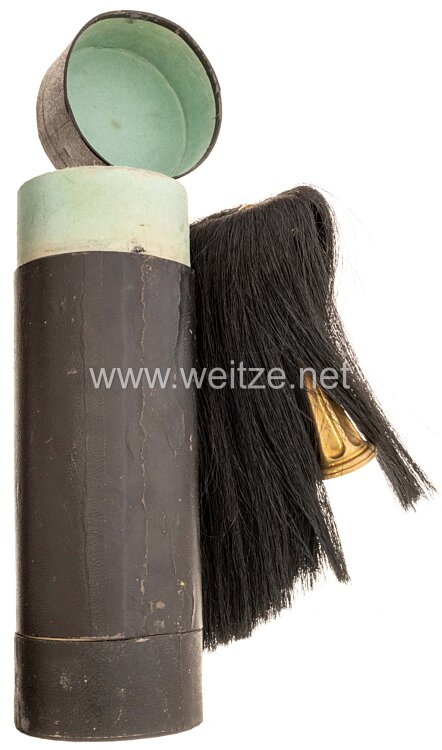
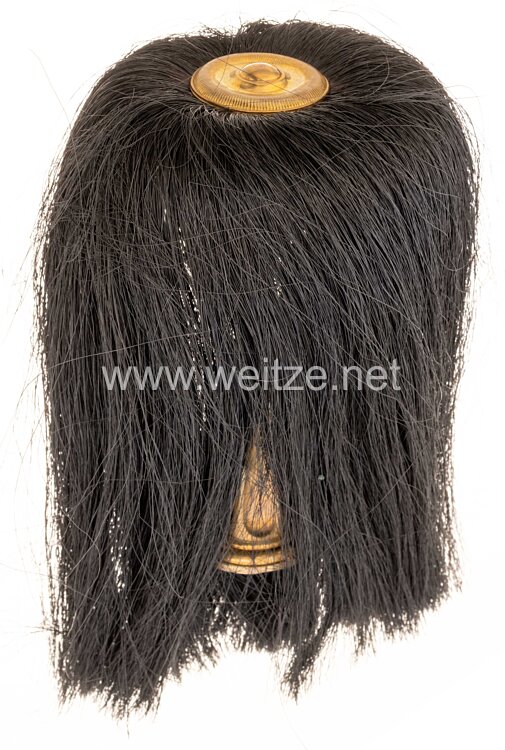
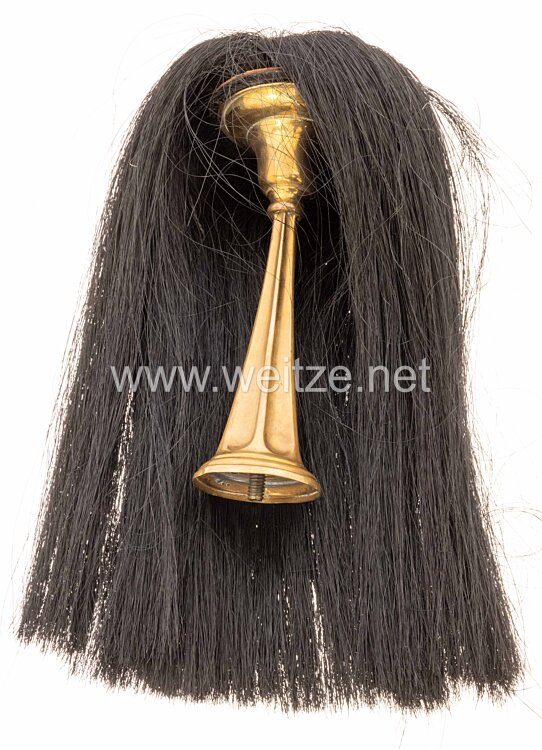
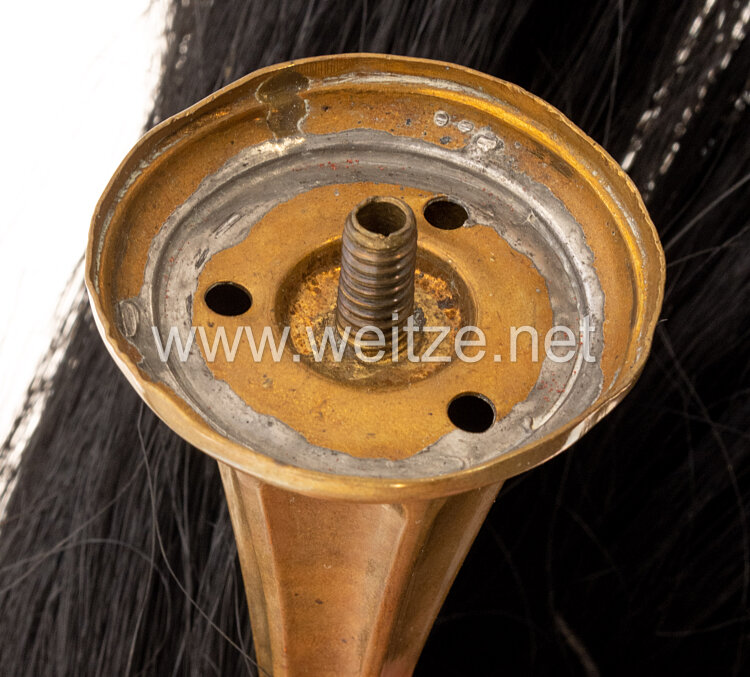
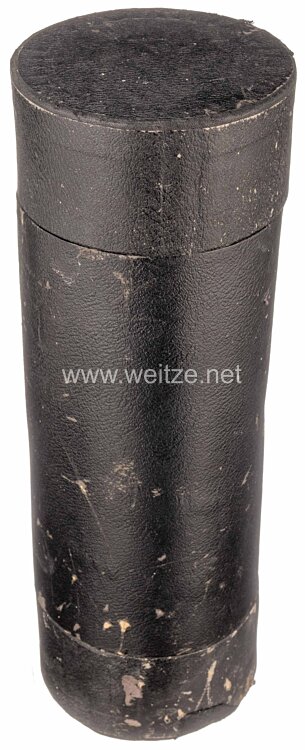
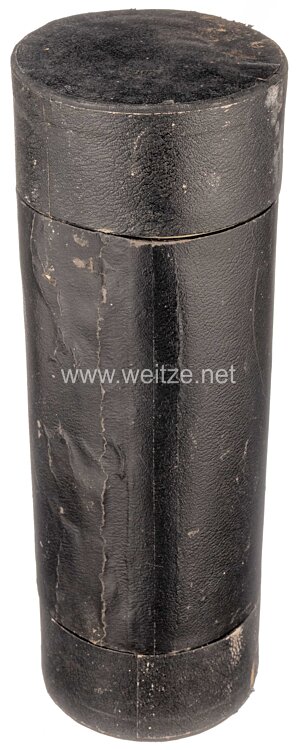
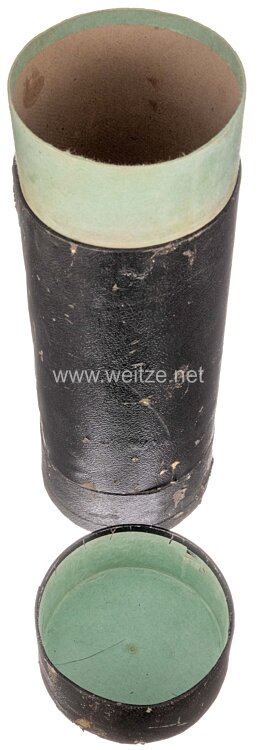
Circa 1900. The parade plume made of black horsehair with fluted brass socket, socket length 16 cm, opening diameter 5 cm. In original cardboard box. Condition 2.
454862
1.200,00

Mecklenburg-Schwerin Black Parade Plume for the Pickelhaube Enlisted Men in Grenadier-Regiment Nr. 89, I. and III. Battalion or Dragoner-Regiment Nr. 17

The black parade plume for the Pickelhaube represents a significant element of Prussian and Mecklenburg military tradition around the turn of the 20th century. This specific example was manufactured for enlisted men of the Grenadier Regiment No. 89 (1st and 3rd Battalions) or the Dragoon Regiment No. 17 in the Grand Duchy of Mecklenburg-Schwerin.

Grenadier Regiment No. 89 was a unit of the Prussian Army closely associated with Mecklenburg-Schwerin. Following the army reforms and wars of unification in the 19th century, the Mecklenburg contingents were integrated into the Prussian Army but retained certain regional distinctions in their uniforms. The regiment carried forward the tradition of grenadiers, those elite infantrymen originally tasked with throwing hand grenades.

The Dragoon Regiment No. 17, also from Mecklenburg-Schwerin, represented the mounted cavalry. Dragoons were originally mounted infantry but evolved during the 19th century into a full-fledged cavalry branch. While the uniforms of these two regiment types differed considerably, the black parade plume was a unifying element for certain occasions.

The parade plume described here consists of black horsehair, the traditional material for such military ornaments. The horsehair was carefully selected, dyed, and bound into a dense plume that was attached to the tip of the Pickelhaube. The fluted brass socket with its characteristic grooves served not only for attachment but also for aesthetic purposes. With a length of 16 centimeters and an opening diameter of 5 centimeters, this socket corresponds to the standardized measurements of the Wilhelmine era.

The use of black horsehair had both practical and symbolic reasons. Black was the traditional color for infantry and dragoon regiments in many German states. Unlike the white parade plumes used, for example, by cuirassier regiments, the black plume signaled membership in specific troop types. The color was also less susceptible to visible soiling than lighter variants.

The Pickelhaube itself, the characteristic helmet with the spike, was introduced in Prussia in 1842 and quickly spread throughout the German states and beyond. Originally made of leather, it offered some protection but was primarily a mark of identification. The spike could be replaced during parades with the parade plume, giving the helmet a significantly more imposing and ceremonial appearance.

Around 1900, the dating of this specimen, the German Empire was in the high phase of the Wilhelmine era under Kaiser Wilhelm II. This was a time of intense military tradition and display of splendor. Parades and military ceremonies played a central role in public life, and the corresponding equipment had to meet the highest aesthetic standards.

The fact that this parade plume is preserved in its original box underscores its historical significance. Such storage boxes were standardized and often bore manufacturer information or military markings. They served to protect the delicate horsehair ornament during storage and transport.

The distinction between the 1st and 3rd Battalions of the Grenadier Regiment is noteworthy. Regiments were typically divided into several battalions that could be stationed at different locations. Each battalion could have slight differences in equipment, although the basic uniforms were uniform.

The indicated Condition 2 suggests very good preservation, which is remarkable for organic materials like horsehair and for objects over a hundred years old. Horsehair is susceptible to moth damage, drying out, and mechanical damage, making well-preserved specimens rare today.

Such parade plumes became obsolete after World War I when the Pickelhaube disappeared as headgear for German armed forces. They were replaced by more practical steel helmets that better met the requirements of modern warfare. Today, these objects are important testimonies to a bygone military culture and are equally valued by collectors and museums.