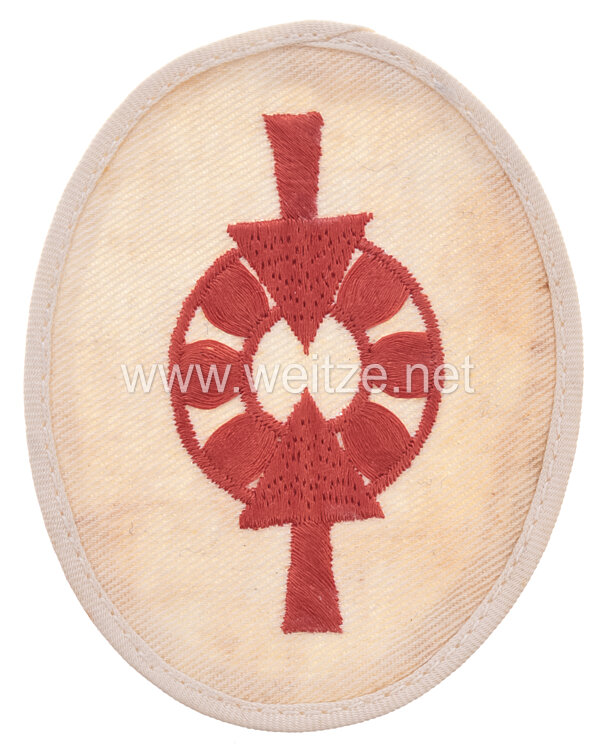
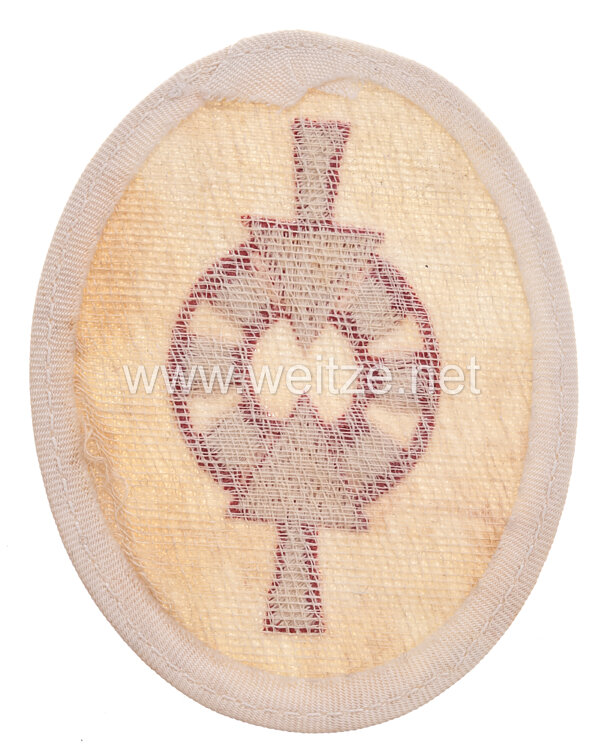
Kriegsmarine Sleeve Insignia Special Training Gun Director Petty Officer (Troop Training)
The Kriegsmarine sleeve badge for special training as Waffenleitvormann (Gun Direction Petty Officer) represents a fascinating testament to the specialized training systems of the German Navy during World War II. These badges were awarded to non-commissioned officers who had completed advanced technical training in the field of weapons direction – a highly specialized area of naval warfare.
The Kriegsmarine placed great emphasis on identifying specialized skills and qualifications of its personnel. The system of career badges and special training insignia developed during the 1930s and was continuously refined. The position of Waffenleitvormann was of particular importance, as these petty officers were responsible for coordinating and controlling ship artillery – a task requiring technical understanding, mathematical abilities, and experience in fire direction.
The badge was worn on the white summer blouse, indicating its use during warmer months or in southern waters. The Kriegsmarine strictly distinguished between different uniform variants, each with specific wearing regulations. Sleeve badges were typically attached to the left upper arm and complemented rank insignia and any trade badges present.
During World War II, weapons direction technology represented one of the most modern areas of naval warfare. German warships were equipped with advanced fire control systems using optical and, later, radar-assisted range finding. The Waffenleitvormann had to understand the complex calculations necessary for hit probability against moving targets at sea. This included consideration of factors such as ship movement, wind conditions, projectile ballistics, and target speed.
Training to become a Waffenleitvormann took place in specialized naval schools and included theoretical instruction as well as practical exercises. Graduates of these courses formed the technical elite of Kriegsmarine petty officers. The badge served not only as external identification of this qualification but also as an expression of pride and professional identity.
The craftsmanship of such badges varied depending on the time of manufacture and manufacturer. Early examples often showed higher quality in material and workmanship, while later wartime production increasingly suffered from material shortages. Badges were typically produced in hand embroidery or machine embroidery on dark blue cloth and displayed symbols characteristic of the particular specialization.
The wearing regulations of the Kriegsmarine were detailed in various dress orders. The naval dress regulations specified exactly when which badge was to be worn and in what position it was to be attached. These regulations were strictly monitored, and violations were considered disciplinary offenses.
After the war's end, many of these badges were taken by Allied soldiers as souvenirs or destroyed by German naval personnel for security reasons. Today, authentic examples are sought-after collectibles that provide important insights into the organizational and training structures of the Kriegsmarine. Condition 2 indicates a well-preserved example showing light signs of use but still retaining all essential details.
Research into such military historical objects contributes to understanding the technical and organizational development of naval warfare in the 20th century. They document the increasing specialization and professionalization of military careers as well as the importance attributed to technical expertise in modern naval forces.