Kriegsmarine Sleeve Insignia Career Path Quartermaster's Mate
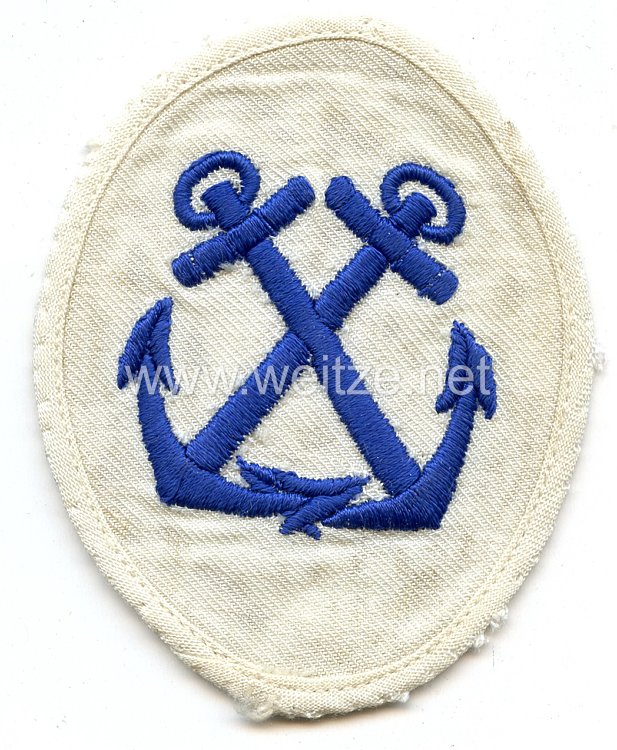
The Kriegsmarine sleeve badge for Steuermannsmaat represents a fascinating testament to the complex rank insignia system of the German Kriegsmarine during World War II. This particular badge, designed for wear on the white blouse, identified a non-commissioned officer in the career group of quartermasters, who were responsible for navigation and course plotting aboard warships.
The Kriegsmarine, which existed as the official naval force of the German Reich between 1935 and 1945, developed a sophisticated system of rank badges and career insignia. Following the official reintroduction of conscription in 1935 and the associated buildup of German armed forces under the National Socialist regime, the Reichsmarine was renamed Kriegsmarine. The new rank insignia system, while drawing on traditional imperial models, also incorporated specific innovations.
The rank of Steuermannsmaat was a non-commissioned officer rank within the quartermaster career path. The word “Maat” traditionally designated a non-commissioned officer without a sword knot in the German Navy, comparable to an Unteroffizier in the Army. The quartermaster career path belonged to the specialized career tracks of the Kriegsmarine and comprised specialists in navigation, chart work, compass and navigation instruments, as well as general seamanship duties related to ship handling.
The sleeve badges of the Kriegsmarine were worn on various uniform items, with distinctions made between the blue working and dress uniforms and the white summer uniforms. The present badge was specifically designed for the white blouse, which was worn primarily during summer months or in warmer climates. The white uniforms were a characteristic feature of the Navy and clearly distinguished sailors from members of other Wehrmacht branches.
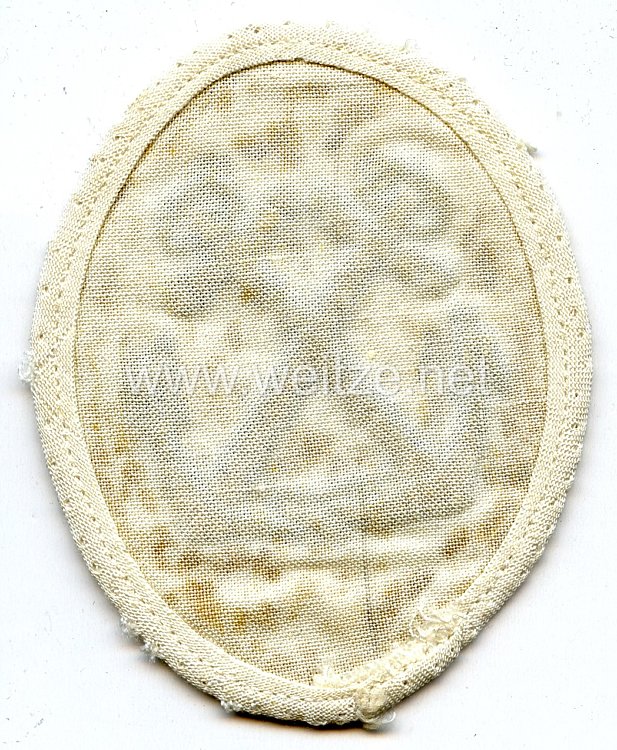
The machine-embroidered execution was common during World War II and represented a rational production method. In contrast to hand-embroidered badges, which were often of higher quality and detail accuracy, machine production enabled faster and more cost-effective manufacturing. This was particularly important given the growing demand for uniform insignia during the war years.
The career badges of the Kriegsmarine were worn according to the Dress Regulations for the Kriegsmarine, which contained precise instructions regarding placement, size, and execution. Quartermasters typically wore their career badges on the upper arm of the left side, with the specific design indicating the particular specialization within the career path. The badges usually consisted of stylized representations of navigation instruments or maritime symbols, typically mounted on an oval or round background.
The importance of the quartermaster career path within the Kriegsmarine cannot be overstated. In an era when navigation still relied largely on traditional methods and electronic navigation aids were only at the beginning of their development, well-trained quartermasters were essential for the safe handling of warships. They had to master not only the art of celestial navigation but also be familiar with nautical charts, tide calculations, and the operation of various navigation instruments.
Training to become a Steuermannsmaat took place in specialized naval schools and included both theoretical and practical components. Trainees had to acquire solid knowledge in mathematics, astronomy, and meteorology and combine this with practical exercises at sea. After successful training and demonstration of the required skills, the rank of Steuermannsmaat was awarded, which was associated with wearing the corresponding career badge.
Today, such sleeve badges are important military-historical collectibles that provide insight into the organization and structure of the Kriegsmarine. They document not only the rank insignia system but also the various specializations and career paths that existed within the Navy. For military historians and collectors, they represent valuable sources for understanding the functioning and hierarchy of the German naval force during World War II.
The condition and authenticity of such pieces are crucial factors for collectors and researchers. Original period badges can be distinguished from later reproductions through various characteristics, including the type of thread used, the quality of embroidery, and the materials employed. The machine embroidery typical of wartime production shows specific characteristics that help authenticate these historical artifacts.