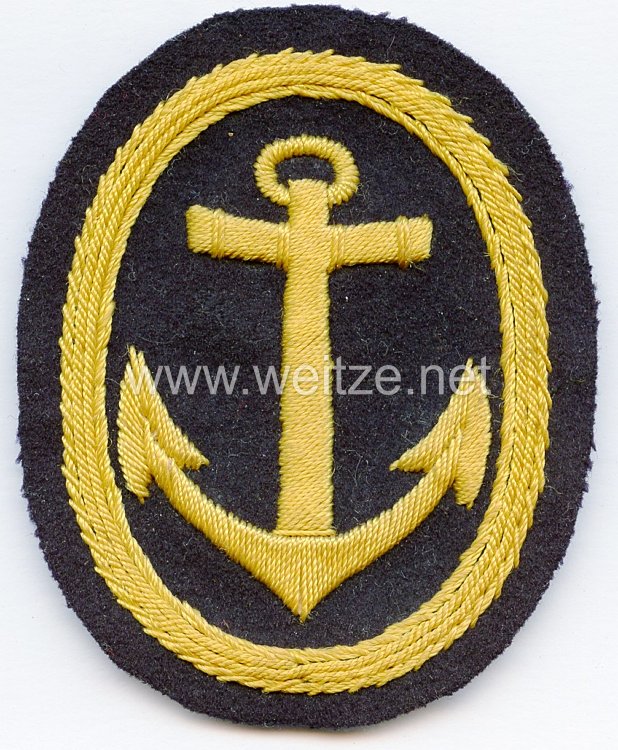
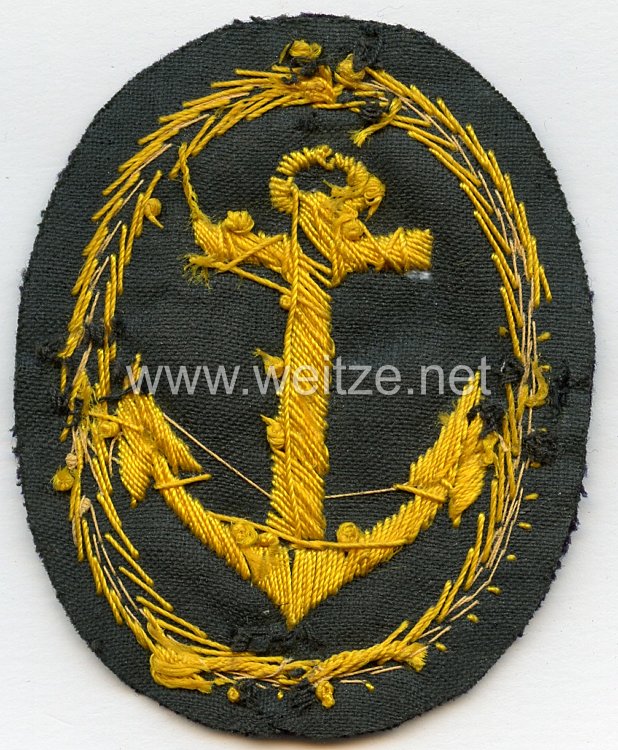
Imperial German Navy Sleeve Insignia for a Paymaster Applicant

for the blue shirt, worn. Condition 2.
395461
80,00

Imperial German Navy Sleeve Insignia for a Paymaster Applicant

The sleeve badge for a Paymaster Candidate (Zahlmeisterapplikant) of the Imperial German Navy represents a fascinating testament to the hierarchical structure and visual rank order that characterized German naval warfare during the Wilhelmine era. This particular badge was worn on the blue work shirt and served to identify a young naval officer in training to become a paymaster.

The Imperial German Navy (Kaiserliche Marine), founded in 1871 following German unification under Emperor Wilhelm I, developed within a few decades from a relatively modest coastal defense force into one of the world's most powerful naval fleets. Under the aegis of Grand Admiral Alfred von Tirpitz and with the enthusiastic support of Kaiser Wilhelm II, the German Empire pursued an ambitious naval expansion that directly influenced the European balance of power and ultimately contributed to maritime rivalry with Great Britain.

The Zahlmeisterapplikant was a specific rank within the administrative officers of the navy. The term “Applikant” designated an aspirant or candidate who was still in the training phase. These young men typically had already completed commercial or administrative education and were now undergoing special naval-specific training to enter service as full-fledged paymasters in the fleet.

The paymasters themselves formed an indispensable part of the naval organization. They were responsible for financial administration, payroll, provisions organization, material management, and other administrative duties aboard warships. While the captain and sea officers were responsible for navigation and combat operations, the paymaster corps ensured that the logistical and economic foundation of ship operations was maintained.

The sleeve badge described here was worn on the blue shirt, indicating service dress for daily duties. The Imperial Navy employed a differentiated system of uniforms and badges that distinguished between occasion, rank, and branch of service. While parade uniforms featured elaborate embroidery and golden braiding, work service uniforms were more pragmatically designed but still had to make the clear rank hierarchy recognizable.

The sleeve badges of administrative officers differed from those of sea officers through specific features. While sea officers wore golden stripes, administrative officials often used darker or differently colored markings. The precise execution and design of these badges were detailed in the uniform regulations of the Imperial Navy, which were regularly updated to meet the changing needs of the expanding fleet.

Training to become a paymaster was demanding and lasted several years. Candidates had to acquire not only commercial and administrative knowledge but also learn the specific regulations and practices of the navy. This included knowledge of naval law, supply management, accounting according to naval-specific regulations, and the peculiarities of administration within the hierarchical structure of a warship.

The condition of the described object is given as “2”, which in the usual rating scale for military antiques indicates a well-preserved, worn piece that shows authentic signs of use. Such original pieces are today of particular value to collectors and historians, as they represent immediate material testimonies of German naval history.

The Imperial Navy existed until the end of World War I in 1918. Following the November Revolution and the abdication of Kaiser Wilhelm II, it was transformed into the Reichsmarine of the Weimar Republic. The uniform traditions and rank insignia underwent significant changes, making objects from the imperial era historically clearly delineated documents of a specific epoch.

For military-historical research, such sleeve badges offer valuable insights into the everyday reality of naval organization beyond the often foregrounded great naval battles and strategic decisions. They remind us that a modern naval fleet was based on a complex network of administrative and logistical structures maintained by specialized professionals such as paymasters.

The existence of distinct insignia for candidates in training also illustrates the meticulous attention to hierarchy and gradation that characterized the Imperial Navy. Every stage of professional development was visibly marked, creating a transparent system that allowed instant recognition of an individual's position within the organizational structure. This was essential for maintaining discipline and order aboard ships where hundreds of men from different branches and ranks had to function as a cohesive unit.

r