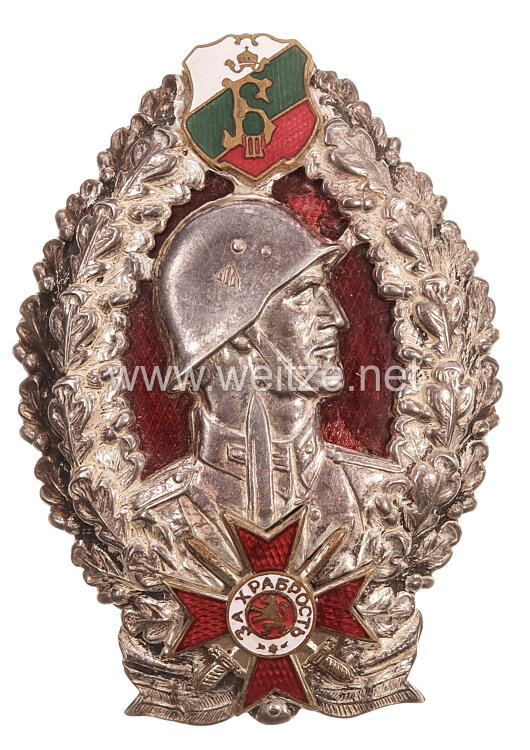
Bulgaria World War II Infantry Assault Badge in Silver
The Bulgarian Infantry Assault Badge in Silver from World War II represents a fascinating chapter in the military decoration history of an often-overlooked participant in the European conflict. Bulgaria, the kingdom under Tsar Boris III, found itself in a complex geopolitical situation during World War II and joined the Tripartite Pact on March 1, 1941.
The introduction of combat badges by the Bulgarian military followed the example of the German Wehrmacht, with which Bulgaria was closely allied. The Infantry Assault Badge was created as recognition for exceptional achievements in infantry combat and was intended to honor the bravery and dedication of Bulgarian soldiers. This decoration was typically awarded to soldiers who had proven themselves in direct combat operations, with specific criteria such as participation in a certain number of combat engagements that had to be fulfilled.
The material design of these badges reflects the economic realities of wartime. The present example consists of silver-plated base metal, a common practice during the war years, as precious metals were scarce and reserved for war-essential purposes. The partial enameling gives the badge its characteristic coloring and highlights certain elements, which was typical for military decorations of that era.
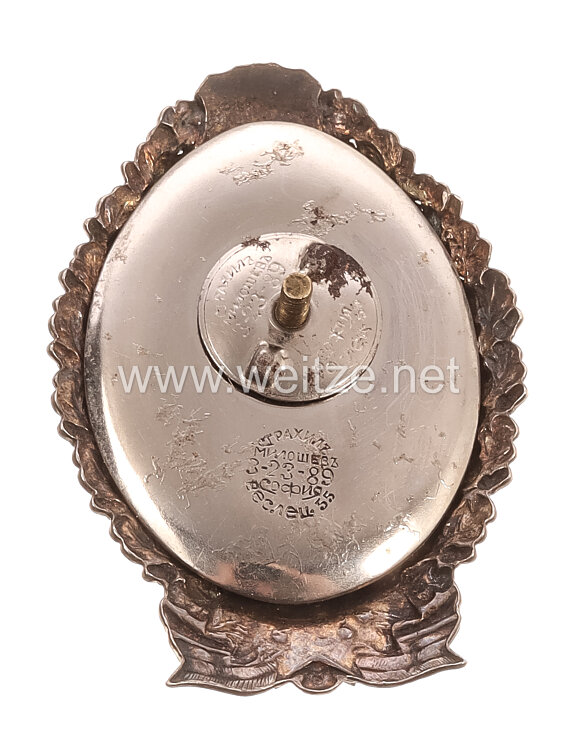
The manufacturer's marking on the reverse is of particular historical interest. Bulgarian orders and decorations were produced by various workshops, both domestically and occasionally in Germany or other allied countries. Manufacturer markings allow collectors and historians to identify production sites and verify the authenticity of pieces.
Bulgaria's military role in World War II was primarily concentrated in the Balkans. Bulgarian troops occupied parts of Yugoslavia and Greece, mainly undertaking occupation and security duties. Unlike other Axis powers, Bulgaria did not participate in the war against the Soviet Union, reflecting the traditionally close cultural and historical ties between the two countries. This unique position made Bulgaria an unusual ally of Nazi Germany.
The Bulgarian Army employed various combat badges during the war, designed after German models. The Infantry Assault Badge was part of a system of decorations that also included wound badges, war merit crosses, and other special combat badges. The award practice followed strict military regulations, and the badges were documented in the recipients' service books.
In September 1944, the political situation changed dramatically. After the death of Tsar Boris III in 1943 and under pressure from the approaching Red Army, the Fatherland Front carried out a coup d'état. Bulgaria switched sides and declared war on Germany. This dramatic turn meant that Bulgarian troops who had previously fought alongside the Axis powers now fought against their former allies.
After the war and the establishment of the communist regime, many decorations from the time of the Kingdom were officially abolished or lost their significance. Wearing orders and badges from the period of alliance with Nazi Germany became problematic and often prohibited. Many of these historical artifacts were hidden, destroyed, or made their way abroad.
Today, Bulgarian militaria from World War II are relatively rare among collectors, making them sought-after objects. The combination of limited production, the political upheavals after the war, and the relative obscurity of Bulgarian decorations compared to those of other nations contributes to their rarity. The indicated Condition 2 suggests a well-preserved example with only slight signs of wear, which is remarkable for an object over 75 years old.
The historical significance of such decorations lies not only in their function as military honors but also in their value as material witnesses to a complex and often contradictory period of Bulgarian history. They document the participation of a small Balkan country in a global conflict and commemorate the individual fates of the soldiers who wore them.
For military historians and collectors, Bulgarian World War II decorations provide important insights into the military culture and alliance politics of a nation caught between German influence and Slavic solidarity. Each piece tells a story of a country navigating the treacherous waters of wartime diplomacy while honoring its own military traditions.