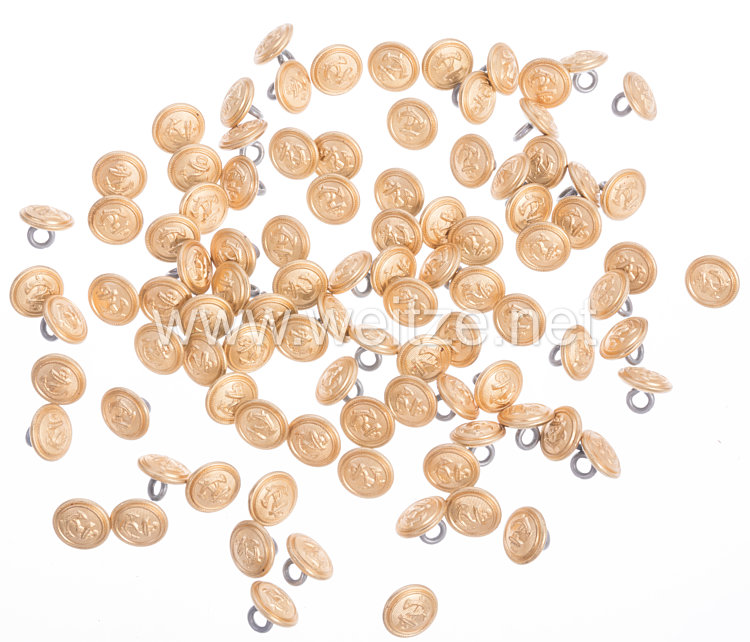
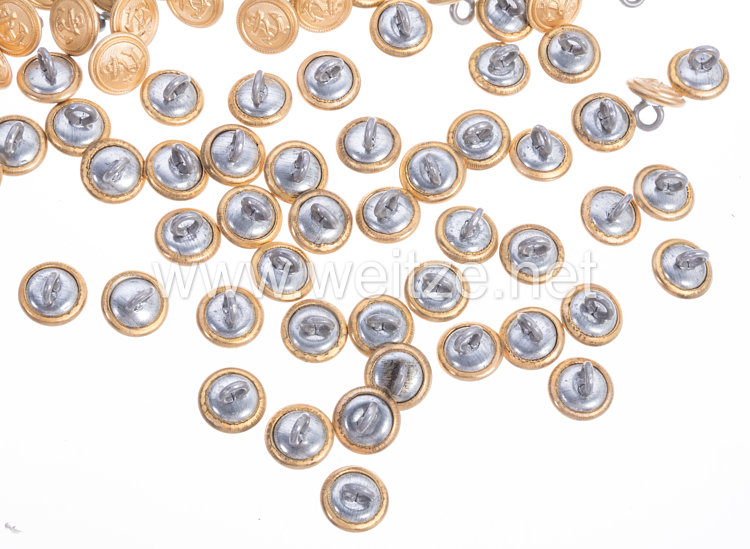
Kriegsmarine Pair of Buttons for Officers and Warrant Officers Visor Cap

gilt-plated, approx. 12 mm, unissued condition, condition 1-2.

Price per pair:
346159
50,00

Kriegsmarine Pair of Buttons for Officers and Warrant Officers Visor Cap

These Kriegsmarine peaked cap buttons for officers and Portepee non-commissioned officers represent a characteristic element of German naval uniforms during World War II. These gilt buttons, measuring approximately 12 millimeters in diameter, served as both functional and decorative components of the peaked cap, which was an essential part of the Kriegsmarine uniform.

Historical Context of the Kriegsmarine

The Kriegsmarine was officially established in 1935 as the successor to the Reichsmarine and represented the naval forces of the Third Reich. Under the supreme command of Grand Admiral Erich Raeder (until 1943) and later Karl Dönitz, the navy grew considerably. The uniform regulations and insignia of the Kriegsmarine were established through detailed regulations that reflected both the tradition of the Imperial Navy and new National Socialist symbolism.

The Peaked Cap in the Kriegsmarine

The Schirmmütze (peaked cap) was the official headgear for officers and Portepee non-commissioned officers of the Kriegsmarine. It differed significantly from the caps worn by ordinary ratings and symbolized the rank and status of the wearer. The cap was made of dark blue or white fabric, depending on the season and occasion, and was equipped with various metal components, including cockades, eagles, and these buttons.

Officers and Portepee Non-Commissioned Officers

The term Portepeeunteroffizier designates a senior non-commissioned officer rank, distinguished by wearing a Portepee (sword knot) on their side arm. This rank group included Bootsleute, Oberbootsleute, Stabsbootsleute, and Oberstabsbootsleute. They occupied a middle position between ordinary non-commissioned officers and commissioned officers and wore similar, though not identical, uniform components to officers.

Materials and Manufacturing

The gilt buttons were manufactured from various metal alloys and subsequently gold-plated. The gilding served not only aesthetic purposes but also protected against corrosion from salty sea air. Production was carried out by specialized supplier companies that worked according to strict military specifications. The quality of the gilding and the precision of workmanship were important quality characteristics.

Design and Symbolism

Kriegsmarine buttons typically bore maritime symbols such as anchors or the Wehrmacht's national emblem. The relatively small diameter of approximately 12 millimeters identifies these buttons as specialized components for the peaked cap, in contrast to the larger buttons used on uniform jackets. The golden color corresponded with other metal uniform components and created a unified, representative appearance.

Uniform Regulations

The exact specifications for uniform buttons were laid down in the Anzugsbestimmungen der Kriegsmarine (Kriegsmarine Dress Regulations). These regulations minutely governed all aspects of the uniform, from the placement of buttons to their precise specifications. Violations of these regulations could result in disciplinary consequences, underscoring the importance of these seemingly small details.

Collector Value and Historical Significance

Unused examples in first-class condition are particularly rare today, as most uniform items were used during the war and often damaged by wear or war action. The indicated condition rating of 1-2 suggests nearly perfect preservation, making these buttons valuable study objects for military historians and collectors.

Research Relevance

Such uniform components are important sources for military history research. They enable conclusions about manufacturing techniques, material availability during different phases of the war, and the practical implementation of uniform regulations. The study of buttons and other small uniform items contributes to a comprehensive understanding of the everyday history and material culture of World War II.