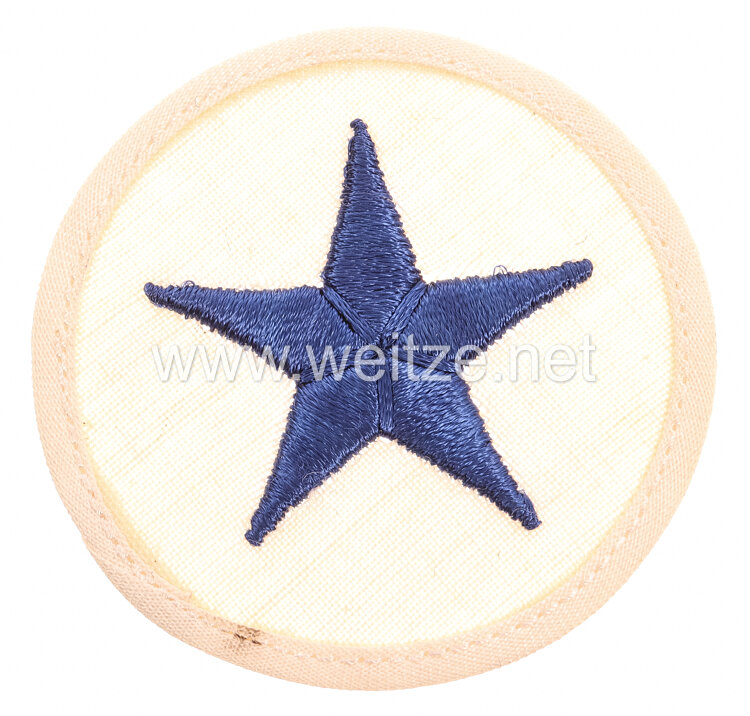
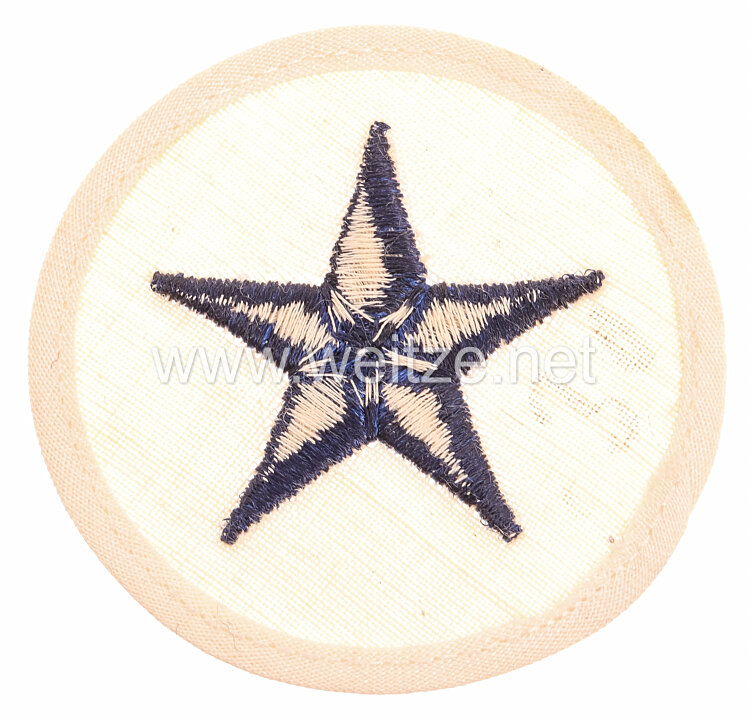
Kriegsmarine Enlisted Ranks Sleeve Insignia for Seaman Career Path

for the white blouse. Unissued condition, condition grade 2.
453659
35,00

Kriegsmarine Enlisted Ranks Sleeve Insignia for Seaman Career Path

The Kriegsmarine sleeve badge for enlisted personnel in the seaman's career path represents a fascinating example of military uniform insignia from the Third Reich era. These badges were worn on the white summer blouse and served for immediate identification of a naval sailor's duty area and career path.

The Kriegsmarine, as the official designation of the German Navy from 1935 to 1945, emerged after Germany's official departure from the Treaty of Versailles. With the Anglo-German Naval Agreement of 1935, Germany began the systematic buildup of its naval forces. The Kriegsmarine developed a complex system of uniforms, badges, and insignia that was based on the traditions of the Imperial German Navy but adapted to new political realities.

The seaman's career path formed the backbone of the Kriegsmarine. Soldiers in this career path were responsible for all fundamental maritime activities aboard ship: navigation, anchor operations, rigging, boat handling, and general deck duties. Unlike technical career paths (machinists, radio operators, torpedo specialists) or administrative functions, seamen represented the traditional core competency of the navy.

The sleeve badge for enlisted men was typically worn on the left upper arm. The Kriegsmarine dress regulations distinguished between various uniform variants: the dark blue walking-out uniform, the working uniform, and the white summer uniform. The white blouse on which this badge was worn was used primarily during summer months or in warmer climates, such as in the Mediterranean or during overseas deployments.

The production of such badges was carried out by various authorized manufacturers who had to maintain strict quality standards. The badges were usually machine-embroidered on a felt backing and displayed specific symbols for the respective career path. For the seaman's career path, this was typically an anchor or a combination of maritime symbols in golden-yellow or light blue embroidery.

The "unworn" condition in military collectibles is of particular significance. Many uniform items and badges were produced during the war years but never issued or worn due to various circumstances. This may be attributed to production surpluses, warehouse stocks at war's end, or transfers that never occurred. Such unworn pieces offer historians and collectors the opportunity to study the original manufacturing quality and coloration, which in worn specimens often faded due to sun, saltwater, and use.

The rank structure of the Kriegsmarine for enlisted personnel comprised various ranks, beginning with Matrose (seaman) through Matrosenobergefreiter (leading seaman) to Obermatrose (able seaman) and Hauptmatrose (petty officer seaman). Each of these ranks had specific insignia and markings, while the career path badge remained constant and indicated the specialization.

Training in the seaman's career path typically began in one of the naval training divisions, where recruits learned the fundamentals of naval service. After basic training, they were assigned to training ships or directly to combat units, where they deepened their practical knowledge. Seaman training was considered particularly demanding and required physical fitness, technical understanding, and the ability to work under extreme conditions.

In the context of Kriegsmarine history, uniform regulations played an important role in discipline and esprit de corps. The dress regulations were detailed and left little room for individual deviations. This reflected Prussian-German military traditions that placed great value on external appearance and correct uniforming.

Today, such sleeve badges are important study objects for military historians and uniform specialists. They document not only the material culture of the Kriegsmarine but also the organizational structure and various specializations within the navy. For collectors of military antiques, unworn specimens represent particularly valuable pieces, as they are authentic witnesses to the production standards and uniform design of the 1930s and 1940s.

The preservation of such artifacts serves historical research and education, allowing future generations to understand the organizational structure and daily life of naval personnel during this significant period of naval history. These seemingly small insignia pieces were part of a larger system of military identification and hierarchy that governed life in the Kriegsmarine throughout its existence.