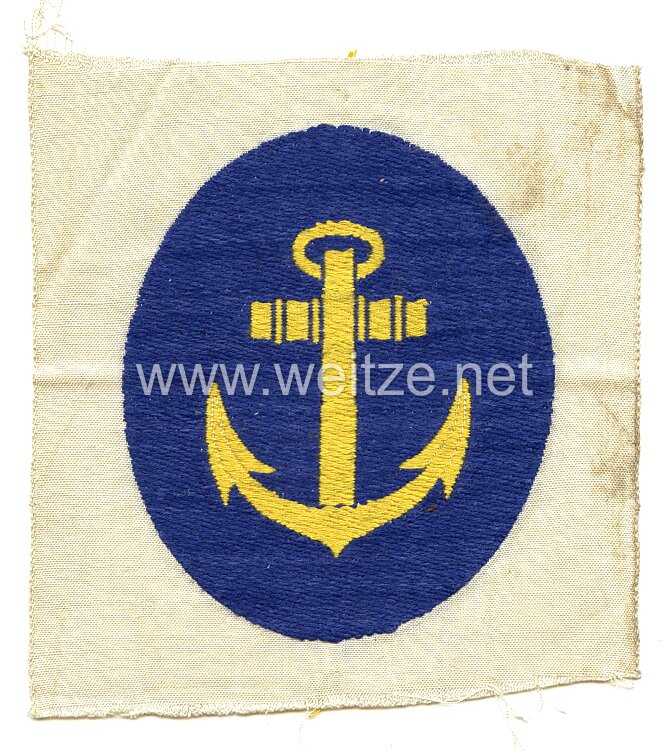
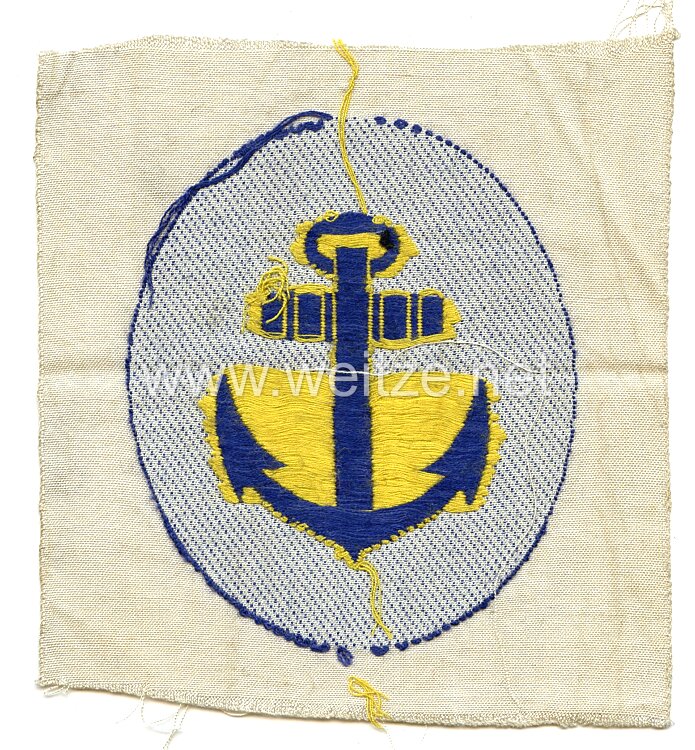
Kriegsmarine Sports Pants Insignia for Petty Officers

Woven version. Unissued condition, Grade 2.
462659
12,00

Kriegsmarine Sports Pants Insignia for Petty Officers

The Kriegsmarine Sports Shorts Badge for Petty Officers represents a distinctive example of Third Reich military uniform regulations. This woven badge was part of the German Navy's sports clothing and was specifically designated for the petty officer rank.

The Kriegsmarine, officially established on June 1, 1935, developed a complex system of uniforms and insignia throughout its existence. Beyond regular service dress, there were specialized items for various purposes, including sports clothing. Physical fitness played a central role in all branches of the Wehrmacht, and the Navy was no exception.

The sports shorts (also referred to as gym shorts) were part of the athletic wear used for physical training and sporting competitions within the Navy. The associated badge served to identify rank and affiliation with the Kriegsmarine. Unlike metal badges worn on service uniforms, sports shorts badges were manufactured in woven form, making them more practical for physical activity.

The woven construction of these badges was typical for Wehrmacht cloth insignia. They were produced either by machine or hand-weaving and typically displayed maritime symbols such as anchors, sometimes combined with other elements. The weaving technique allowed for permanent and wash-resistant attachment of insignia to sports clothing. These badges were usually affixed to the left or right side of the sports shorts.

The rank of Petty Officers (Unteroffizierskorps) formed the backbone of the Kriegsmarine. This group included various grades from Maat to Oberstabsbootsmann. Petty officers were responsible for training and leading enlisted personnel and played a crucial role in the daily operations of warships and shore installations. The special badges for petty officers differed in design and execution from those of enlisted men and officers.

The uniform regulations of the Kriegsmarine were detailed in various service manuals. These governed not only service uniforms but also auxiliary clothing such as sports equipment. The regulations specified material, color, size, and manner of wearing the various badges. Strict adherence to these regulations was part of military discipline.

Physical training in the Kriegsmarine encompassed various disciplines: running, swimming, rowing, boxing, and other sports. Regular sporting competitions between different units promoted esprit de corps and physical fitness of the crews. During such events, participants wore their sports clothing with appropriate rank insignia.

The production of such badges was carried out by specialized textile manufacturers who held contracts with the Wehrmacht. Quality could vary depending on the manufacturer and production period. Early war productions often showed higher quality standards than later versions, where material shortages led to simplifications.

From a collecting perspective, unworn examples of such sports badges are rare today, as sports clothing was subject to heavy use and many pieces wore out during service or were disposed of after the war. Preserved specimens document the comprehensive regulation of all aspects of military life during this era.

These badges serve as tangible evidence of the detailed organizational structure of the Kriegsmarine and the importance placed on physical fitness and proper military bearing, even during athletic activities. They represent a specific category of military insignia that reflects both the practical needs of military training and the strict hierarchical structure of the German Navy during World War II.

r