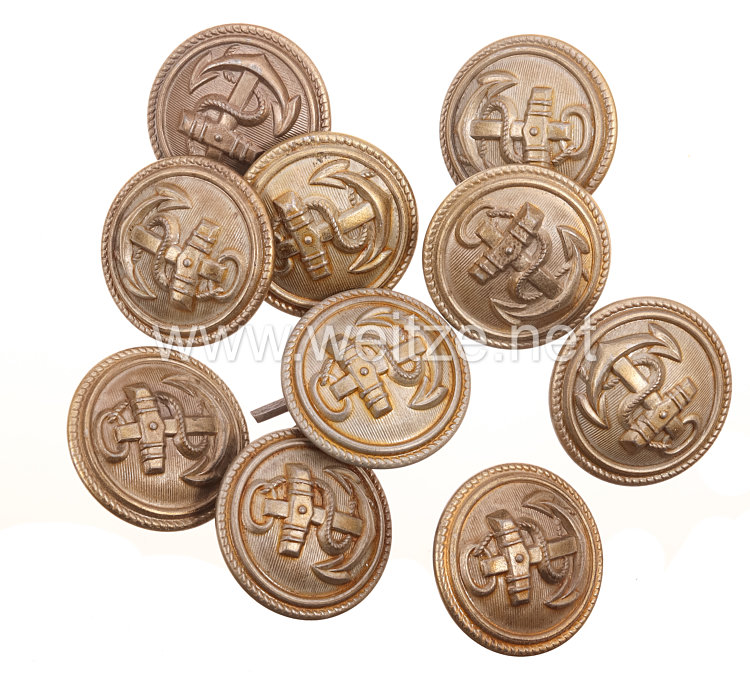
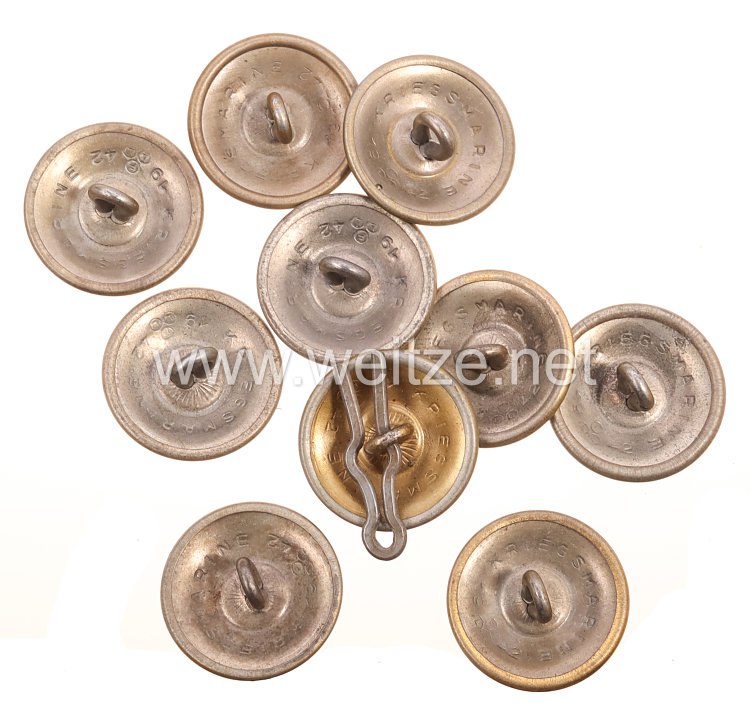
Kriegsmarine 10 Uniform Buttons

Fine zinc, reverse stamped Kriegsmarine, identical manufacturer, 25 mm, condition 2.
440059
50,00

Kriegsmarine 10 Uniform Buttons

These Kriegsmarine uniform buttons represent an important aspect of maritime military history during the Third Reich. This set of ten identical buttons made of fine zinc with a diameter of 25 mm were components of the service uniforms of the German Kriegsmarine between 1935 and 1945.

The Kriegsmarine was officially established on June 1, 1935, when Nazi Germany reasserted military sovereignty and rejected the provisions of the Treaty of Versailles. Under the supreme command of Grand Admiral Erich Raeder and later Karl Dönitz, the Kriegsmarine developed into a significant naval force that played a central role in World War II.

The uniform regulations of the Kriegsmarine were detailed and subject to strict requirements. Buttons were not merely functional elements but also identification markers that distinguished the wearer as a member of the Navy. The reverse stamping “Kriegsmarine” served for clear attribution and quality control.

The use of fine zinc as material was typical for wartime production, particularly from the late 1930s onwards. While higher-quality materials such as brass or gilded alloys were used in peacetime, wartime shortages of raw materials forced substitution with more economical materials. Zinc was readily available and easily processed, though it was prone to oxidation.

The standard size of 25 mm corresponds to medium buttons that were used on various Kriegsmarine uniform pieces, including uniform jackets, reefers (uniform coats), and work suits. Smaller buttons (15-20 mm) were used on pockets, while larger examples (30 mm) were attached to overcoats.

The fact that all ten buttons are from the identical manufacturer suggests they originally belonged to a coherent uniform set. The manufacturer markings on the reverse often allow attribution to specific production facilities. During the war, numerous companies were contracted to manufacture uniform accessories, including traditional button manufacturers and converted industrial operations.

The design of Kriegsmarine buttons followed established nautical traditions. They typically displayed maritime symbols such as anchors, eagles, or the characteristic combination of both. The Reich eagle with swastika and anchor was the official emblem of the Kriegsmarine and appeared on various uniform elements.

The preservation of these buttons in condition grade 2 (according to common collector scales) indicates they are well-preserved with slight signs of use. This is remarkable for zinc objects, which are susceptible to corrosion and deterioration due to their material properties. Many zinc artifacts from this period have not survived the decades in collectible condition.

The historical significance of such uniform buttons lies in their authenticity as historical witnesses. They document the material culture of the Kriegsmarine, production conditions during the war, and the strict regimentation of military equipment in Nazi Germany. For military historians and collectors, they provide insights into manufacturing techniques, material usage, and the organization of armaments production.

After the end of World War II in 1945, the Kriegsmarine was dissolved. Its uniform components, including such buttons, were partly destroyed, partly distributed as war booty, or entered private collections. Today they are objects of study for researching naval history and the material culture of the 20th century.