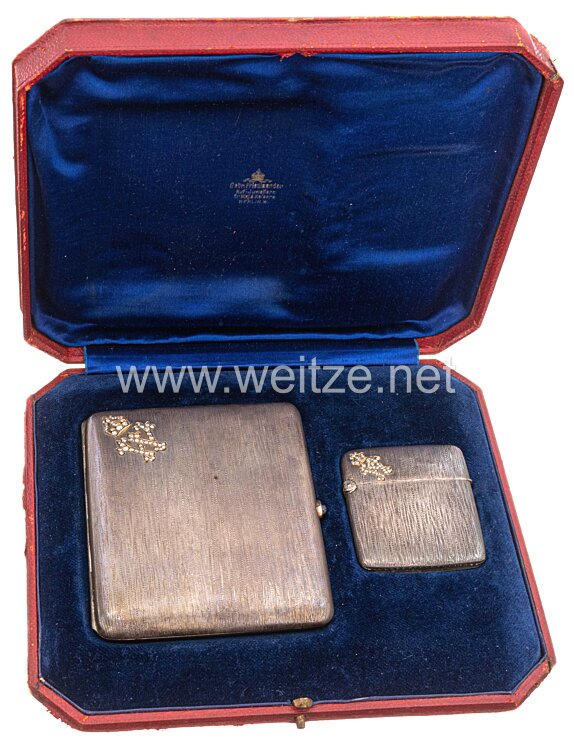
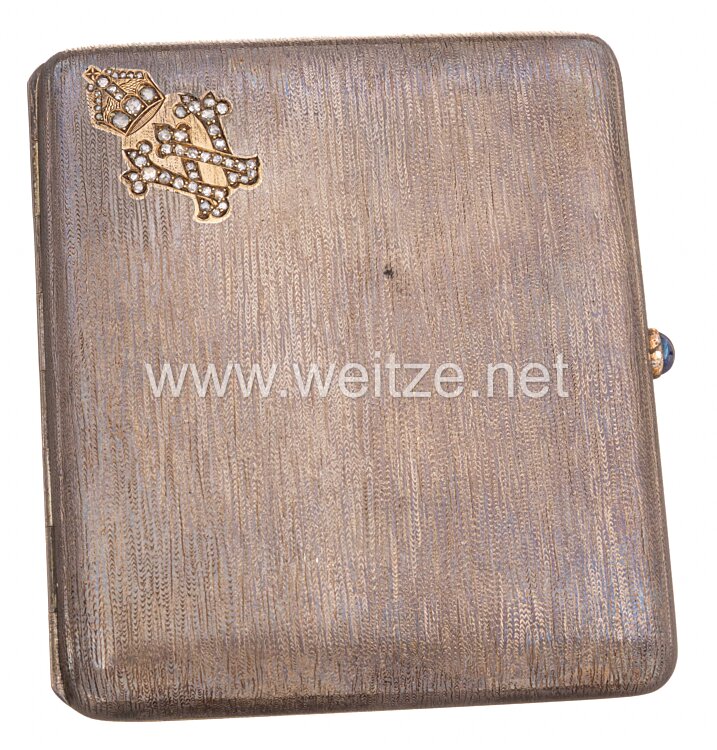
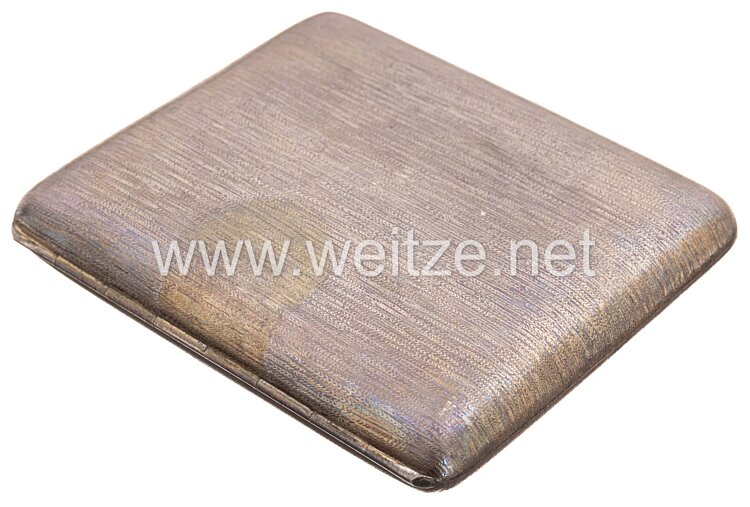
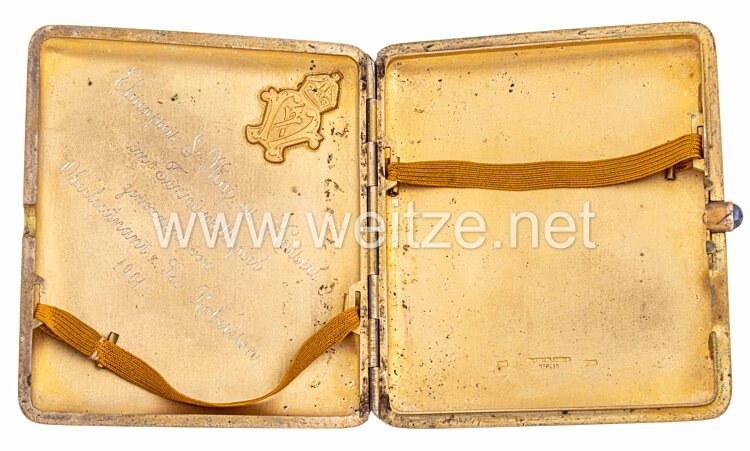
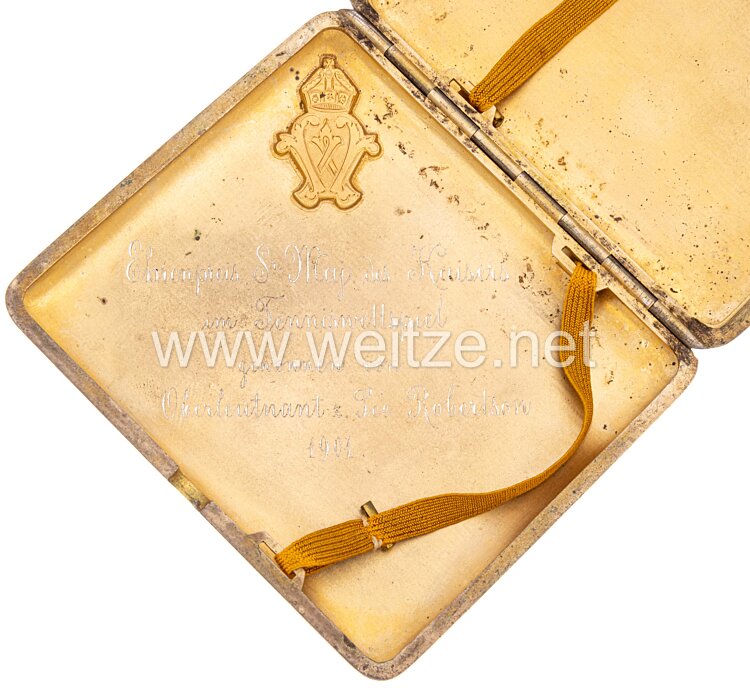
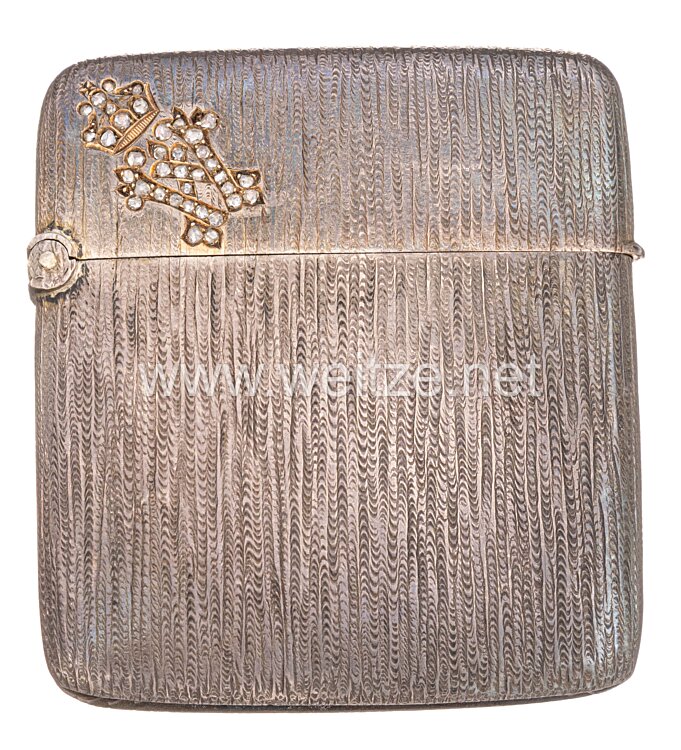
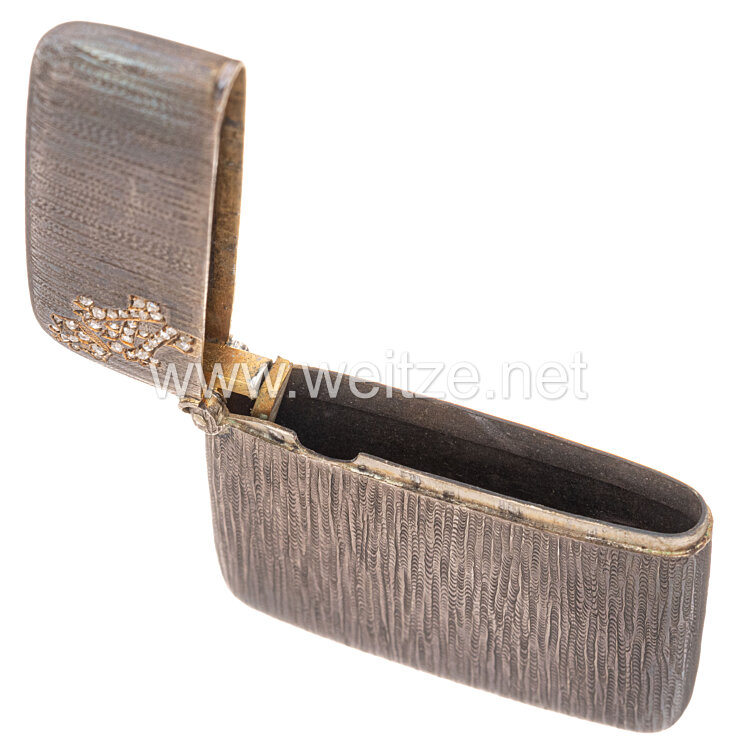
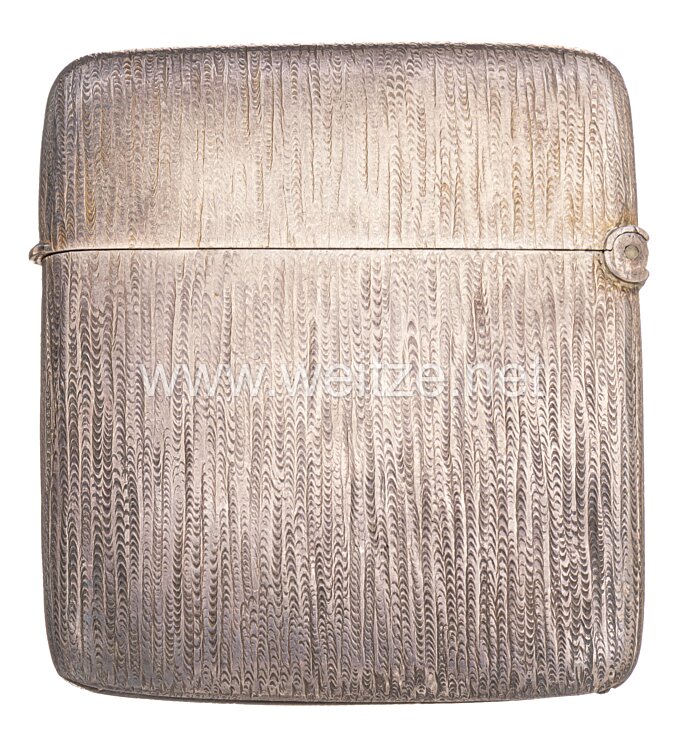
This silver cigarette case with matching matchbox holder represents an exceptional example of the courtly gift culture of the German Empire under Kaiser Wilhelm II (1888-1918). These precious objects were awarded in 1901 as an honorary prize from the Kaiser to the winner of a tennis match, illustrating the significance that sporting activities and social events held at the imperial court.
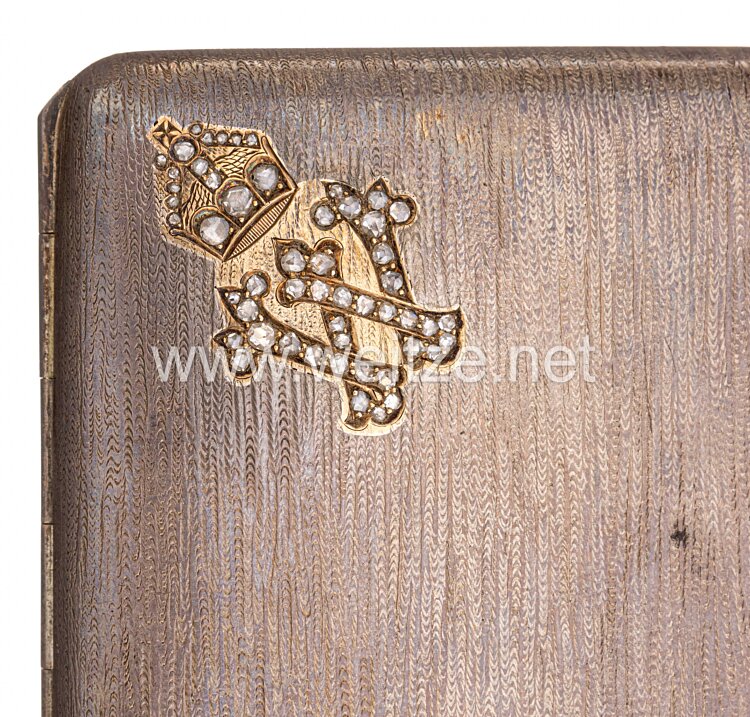
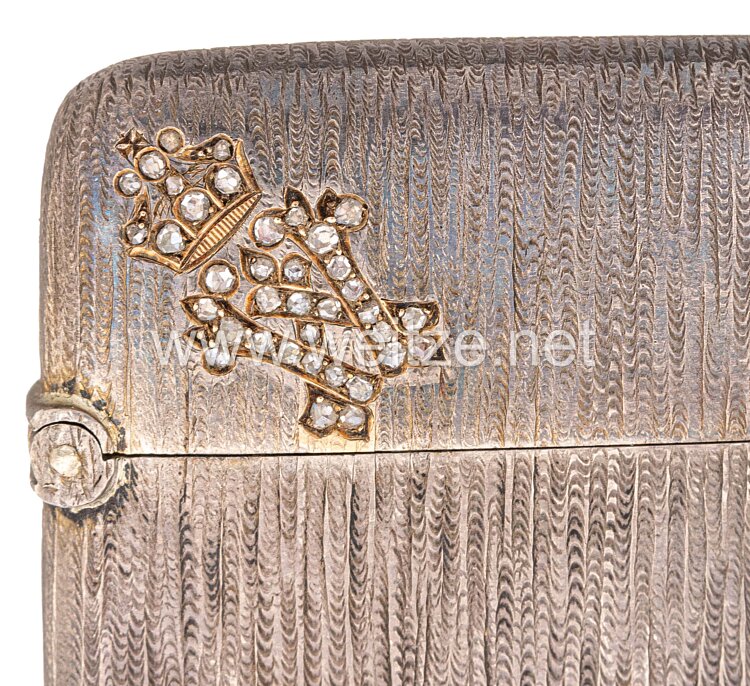
The reign of Wilhelm II was characterized by a pronounced culture of representation and the endeavor to display the power and splendor of the Hohenzollern Dynasty in all aspects of life. The imperial cipher “W”, prominently placed on both cases, served as the monarch's personal symbol and conferred special status upon these objects. The use of gilded elements, rose-cut diamonds, and a sapphire cabochon underscores the exclusive character of this distinction.
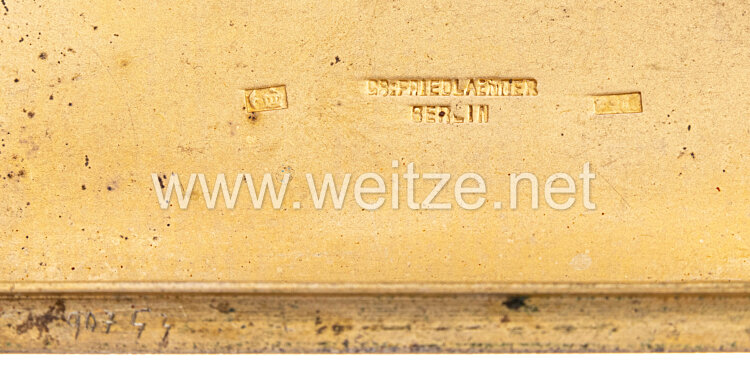
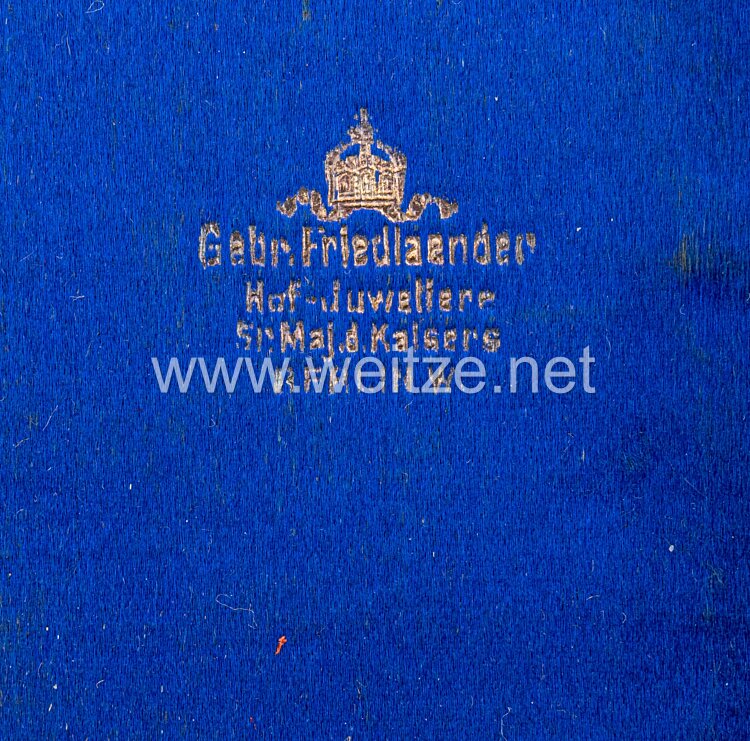
The renowned Berlin firm Gebrüder Friedlaender (Friedlaender Brothers), which held the distinction of being Court Jewelers to His Majesty the Kaiser, crafted these precious items. This appointment as a court supplier was a special honor bestowed upon only a select few craftsmen and merchants. Gebrüder Friedlaender was among Berlin's leading jewelers, supplying the court with exquisite jewelry and representative gifts. The craftsmanship quality, documented by the Reich silver hallmarks and the 900 mark (90% silver content), meets the highest standards.
Tennis had established itself in the late 19th century, spreading from England, as the sport of high society throughout Europe. At the German imperial court, tennis was valued not only as athletic activity but also served as a social framework for informal encounters between the Kaiser, members of the high nobility, senior military officers, and the diplomatic elite. These sporting events provided opportunities for cultivating contacts and discreet exchange about political and military matters, away from formal court ceremonies.
The prize winner, Oberleutnant zur See Robertson (Lieutenant at Sea Robertson), belonged to the Imperial Navy in 1901, which was massively expanded under Wilhelm II. The Navy was a prestige project of the Kaiser, who sought to emphasize Germany's claim as a world power. The Fleet Acts of 1898 and 1900 had initiated comprehensive rearmament that contributed to the naval arms race with Great Britain. Naval officers enjoyed special attention at court, and the Kaiser maintained personal contact with many of them.
Henry Robertson continued to advance his career in the Navy in the following years. According to the honor roll of the Imperial German Navy 1914-18, he reached the rank of Korvettenkapitän (Corvette Captain, equivalent to Lieutenant Commander) and last served as Adjutant of the Danzig Shipyard. The Imperial Danzig Shipyard was one of the most important naval shipyards of the German Empire, where warships were built and maintained. The position of adjutant was a position of trust encompassing administrative and representative duties.
The imperial gift-giving practice was an important instrument of representation of power and served to bind individuals to the monarch. Such personal honorary prizes, bearing the imperial cipher, created a special connection between the Kaiser and the recipient. They were not merely material valuables but symbolized imperial favor and recognition. Recipients of such gifts frequently preserved them as family treasures and regarded them as important testimonies of their connection to the ruling house.
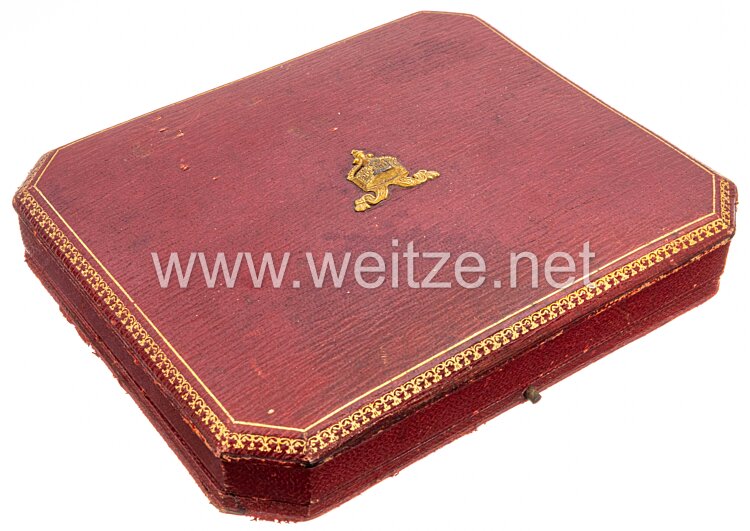
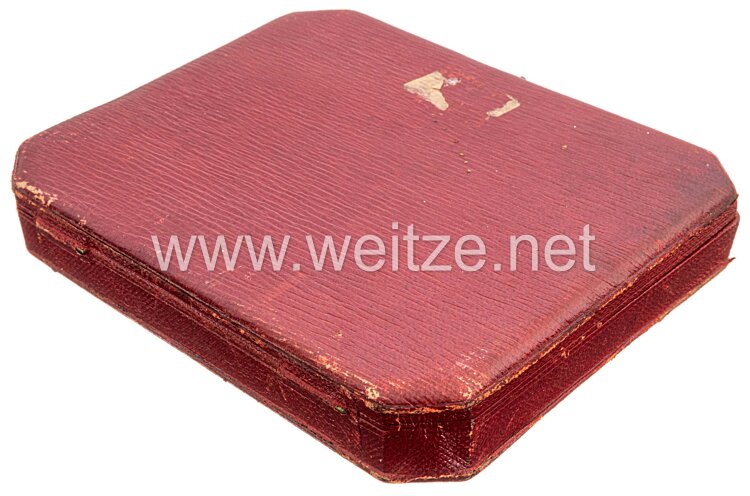
The original presentation case with red leather covering and blue velvet lining, crowned with a gilded imperial crown, underscores the ceremonial character of the presentation. Such presentation cases were an integral part of courtly gift culture and reinforced the impact of the gift through their magnificent appearance.
These objects today offer a fascinating insight into the courtly culture of the Wilhelmine Era, an epoch characterized by pronounced social hierarchies, cultivation of military tradition, and the attempt to demonstrate the stability of the monarchy through pomp and ceremony. They document the interweaving of sport, society, and politics in the highest circles of the Empire and illustrate the personal exercise of power by Wilhelm II, who sought to create and maintain personal bonds through such gestures.
The survival of such items in their original presentation cases is relatively rare, making this ensemble particularly significant for understanding the material culture and social practices of the German imperial court at the turn of the 20th century.