Wehrmacht Panzertruppe - Nachlass des späteren Obergefreiten Ernst Zeeb bei der 1.Panzer-Aufklärungs-Abteilung 5
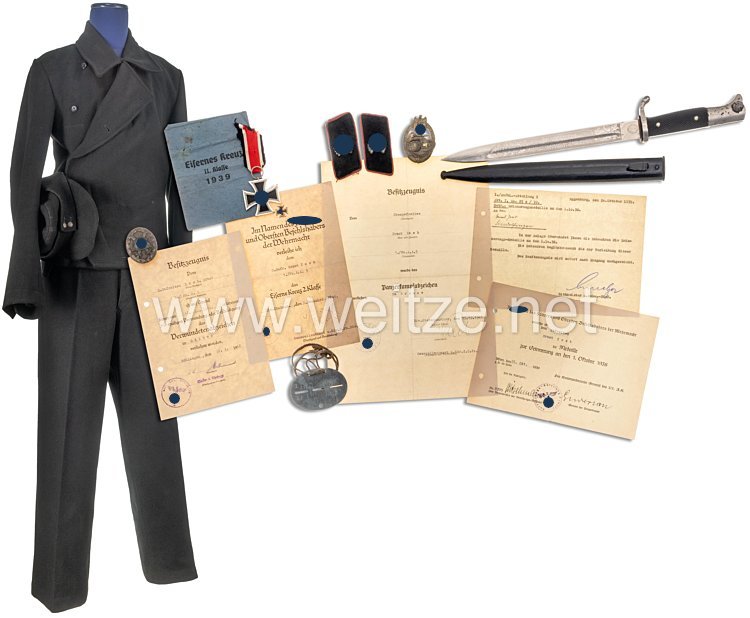
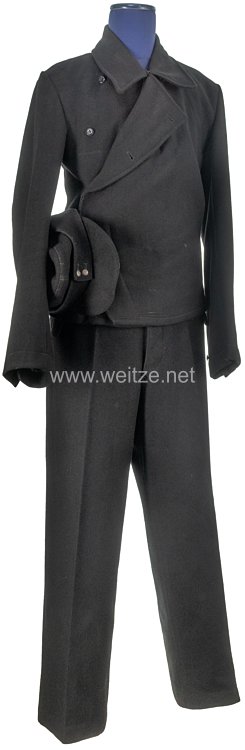
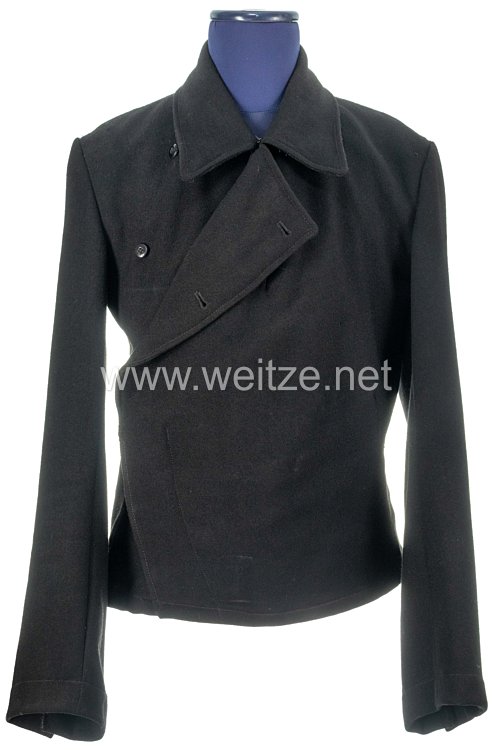
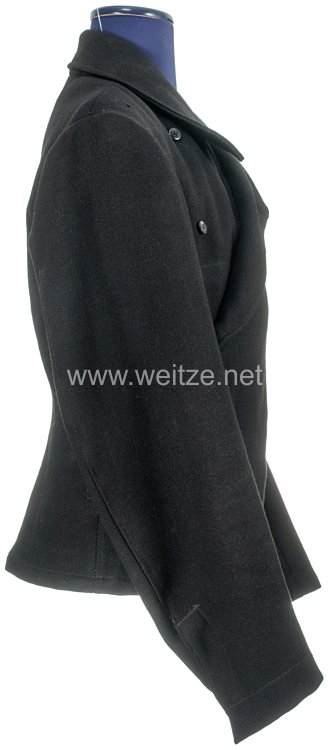
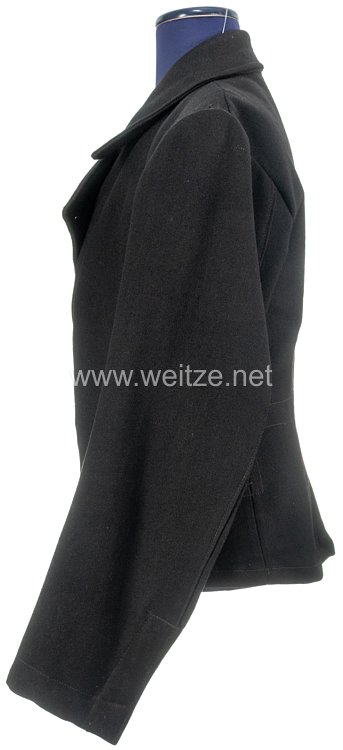
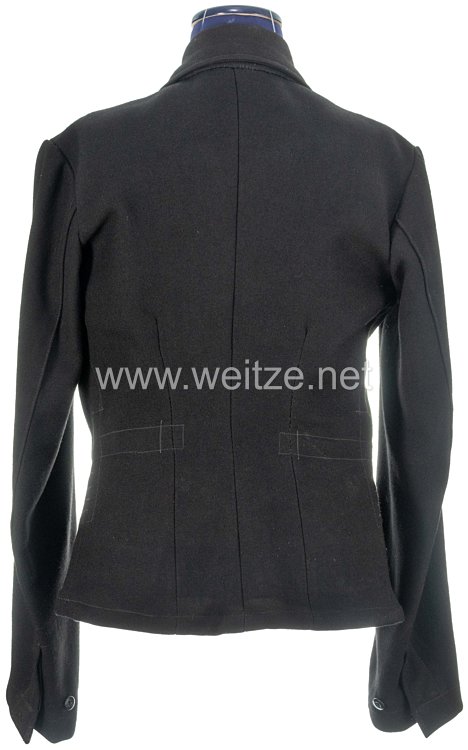
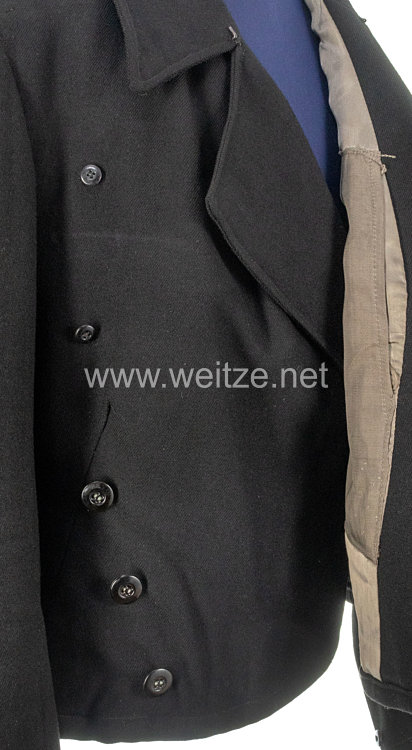
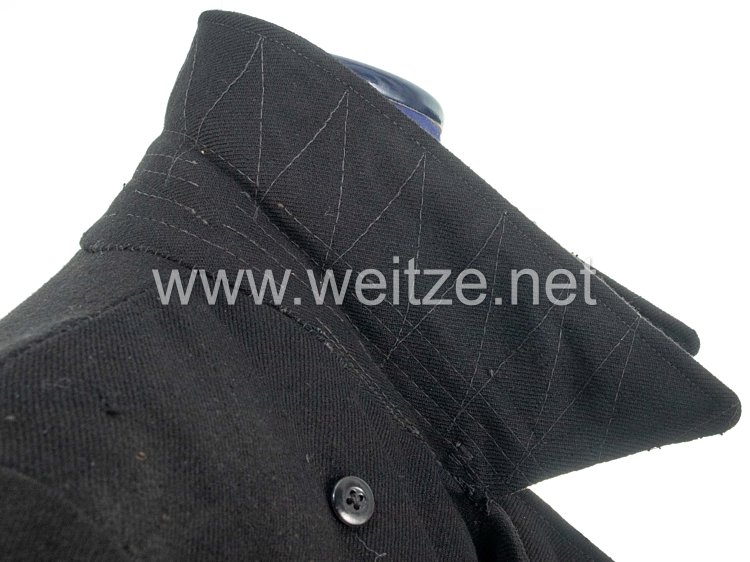
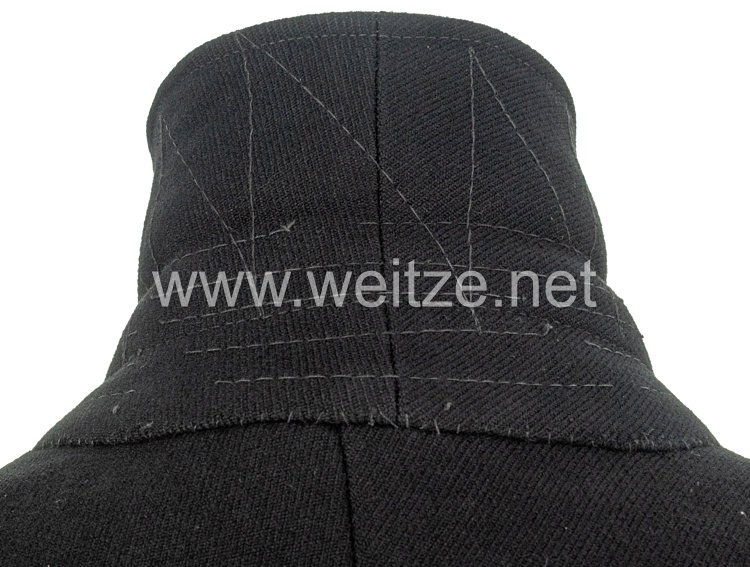
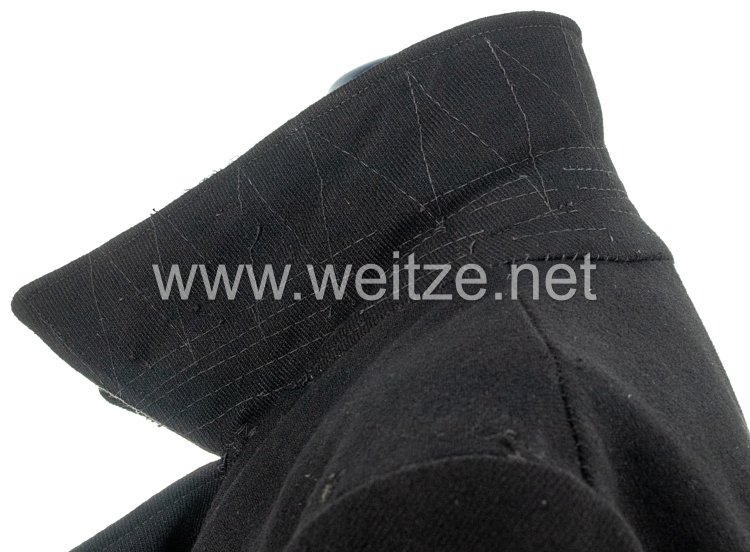
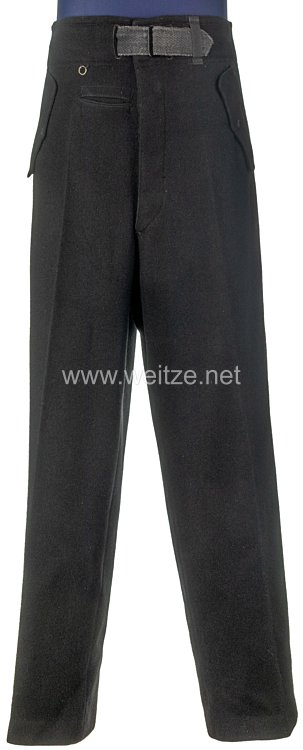
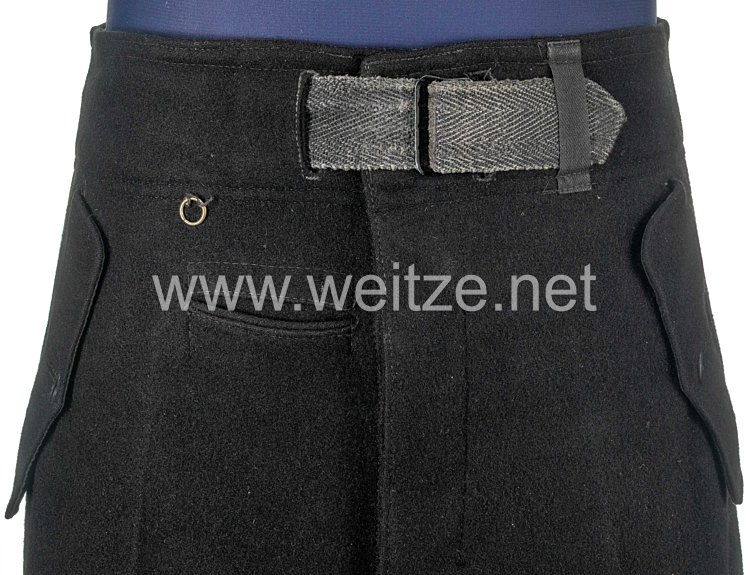
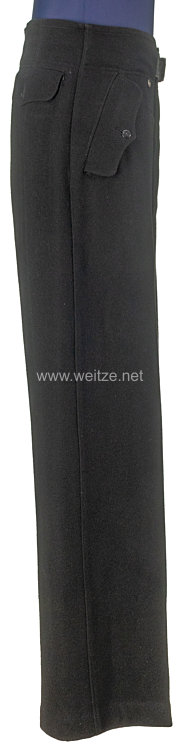
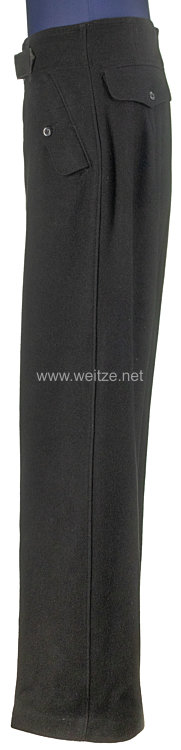
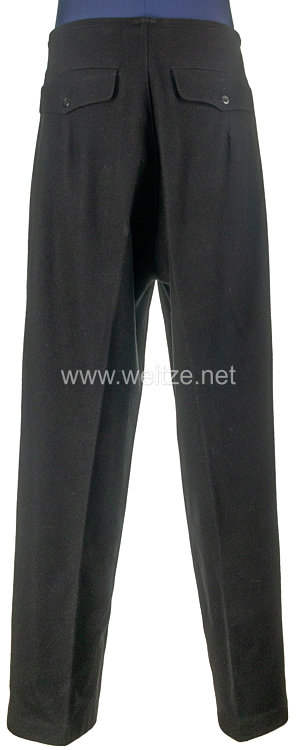
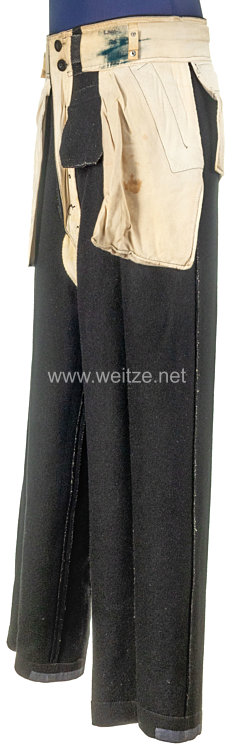
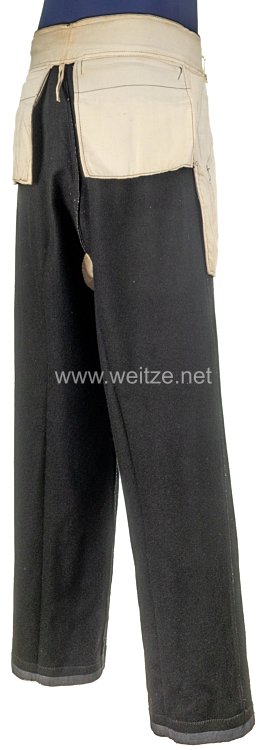
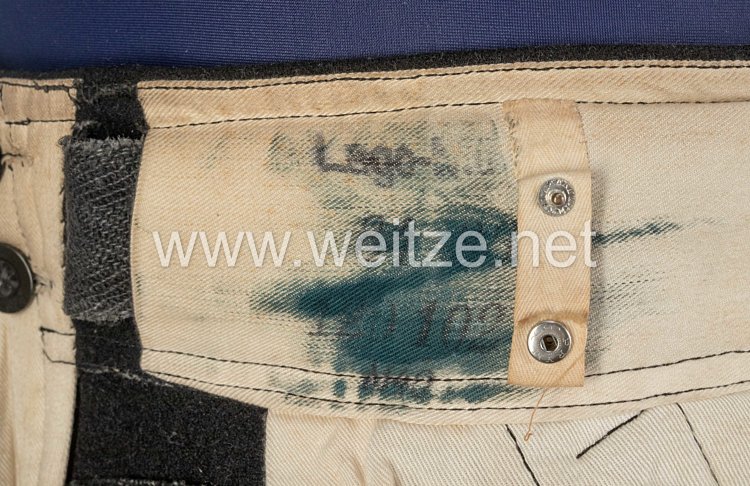
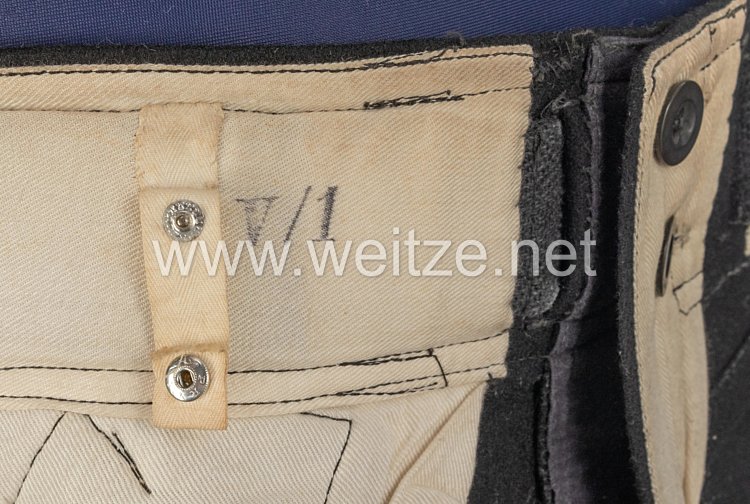
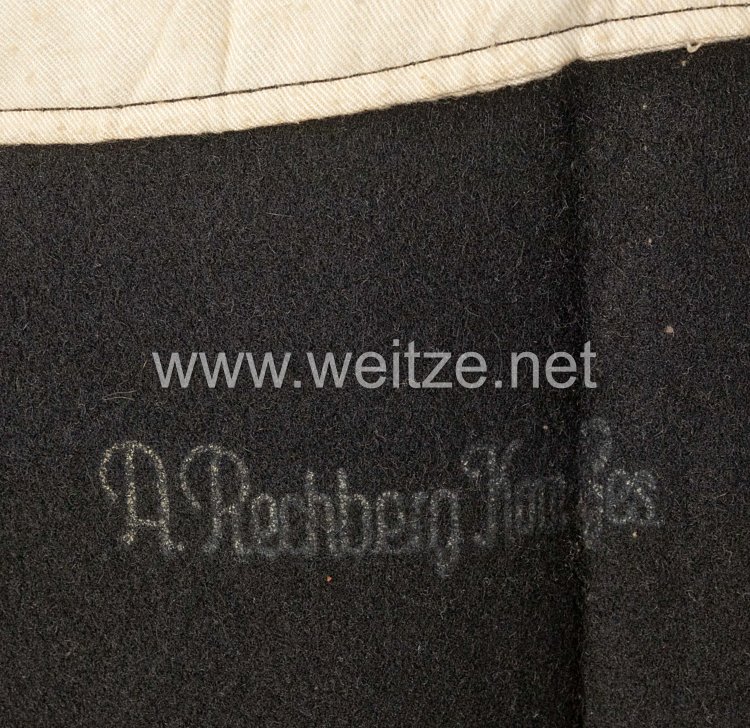
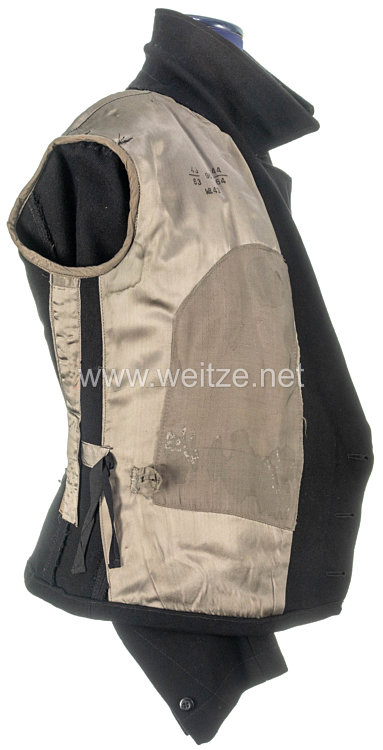
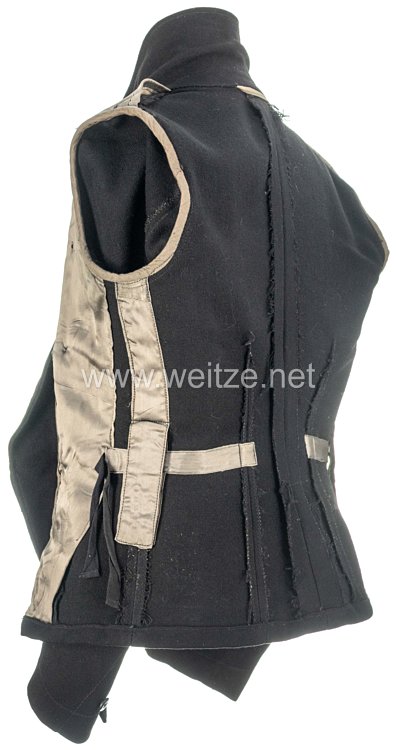
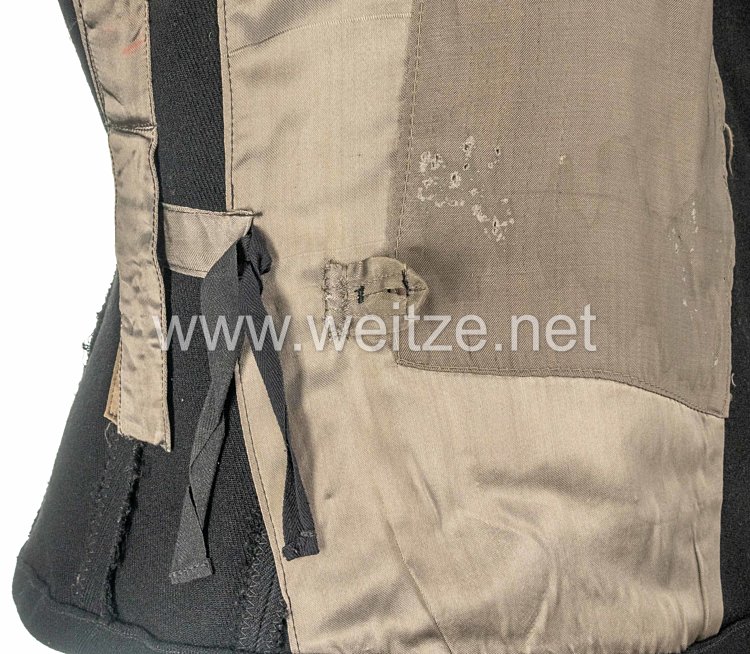
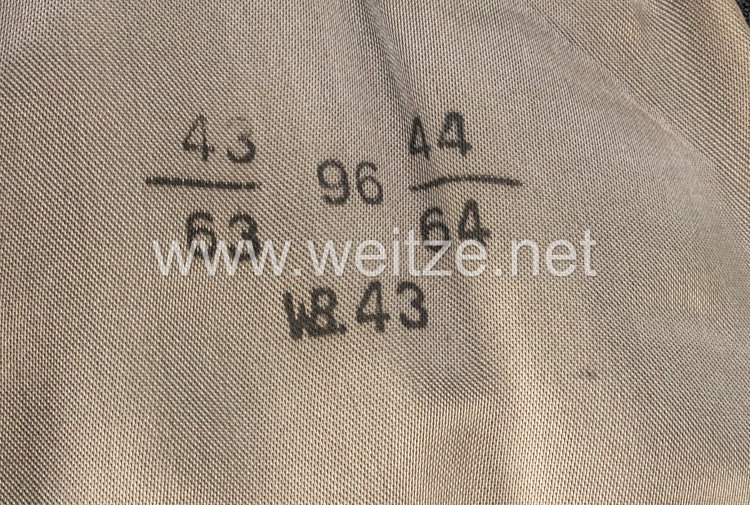
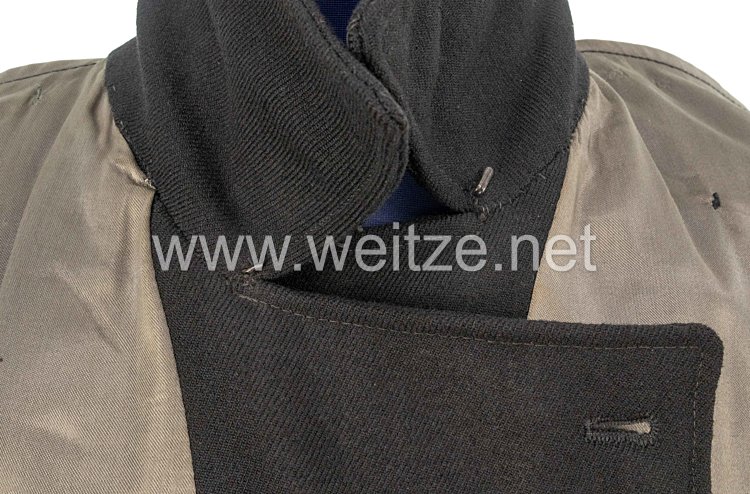
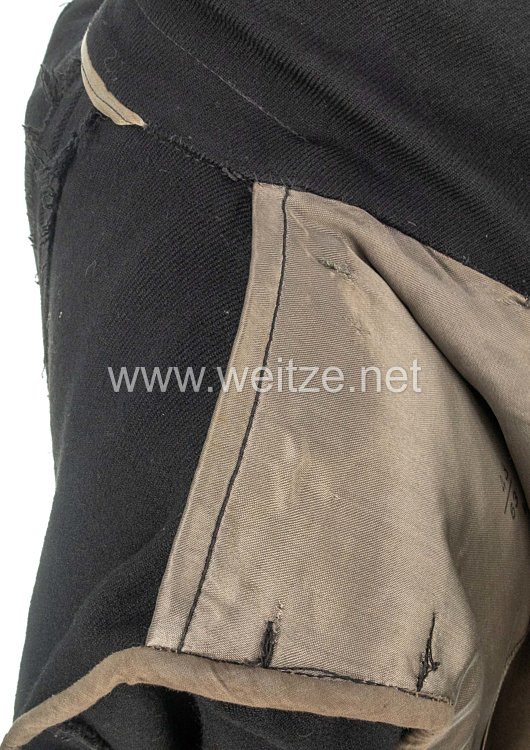
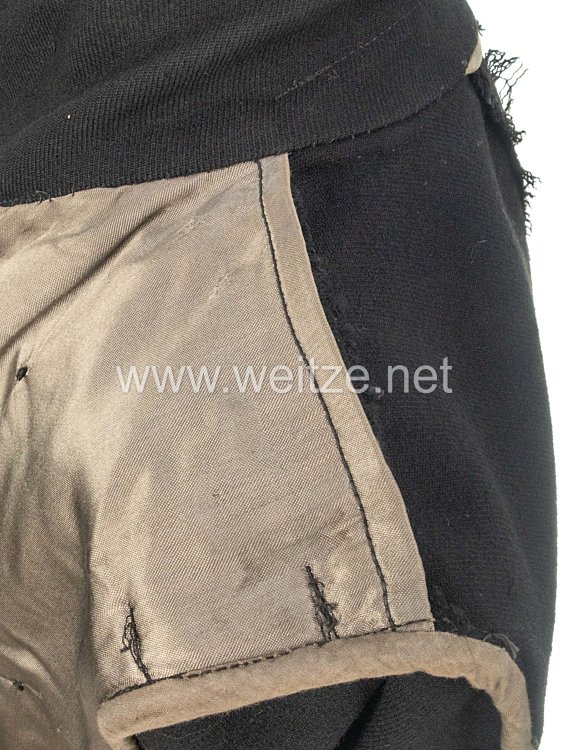
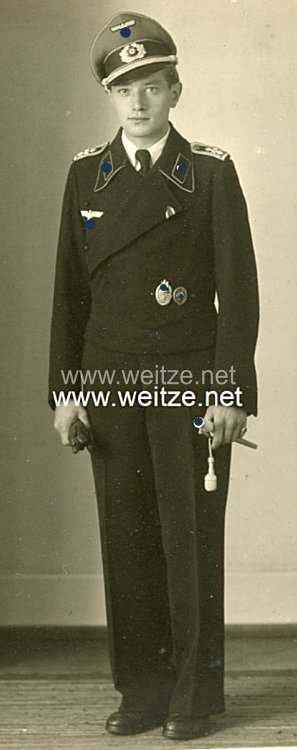
Die Panzerjacke ist ein Kammerstück, um 1943. Fertigung aus schwarzem geriffelten Tuch, ohne jegliche Effekten. Auf der Brust wurden die Schlaufen für die Steckabzeichen entfernt, sowie auch die Schlaufen für die Schulterklappen. Die Jacke wurde zeitgenössisch leicht gekürzt. Innen mit grauem Seidenfutter und schönem Kammerstempel "Wb.43". Leicht getragen, Zustand 2. Die Panzerhose aus schwarzem Tuch und Durchzuggürtel, mit Uhrentasche und angedeuteter Hosenfalte, die Hosenbeine wurden begradigt für den Tagesdienst (anbei ein Beispielfoto für die Hose, das Foto ist aber nicht verkäuflich und auch nicht Teil der Gruppe), innen mit Kammerstempel " M4?" Maße: Hosen-Bundumfang ca 80 cm, Gesamtlänge ca. 110 cm. Getragen, Zustand 2.
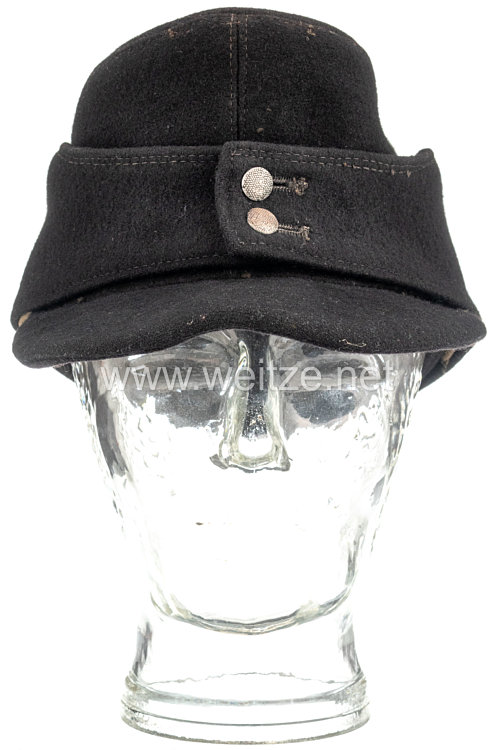
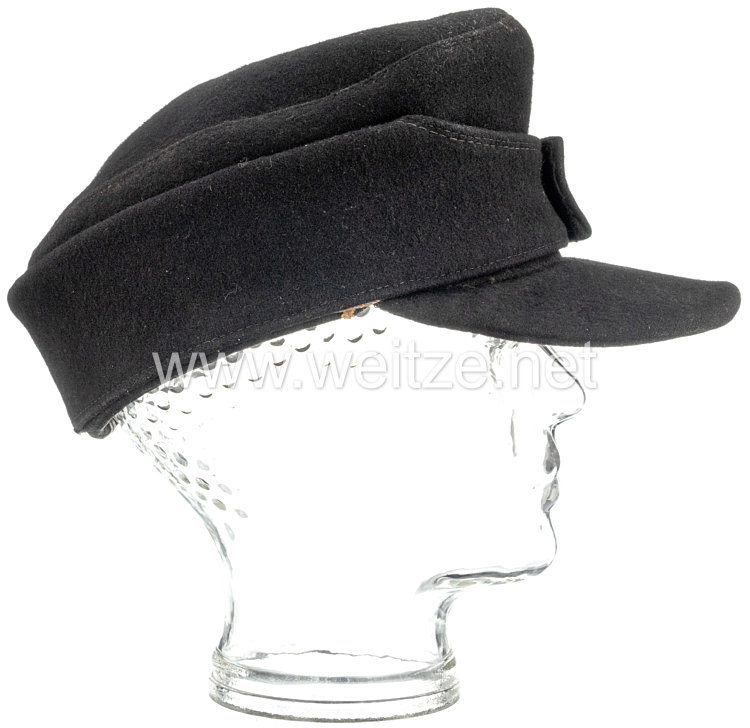
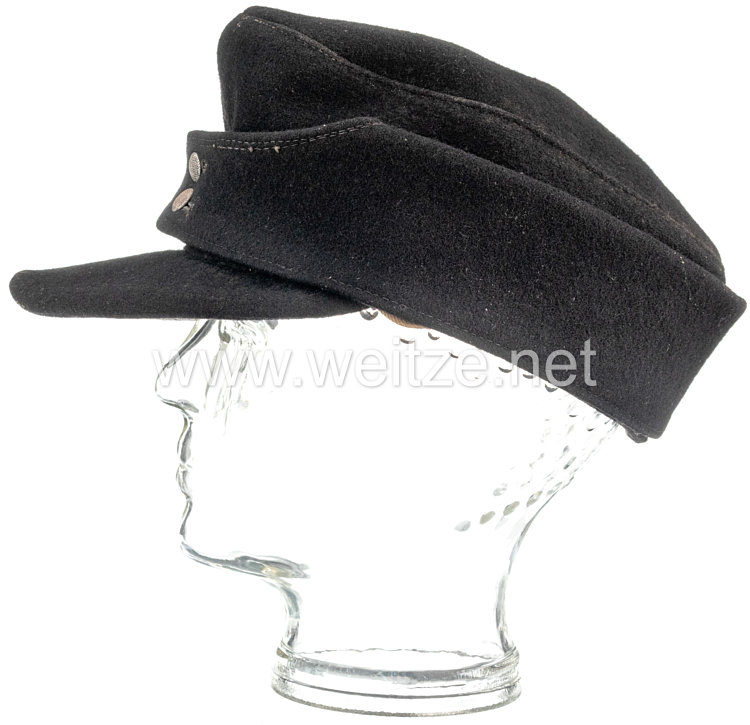
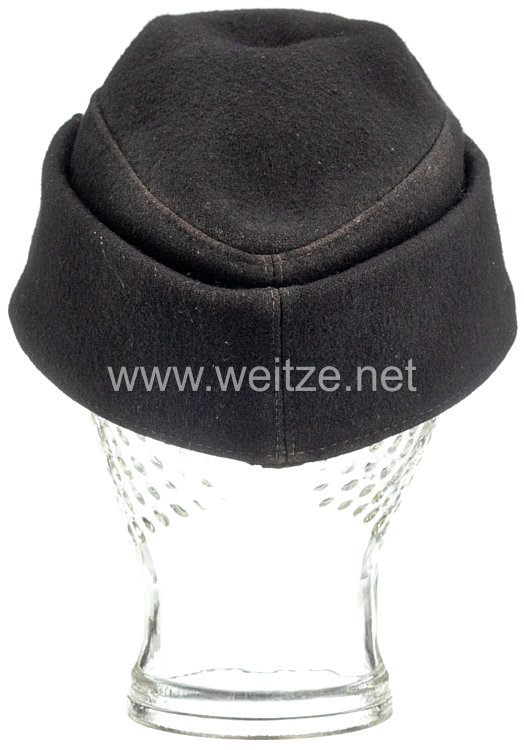
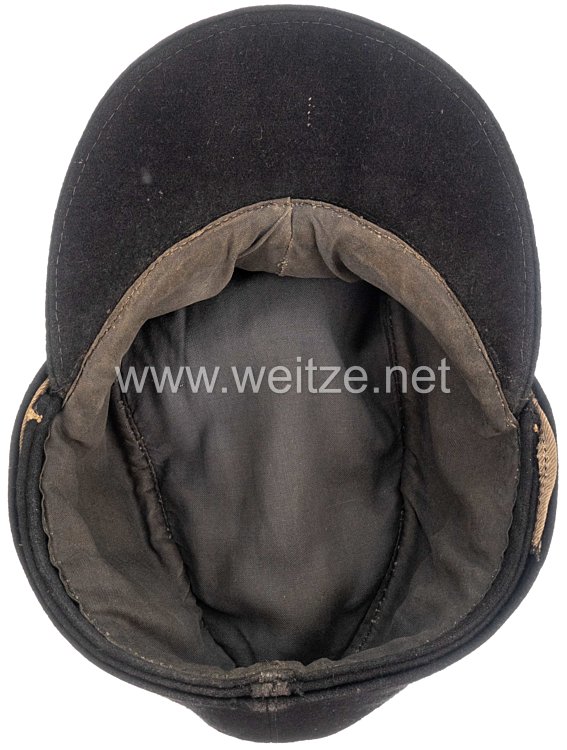
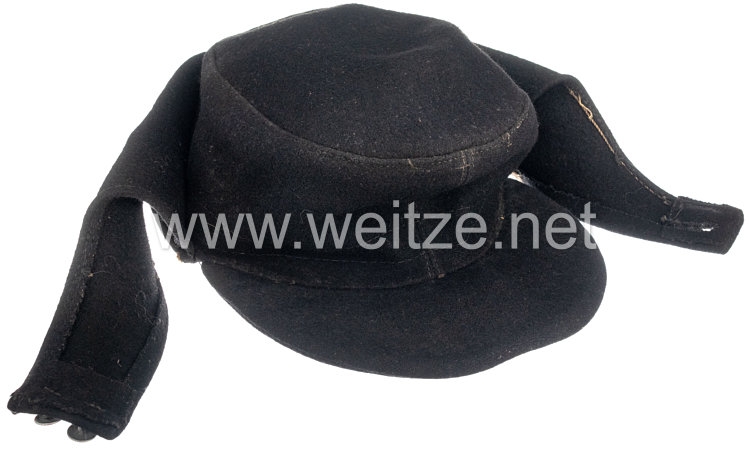
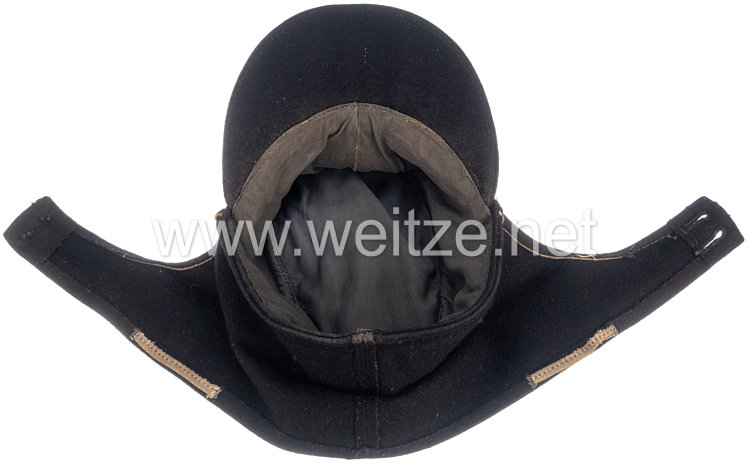
Einheitsfeldmütze für die Panzertruppe, schwarzes Tuch, ohne Hoheitsabzeichen, innen mit grauem Tuchfutter, Größe ca.56, getragenes Stück, Zustand 2-.
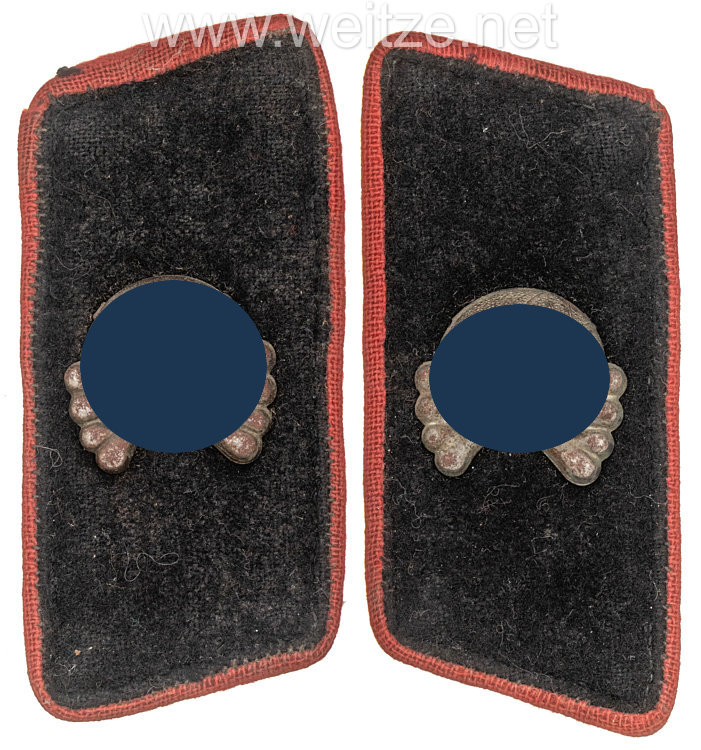
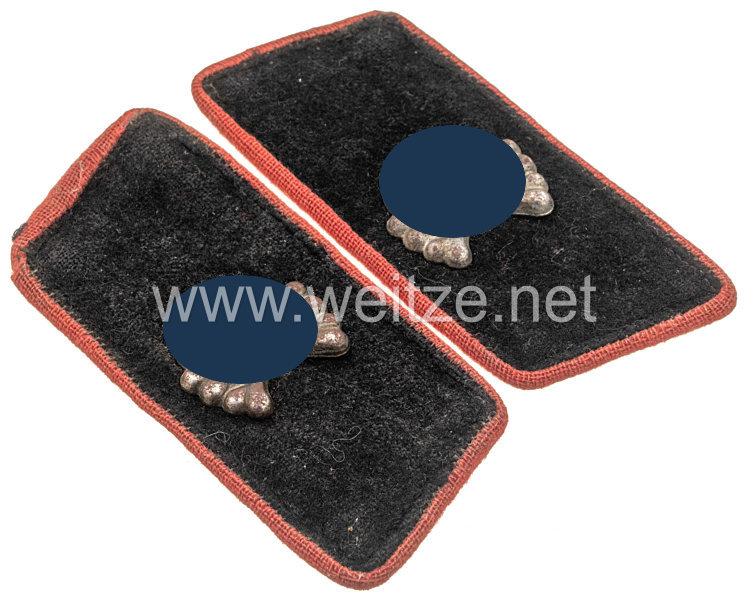
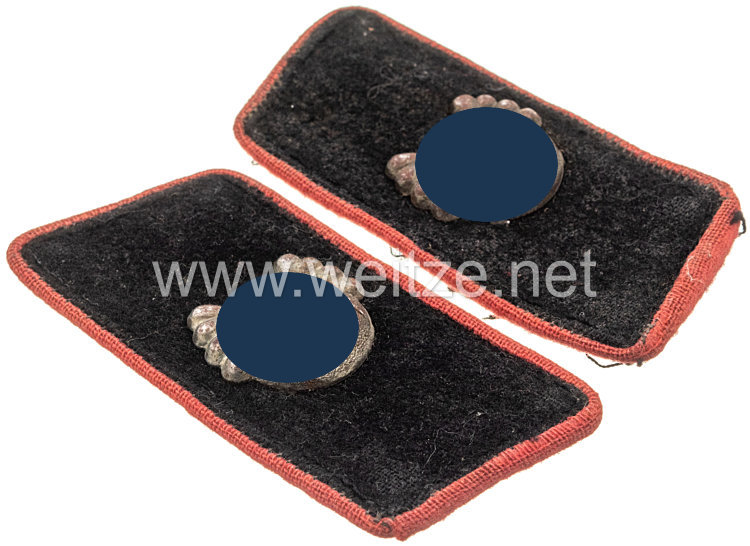
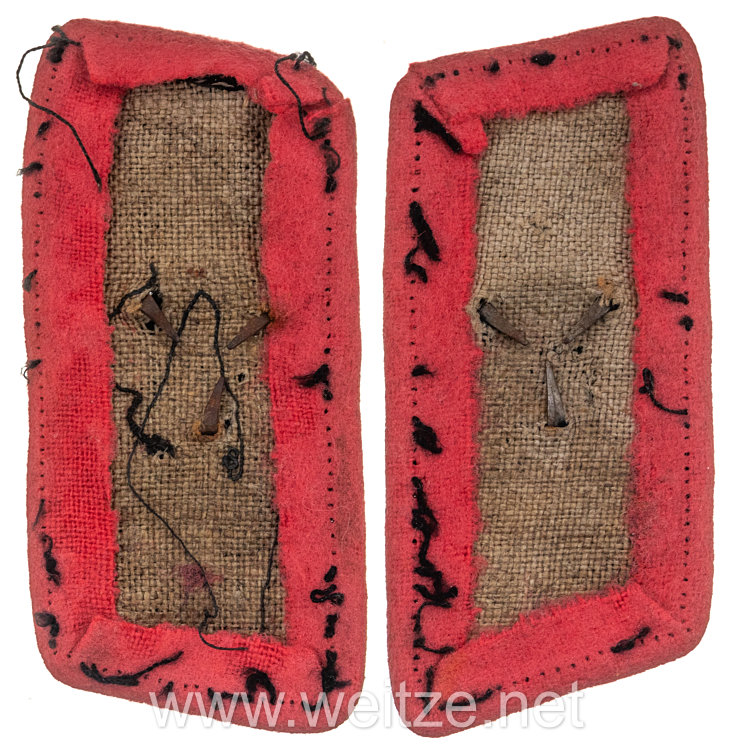
Paar Kragenspiegel, Totenköpfe aus Eisenblech, von der Uniform abgetrennt, Zustand 3.
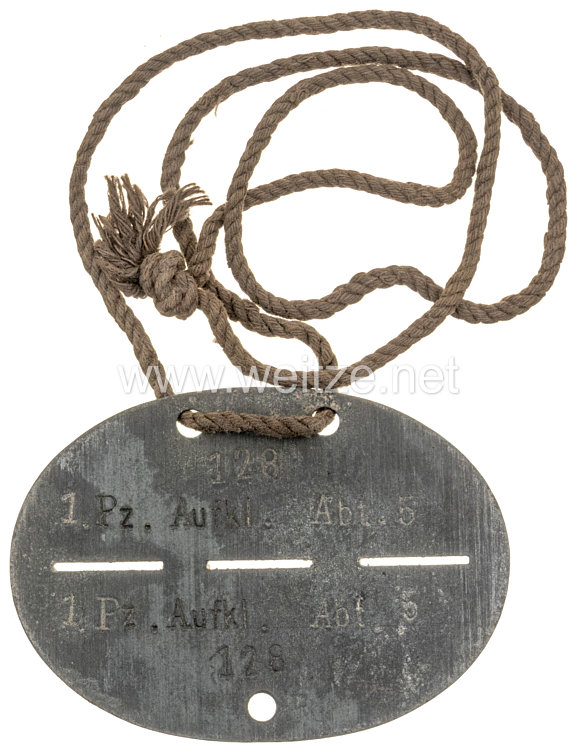
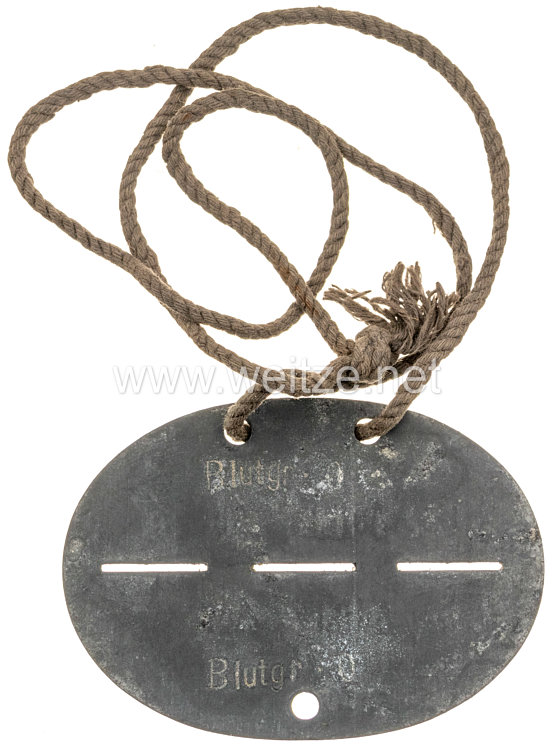
Dabei seine Erkennungsmarke in Feinzink, am Band "1.Pz.Aufkl. Abt 5". Zustand 3.
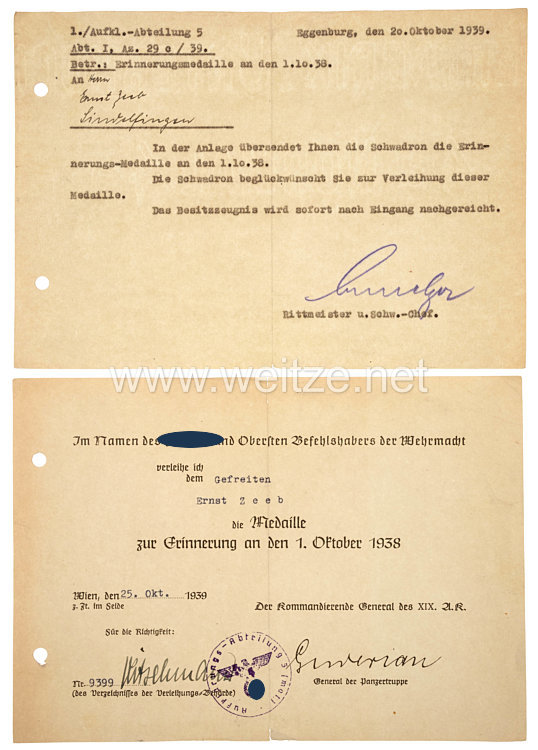
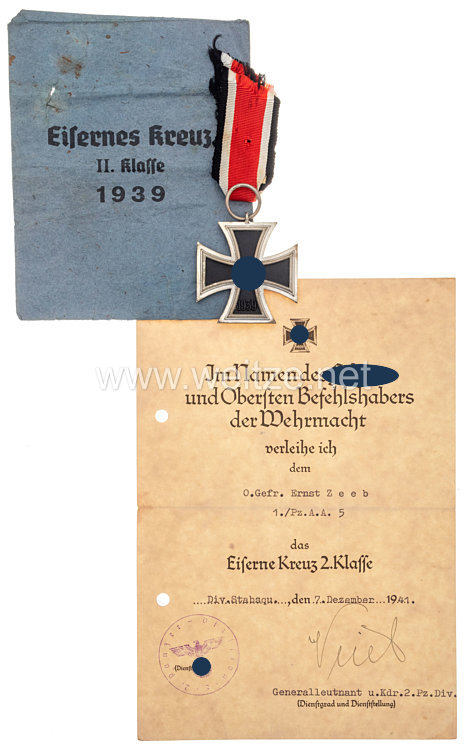
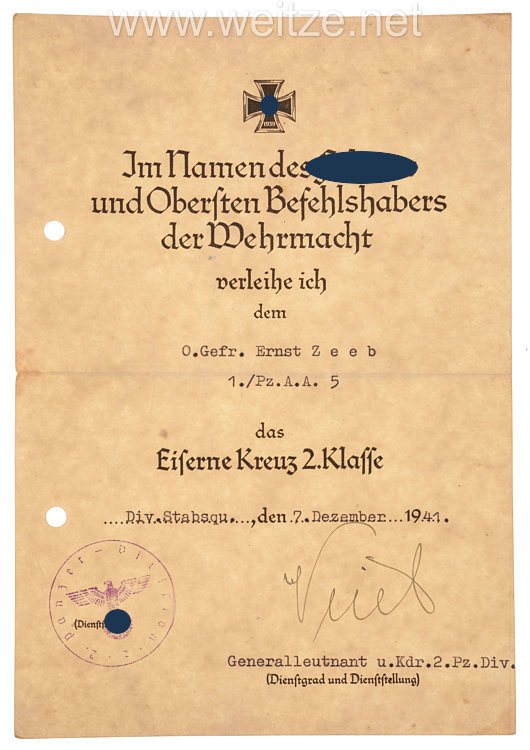
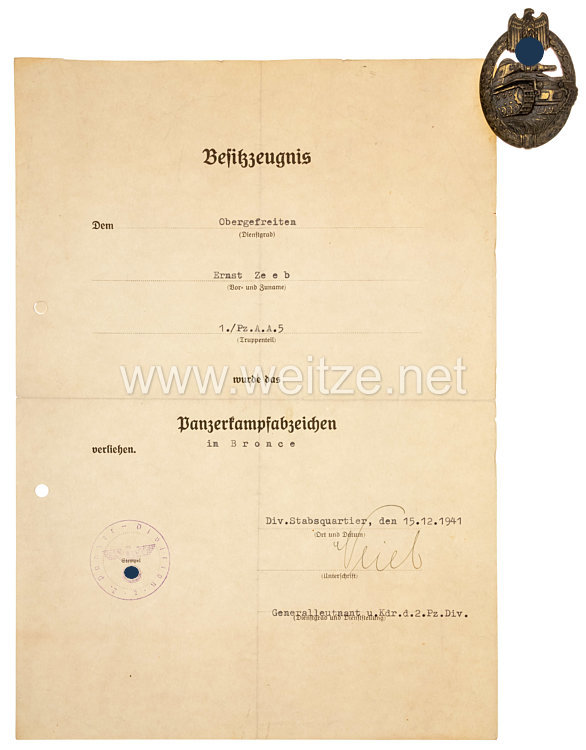
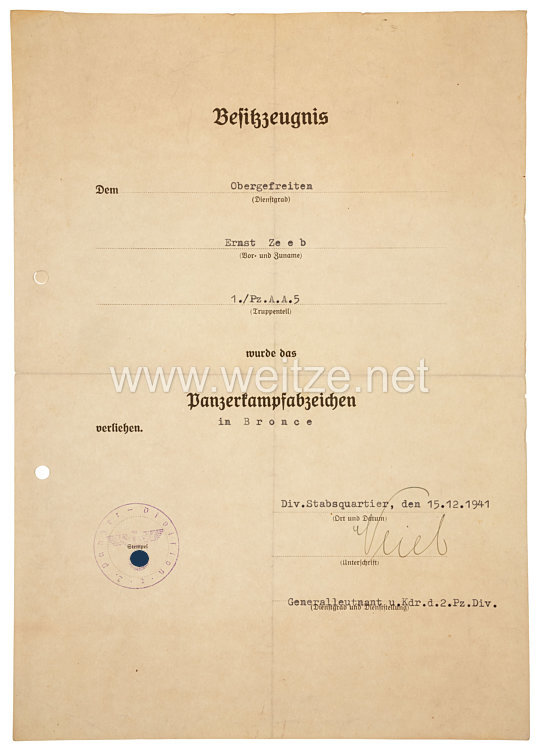
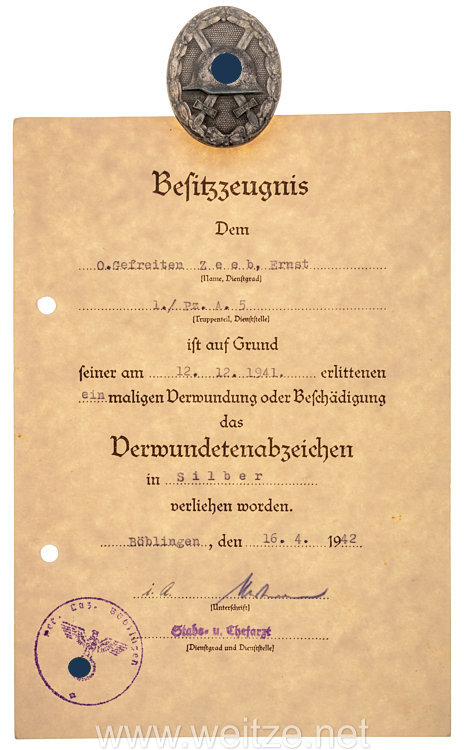
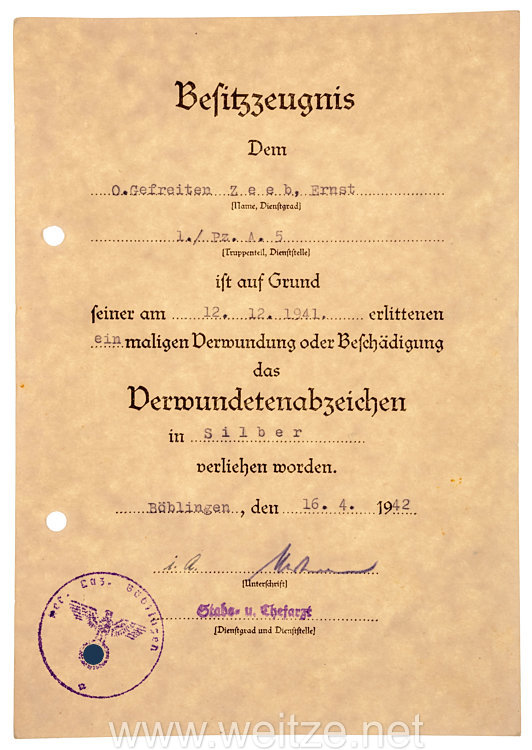
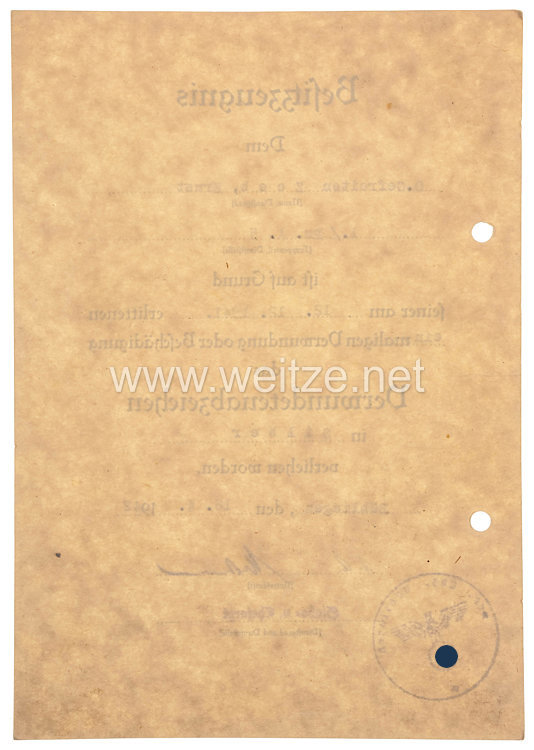
Urkunden: Anschreiben und Besitzzeugnis für "Medaille zur Erinnerung an den 1 Oktober 1938", ausgestellt in Wien den 25.10.1939, mit Einheitsstempel "Aufklärungs - Abteilung 5 mot". Urkunde zum Eisernen Kreuz 2.Klasse 1939, ausgestellt am 7. Dezember 1941, unterschrieben durch den Kommandeur der 2. Pz Division. Besitzzeugnis zum Panzerkampfabzeichen in Bronze, ausgestellt am 15.12.1941, unterschrieben durch den Generalleutnant und Kommandeur der 2. Panzerdivision. Besitzzeugnis zum Verwundeten Abzeichen in Silber, ausgestellt am 16.4.1942 in Böblingen. Alle Urkunden sind gelocht und teilweise gefaltet.
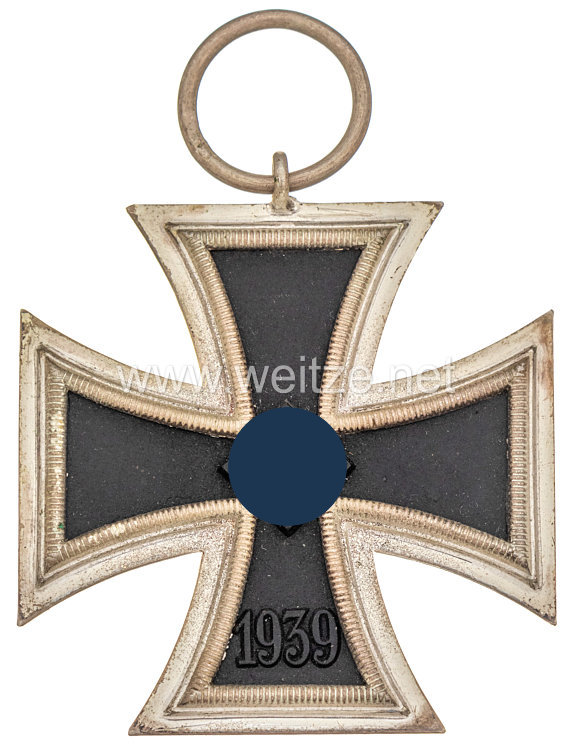
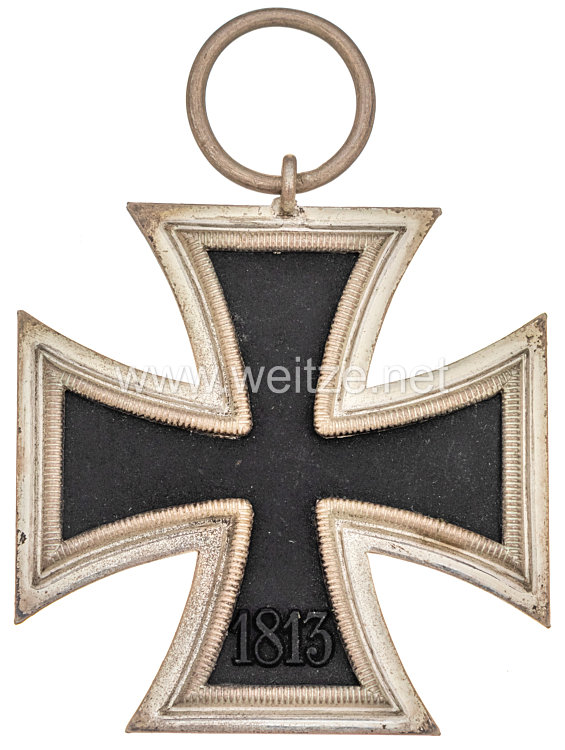
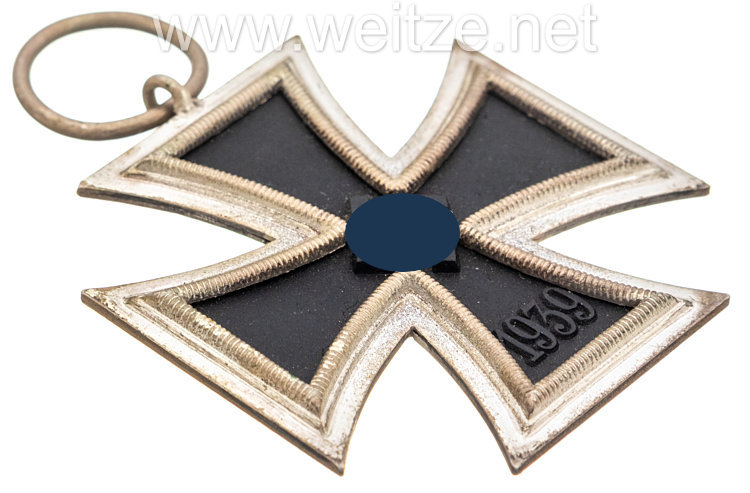
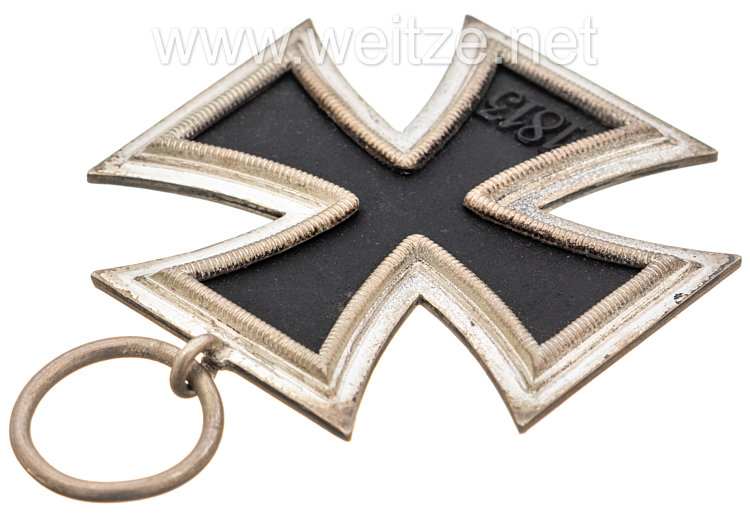
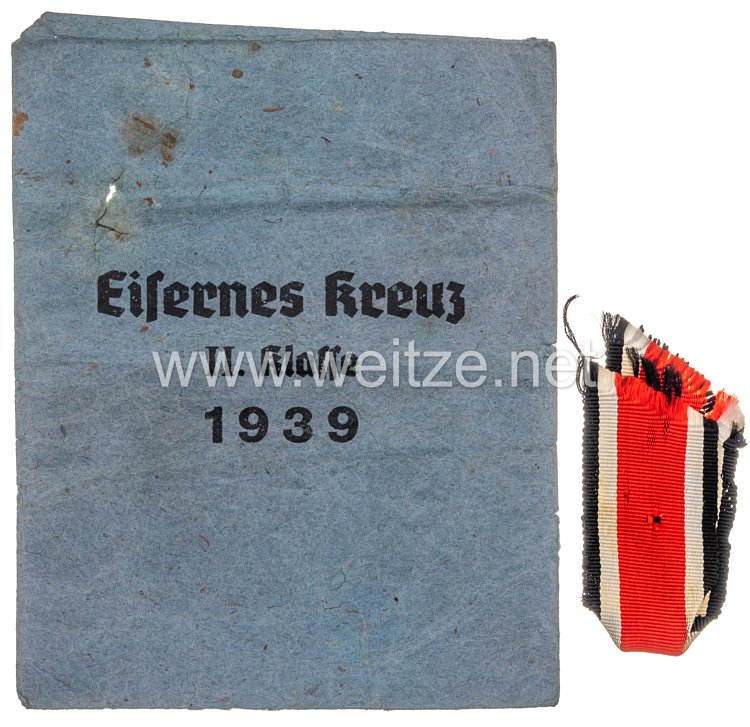
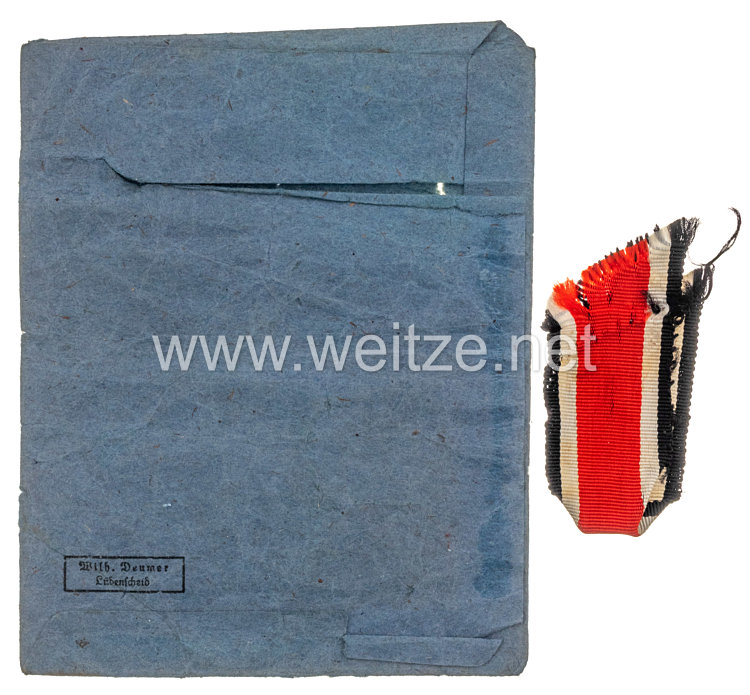
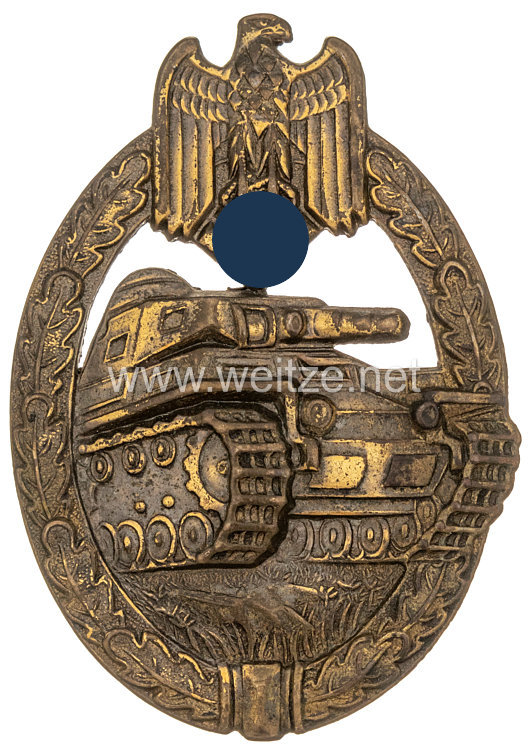
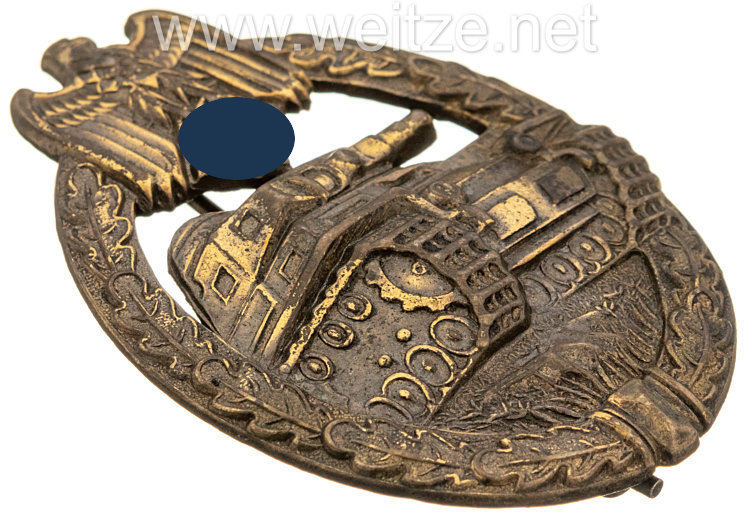
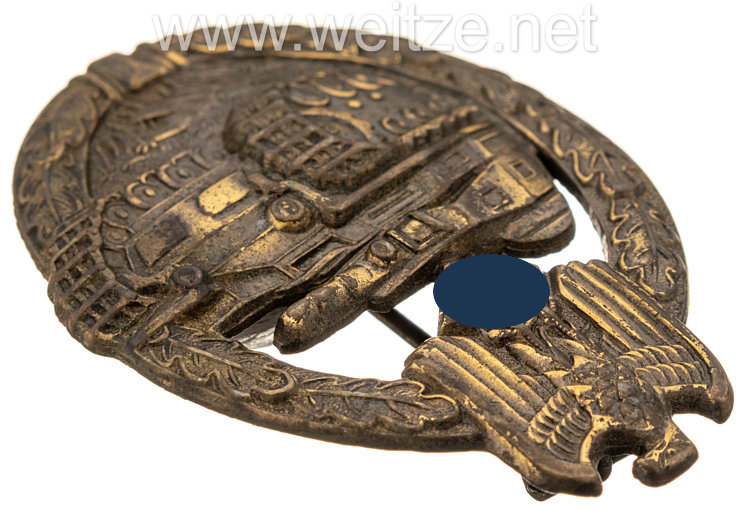
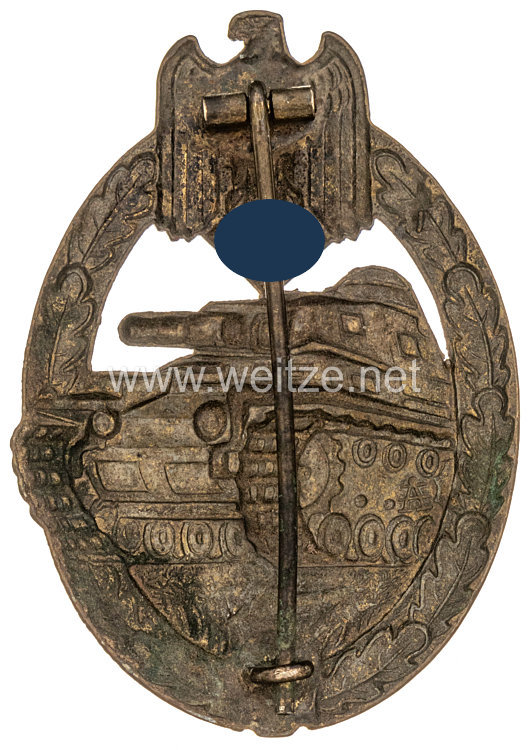
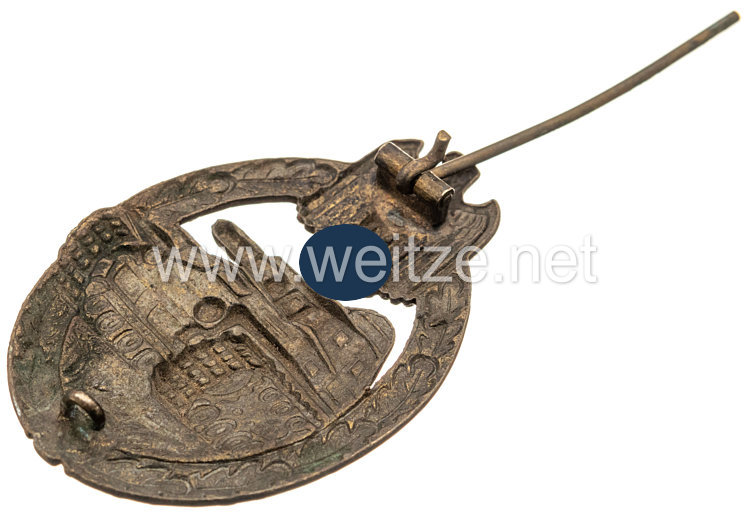
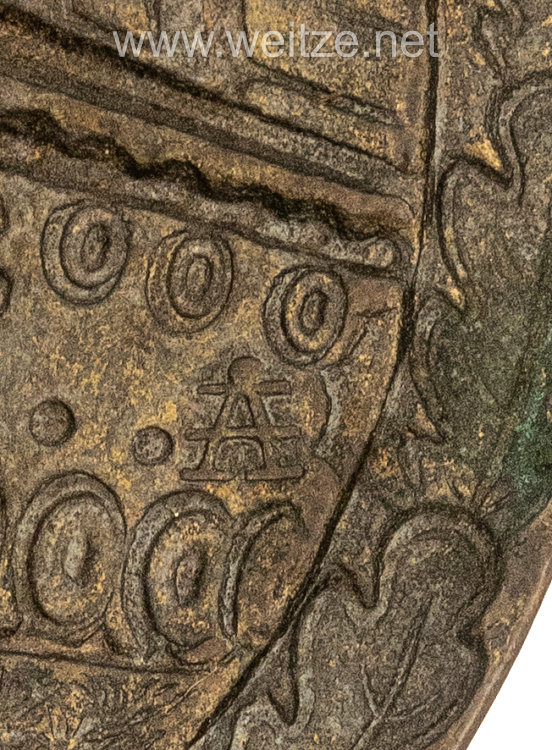
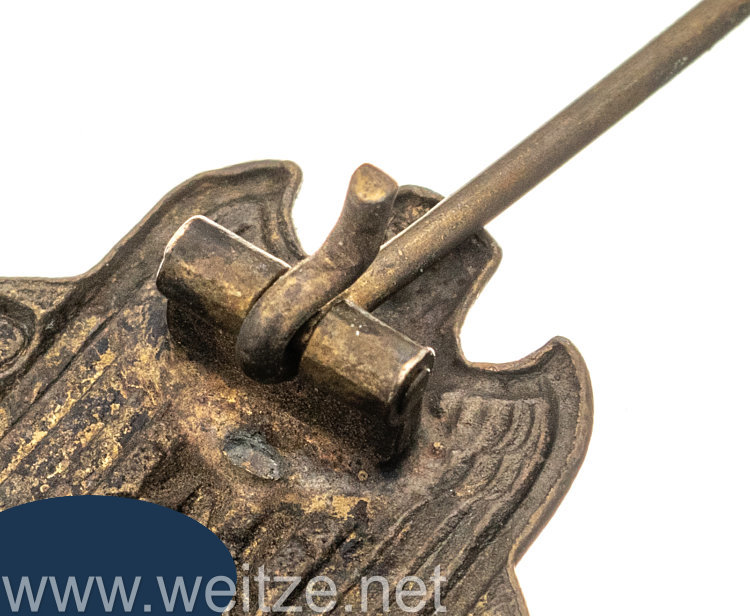
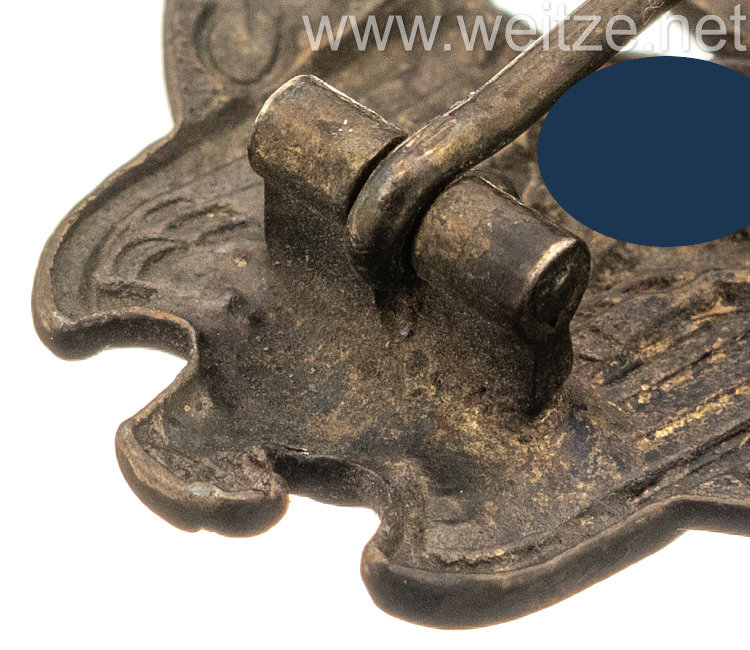
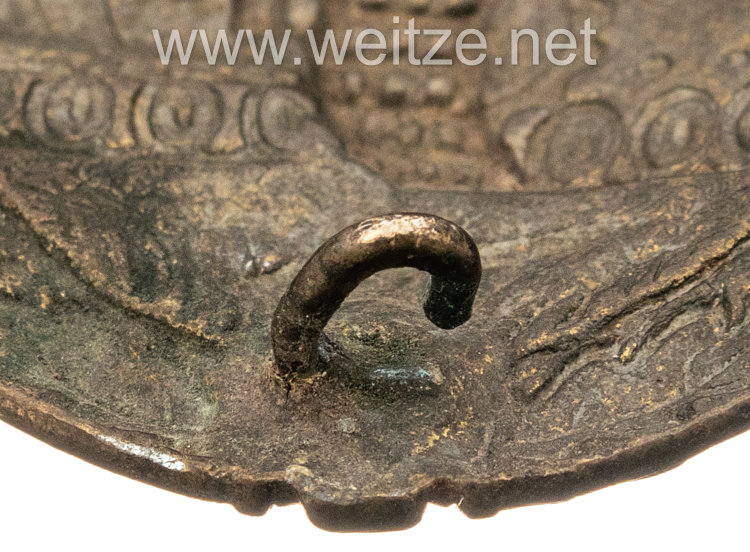
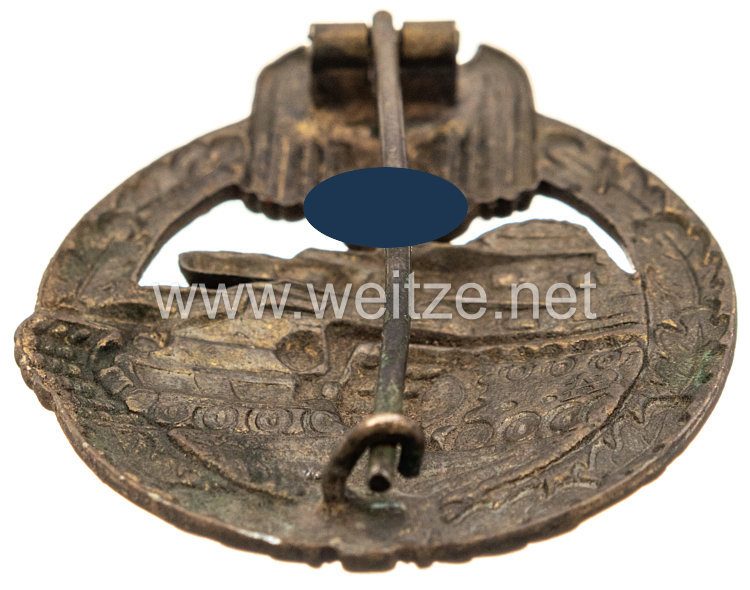
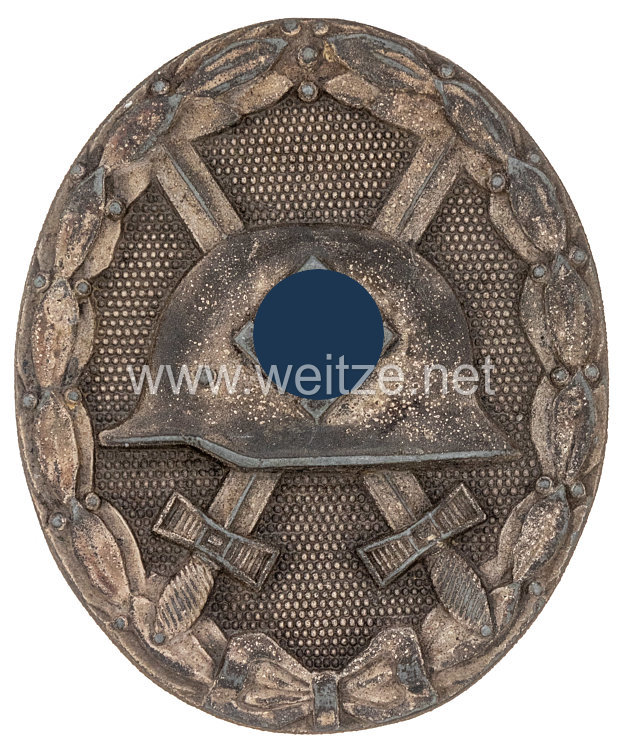
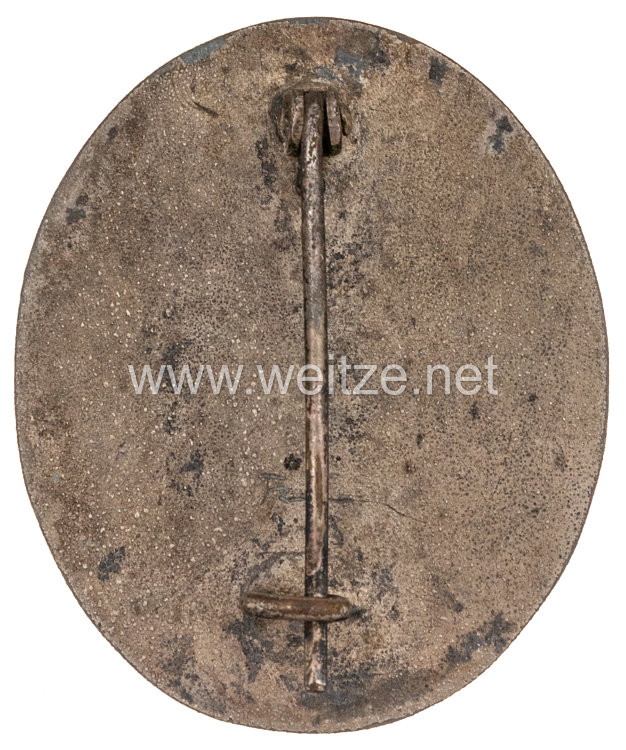
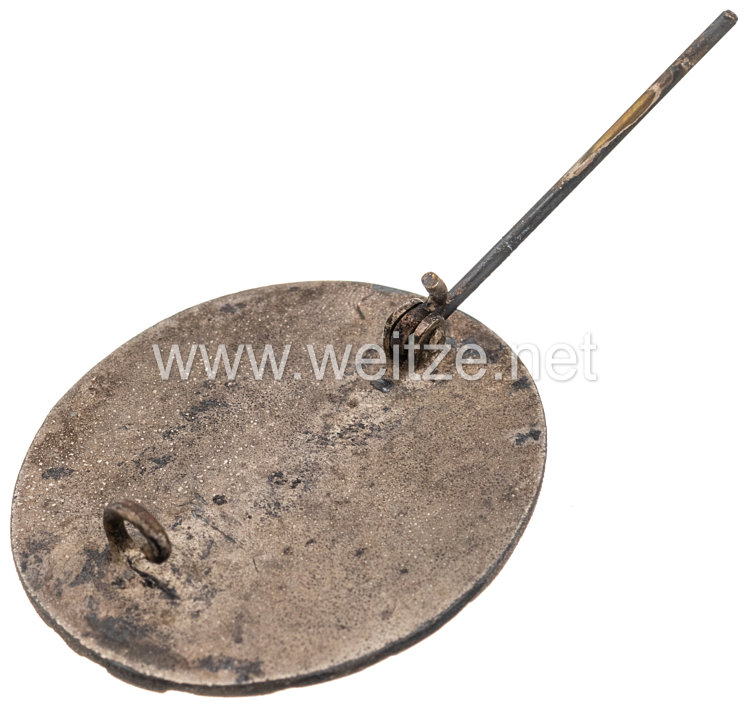
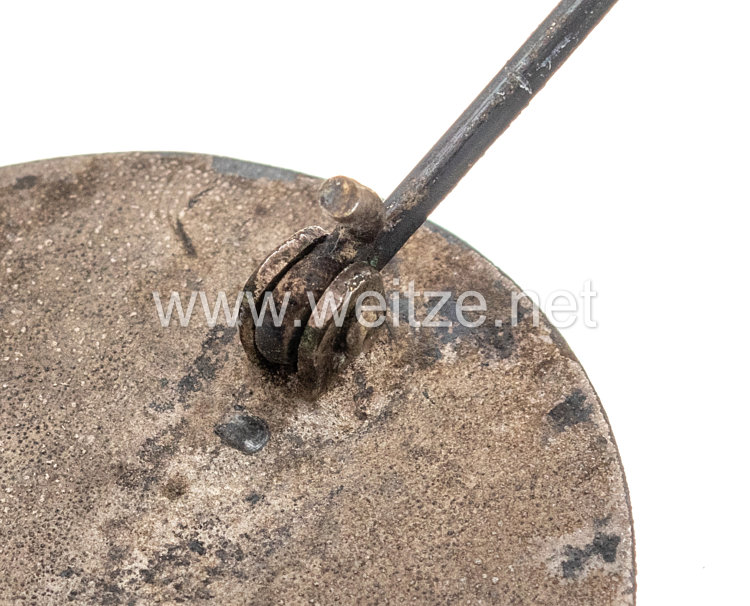
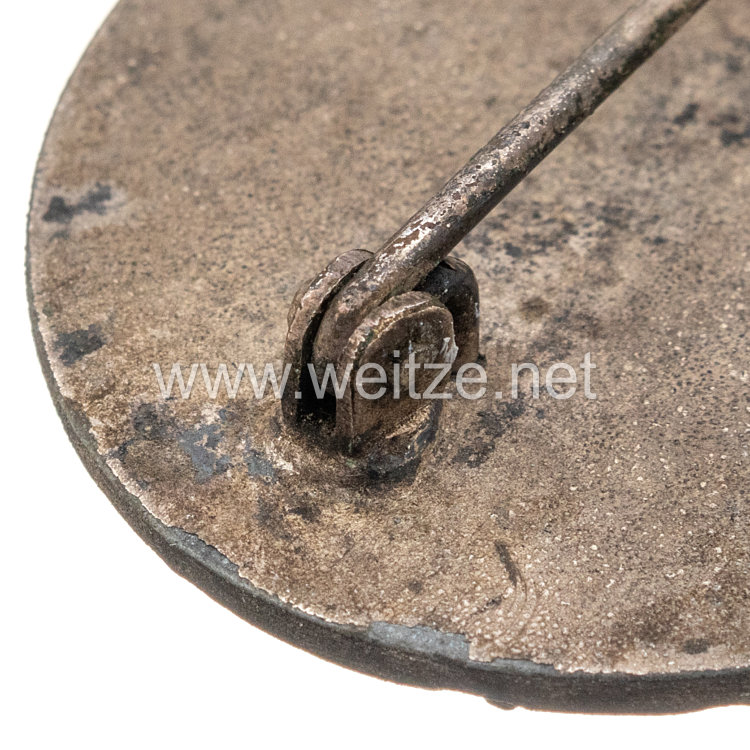
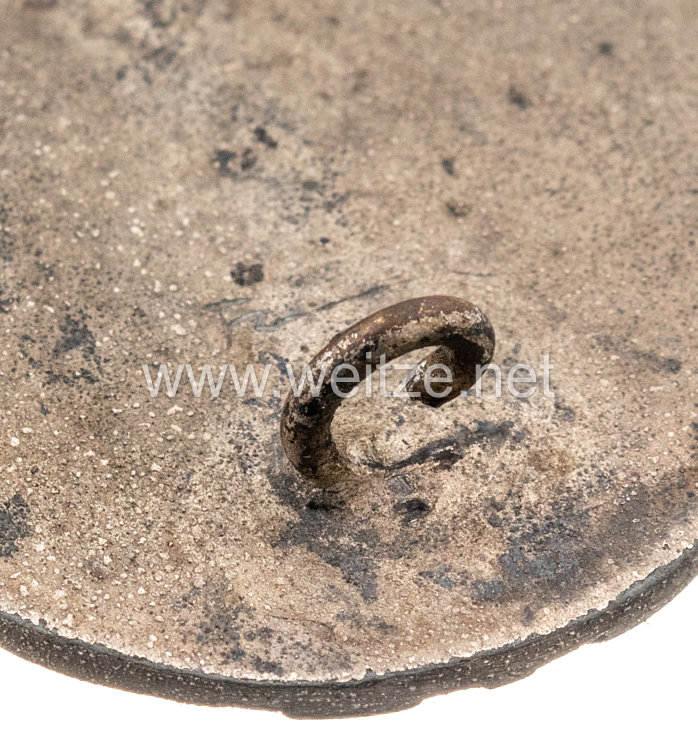
Auszeichnungen: Eisernes Kreuz 2 Klasse 1939, mit Verleihungstüte "Willhelm Deumer Lüdenscheid". Verwundeten Abzeichen in Silber, Feinzink. Panzerkampfabzeichen in Bronze, Buntmetall hohlgeprägt.
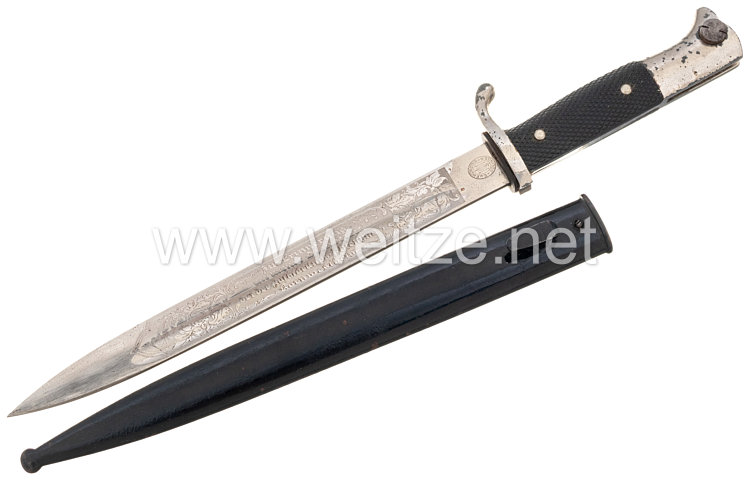
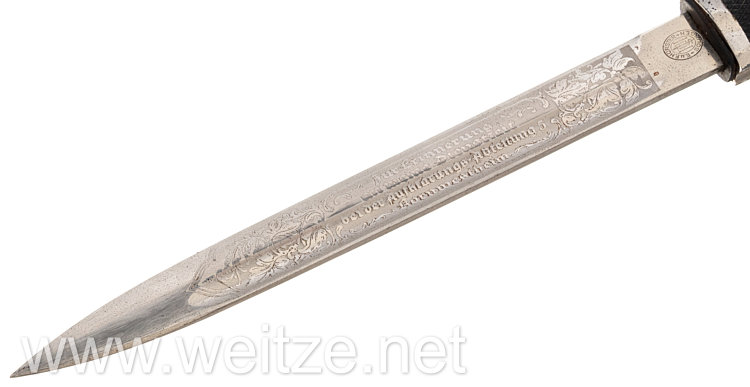
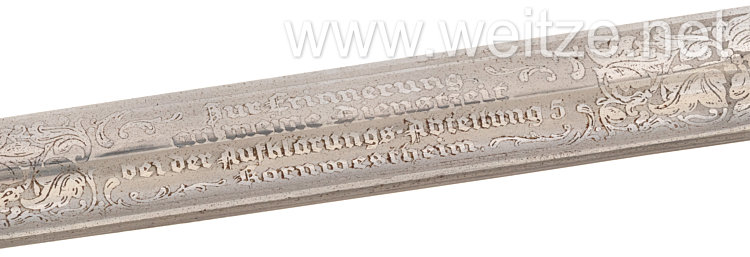
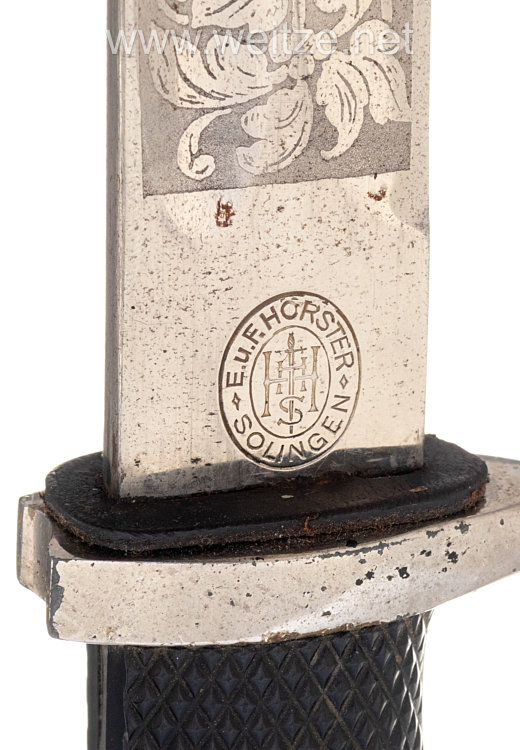
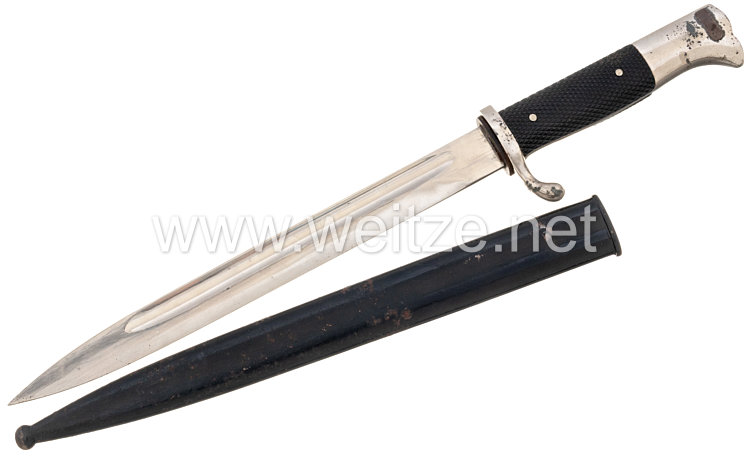
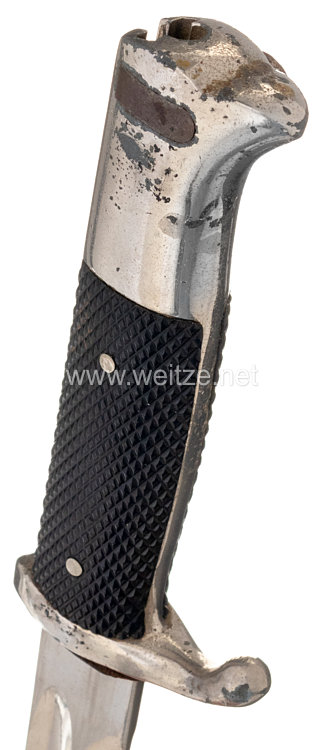
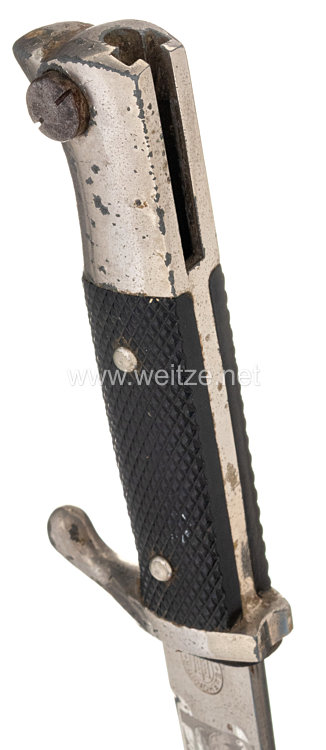
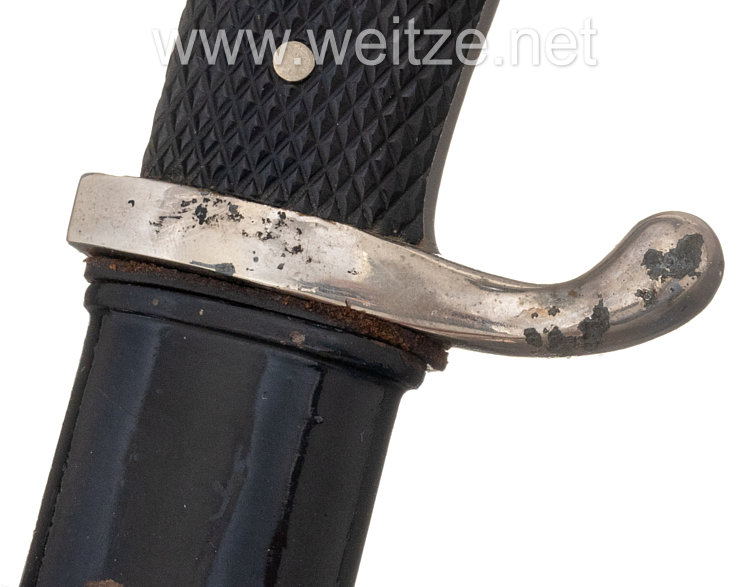
Dazu noch sein Extraseitengewehr mit einseitiger Klingenätzung "Zur Erinnerung an meine Dienstzeit bei der Aufklärungs-Abteilung Kornwestheim", Zustand 2-.
Ein toller Nachlass in unberührtem Originalzustand, direkt aus Familienbesitz. In diesem Umfang tauchen nur noch ganz selten so vollständige Gruppen wie diese auf dem Markt auf.
Einheitsfeldmütze für die Panzertruppe, schwarzes Tuch, ohne Hoheitsabzeichen, innen mit grauem Tuchfutter, Größe ca.56, getragenes Stück, Zustand 2-.
Paar Kragenspiegel, Totenköpfe aus Eisenblech, von der Uniform abgetrennt, Zustand 3.
Dabei seine Erkennungsmarke in Feinzink, am Band "1.Pz.Aufkl. Abt 5". Zustand 3.
Urkunden: Anschreiben und Besitzzeugnis für "Medaille zur Erinnerung an den 1 Oktober 1938", ausgestellt in Wien den 25.10.1939, mit Einheitsstempel "Aufklärungs - Abteilung 5 mot". Urkunde zum Eisernen Kreuz 2.Klasse 1939, ausgestellt am 7. Dezember 1941, unterschrieben durch den Kommandeur der 2. Pz Division. Besitzzeugnis zum Panzerkampfabzeichen in Bronze, ausgestellt am 15.12.1941, unterschrieben durch den Generalleutnant und Kommandeur der 2. Panzerdivision. Besitzzeugnis zum Verwundeten Abzeichen in Silber, ausgestellt am 16.4.1942 in Böblingen. Alle Urkunden sind gelocht und teilweise gefaltet.
Auszeichnungen: Eisernes Kreuz 2 Klasse 1939, mit Verleihungstüte "Willhelm Deumer Lüdenscheid". Verwundeten Abzeichen in Silber, Feinzink. Panzerkampfabzeichen in Bronze, Buntmetall hohlgeprägt.
Dazu noch sein Extraseitengewehr mit einseitiger Klingenätzung "Zur Erinnerung an meine Dienstzeit bei der Aufklärungs-Abteilung Kornwestheim", Zustand 2-.
Ein toller Nachlass in unberührtem Originalzustand, direkt aus Familienbesitz. In diesem Umfang tauchen nur noch ganz selten so vollständige Gruppen wie diese auf dem Markt auf.