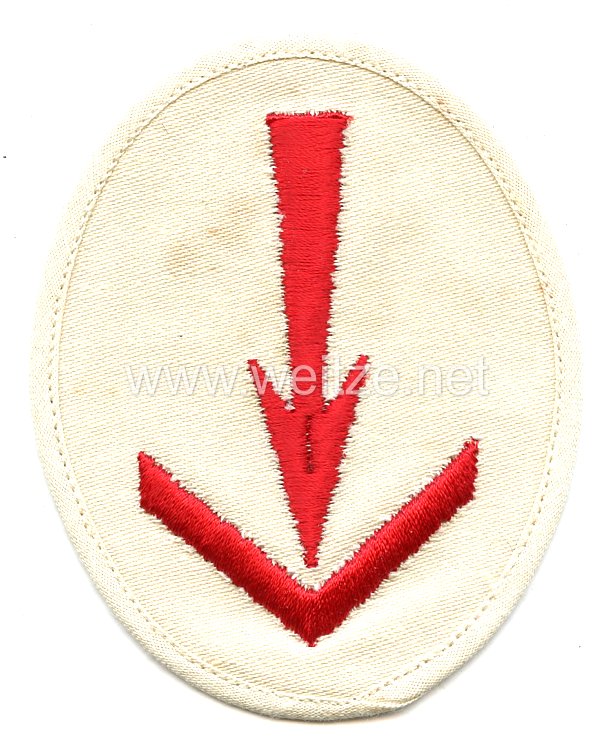
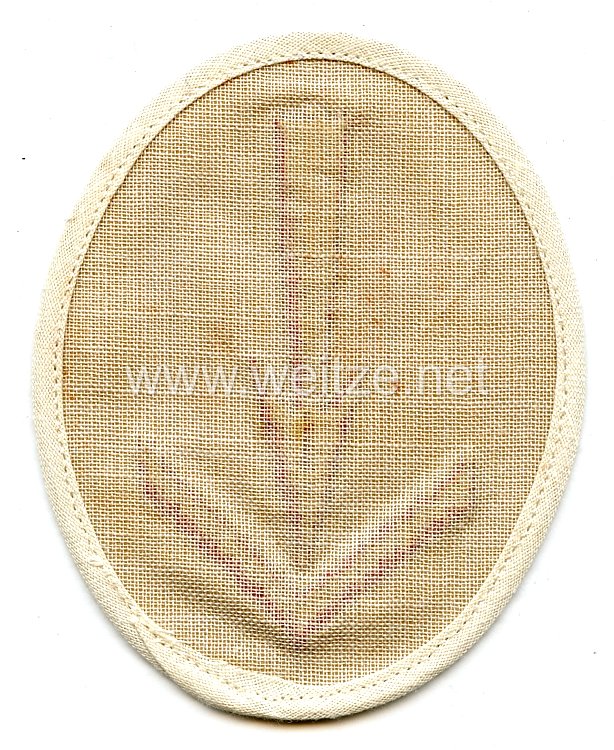
Kriegsmarine Sleeve Insignia Special Training Underwater Hydrophone Operator Enlisted Course
The Kriegsmarine sleeve badge for special training as underwater sound detector (Unterwasserhorcher) for enlisted personnel represents a remarkable example of the specialized qualification badges introduced by the German Navy during World War II. These badges identified naval personnel who had completed special technical training in acoustic underwater detection.
The Unterwasserhorcher (underwater listeners or sound detection operators) played a crucial role in submarine warfare and naval defense. Their task was to locate and identify enemy ships and submarines by listening to underwater sounds. This capability was particularly important in an era before modern sonar technologies were fully developed. The listeners had to be able to distinguish different ship types based on their characteristic engine sounds, propeller noises, and other acoustic signatures.
Training as an underwater sound detector was highly specialized and required special abilities. Candidates needed excellent hearing and the ability to recognize even the smallest differences in underwater sounds. The enlisted personnel course (Mannschaftslehrgang) included theoretical instruction on sound propagation in water, practical exercises with listening devices, and training in recognizing various sound signatures. The training lasted several weeks and took place in specialized naval schools.
The sleeve badge was typically worn on the white summer blouse of the Kriegsmarine, as mentioned in the object description. The white uniform was the summer service uniform for enlisted men and petty officers of the Kriegsmarine and was worn during warmer months or in southern waters. The badge was attached to the left upper arm, according to Kriegsmarine uniform regulations.
The design of such special training badges followed certain Kriegsmarine guidelines. Typically, they consisted of embroidered motifs on a dark blue cloth background that harmonized with the basic color of the naval uniform. Badges for technical specializations often displayed symbolic representations of the respective activity or equipment. For underwater listeners, this might include elements such as stylized sound waves or listening devices.
The introduction of such qualification badges served several purposes. First, they enabled rapid visual identification of specialists on board, which was important for ship or submarine organization. Second, they strengthened morale and esprit de corps among specialized crews, as the badges recognized their special skills and successful training. Third, they contributed to military order and hierarchy by making competencies and areas of responsibility visible.
Condition 2, as stated in the description, indicates a well-preserved specimen that may have been worn but shows no significant damage. Such badges were produced in limited quantities during the war, as only qualified specialists were permitted to wear them. This makes surviving examples interesting historical artifacts today.
The importance of underwater sound detectors cannot be underestimated. In the Battle of the Atlantic, they were often the first to detect enemy convoy escorts or destroyers, giving U-boat crews valuable time to react. On surface ships and in coastal defense stations, listeners helped locate enemy submarines and initiate countermeasures.
After the war, these specific badges disappeared with the dissolution of the Kriegsmarine. The Bundesmarine, which was founded later, developed its own system of qualification badges, although the tradition of acoustic underwater surveillance continues in modern navies, now with highly sophisticated electronic sonar technology.
Today, such sleeve badges are important objects of study for military historians and collectors interested in the Kriegsmarine and naval history of World War II. They document the specialization and technical development of the German Navy and commemorate the young men who completed this demanding training and served under difficult conditions.