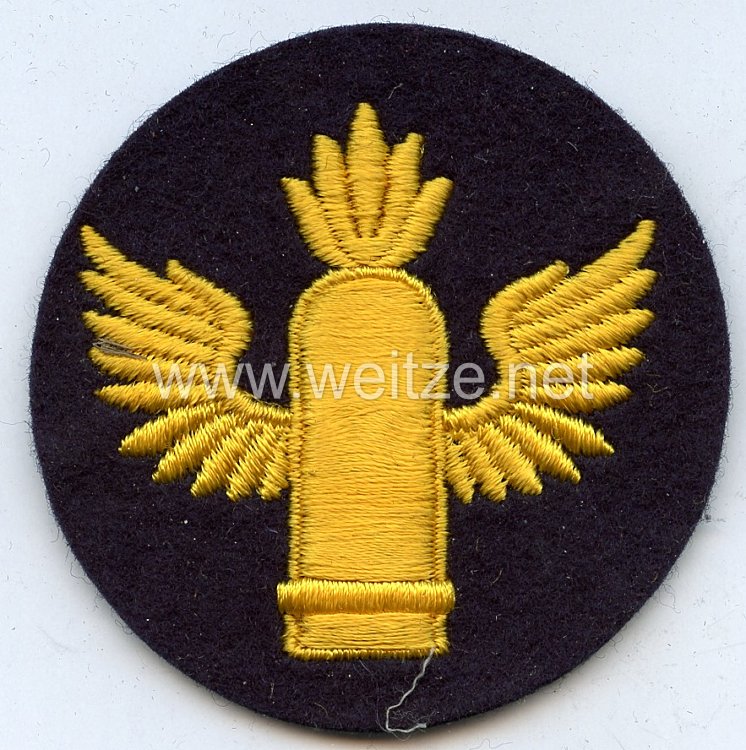
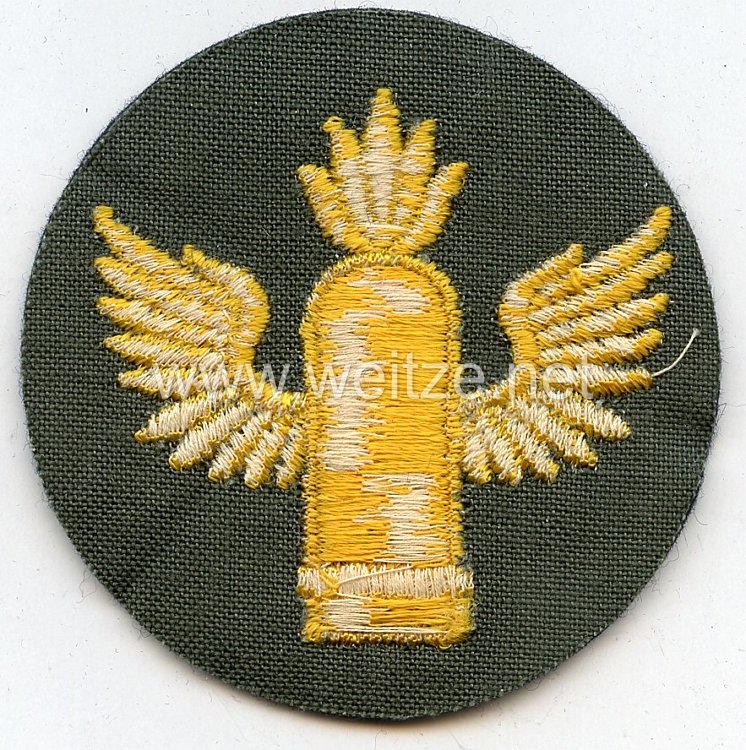
Kriegsmarine Enlisted Ranks Sleeve Insignia Naval Artillery Career Path

for the blue uniform, machine-embroidered yellow on blue. Worn condition, Condition Grade 2.
436658
15,00

Kriegsmarine Enlisted Ranks Sleeve Insignia Naval Artillery Career Path

The Kriegsmarine sleeve badge for enlisted personnel of the Naval Artillery career path represents an important example of the complex career and identification system employed by the German Kriegsmarine during World War II. This machine-embroidered version in yellow on blue background was worn on the blue service uniform and identified the specific career path of a naval serviceman.

The Kriegsmarine, founded in 1935 as the successor to the Reichsmarine, developed a differentiated system of career badges to make visible the various specializations within the navy. The introduction of these badges was codified through the Uniform Regulations for the Kriegsmarine of September 1, 1935, which was supplemented and refined multiple times. The career badge system allowed for immediate recognition of a sailor's technical specialization.

The Naval Artillery career path belonged to the most important technical branches of the Kriegsmarine. Personnel in this career path were responsible for the operation, maintenance, and deployment of naval artillery – a central task, as guns constituted the main armament of most surface vessels. The corresponding career badge typically displayed a stylized grenade or other artillery-specific symbol.

Sleeve badges were worn on the left upper arm of the blue service uniform, referred to as the parade jacket or walking-out jacket. This blue uniform differed from the white summer uniform and the field-gray working uniform. The positioning and exact placement of badges was precisely regulated in the clothing directives, with badges to be attached at a specific height above the cuff.

The machine embroidery technique was a common manufacturing method for these badges, particularly for enlisted ranks. In contrast to hand-embroidered variants, often reserved for officers, machine production enabled more cost-effective and faster manufacturing. The yellow color on blue background followed the Kriegsmarine's color specifications and ensured good visibility of the badge on the dark blue uniform.

The hierarchical system of the Kriegsmarine clearly distinguished between enlisted personnel, non-commissioned officers, and officers. Enlisted ranks encompassed grades from seaman to leading seaman and formed the backbone of ship crews. Career badges for enlisted personnel were simpler in their execution than those for higher ranks.

During the war, numerous different manufacturers were contracted to produce uniform effects. Quality could therefore vary, with early wartime productions often exhibiting higher quality than later examples manufactured under increasing material and time pressure. The use of substitute materials and simplified manufacturing processes became increasingly common as the war progressed.

The importance of naval artillery to the Kriegsmarine cannot be overestimated. From the heavy guns of battleships and cruisers to the medium and light artillery on destroyers and smaller vessels – trained artillerymen were essential everywhere. Training to become a naval artilleryman was demanding and included theoretical instruction as well as practical exercises on various weapon systems.

After World War II, all badges and uniforms of the Kriegsmarine became obsolete. Today, such pieces are historical artifacts that document the complex organizational system of the German Navy in collections and museums. The condition of such textile badges varies greatly, as they were subject to natural wear during service and exposed to weather conditions.

Research into these uniform effects contributes to understanding the everyday history of World War II. They show not only military organization but also craft traditions, production methods, and the material culture of the era. For military-historical research, such objects are important sources that, together with documents, photographs, and eyewitness accounts, enable a comprehensive picture of historical reality.

The study of Kriegsmarine insignia also reveals the navy's emphasis on professionalization and specialization. Each career path required specific training and expertise, and the visible display of these qualifications through badges served both practical and psychological purposes. It fostered esprit de corps among specialists and facilitated the identification of qualified personnel in operational situations.