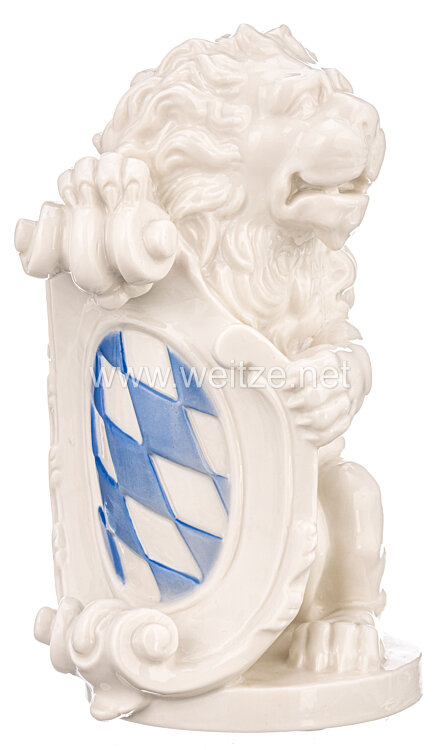
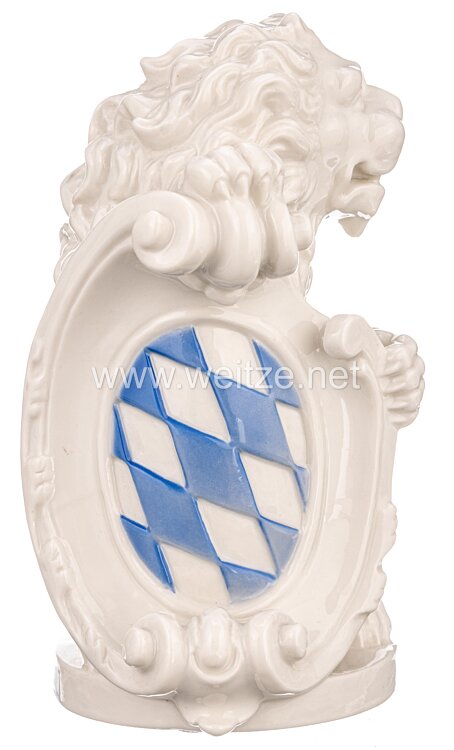
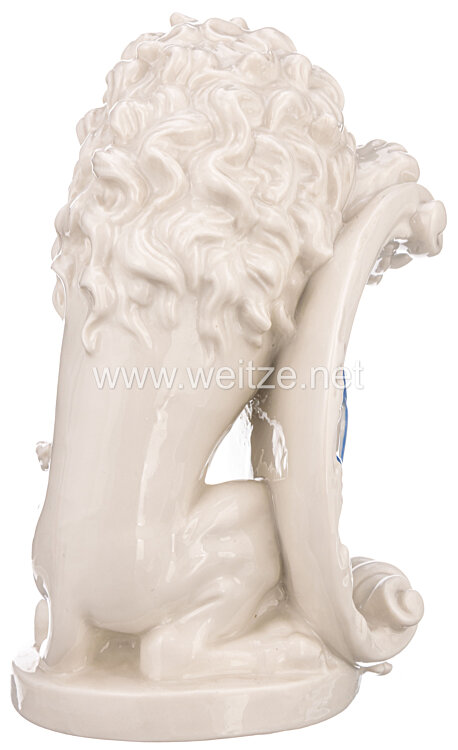
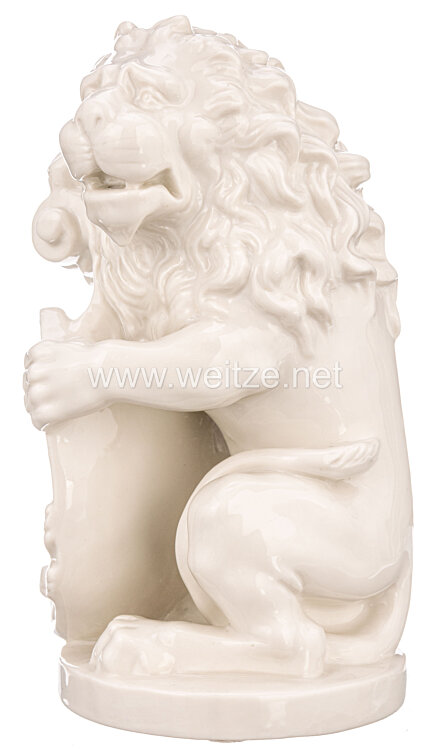
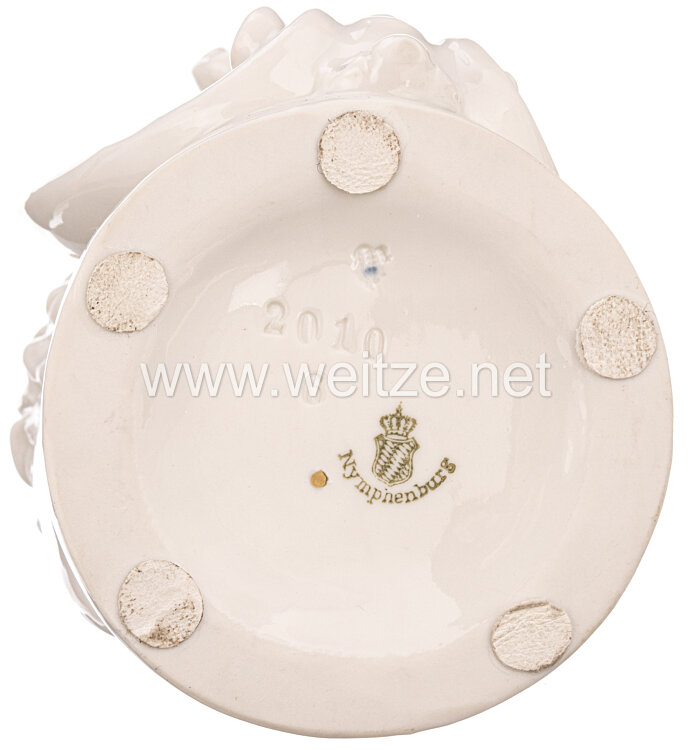
Nymphenburg Porcelain Manufactory Table Decoration “The Bavarian Lion”
The Nymphenburg Porcelain Manufactory is one of Europe's most traditional and prestigious porcelain manufacturers, with a history spanning over 270 years. This table decoration featuring “The Bavarian Lion” represents not only the outstanding craftsmanship tradition of this manufactory but also the deep connection between Bavarian state identity and military-monarchical symbolism.
The Manufactory and Its History
The manufactory was founded in 1747 by Prince-Elector Maximilian III Joseph and was initially housed in Neudeck Palace before being relocated to Nymphenburg Palace in 1761. From the beginning, the manufactory was closely connected with the Bavarian royal house and produced exquisite porcelain objects for the court and representative purposes. The Nymphenburg Porcelain Manufactory developed into a symbol of Bavarian art and culture and always stood under the patronage of the House of Wittelsbach.
The Bavarian Lion as State Symbol
The Bavarian Lion has been Bavaria's heraldic animal for centuries, embodying strength, courage, and sovereign authority. Its origins date back to the 12th century when the Guelphs and later the Wittelsbachs adopted the lion as their coat of arms. The rampant golden lion on a black or blue field became the unmistakable symbol of Bavarian statehood and was used in both civil and military contexts.
In Bavaria's military tradition, the lion played a special role. It adorned regimental flags, standards, uniform buttons, and military decorations. During the Napoleonic Wars and Bavaria's elevation to a kingdom in 1806 under King Maximilian I Joseph, the symbol gained additional significance. Bavarian troops first fought alongside Napoleon and later in the Wars of Liberation, always under the banner of the Bavarian Lion.
Porcelain as Medium of Representation
Since the 18th century, porcelain has been a preferred medium for representative and ceremonial objects. Table decorations of this type were used for festive occasions, military banquets, and state receptions. The white-glazed execution of the lion corresponds to Nymphenburg's classical tradition and emphasizes the purity and elegance of form. Such objects served as table centerpieces and symbolized the power and continuity of the Bavarian state.
Particularly in the 19th century, during the reigns of King Ludwig I, Maximilian II, and Ludwig II, the production of representative porcelain objects experienced a golden age. The Nymphenburg Manufactory produced gifts for foreign potentates, honors for distinguished officers, and decorative elements for royal residences.
Military and Ceremonial Use
Table decorations featuring the Bavarian Lion were used in officers' messes, regimental anniversaries, and military festivities. They were part of the visual culture that strengthened esprit de corps and demonstrated the connection between the army and the royal house. During World War I and the interwar period, such objects were also maintained as mementos and symbols of Bavarian identity.
After the end of the monarchy in 1918 and the establishment of the Free State of Bavaria, the Bavarian Lion remained the state coat of arms and is still used today. The Nymphenburg Porcelain Manufactory, which passed into private hands after 1918, continued its tradition and still produces according to historical models.
Collector Value and Historical Significance
Objects from the Nymphenburg Porcelain Manufactory are sought-after collector's items today. The manufactory mark on the underside guarantees authenticity and provenance. The white-glazed version of the Bavarian Lion with the coat of arms in its claws is a classic motif that was produced in various sizes and versions. Such pieces document not only craftsmanship mastery but also Bavaria's state and military representation culture over several centuries.
The combination of courtly manufactory tradition, state symbolism, and military culture makes objects like this table decoration valuable historical testimonies of Bavarian history.