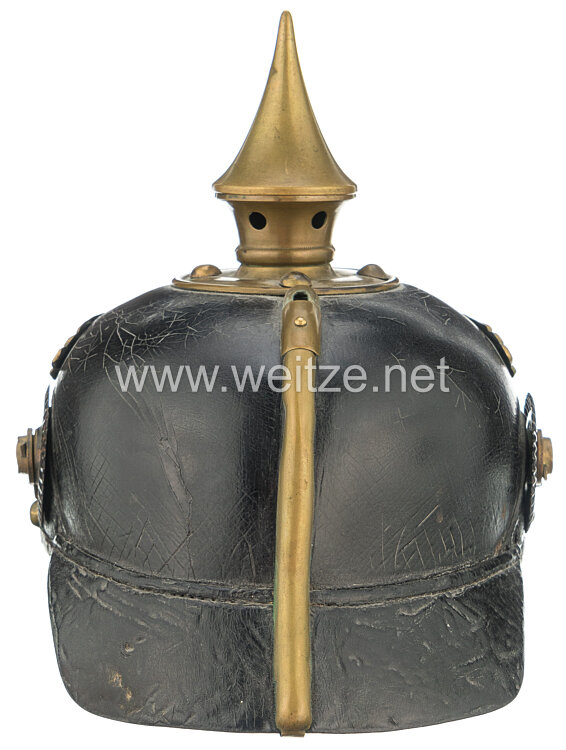
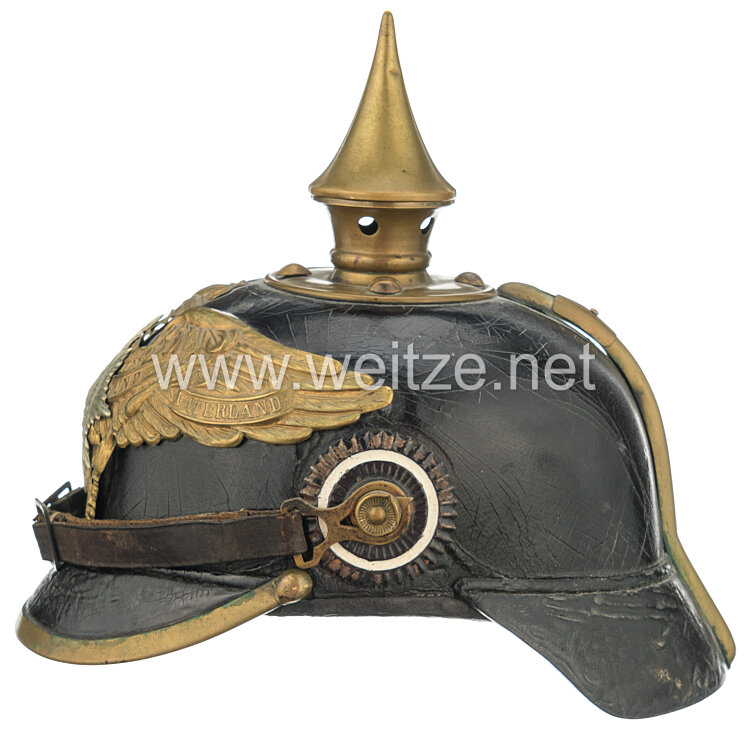
Prussia Pickelhaube Spiked Helmet for a Mounted Officer in Simple Service of the Rural Gendarmerie

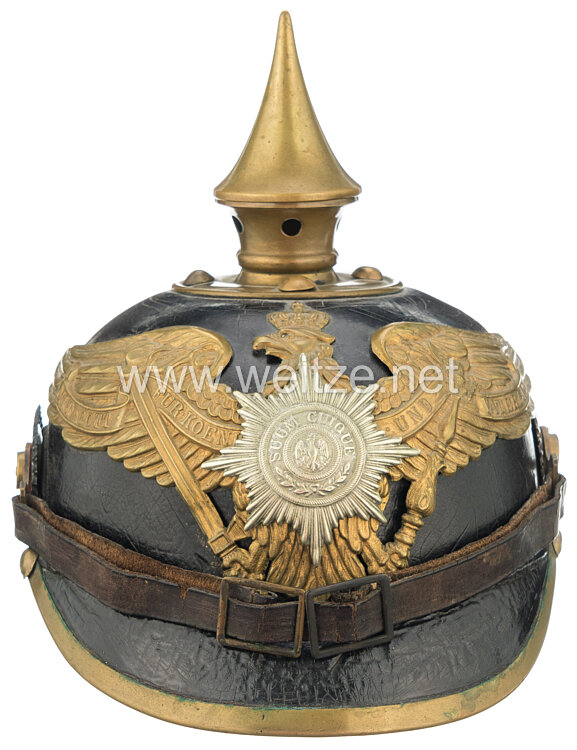
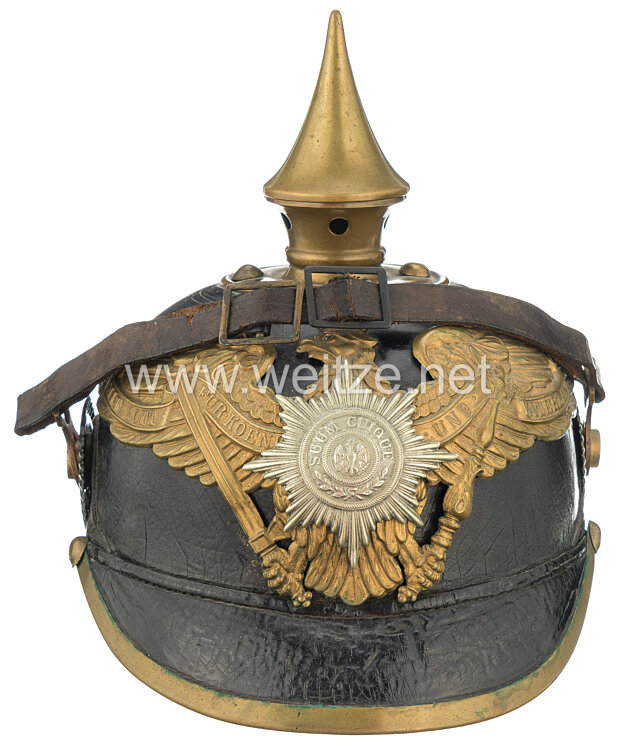
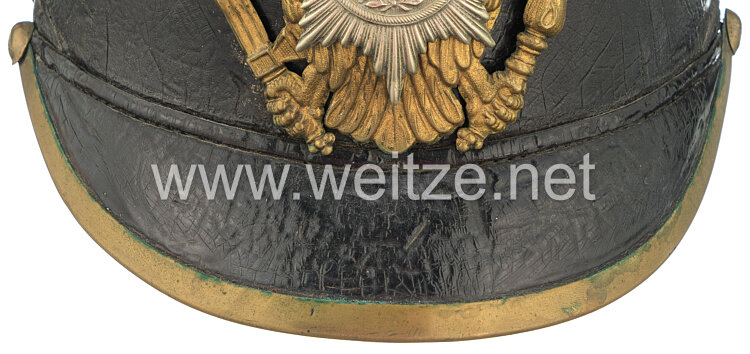
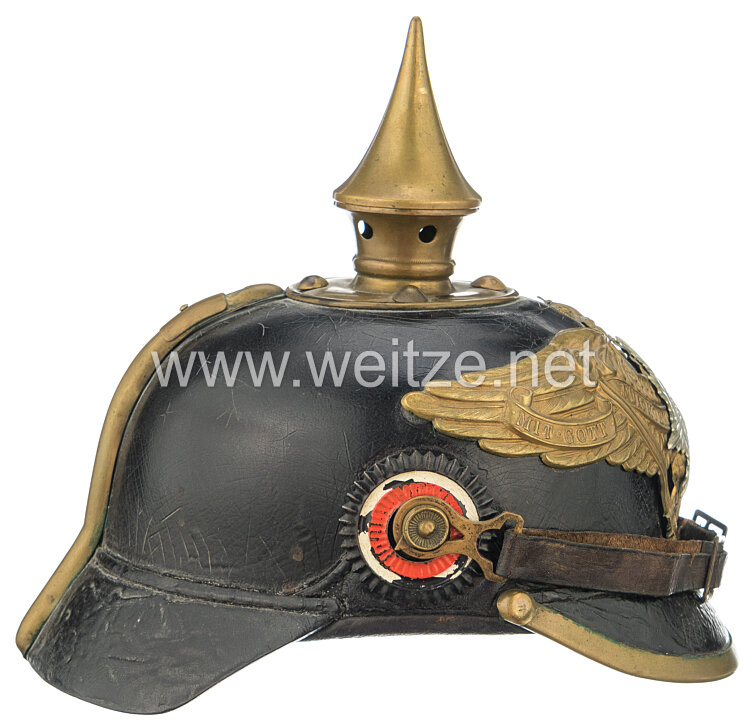
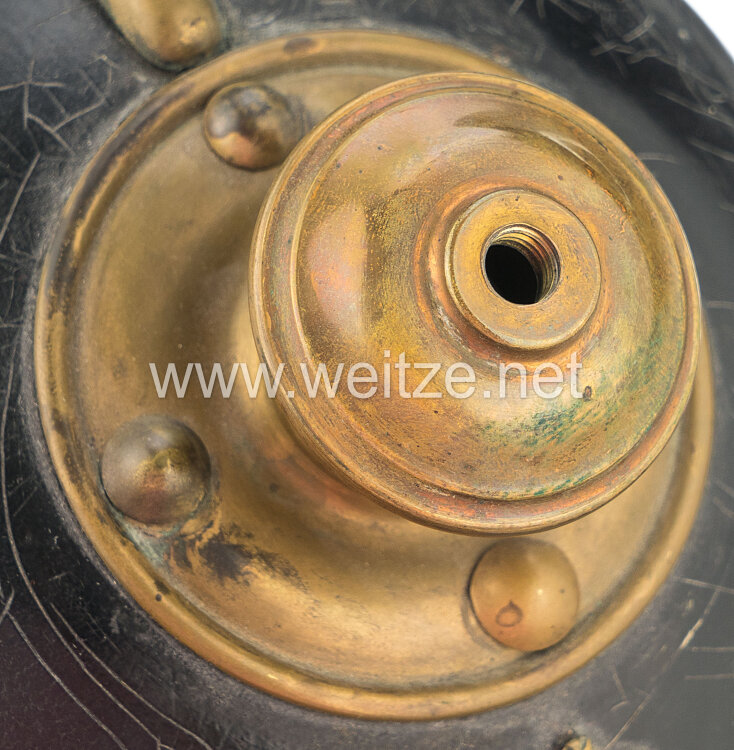
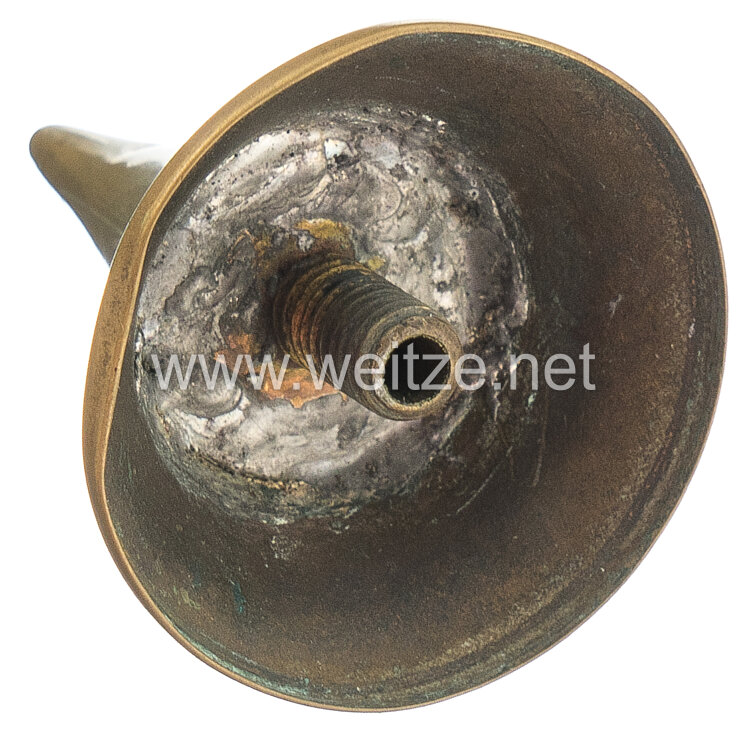
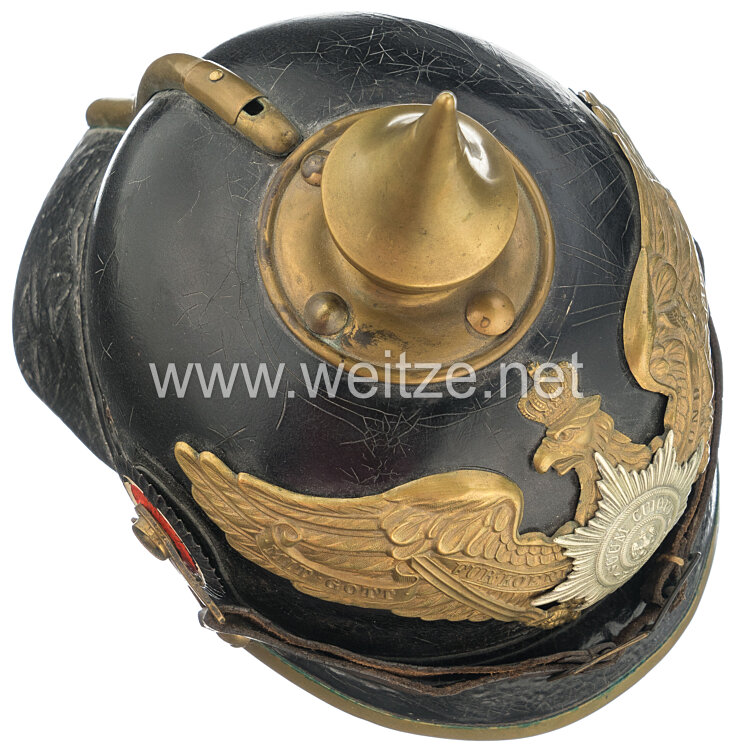
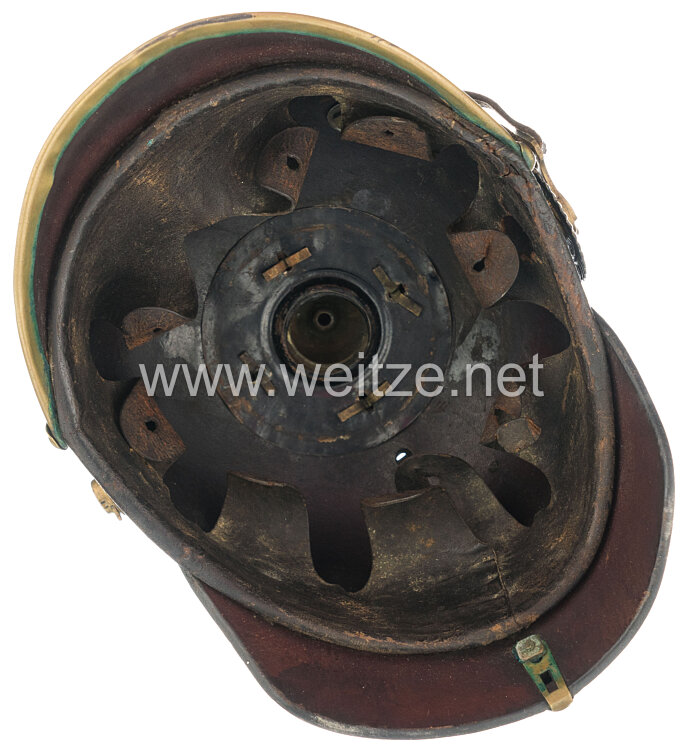
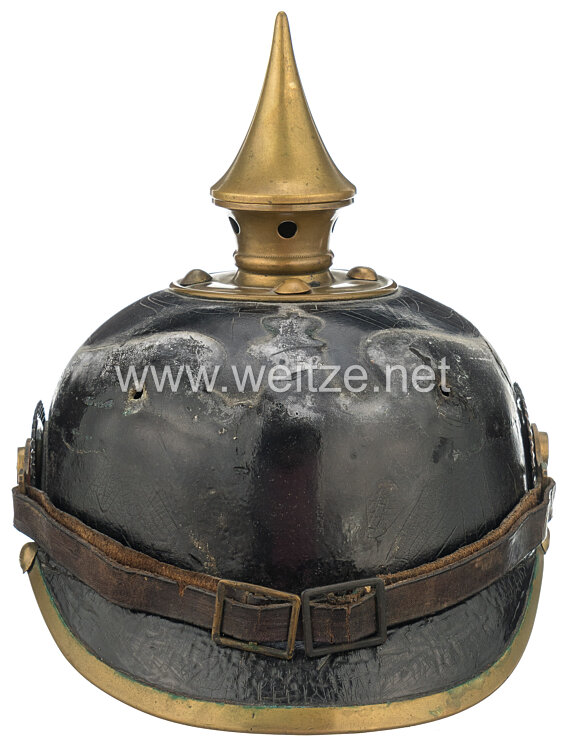
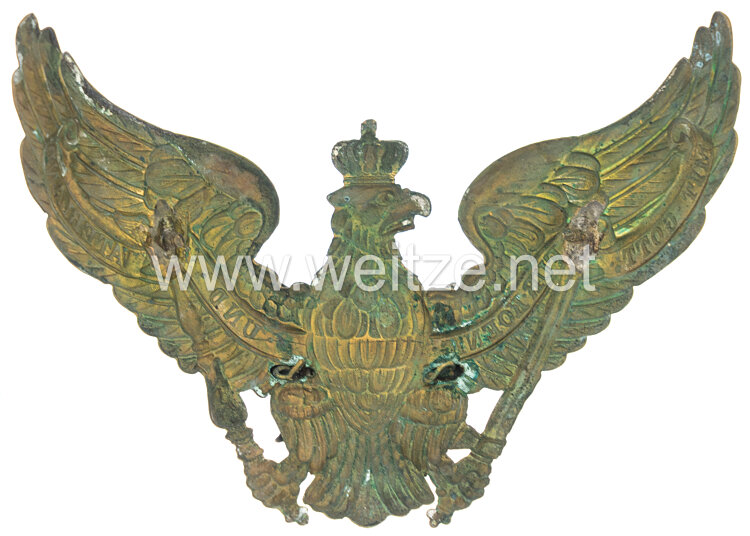
Chamber piece circa 1908. Heavy leather helmet in execution similar to those for the Guard Infantry Regiments, complete with all fittings in brass. Front features the Guard eagle with applied silver Guard star. Leather chin strap on button 91, complete with both cockades. Plate with service spike. Interior with laced leather lining. Stamped “LG 08” inside behind the helmet eagle. Size 55. Worn, condition 2.

450256
1.650,00

Prussia Pickelhaube Spiked Helmet for a Mounted Officer in Simple Service of the Rural Gendarmerie

The Prussian Pickelhaube for mounted officers of the rural gendarmerie (Land-Gendarmerie) represents a fascinating example of military headgear from the German Empire. This particular specimen from 1908 embodies the complex hierarchy and detailed uniform regulations that characterized the Prussian military and police system.

The Prussian Gendarmerie was established in the 19th century as a militarily organized police force. The Land-Gendarmerie was responsible for rural areas and reported to the War Ministry. The gendarmes were active non-commissioned officers of the army who were transferred to this function after their service period. They wore a distinctive uniform that reflected their dual role as police and military personnel.

This helmet represents Kammerstück quality, meaning it was purchased with the wearer's private funds rather than issued from army stocks. Such helmets were often of superior quality and more careful workmanship than standard issues. The manufacture around 1908 dates the helmet to the late Wilhelmine era, a period of relative stability before World War I.

The construction of the helmet follows the model of the Guard Infantry Regiments, evident in the heavy leather design. This was a special distinction, as the Guard units held the highest rank in the Prussian hierarchy. The helmet consists of pressed leather formed over a cork insert to maintain its characteristic shape. This construction method offered some protection against saber strikes, although the Pickelhaube was primarily conceived as a parade helmet rather than a combat helmet.

The brass fittings on this helmet identify it as intended for simple service. Higher ranks would have worn gilded or silvered fittings. The front Guard eagle with applied silver Guard star is particularly noteworthy. This combination was extremely rare and designated special units that had a particular connection to the Guard. The Guard star was normally reserved for actual Guard regiments, underscoring the special status of this gendarmerie unit.

The leather chin strap on button 91 is an important dating feature. The Model 91 was introduced in 1891 and remained in use until the end of the monarchy. The two cockades – the black-white-black Prussian state cockade and the black-white-red Imperial cockade – symbolized dual loyalty to Prussia and the German Empire.

The helmet plate with service spike is a characteristic feature of mounted units. The spike was not merely decorative but was also intended to increase the wearer's silhouette and create an impression. For mounted gendarmes, this had a practical psychological function, as they often served alone or in small groups in remote areas and needed to project authority.

The interior stamp “LG 08” behind the helmet eagle is of particular significance. “LG” undoubtedly stands for Land-Gendarmerie, while “08” designates the issue year 1908. Such stamps served for inventory purposes and today enable precise dating and attribution. The scalloped leather lining inside was typical of high-quality helmets and provided better wearing comfort through air circulation.

Size 55 corresponds to a head circumference of approximately 55 centimeters, which represents an average size. Size specifications were standardized according to Prussian regulations to enable rational production.

The historical significance of such helmets lies not only in their military function but also in their symbolic role. The Pickelhaube became the epitome of Prussian-German militarism and shaped the international image of Germany in the late 19th and early 20th centuries. For the population, the gendarme with his Pickelhaube was an everyday embodiment of state authority.

With the end of World War I and the collapse of the monarchy in 1918, the Pickelhaube disappeared from active service. The Weimar Republic introduced new, republican uniforms. Today, well-preserved specimens like this are sought-after collectors' items that document an important aspect of German military and police history. The indicated condition 2 suggests a worn but well-preserved helmet, which is remarkable given its age of over 100 years and underscores its historical and collectible value.