Ottoman Empire Order of Osmanieh
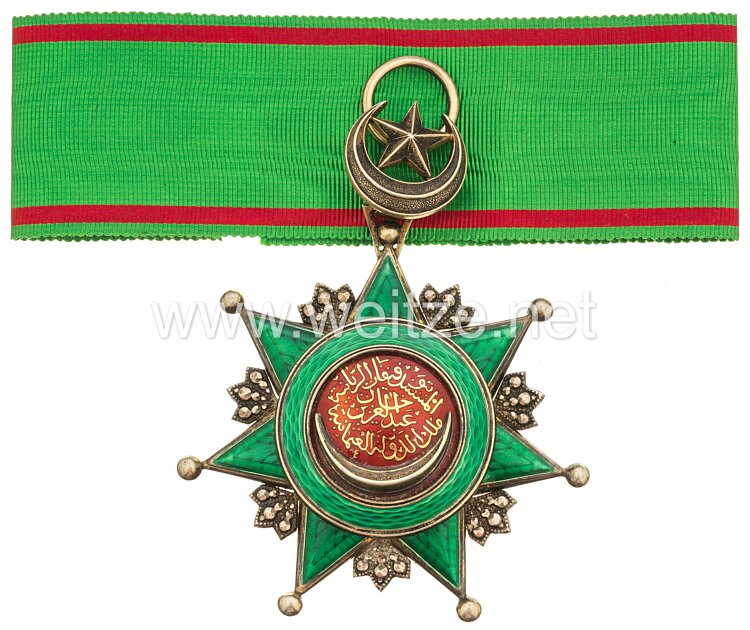
The Osmanje Order (Turkish: Osmanlı Nişanı) was one of the most distinguished state decorations of the Ottoman Empire and represented the highest honor that the Sultan could bestow upon deserving individuals both domestically and abroad. The example described here dates from the reign of Mehmed V Reşad (1844-1918, reigned 1909-1918), a period of profound political upheaval in the Ottoman Empire.
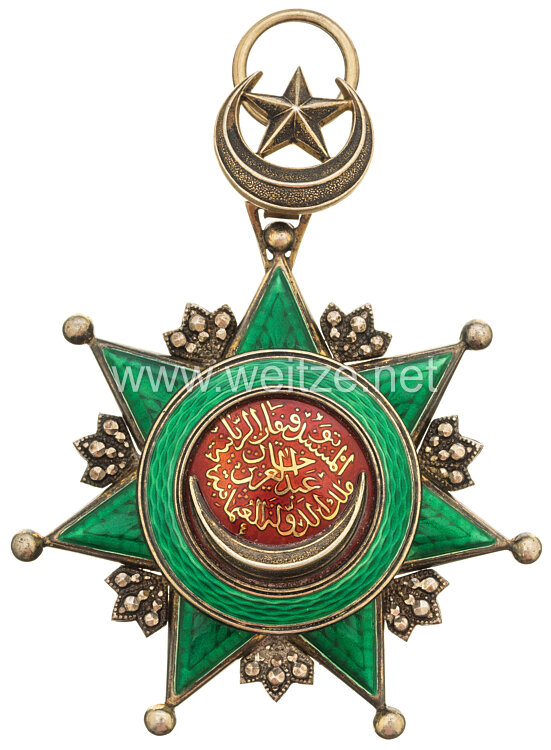
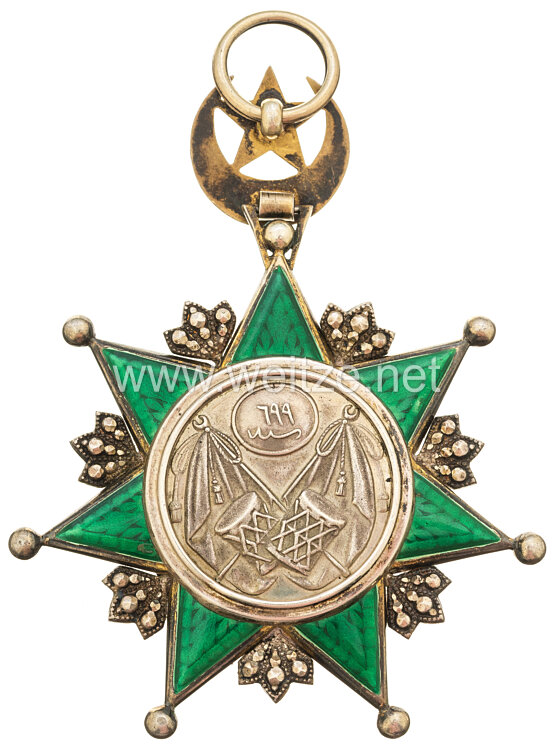
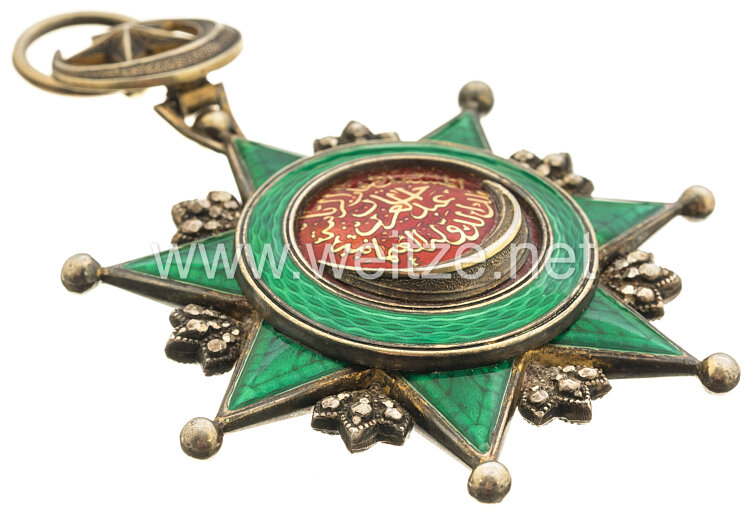
The order was first established in 1862 under Sultan Abdülaziz (r. 1861-1876) and quickly developed into the empire's most important order of merit. The decoration was awarded in several classes, with the highest grades featuring brilliant-cut diamonds. The magnificent design with partially gilded silver, brilliant-set decoration, and enameled gold medallions testifies to the high level of craftsmanship at the Darphâne-i Âmire, the imperial Ottoman mint in Constantinople.
The Darphâne-i Âmire was responsible not only for minting coins but also for producing state orders and decorations. The workshops of this institution employed highly skilled goldsmiths, enamel artists, and jewelers capable of creating objects of exceptional quality. The use of enamel combined with gold and brilliant-set elements represented the highest standard of Ottoman court art.
The Osmanje Order was distinguished by its characteristic form: a medallion featuring the imperial monogram (Tughra) of the reigning Sultan, surrounded by a star pattern. The typical design often showed red enameling with gold or silver elements. The various classes of the order differed in size, material, and additional decoration such as diamonds or other precious stones.
The reign of Mehmed V was marked by the dramatic events of the Balkan Wars (1912-1913) and the Ottoman Empire's entry into World War I in 1914 on the side of the Central Powers. During this turbulent period, numerous orders were conferred upon both Ottoman military officers and officials as well as allied foreign officers, particularly from the German Empire and Austria-Hungary. The military cooperation between the Ottoman Empire and the Central Powers led to an intensive exchange of decorations.
The dimensions described here of approximately 83x63 mm suggest a higher class of the order, possibly the Second or Third Class, which were worn as neck orders. The brilliant-set execution was an additional feature that emphasized the significance of the decoration and was typically reserved for high-ranking recipients.
After the end of World War I and the dissolution of the Ottoman Empire in 1922, the awarding of Ottoman orders ceased. The newly founded Turkish Republic under Mustafa Kemal Atatürk abolished the old order system and introduced new republican decorations. The Ottoman orders became historical objects that are today preserved in museums and private collections, representing important testimonies to the imperial history of the Ottoman Empire.
For collectors and historians, Osmanje Orders are of particular interest because they represent not only masterpieces of craftsmanship but also important historical documents. The Tughra of the respective Sultan enables precise dating, and often the recipients and reasons for award can be identified through research. The provenance of such pieces can reveal fascinating stories about diplomatic relations, military alliances, and individual merits.
The craftsmanship quality of Ottoman orders from the Darphâne-i Âmire exemplifies the highly developed artistry that was cultivated at the Ottoman court until the final years of the empire. The combination of traditional techniques with modern methods of enamel art and brilliant-setting demonstrates the ability of Ottoman workshops to compete with European manufactories while preserving independent aesthetic traditions.
These decorations serve as tangible links to a vanished world of imperial grandeur and continue to fascinate scholars and collectors with their beauty and historical significance.