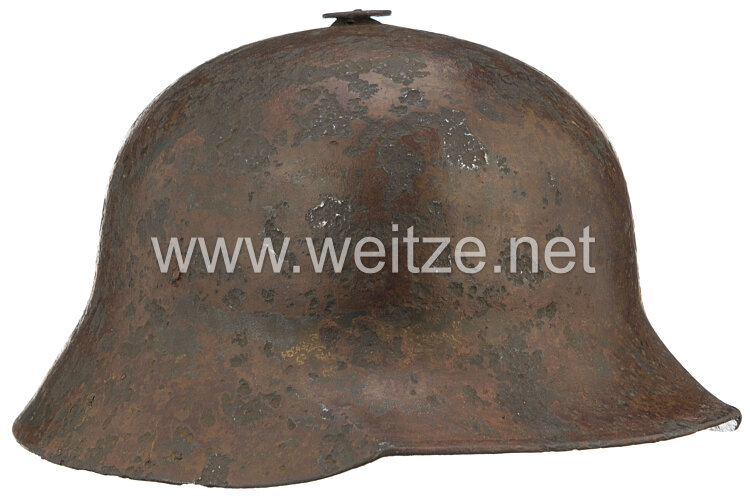
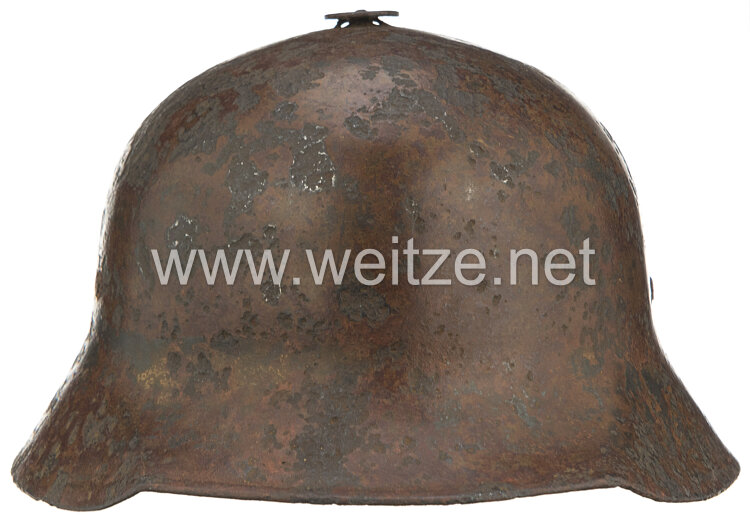
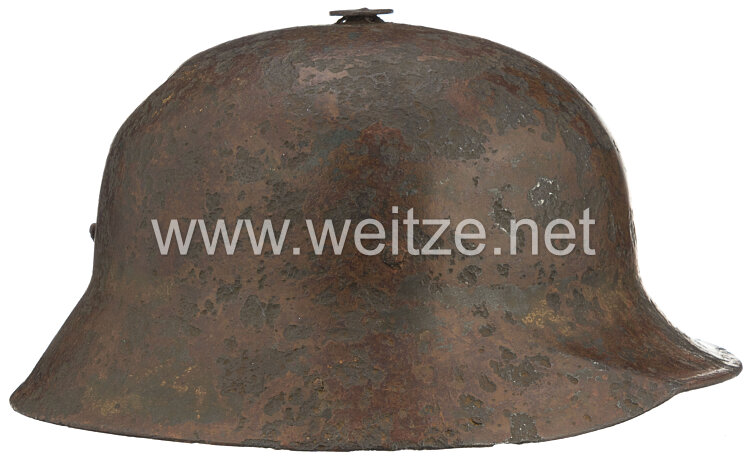
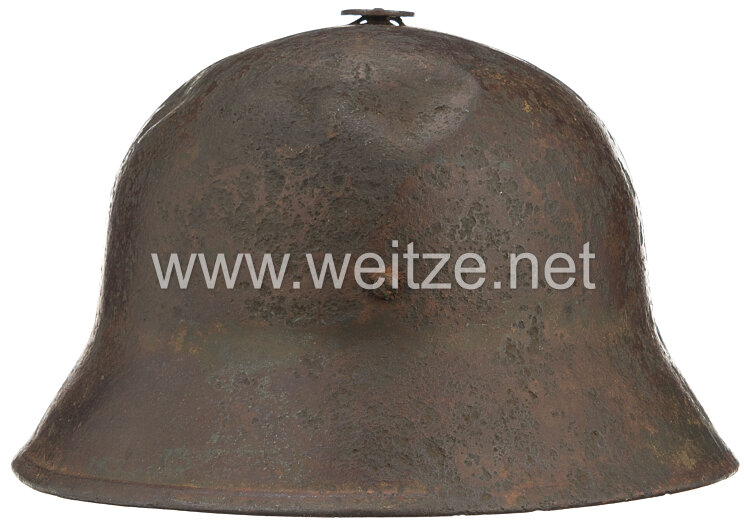
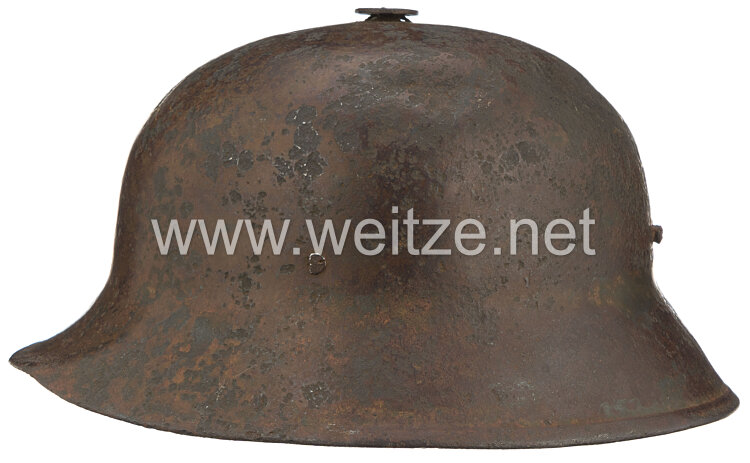
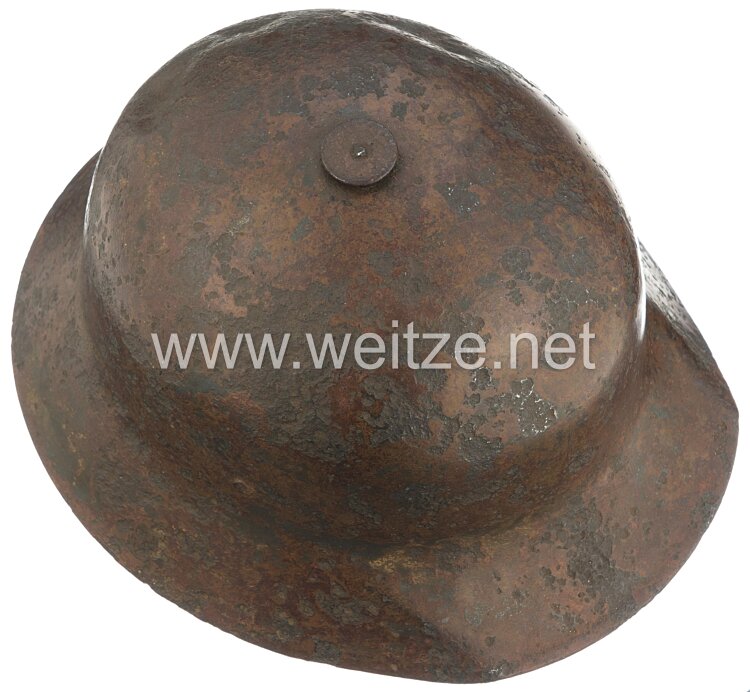
The Austro-Hungarian steel helmet, colloquially known as the “Berndorfer helmet”, represents a fascinating testimony to military-technical development during World War I. This helmet type was introduced from 1917 onwards and marked a decisive turning point in the protection of k.u.k. soldiers at the fronts of the Dual Monarchy.
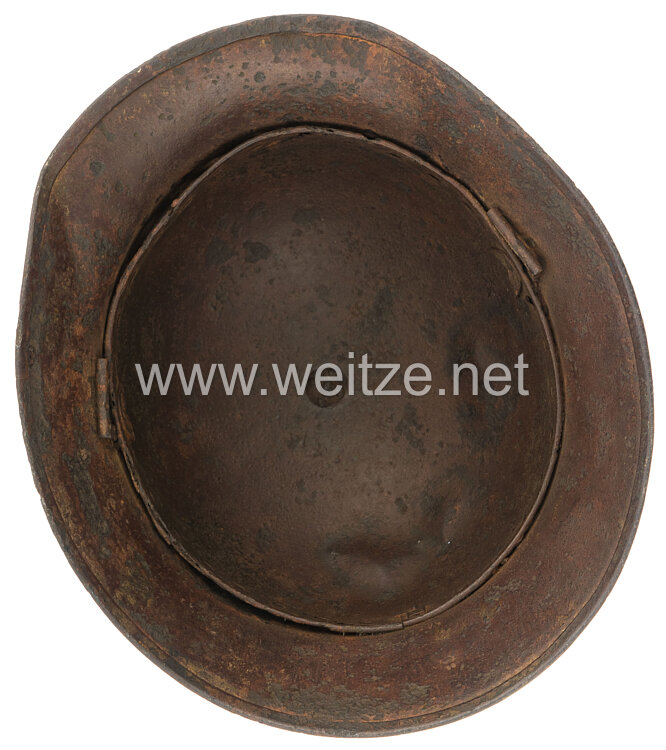
The Berndorfer Metallwarenfabrik (Berndorf Metal Goods Factory) in Lower Austria was one of the main manufacturers of this steel helmet. The company, already known for high-quality metal goods before the war, became an important armaments supplier during the conflict. The characteristic bear stamp inside the helmet served as a manufacturer's mark and enables clear attribution today. The size designation, in this case "66", refers to the head circumference in centimeters.
The development of steel helmets in the Austro-Hungarian Army occurred relatively late compared to other warring nations. While France had already introduced the Adrian helmet in 1915 and Germany the legendary Stahlhelm M1916 in 1916, Austria-Hungary only began mass production of its own protective helmets in 1917. Previously, Austrian troops had been partially equipped with German helmets, which additionally burdened the logistical challenges of the Dual Monarchy.
The most distinctive feature of the Berndorfer helmet is the characteristic ventilation opening on top of the shell. This circular opening with an attached protective ring was designed to improve air circulation and make wearing the helmet more bearable in the often extreme climatic conditions of the various theaters of war. This design clearly distinguished the Austro-Hungarian helmet from other contemporary models.
The green-brown camouflage found on many of these helmets was not applied at the factory but often by the troops themselves or in field workshops. The coloring was intended to adapt the helmet to the respective environment – green tones for wooded areas, brown tones for earthworks. On the Italian Alpine Front, where particularly intense fighting took place, such camouflage measures were of great importance.
The Battles of the Isonzo and the fighting in the Dolomites between 1915 and 1918 were among the most brutal confrontations of World War I. At extreme altitudes, in temperatures of minus 30 degrees in winter and under constant artillery bombardment, Austro-Hungarian and Italian troops fought for every meter of terrain. The steel helmet provided a certain, albeit limited, protection against shell fragments, shrapnel, and falling rock debris.
A dent from a shrapnel hit, as found on this specimen, tells a dramatic story. It shows that the helmet actually withstood a hit and possibly saved its wearer's life. At the same time, it illustrates the limits of protection: while splinters and indirect hits could often be deflected, these early steel helmets offered no protection against direct bullets.
The production of Berndorfer helmets was characterized by the increasing material shortages of the Dual Monarchy. From 1917 onwards, the supply situation deteriorated dramatically, which was reflected in the quality and availability of military equipment. Nevertheless, an estimated several hundred thousand units were produced by the end of the war, though never enough to fully equip all front-line units.
The inner lining of these helmets typically consisted of leather with padding designed to increase wearing comfort and absorb shocks. The chin strap, also made of leather, secured the helmet to the head. The fact that these components are often missing or completely decomposed in found specimens is due to the organic nature of the materials, which, unlike steel, could not withstand the weather.
The corrosion traces and general condition of such finds from former battlefields tell of over a hundred years underground or in the mountains. The alpine environment with its extreme weather conditions, humidity, and temperature fluctuations has left its mark. Nevertheless, this authentic condition is precisely what constitutes the historical value of such objects.
Today, original helmets of the Austro-Hungarian Army are sought-after collector's items and important museum objects. They document not only military-technical development but also stand symbolically for the fate of the millions of soldiers of the declining Habsburg Monarchy. The Museum of Military History in Vienna houses an extensive collection and documents the history of these helmets scientifically.
The Berndorfer steel helmet remains an impressive testimony to an era that fundamentally changed Europe and whose effects are still felt today.