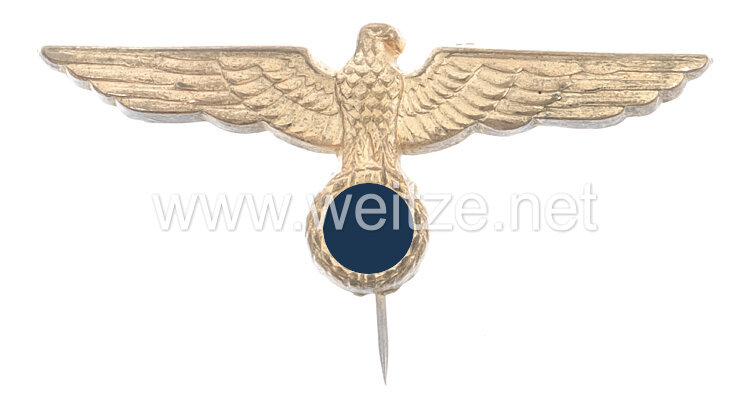
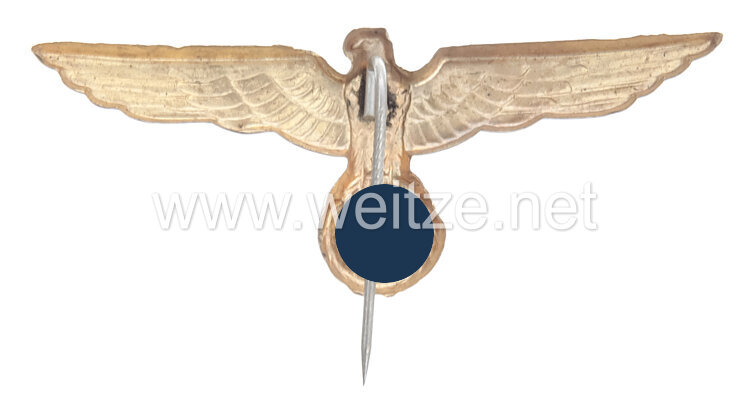
Kriegsmarine Visor Cap Eagle for Portepee NCO Visor Cap

Eagle 2nd Model, width 65 mm, large version for Portepee NCOs, pin fastening on reverse, condition 2.
463854
120,00

Kriegsmarine Visor Cap Eagle for Portepee NCO Visor Cap

The Kriegsmarine cap eagle for the peaked cap of Portepee non-commissioned officers represents a characteristic insignia of the German Navy during World War II. This particular type represents the 2nd Model in the large version with a width of 65 mm, which was worn exclusively by Portepee non-commissioned officers.

The Portepeeunteroffiziere (Portepee NCOs) formed a special rank group within the military hierarchy of the Wehrmacht. They represented the senior non-commissioned officers, distinguished by special qualifications and leadership responsibilities. The term “Portepee” derives from the French “porte-épée” and originally referred to the sword knot that became the status insignia of these ranks. In the Kriegsmarine, this group included ranks from Obermaat (Senior Mate) to Stabsoberbootsmann (Senior Chief Petty Officer).

The peaked cap (Schirmmütze) was an essential component of the Kriegsmarine uniform and was subject to strict dress regulations. The cap eagle was attached above the cockade on the cap and, together with the cockade, formed the national emblem of the German Navy. The design and positioning of these insignia were precisely defined in the dress regulations of the Kriegsmarine.

The 2nd Model of the cap eagle was introduced around 1939/1940 and differed from the 1st Model through subtle changes in design. The eagle displays the characteristic national emblem of the Third Reich: a stylized eagle with outstretched wings, clutching a swastika in its talons. The artistic execution followed the official templates of the Wehrmacht, with the Navy using its own specific variants.

The large version measuring 65 mm in width was specifically designated for Portepee non-commissioned officers and thus differed from the smaller versions for enlisted personnel and NCOs without Portepee status. This differentiation in size served the immediate visual recognition of rank and corresponded to the hierarchical structure of the military organization. The larger dimensions emphasized the elevated status of Portepee NCOs within the enlisted and non-commissioned ranks.

The manufacture of these cap eagles was carried out by various authorized manufacturers who worked according to official specifications. The eagles were typically made from metal, often aluminum or zinc alloys, and featured different surface treatments. The reverse fastening by means of a pin enabled secure attachment to the cap body.

The Kriegsmarine itself was officially founded in 1935 as the successor to the Reichsmarine and represented the naval forces of the German Reich. Under the supreme command first of Grand Admiral Erich Raeder and from 1943 of Grand Admiral Karl Dönitz, it played a central role in maritime warfare. Uniform dress and associated insignia served not only for identification but also for promoting esprit de corps and military discipline.

The dress regulations of the Kriegsmarine were detailed in various service regulations. The “Dress Regulations for the Kriegsmarine” (M.Dv. Nr. 110) precisely regulated which uniform was to be worn on which occasion and how individual insignia were to be attached. These regulations were modified several times during the war, partly due to material shortages, partly due to organizational changes.

In the context of military-historical research, such uniform insignia represent important sources. They enable conclusions about organizational structures, hierarchies, and the material culture of the military. The distinction between different models and versions helps in the chronological classification of photographs and other historical documents.

After 1945, the wearing of all insignia bearing National Socialist symbols was prohibited in Germany. Today, the scholarly and museum engagement with such objects serves exclusively historical study and education. Modern military-historical collections preserve these objects as testimonies of a dark epoch in German history, whereby the historical context and critical examination must always remain paramount.

r