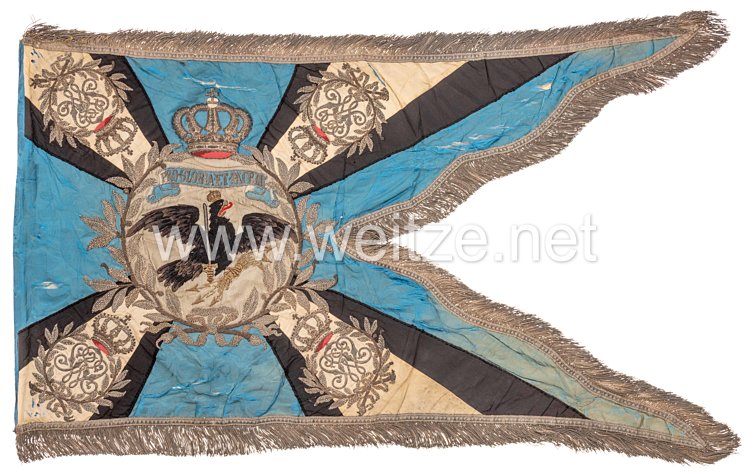
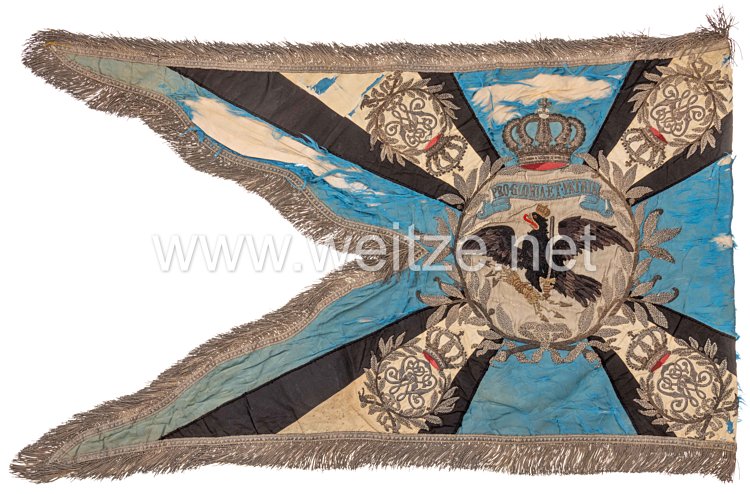
Among the most prized relics of the Kingdom of Prussia, cavalry regimental standards occupy a place of singular distinction. More than tactical field markers, they were tangible embodiments of regimental honor, royal patronage, and continuity across generations of service. The Regimentsstandarte of Ulanen-Regiment ‘Graf zu Dohna’ (Ostpreußisches) Nr. 8 presented here is one of the rarest surviving examples of a Prussian cavalry standard and represents an extraordinary artifact of Prussian-German military history.
A Regiment Born of the Wars of Liberation
The regiment’s origins lie in the dramatic upheavals of the Napoleonic era. Friedrich zu Dohna-Schlobitten left the Prussian Army in 1812 to enter Russian service, joining the Russian-German Legion, where he became a Major on the staff of the Legion’s Hussars. On 1 September 1814, Count zu Dohna transferred two hussar regiments of the Russian-German Legion into Prussian service. On 19 March 1815, an Uhlan regiment was formed that would later become the East Prussian Uhlan Regiment Nr. 8. The founding of the regiment was thus a Prussian-Russian joint effort of the Wars of Liberation – a fact that gave the regiment a distinctive historical identity from its very inception. The regiment received its honorary designation ‘Graf zu Dohna’ in 1889.
The regiment was garrisoned in East Prussia: the 1st and 3rd Squadrons in Stallupönen, and the 2nd Squadron in Gumbinnen. These garrison towns on the eastern periphery of the German Empire underscored the regiment’s role as part of Prussia’s frontier defense.
The Granting of the Standard in 1898
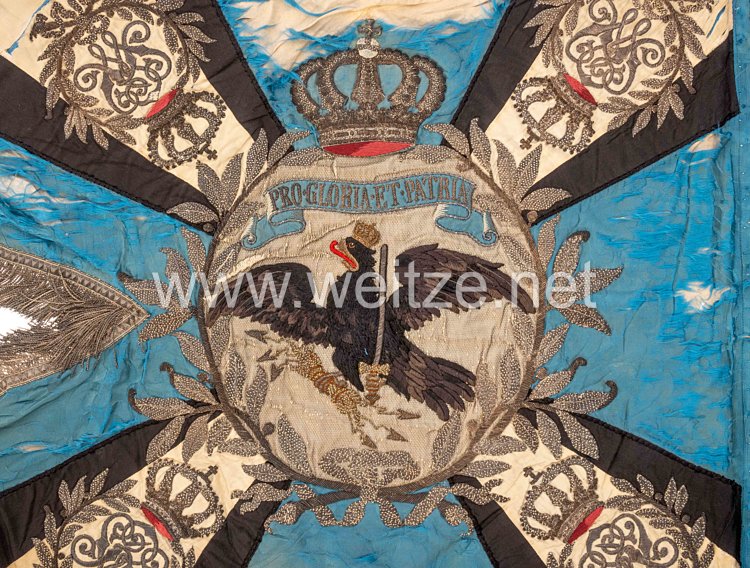
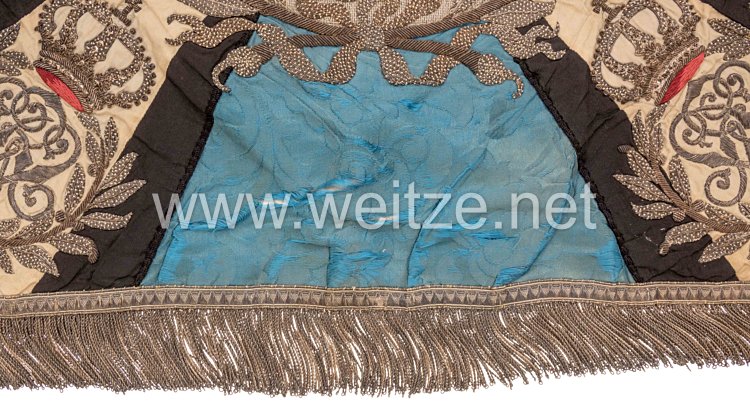
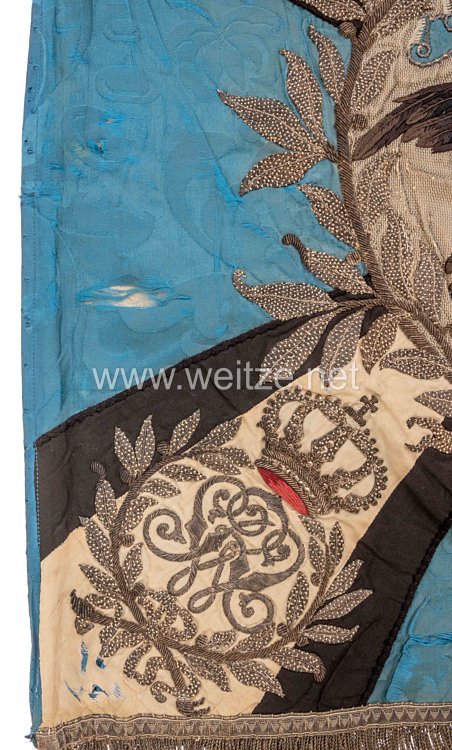
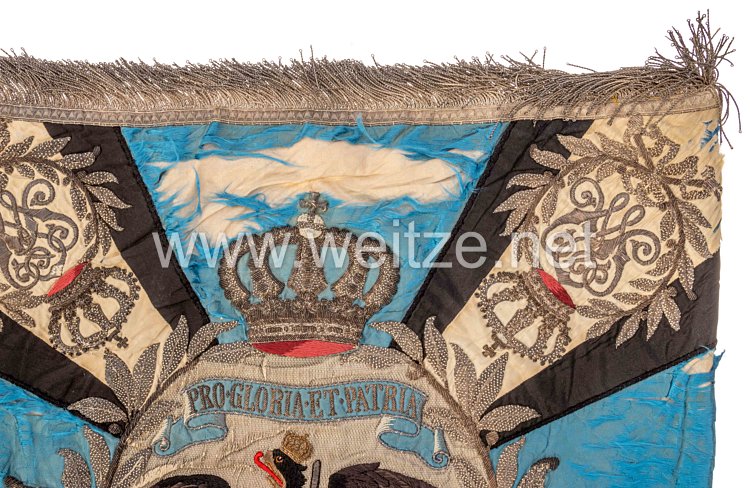
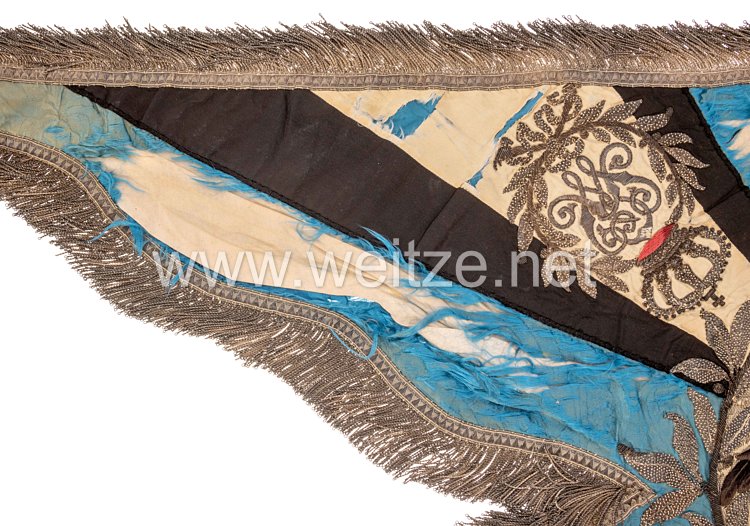
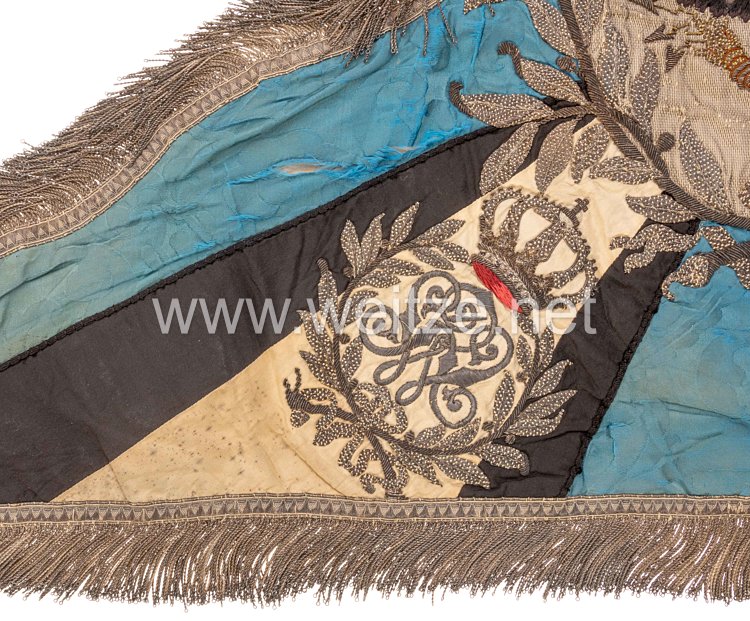
This standard was granted in 1898 during the reign of Kaiser Wilhelm II (reigned 1888–1918). It accordingly bears the crowned cipher “WR” – Wilhelm Rex – hand-embroidered in silver metallic thread within laurel wreaths in each corner section.
Design and Craftsmanship
Cavalry standards and guidons of the Prussian army occupied a unique position among Prussian military flags. Although clearly smaller in size than infantry colors, they were the heavy weights among the flags of the Prussian army. Unlike infantry flags, which carried mere paintings, cavalry standards were made of heavy silk, were double-sided, and bore embroideries rather than painted designs, complemented by fringes and raised details.
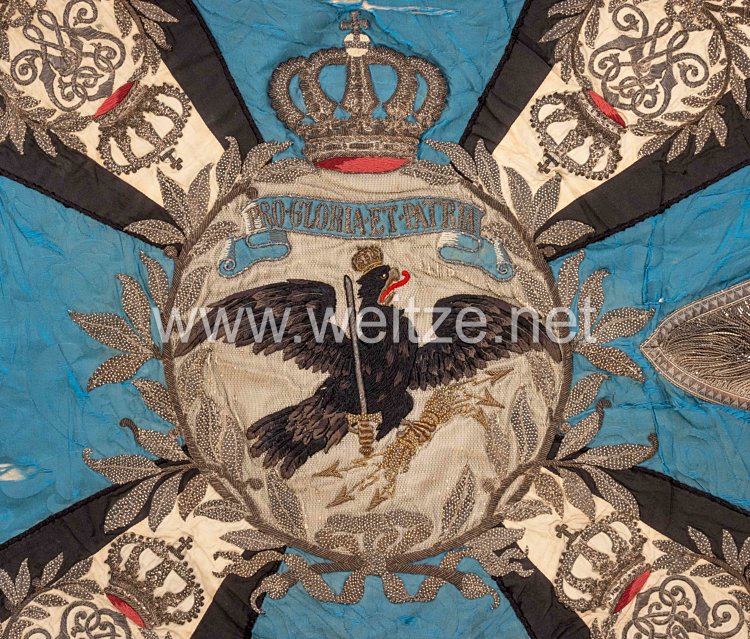
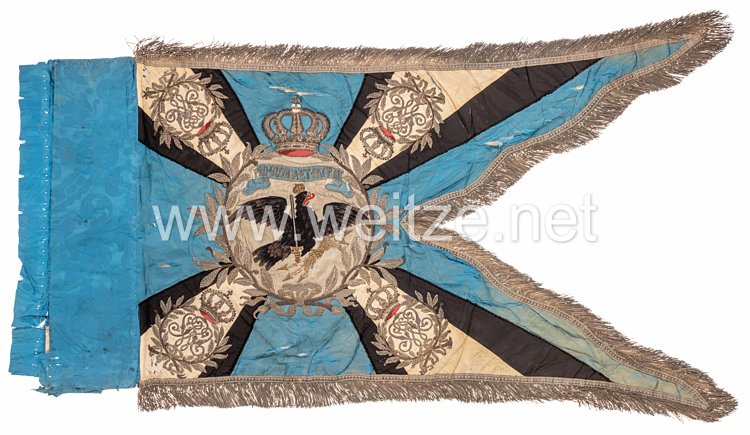
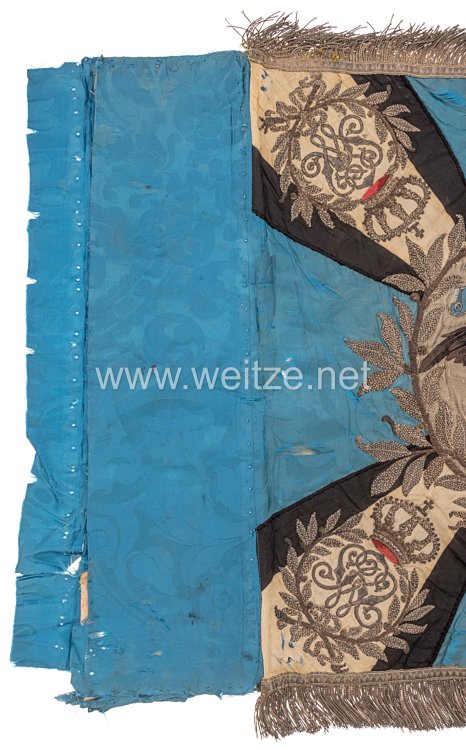
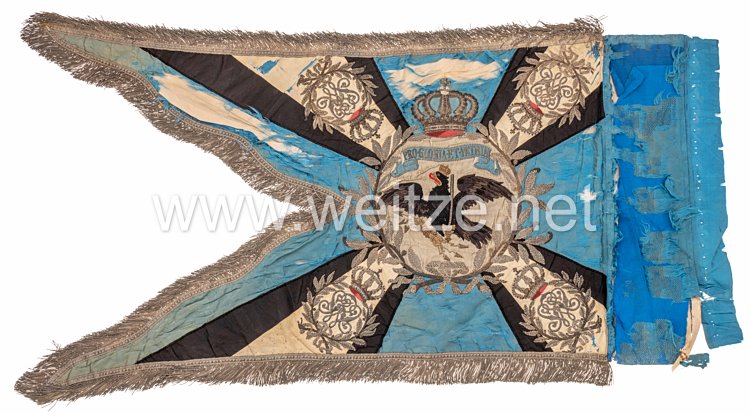
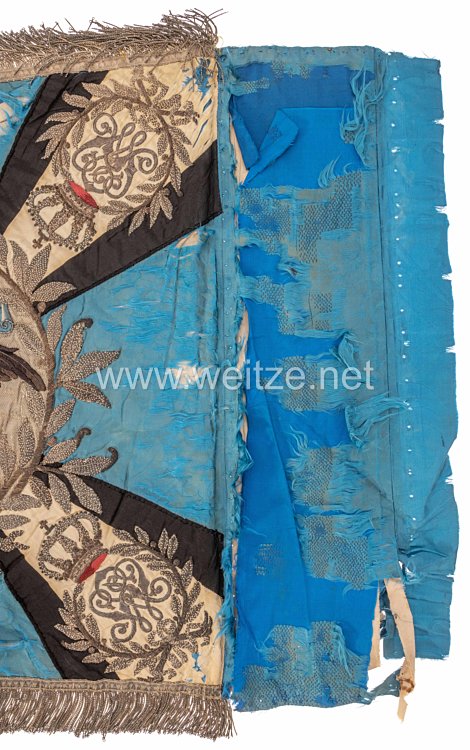
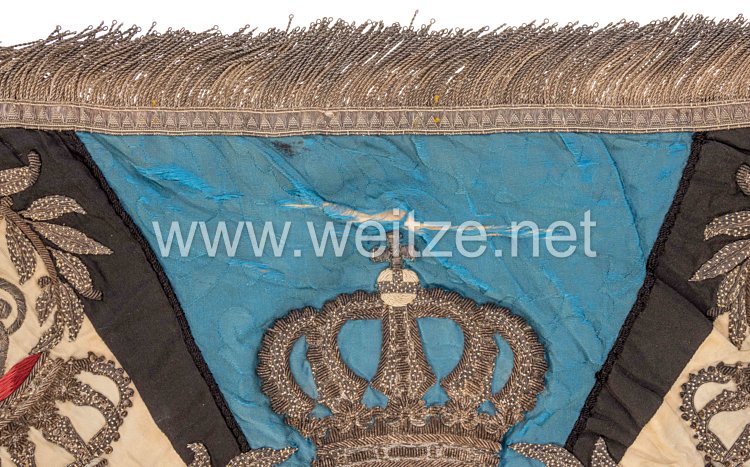
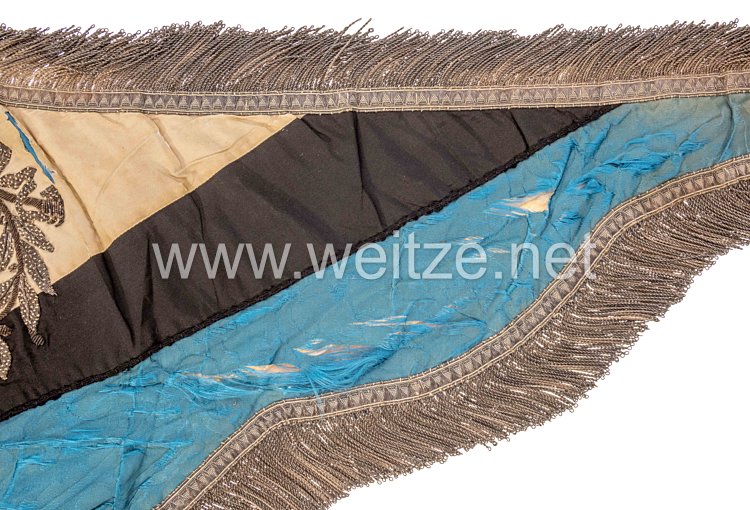
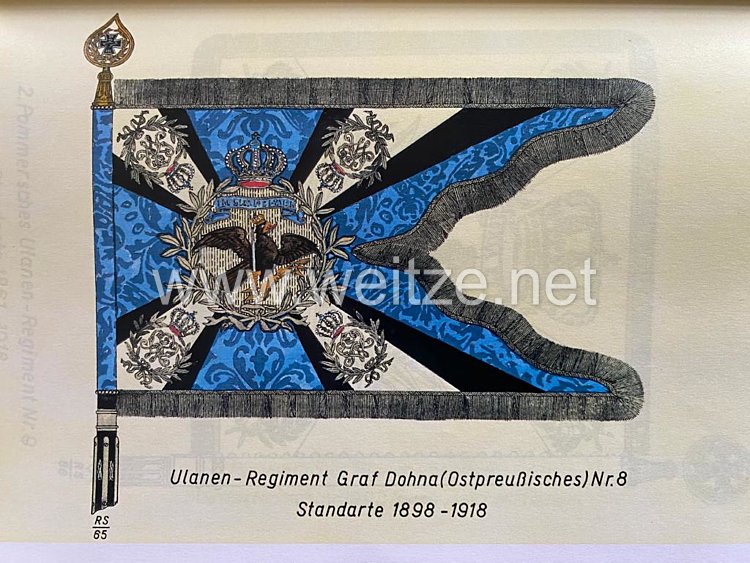
The standard cloth is made of medium blue silk with a woven vine pattern. The black/white/black corner sections are sewn in, each containing the crowned cipher “WR” hand-embroidered in silver metallic thread within a laurel wreath. The center is woven in gold thread and hand-embroidered with the flying Prussian eagle bearing a dark green banner inscribed with the motto “PRO GLORIA ET PATRIA” – “For Glory and Fatherland.” The eagle is surrounded by a silver-embroidered laurel wreath tied at the bottom, surmounted by the Prussian Crown. Silver fringe runs along the entire perimeter. The dimensions are approximately 51 × 81 cm. The flag cloth was removed from the flagpole, with the sleeve fabric left intact.
War and Dissolution
The Ulanen-Regiment ‘Graf zu Dohna’ Nr. 8 served in the First World War, as documented in the regimental history “Das Ulanen-Regiment Graf zu Dohna (Ostpr.) Nr. 8 im Weltkrieg”. Following Germany’s defeat, the regiment was dissolved in 1919, sharing the fate of the entire Prussian Army.
The Fate of Prussian Cavalry Standards
The survival of this standard is remarkable when considered against the broader fate of Prussian military flags. Today, only very few standards of Prussian cavalry regiments remain in private collections. In May 1945, many flags and standards were captured by the Red Army and remain in Moscow to this day. At the Moscow Victory Parade of 24 June 1945, 200 captured German military standards were displayed; most had been taken from the Berlin Zeughaus (the War Memorial Museum), meaning that many were not World War II-era standards at all, but flags from the Imperial era. Other flags found their way into German museums, while still others were destroyed in the closing days of the war.
That this standard has survived and now resides in a private collection makes it one of the most significant and rarest military collectibles of Prussian provenance. It is a tangible witness to over a century of regimental history – from the Wars of Liberation through the German Empire to the dissolution of the Prussian Army – and an artifact of extraordinary importance for the collector of Prussian and German military heritage.