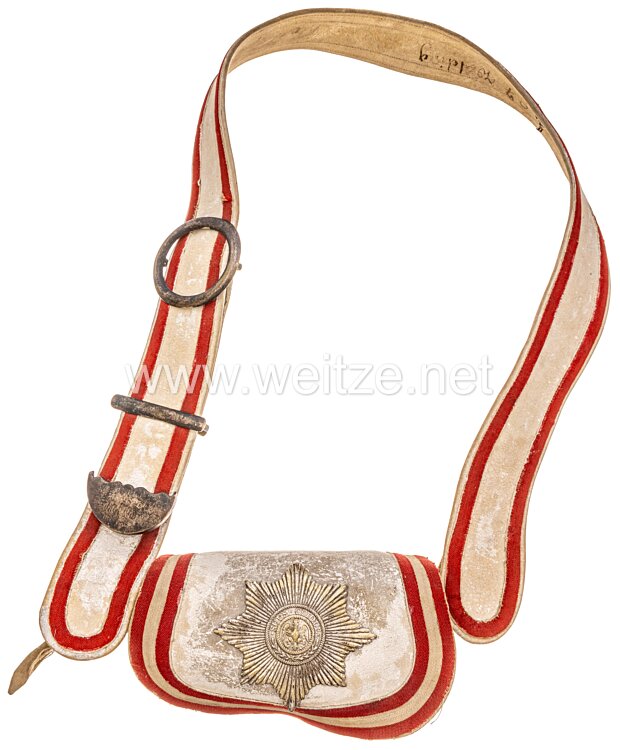
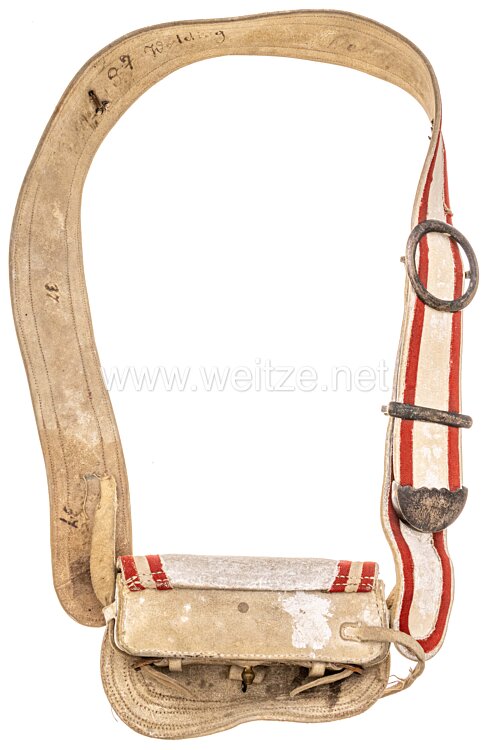
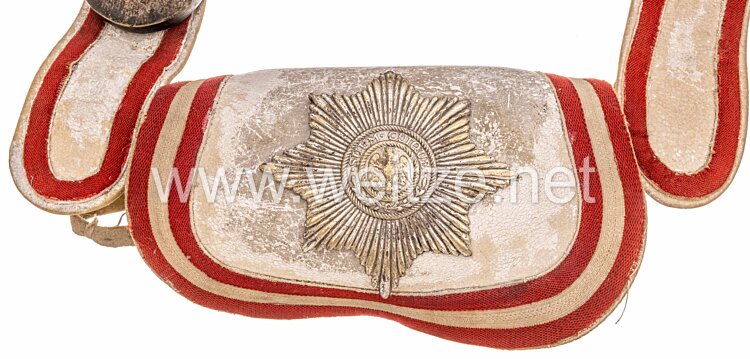
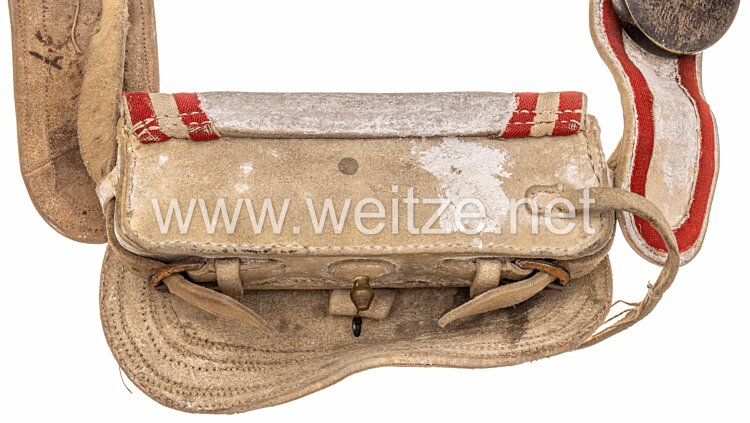
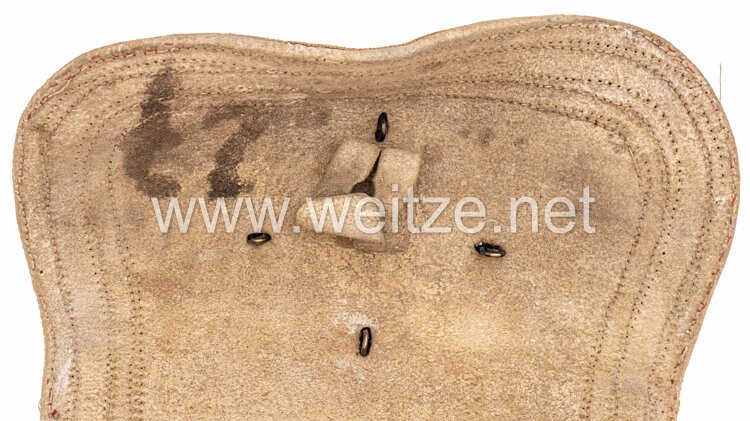
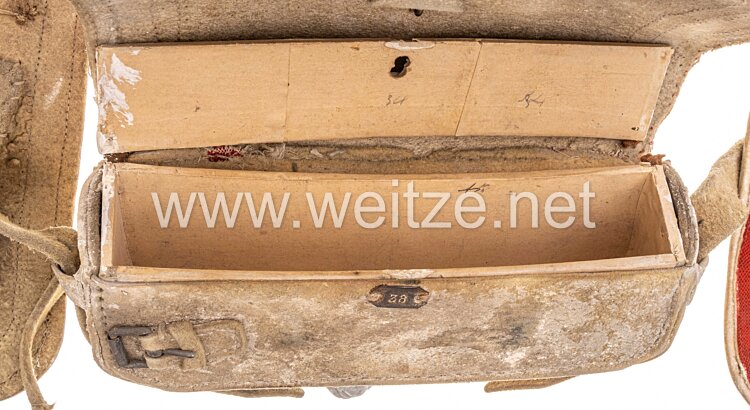
The cartridge box with bandolier for enlisted men for the gala guard uniform of the Regiment der Gardes du Corps represents one of the rarest and most prestigious pieces of equipment in Prussian military history. This extraordinary ensemble was worn exclusively by enlisted men of the elite Regiment der Gardes du Corps when serving as honor guards at major court festivals.
The Regiment der Gardes du Corps was founded on June 23, 1740, in Charlottenburg by King Frederick II of Prussia, initially as a training squadron of 178 men selected from existing cavalry regiments. It served not only as the personal bodyguard of the king but also as a model unit for the Prussian cavalry. The regiment was expanded during the Seven Years' War and was garrisoned in Potsdam from 1753. By 1914, it consisted of five squadrons. The regiment fought in numerous battles including Hohenfriedberg and Lobositz, the Franco-Prussian War, and World War I. The regiment was disbanded after the end of World War I in 1918-1919.
The Galawachanzug (gala guard uniform) with its distinctive equipment was introduced to enhance the ceremonial appearance of the regiment at court functions. Initially, the gala uniform featured only the red Supraweste (survest). The special bandolier with cartridge box and belt were not added until 1883 as additions to the existing gala uniform. This equipment was worn exclusively by enlisted men and differed from officers' equipment.
The Regiment der Gardes du Corps was the royal cuirassier guard regiment and, after 1871, served as the personal bodyguard of the German Emperor. Garrisoned in Potsdam, the regiment was considered the most prestigious cavalry unit of the Prussian Army, ranking second only to the 1st Garde Regiment zu Fuß in the Prussian order of precedence. The regiment recruited nationally after German unification in 1871 and was extremely selective, with the enlisted ranks drawn from high-quality candidates. The officer corps was exclusively noble, with 20 of 34 officer positions held by princes and counts as of 1913.
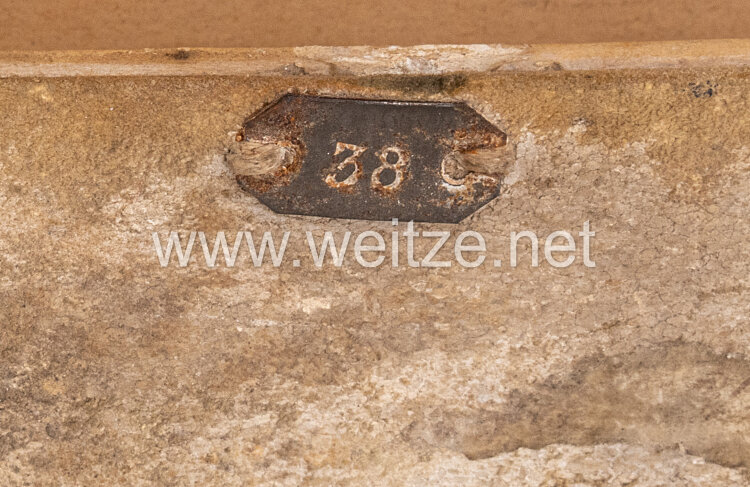
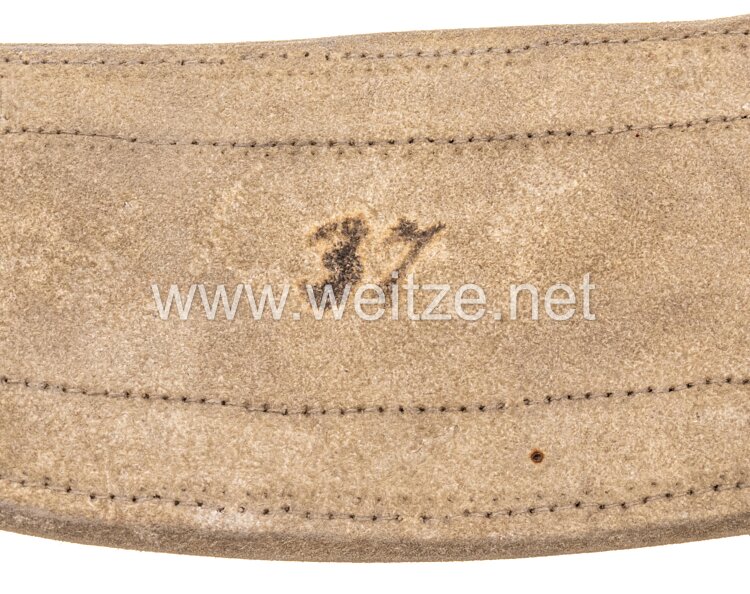
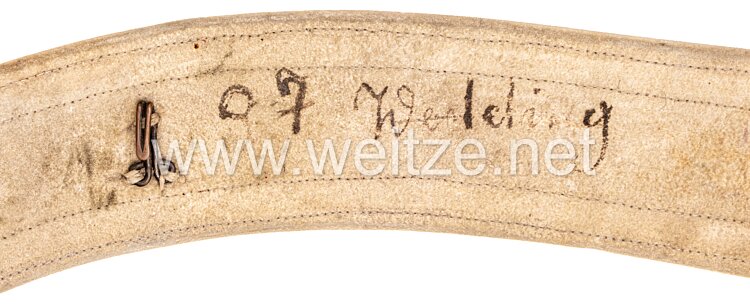
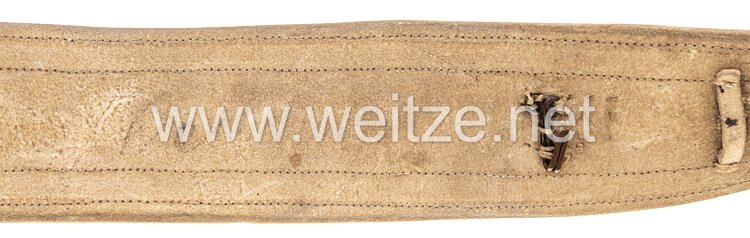
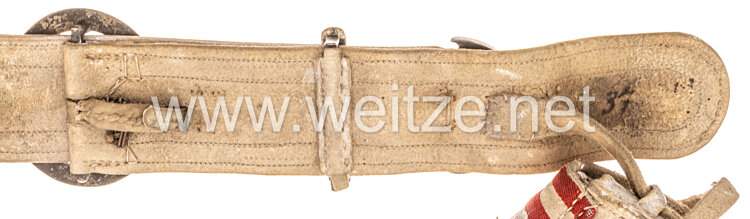
The present example from 1897 bears inscriptions on the interior of the bandolier including the bearer's name “Wentching” and the year “97”. The cartridge box is constructed from heavy whitened leather and displays on the lid the large Gardestern (Guard star) for enlisted men, surrounded by red-and-white trim. A small plaque with the inventory number “38” marks the box. Inside is an inserted wooden box. The bandolier, approximately 6.4 cm wide, is also made from heavy whitened leather with applied red borders and nickel-silver metal fittings.
Following World War I and the dissolution of the Prussian Army in 1918-1919, the Regiment der Gardes du Corps ceased to exist. Its tradition was carried on in the Reichswehr by the 1st Eskadron of the 4th (Prussian) Cavalry Regiment in Potsdam from August 24, 1921. Eventually, in the Bundeswehr, Panzerbataillon 24 in Braunschweig carried the tradition until its own dissolution. Surviving examples of the Galawachanzug equipment, including cartridge boxes and bandoliers, are now rare collector's items described as “sehr selten” (very rare) on the militaria market. This Model 1883 was distinct from the fieldgrey service uniform M 1910 introduced in 1913 and represents a unique aspect of Prussian military ceremony and court culture.