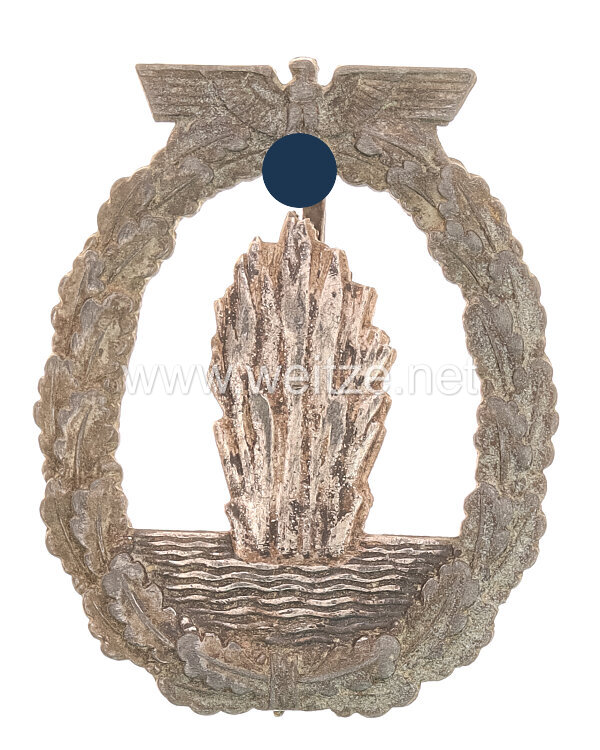
Minesweeper War Badge

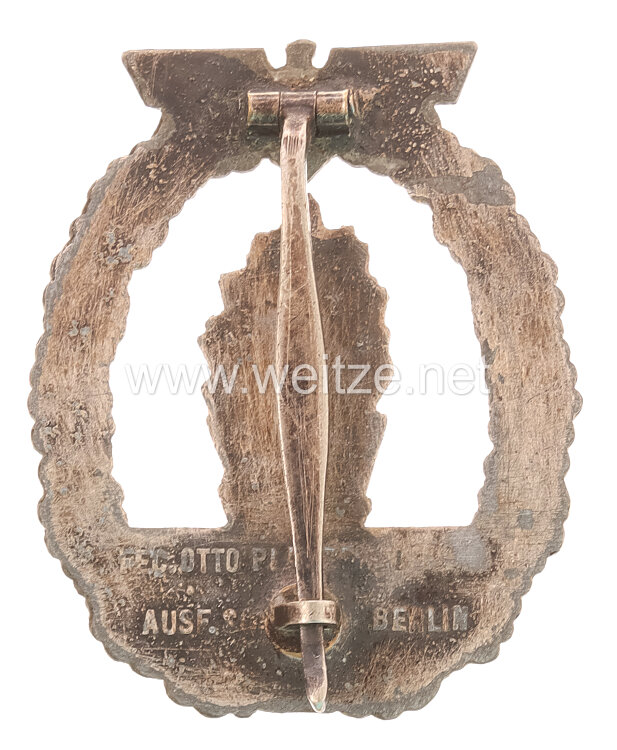
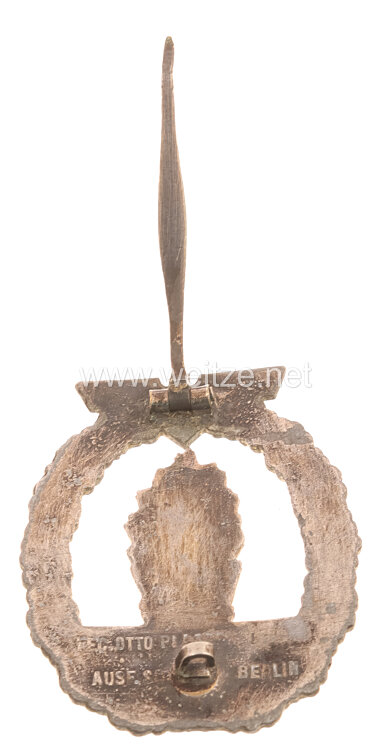
Zinc, reverse marked by manufacturer "Fec. Adolf Bock - Ausf. Schwerin Berlin".
452452
250,00

Minesweeper War Badge

The Minesweeper War Badge (Minensucherkriegsabzeichen) represents a significant decoration of the German Kriegsmarine during World War II. This award was established on August 31, 1940 by Grand Admiral Erich Raeder, Commander-in-Chief of the Kriegsmarine, and honored the extraordinarily dangerous work of minesweeper crews.

The creation of this decoration came at a time when the strategic importance of minesweeping in maritime conflict was becoming increasingly apparent. Mines represented one of the greatest threats to shipping, both military and civilian. The men who undertook this life-threatening task deserved, in the opinion of the naval leadership, special recognition for their service.

The present specimen was manufactured by Adolf Bock of Berlin-Schwerin, one of the officially authorized producers of this decoration. The marking “Fec. Adolf Bock - Ausf. Schwerin Berlin” on the reverse clearly identifies the origin of the piece. The manufacture from zinc corresponds to typical material usage during the later war years, when strategically more important metals such as bronze or tombac became increasingly scarce and had to be reserved for more critical war purposes.

The badge displays a characteristic motif in its design: a minesweeper vessel, framed by an oval oak leaf wreath, with a sword and a mine in the lower section. Above the boat sits the Reich eagle with swastika. This iconographic design symbolized both the maritime deployment and the military valor of its wearers.

The award criteria were strictly defined. Initially, a crew member of a minesweeper had to complete at least three missions. However, these regulations were modified several times during the course of the war. On November 18, 1944, fundamental changes to the award regulations took place, which now also included mine clearance in harbors and coastal waters and modified the requirements.

The bearers of the Minesweeper War Badge belonged to the most endangered units of the Kriegsmarine. Their task consisted of detecting and eliminating naval mines that were deployed both by enemy forces and for the defense of their own waters. This activity required not only technical skill and precision, but also extraordinary courage, as the danger of detonation was present during every mission.

Manufacturing by specialized firms such as Adolf Bock followed strict guidelines of the Supreme Command of the Kriegsmarine. Each manufacturer had to produce their products according to official specifications, although certain variations in execution quality and details are recognizable. The identification of manufacturers on the reverse served quality control and authentication purposes.

After the end of World War II, the wearing of all National Socialist orders and badges was prohibited by Control Council Law No. 1 of October 1945. The Law on Titles, Orders and Decorations of 1957 in the Federal Republic of Germany later permitted the wearing of historical awards only in modified form without National Socialist symbols.

Today, such decorations possess primarily historical and collectible value. They document a dark chapter of German history while simultaneously commemorating the individual achievements and sacrifices of soldiers, independent of the ideology of the regime they served. For military historians and collectors, authentic specimens with clear manufacturer markings like the described piece are important study objects for researching the history of orders and military history of this era.