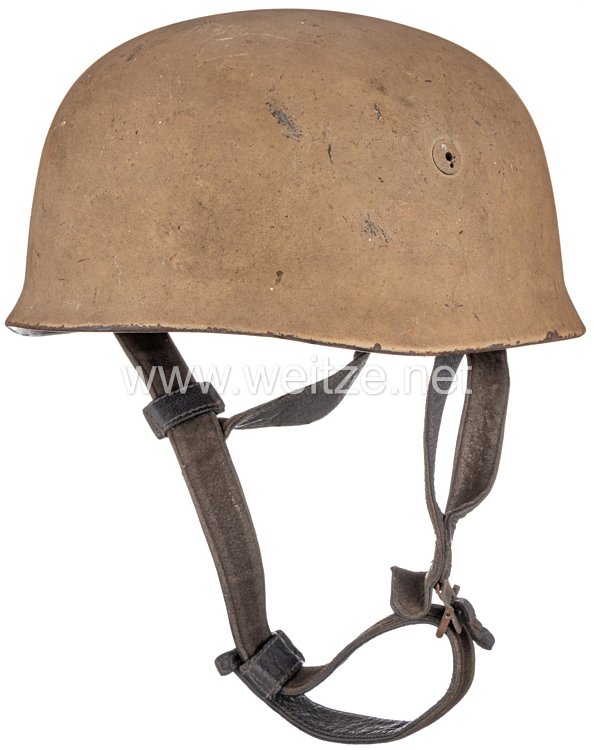
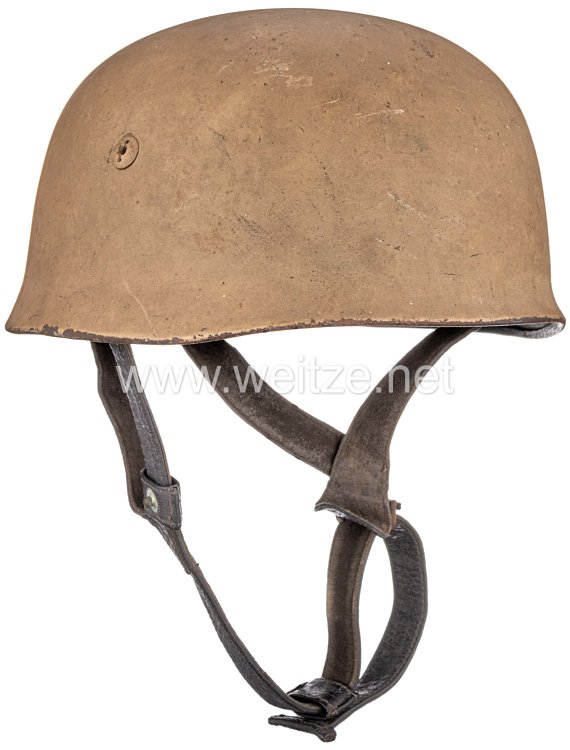
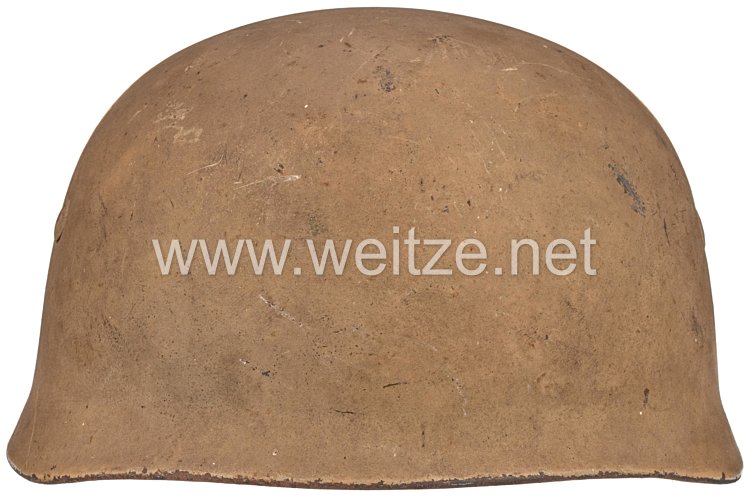
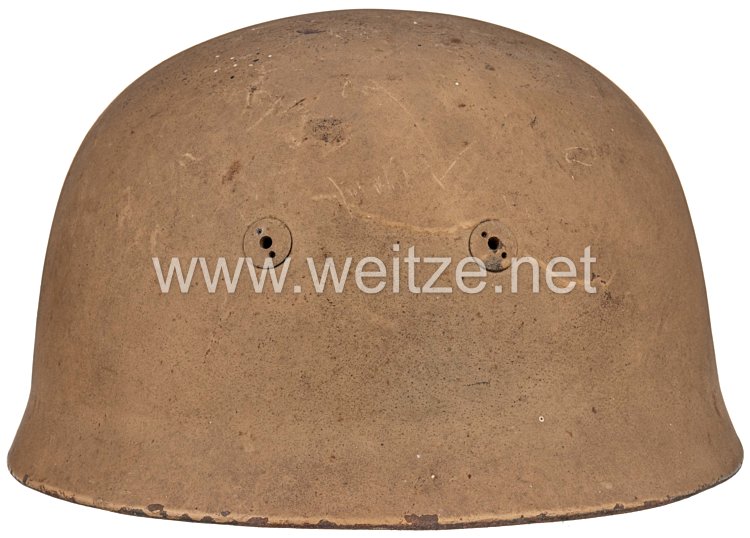
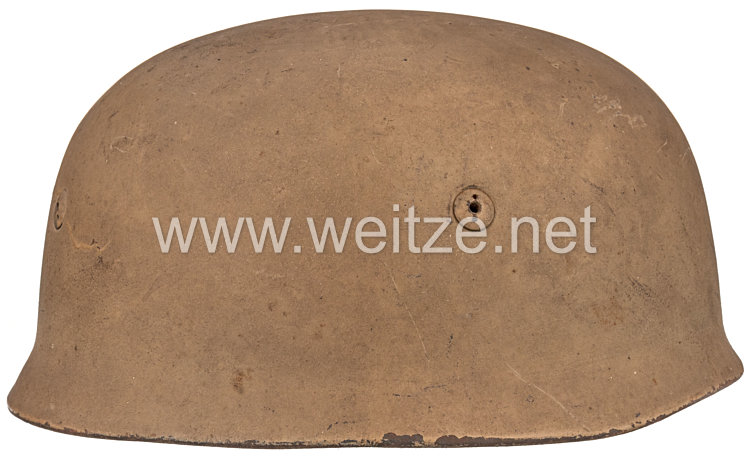
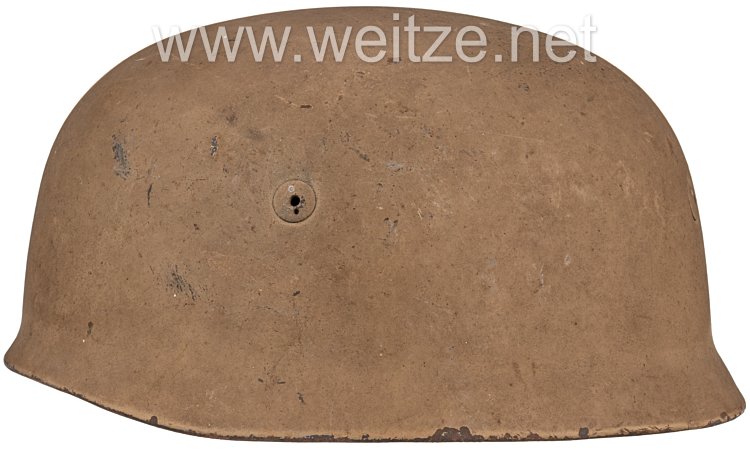
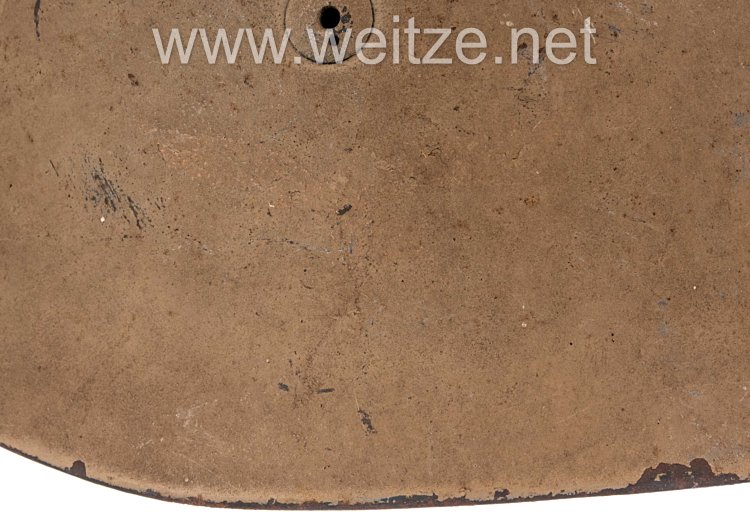
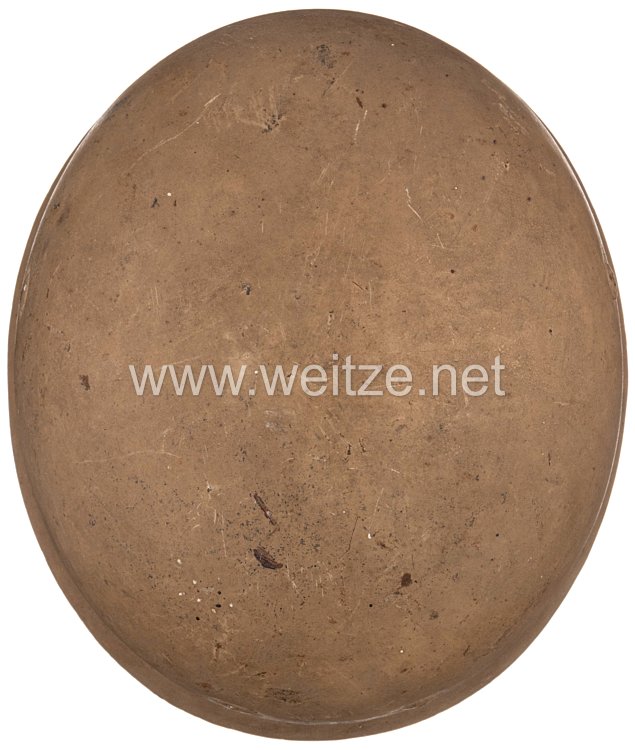
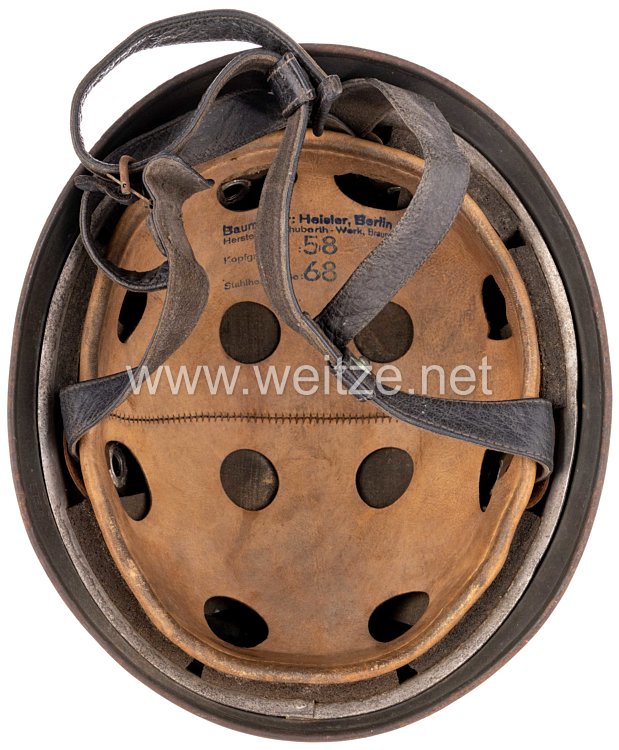
Luftwaffe Steel Helmet M38 for Paratroopers with 1 Emblem and Italian Camouflage Paint from the Estate of Unteroffizier Karl-Heinz Grunert, Fallschirmjäger-Regiment Nr. 4, Participant in the Battle of Monte Cassino
The Fallschirmjägerhelm M38 represents one of the most significant technical developments in German Luftwaffe history. Designed between 1936 and 1938 by engineer Karl Heisler, this steel helmet was specifically conceived for the requirements of paratroopers after the standard M35 Stahlhelm proved unsuitable for airborne operations. The Luftwaffe adopted the design under the designation M38, and production began in 1938 at Eisenhüttenwerke AG of Thale in the Harz region, which remained the sole manufacturer of all paratrooper helmets until the war's end in 1945.
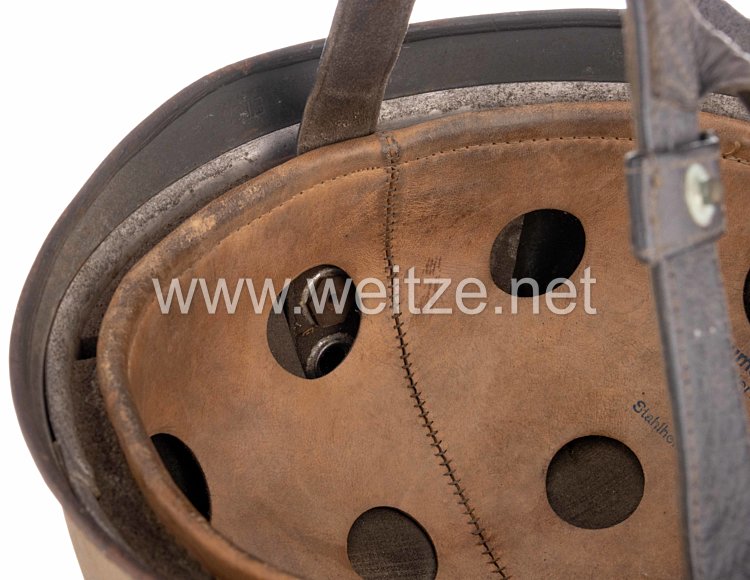
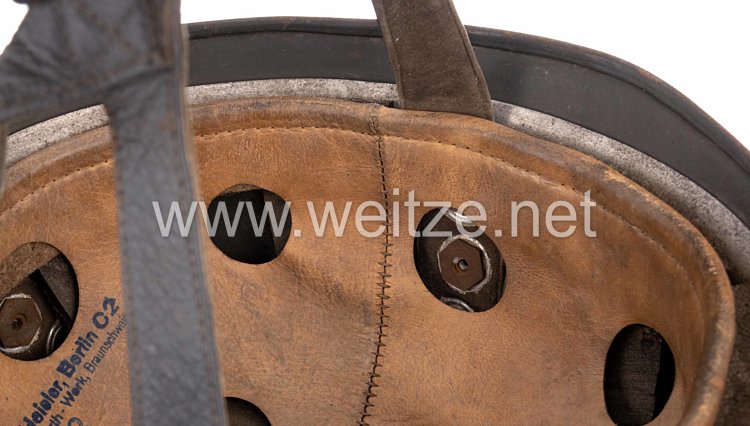
The revolutionary construction of the M38 featured a significantly reduced profile, smaller and more streamlined than the standard steel helmet. The rear neck skirt was shortened to merely 1.8 centimeters to minimize air resistance during parachute jumps and ensure better head mobility. The standard M35 had proven dangerous as it could be torn off during jumps or cause suffocation. The M38 featured rolled rims on the helmet bell and four vented spanner bolts for liner attachment. The helmet shell consisted of 1.5-millimeter thick magnetic steel sheet and was produced in three sizes: 66, 68, and 71 centimeters exterior circumference.
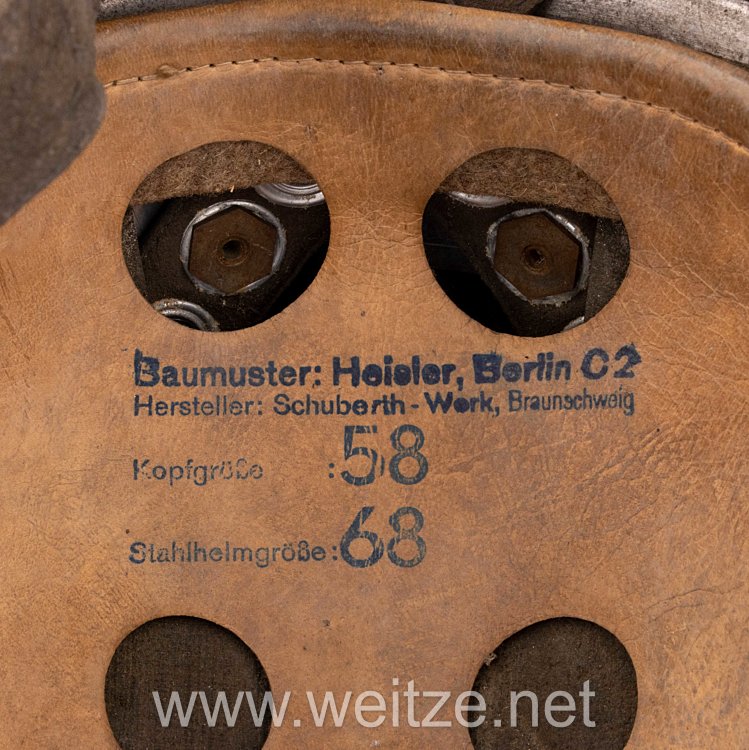
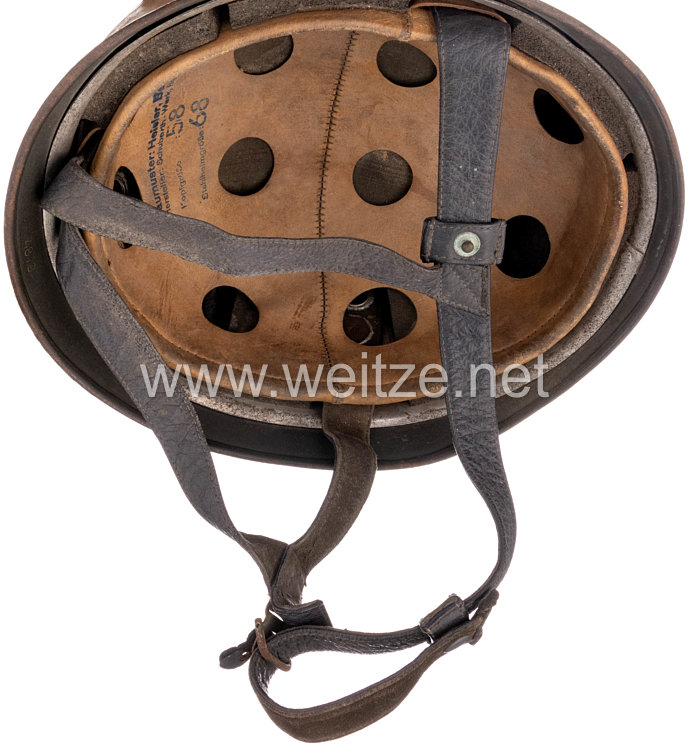
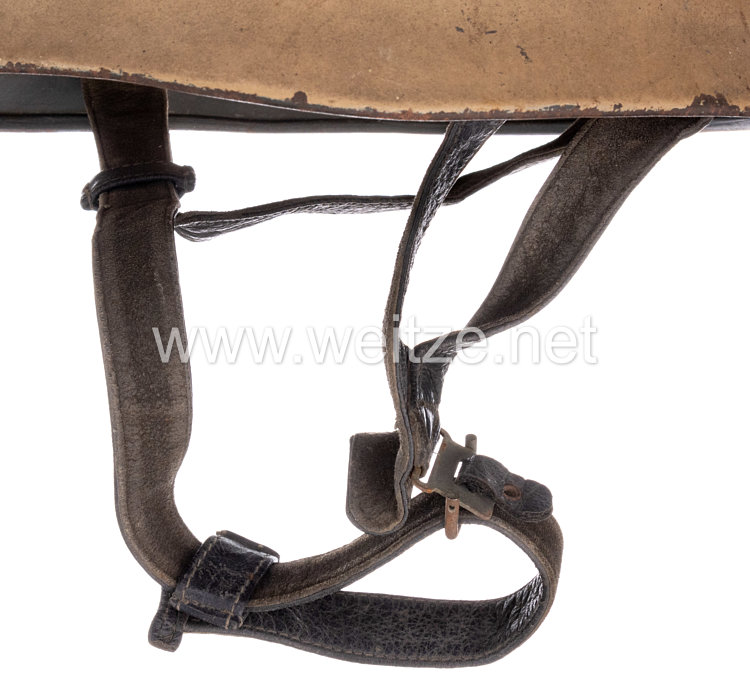
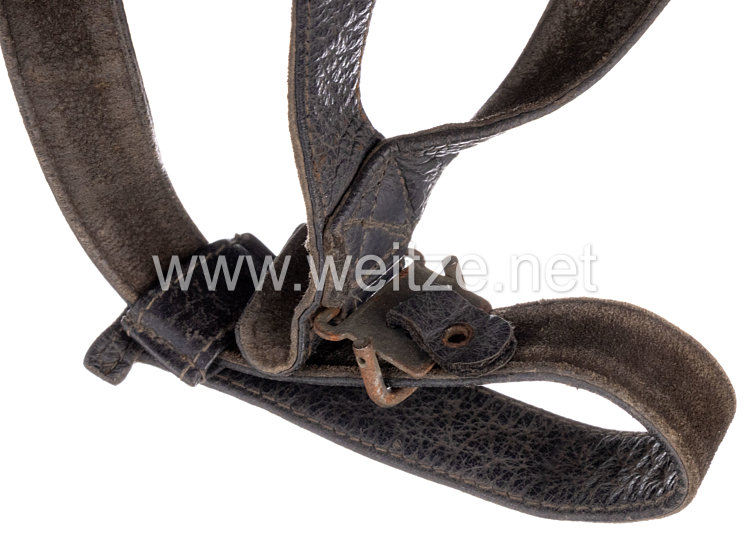
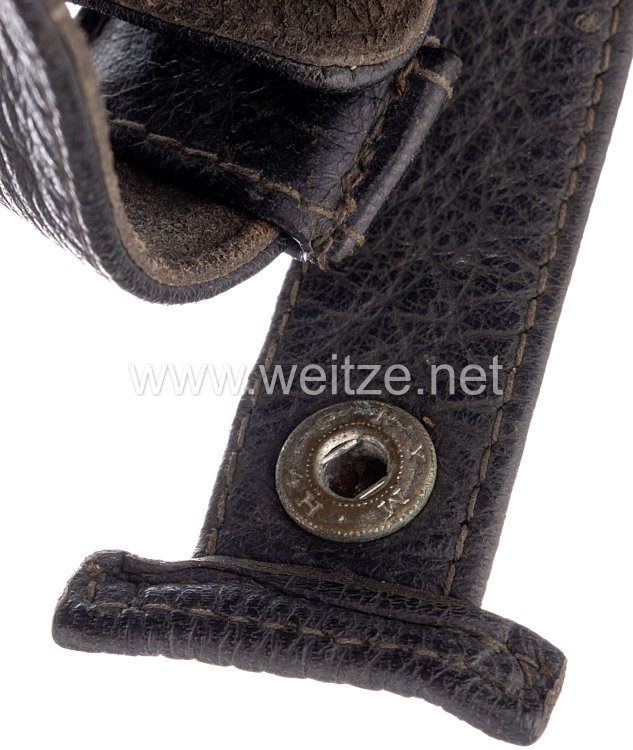
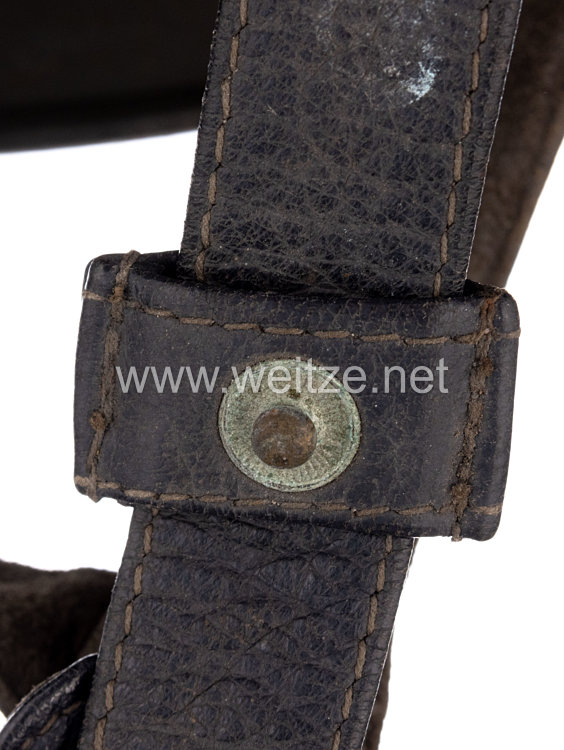
The liner combined a leather cap with an aluminum or steel band along with shock-absorbing micro-rubber inserts cut into seven “arms” with a thickness of 10 to 13 millimeters. A four-point Y-shaped suspension system distributed impact evenly. For this particular example, Schuberth-Werk in Braunschweig manufactured the liner, as documented by the stamp in the leather interior: “Baumuster: Heisler, Berlin C2, Hersteller: Schubert-Werk Braunschweig.”
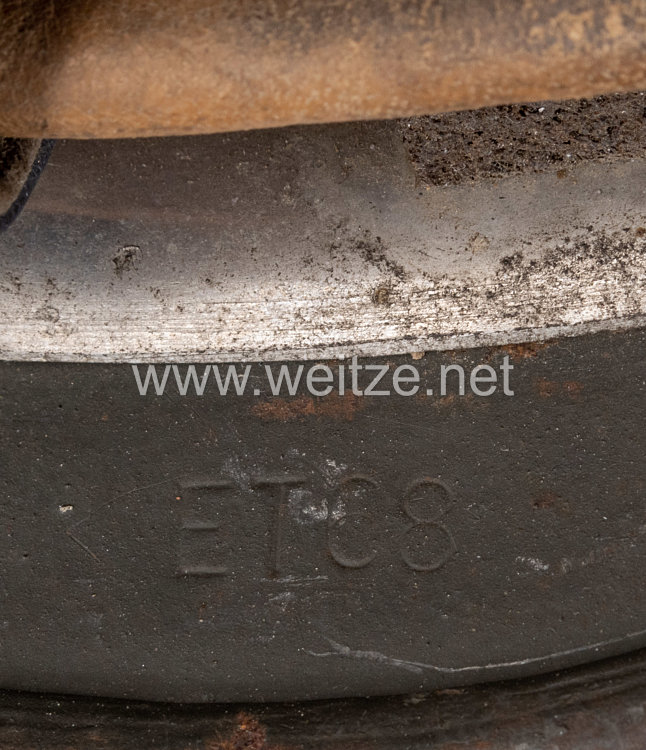
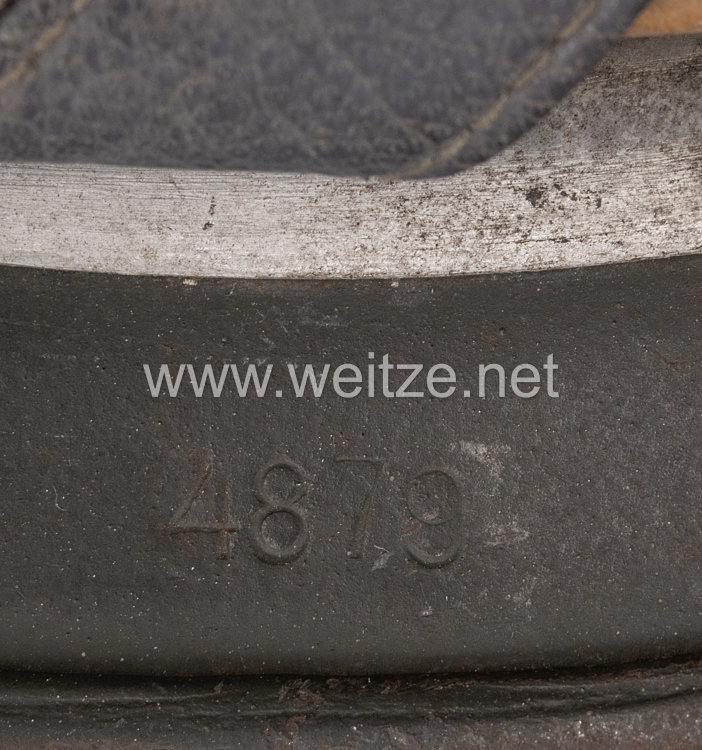
The manufacturer marking ET68 inside the helmet identifies Eisenhüttenwerke Thale as the producer, with 68 indicating the shell size. This designation was used until approximately 1942 before being replaced by the code CKL. Early production featured helmets painted gray-blue with two decals: the Luftwaffe eagle on the left and the national shield on the right. During the middle to late war period, helmets were painted gray-green or feldgrau and bore only a single decal or no decals at all. Toward war's end, many helmets received field-applied camouflage paint in various patterns, including sand colors for Mediterranean and Italian theater operations.
The M38 saw service in all major paratrooper operations: Norway and Denmark in 1940, the Netherlands and Belgium in 1940, Crete in May 1941, the Eastern Front, North Africa, Sicily, and Italy. The Battle of Monte Cassino from January to May 1944 represented one of the fiercest combat deployments. The 1st Fallschirmjäger Division, which included Fallschirmjäger-Regiment 4, defended Monte Cassino in bitter defensive battles against Allied forces. Regiment 4 fought at strategic height Point 593 and suffered extreme losses under massive bombardment. Approximately 20,000 German soldiers were killed or wounded, while the Allies sustained about 55,000 casualties. The paratroopers earned the nickname “Green Devils” for their determined defense.
After the heavy losses on Crete, where 3,600 of 22,000 deployed German paratroopers were killed, Hitler forbade further large-scale airborne operations. The Fallschirmjäger served primarily as elite infantry for the remainder of the war. By 1945, ten Fallschirmjäger divisions had been formed.
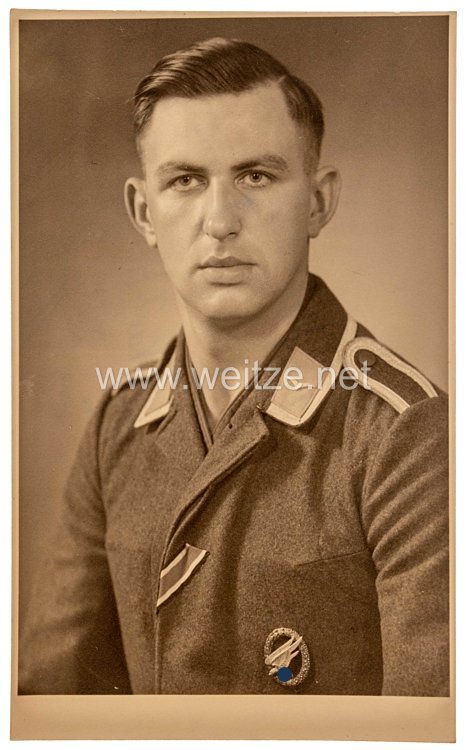
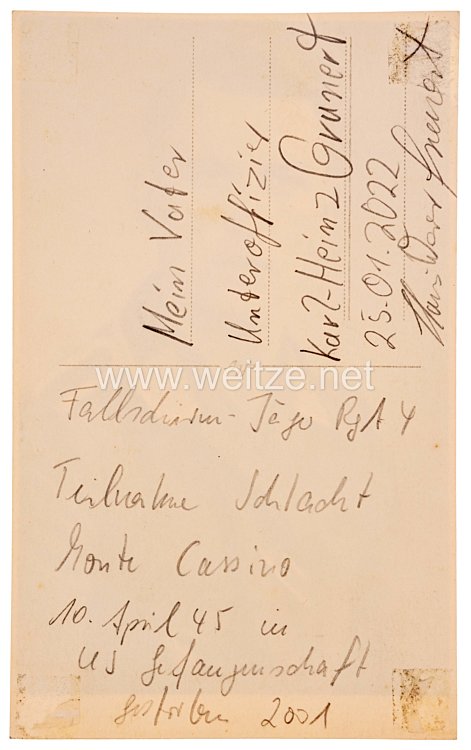
This specific example was worn by Unteroffizier Karl-Heinz Grunert, who participated in Operation Merkur, the Battle of Crete, in May and June 1941. In 1942 he was transferred to Fallschirmjäger-Regiment 4 and from 1943 was deployed to Italy, where he participated in the Battle of Monte Cassino. He fought in retreat battles to the Po Valley and was captured by US forces on April 10, 1945. Grunert was awarded the Iron Cross 2nd Class and the Fallschirmjägerabzeichen (Paratrooper Badge). He died in 2001.
After World War II, M38 Fallschirmjäger helmets became highly sought collector items due to their rarity and the legendary status of the units. Many original helmets were battlefield pickups by Allied soldiers. This specific helmet remained in the Grunert family's possession until it was acquired directly from his son in 2022, accompanied by an original photograph and documented family history.