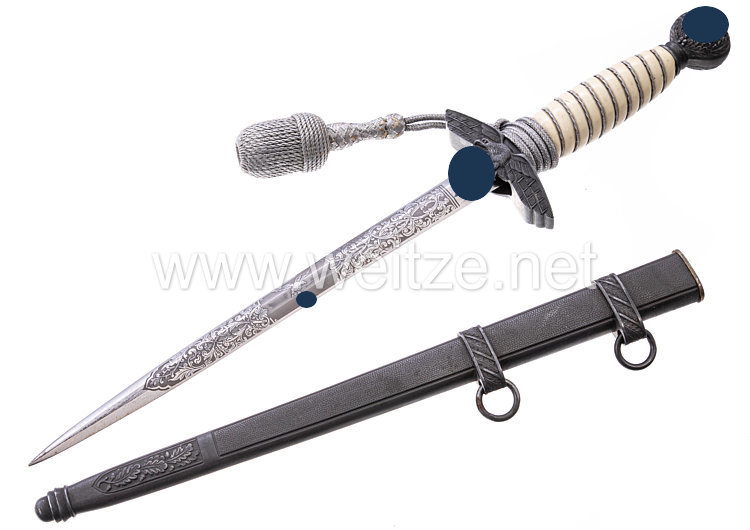
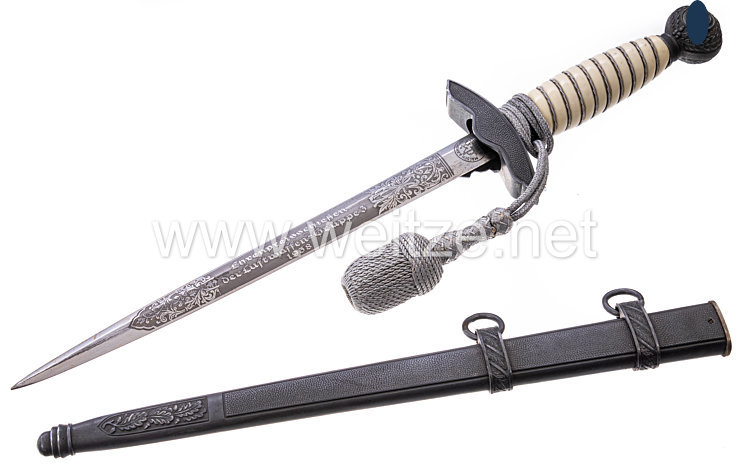
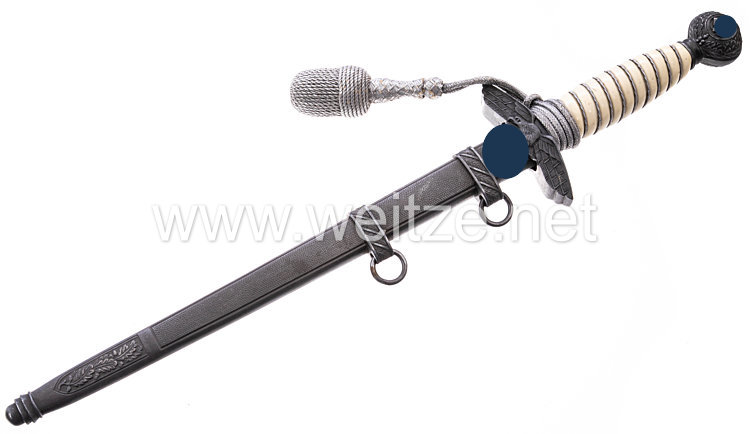
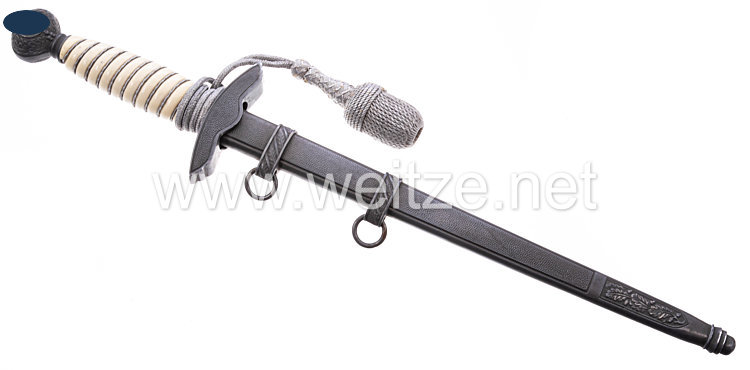
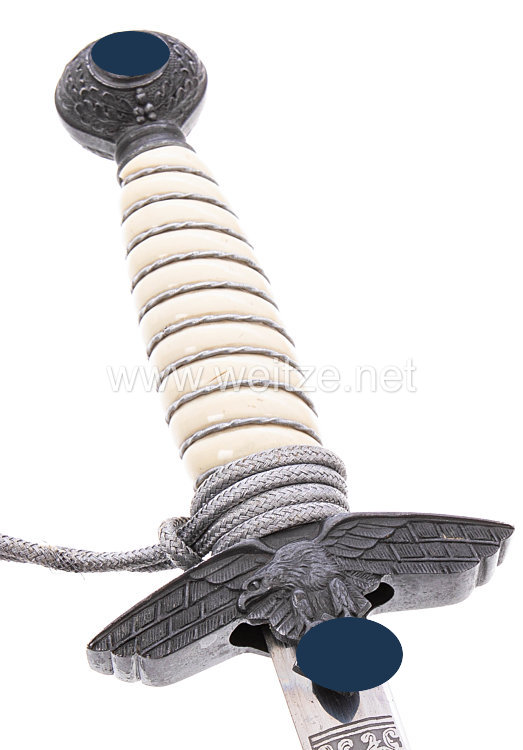
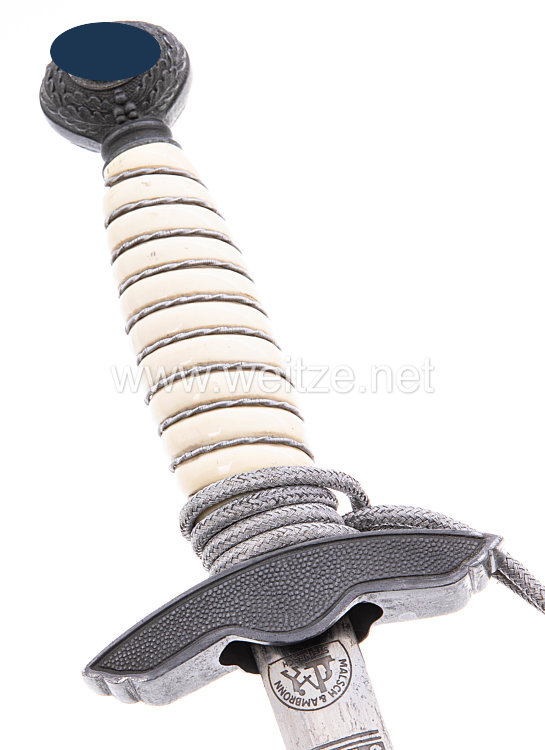
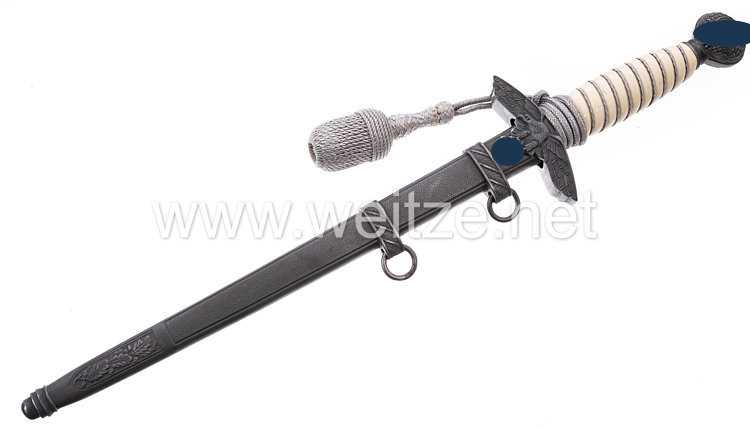
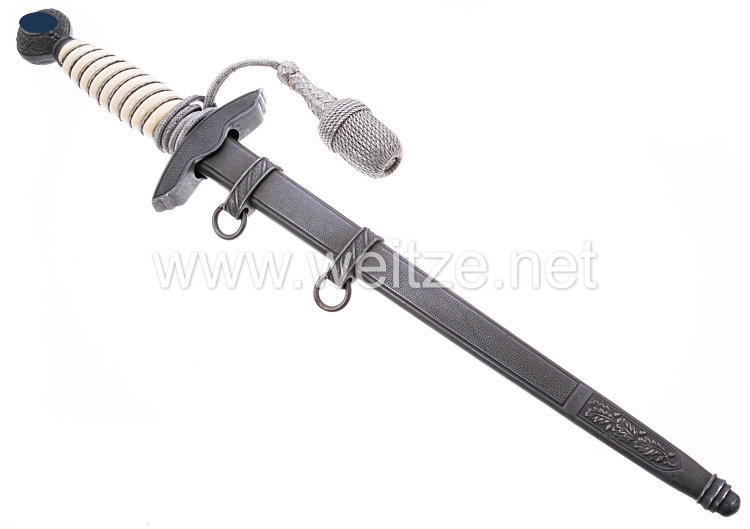
Luftwaffe Offiziersdolch-Ehrenpreis Schießen.
Die Klinge mit beidseitiger Zierätzung (florale Motive), auf der Frontseite Luftwaffenadler, auf der Rückseite "Ehrenpreisschießen der Luftwaffen-Gruppe 3, 1938", Herstellermarke von "Malsch & Ambronn Steinbach", weißer Griff mit feiner Drahtwicklung, Knauf und Parierstück sowie Scheide gleichmäßig getönt, nur leicht getragener Dolch mit wenigen Altersspuren, insgesamt aber noch sehr gut erhalten, selten. Zustand 2
Die Luftflotte 3 ging am 1. Februar 1939 aus dem ein Jahr zuvor gebildeten Luftwaffengruppenkommando 3 unter Hugo Sperrle hervor und hatte ihr Hauptquartier bis zum Kriegsbeginn in München. Im September 1939 wurde dann das neue Hauptquartier im hessischen Bad Orb bezogen, von wo aus die Luftflotte die Einsätze während des sogenannten Sitzkrieges im Raum Südwestdeutschland leitete. Während des Westfeldzugs unterstützte die Luftflotte 3 das Vorgehen der Heeresgruppe A durch die Ardennen und trug wesentlich zum Gelingen des Sichelschnittplans bei. Nach dem Ende der Operationen in Frankreich trug sie gemeinsam mit der Luftflotte 2 die Hauptlast der Luftschlacht um England. Als letztere in Vorbereitung auf den Angriff auf die Sowjetunion 1941 nach Osten verlegt wurde, verblieb die Luftflotte 3 als oberstes Hauptquartier der Luftwaffe im Westen und übernahm deren Zuständigkeit für Nordostfrankreich, Belgien und die Niederlande.
Die Luftflotte 3 ging am 1. Februar 1939 aus dem ein Jahr zuvor gebildeten Luftwaffengruppenkommando 3 unter Hugo Sperrle hervor und hatte ihr Hauptquartier bis zum Kriegsbeginn in München. Im September 1939 wurde dann das neue Hauptquartier im hessischen Bad Orb bezogen, von wo aus die Luftflotte die Einsätze während des sogenannten Sitzkrieges im Raum Südwestdeutschland leitete. Während des Westfeldzugs unterstützte die Luftflotte 3 das Vorgehen der Heeresgruppe A durch die Ardennen und trug wesentlich zum Gelingen des Sichelschnittplans bei. Nach dem Ende der Operationen in Frankreich trug sie gemeinsam mit der Luftflotte 2 die Hauptlast der Luftschlacht um England. Als letztere in Vorbereitung auf den Angriff auf die Sowjetunion 1941 nach Osten verlegt wurde, verblieb die Luftflotte 3 als oberstes Hauptquartier der Luftwaffe im Westen und übernahm deren Zuständigkeit für Nordostfrankreich, Belgien und die Niederlande.