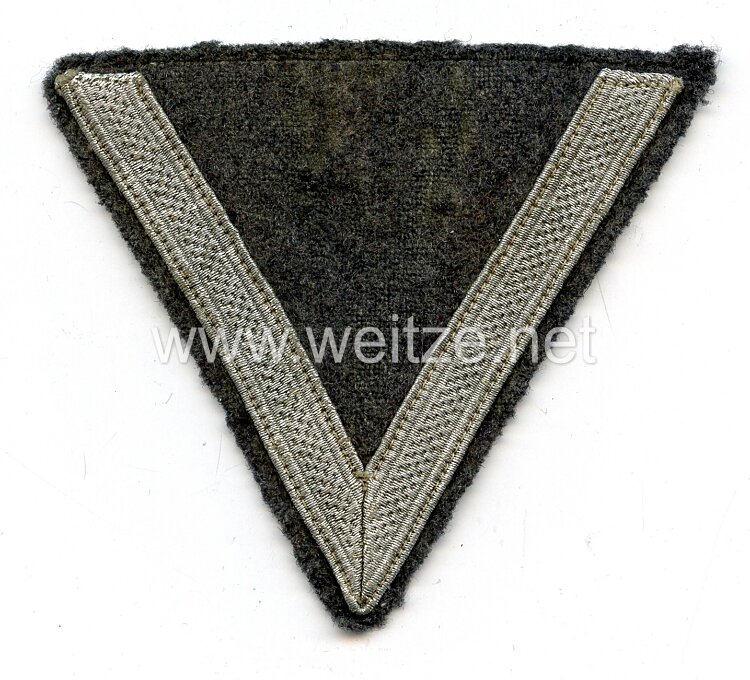
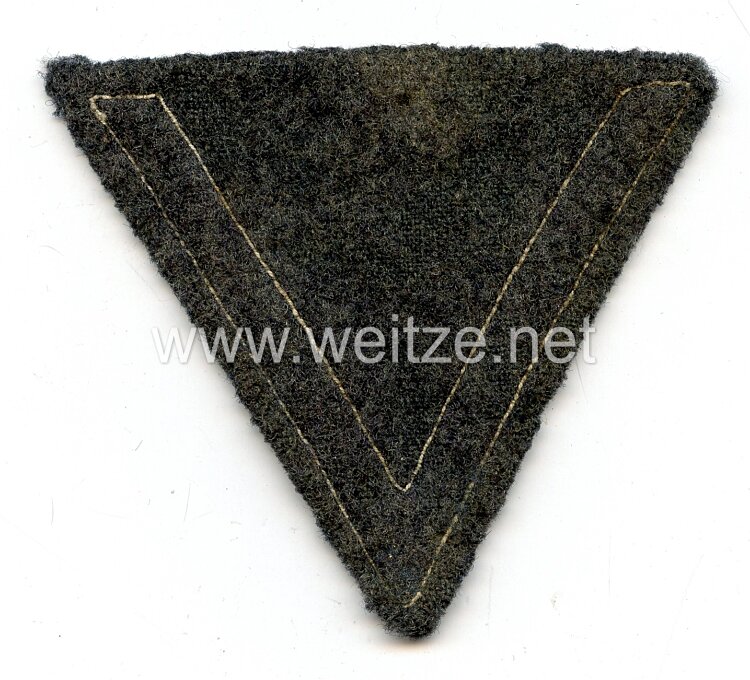
Luftwaffe Sleeve Insignia Lance Corporal
The Luftwaffe sleeve badge for Gefreiter represents a significant example of the rank insignia system used by German air forces during World War II. This type of service rank badge embodies the precise hierarchy and organizational structure that was characteristic of the Wehrmacht.
The Luftwaffe was officially established on March 1, 1935, when the German Reich openly rejected the military restrictions of the Treaty of Versailles. Under the leadership of Hermann Göring, the Luftwaffe rapidly developed into one of the world's most modern air forces. With its founding, a comprehensive system of service and rank insignia was introduced, oriented toward traditional military structures but also featuring specific characteristics unique to the air force.
The rank of Gefreiter represented the first promotion level above the basic soldier. The term “Gefreiter” derives from the Middle High German word meaning “exempted” and historically referred to a soldier who was freed from certain menial duties. In the Luftwaffe hierarchy, the Gefreiter ranked above the Flieger (the basic rank) and below the Obergefreiter. This promotion typically occurred after a certain period of service and satisfactory performance.
Luftwaffe sleeve badges were worn according to the Dress Regulations for the German Luftwaffe, first issued in 1935 and revised several times in subsequent years. These regulations meticulously governed all aspects of the uniform, including the correct placement and design of rank insignia. The sleeve badge for Gefreiter was typically attached to the left upper arm of the uniform.
The design of these badges followed a uniform system: they consisted of a dark blue-gray base that corresponded to the characteristic color of Luftwaffe uniforms. The Gefreiter was identified by a specific arrangement of chevrons or braids that clearly distinguished it from badges of other ranks. Production was typically accomplished through hand embroidery or machine manufacturing, with various quality levels existing.
Several variants of these badges existed, depending on the type of uniform: for the service dress, the walking-out dress, and the work uniform. Badges for higher-grade uniforms were often more elaborately crafted and showed finer details. Unworn examples, such as the piece described here in Condition 2, are particularly valuable to collectors and historians because they preserve the original manufacturing condition and display details that are often lost through wear in used examples.
The production of these badges was carried out by various manufacturers throughout the German Reich. Both military depots and private companies were involved in manufacturing. Quality could vary, especially toward the end of the war when material shortages increasingly became a problem. Early wartime productions generally showed higher craftsmanship quality than later manufactures.
The study of such rank insignia provides important insights into the organizational structure of the Luftwaffe, its personnel strength, and the social hierarchy within the Wehrmacht. The careful documentation and differentiation of service ranks reflects the Prussian military tradition, which placed great value on clear command structures and external identification.
Today, such badges are important objects of study for military historians and are preserved in museums and private collections. They document not only the military history of the Third Reich but also the textile craftsmanship and production methods of that era. The unworn condition makes such a piece particularly valuable for historical research, as it provides authentic information about manufacturing techniques, materials, and original coloring that are often no longer visible in worn and aged examples.
These insignia serve as tangible connections to the complex history of World War II and the German armed forces. Their systematic study contributes to our understanding of military organization, social structures within authoritarian regimes, and the evolution of military traditions. For researchers, each authentic piece represents a primary source that can corroborate documentary evidence and provide material evidence of historical practices.