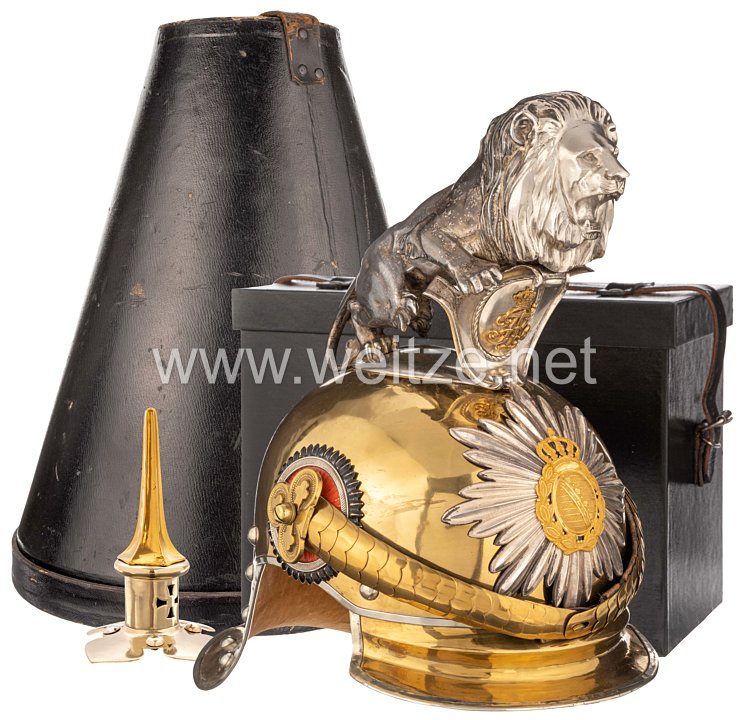
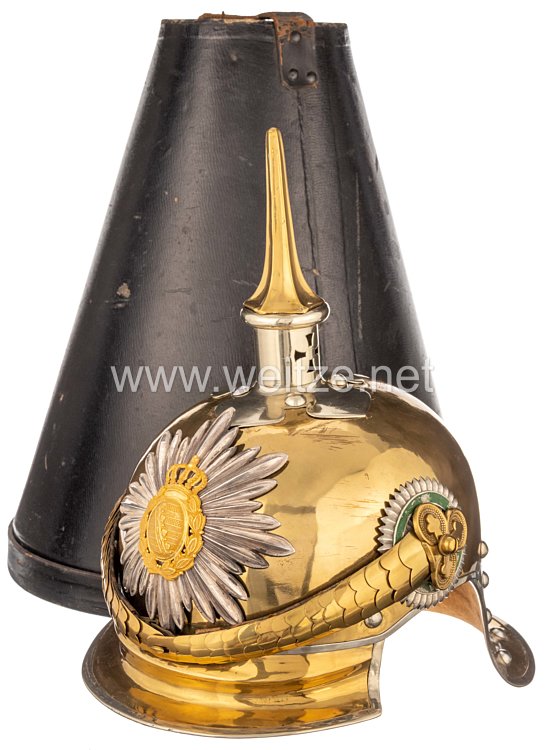
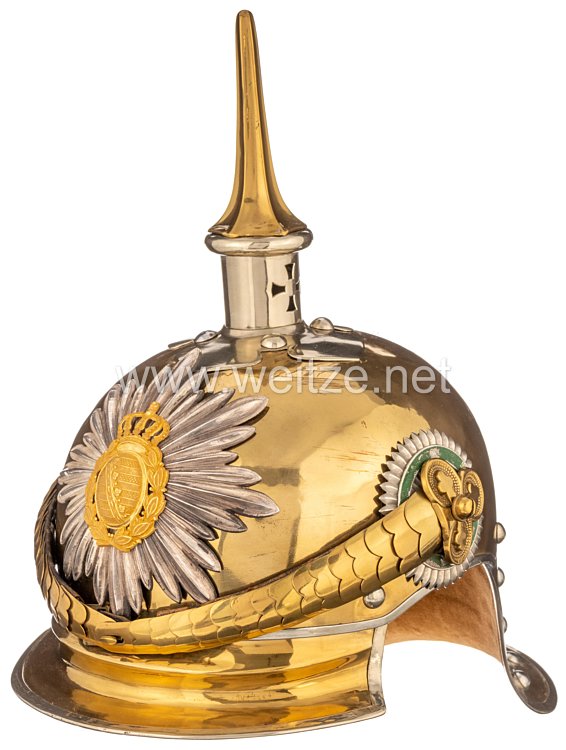
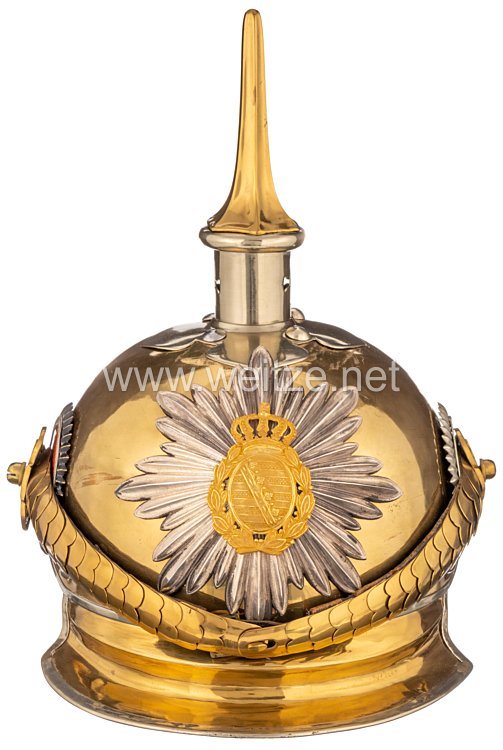
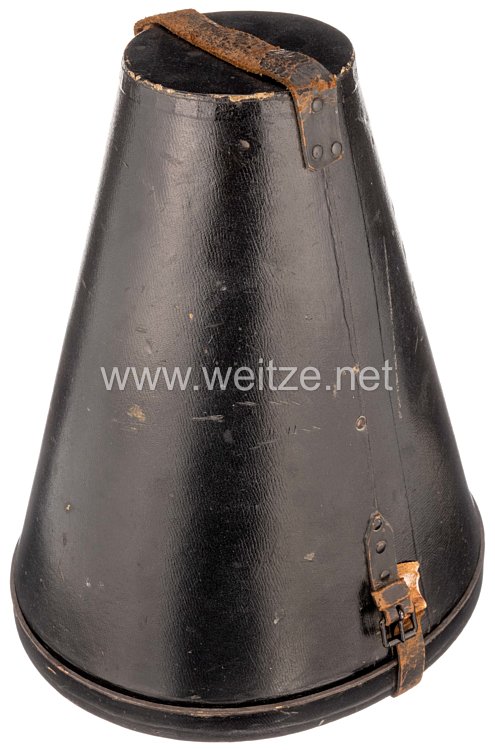
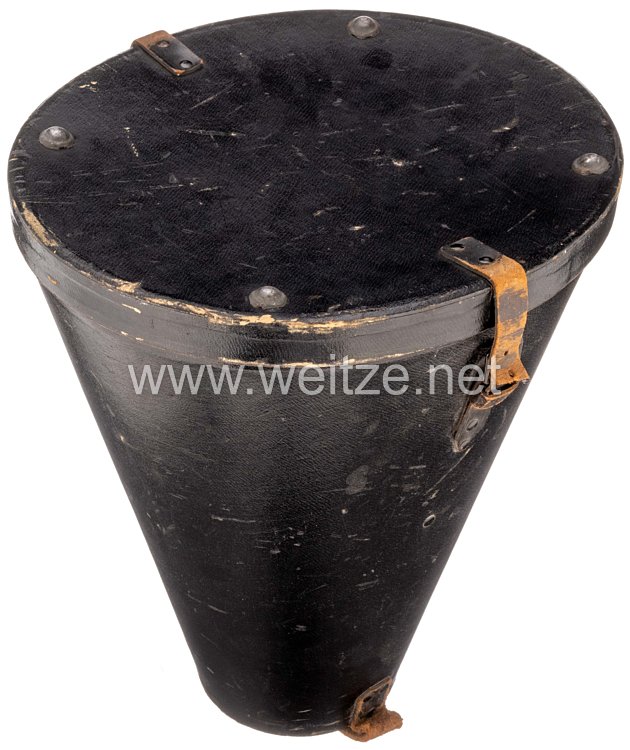
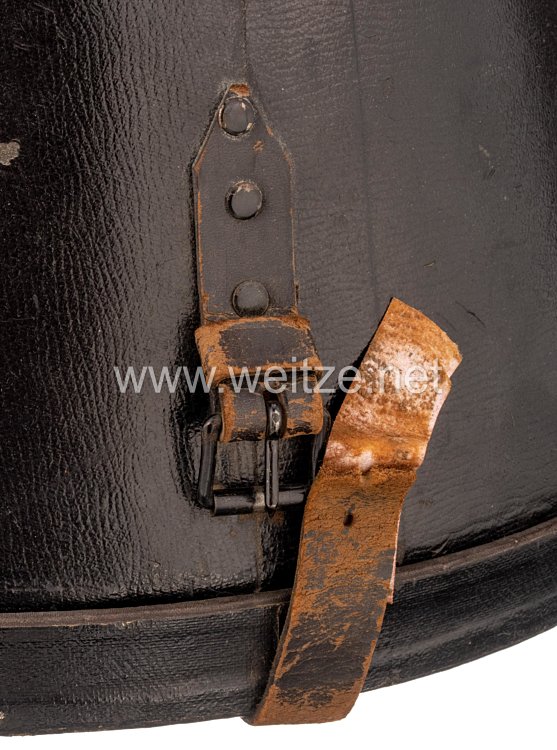
Kingdom of Saxony Helmet for an Officer of the Garde-Reiter-Regiment
Only lightly worn, a particularly elegant helmet in beautiful condition. Of this quality only very rarely found!
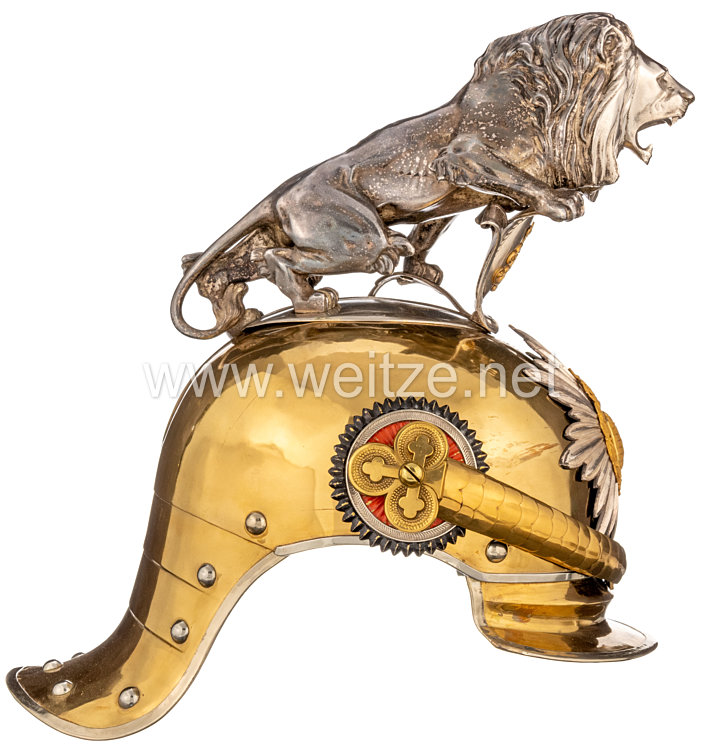
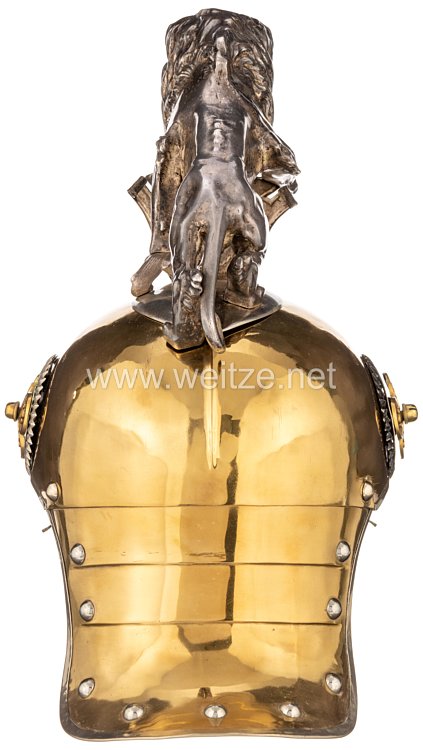
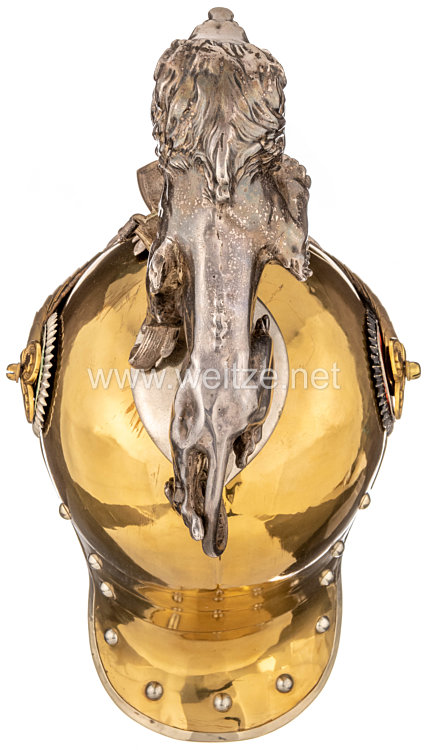
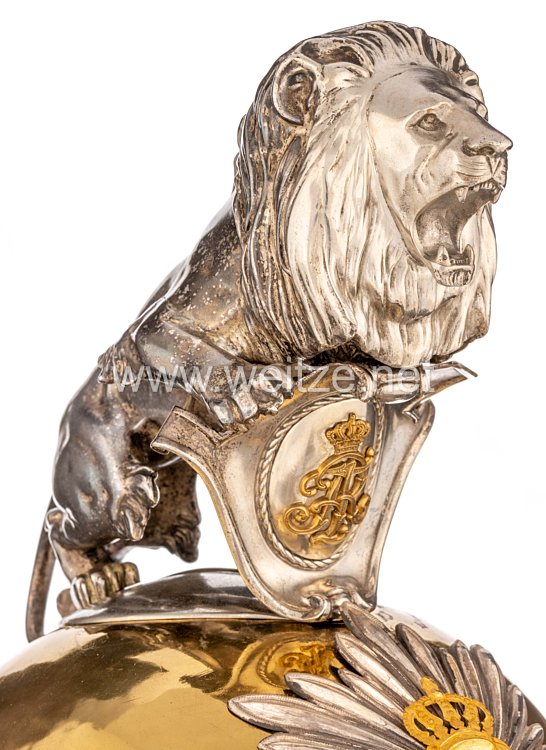
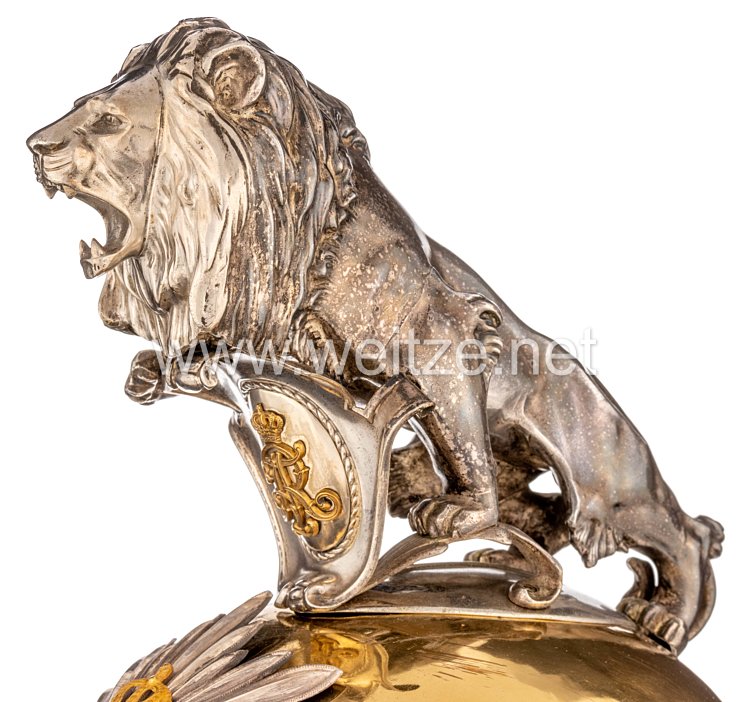
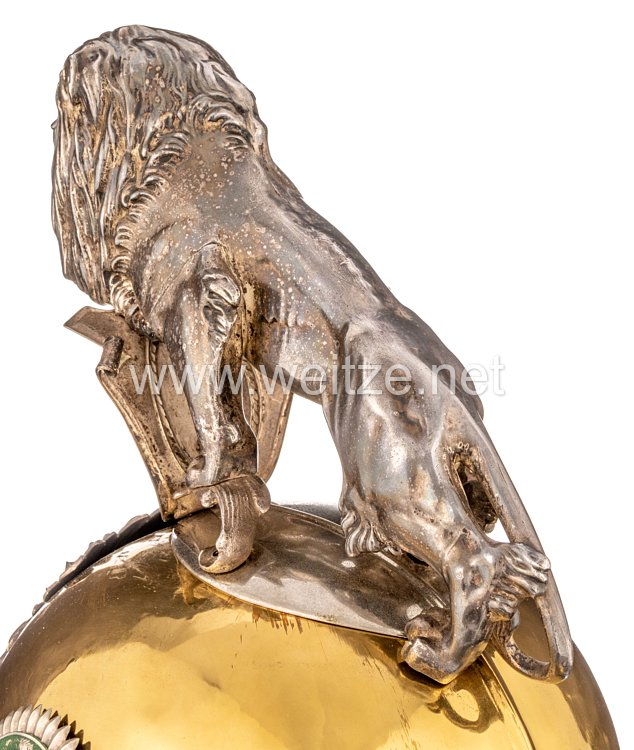
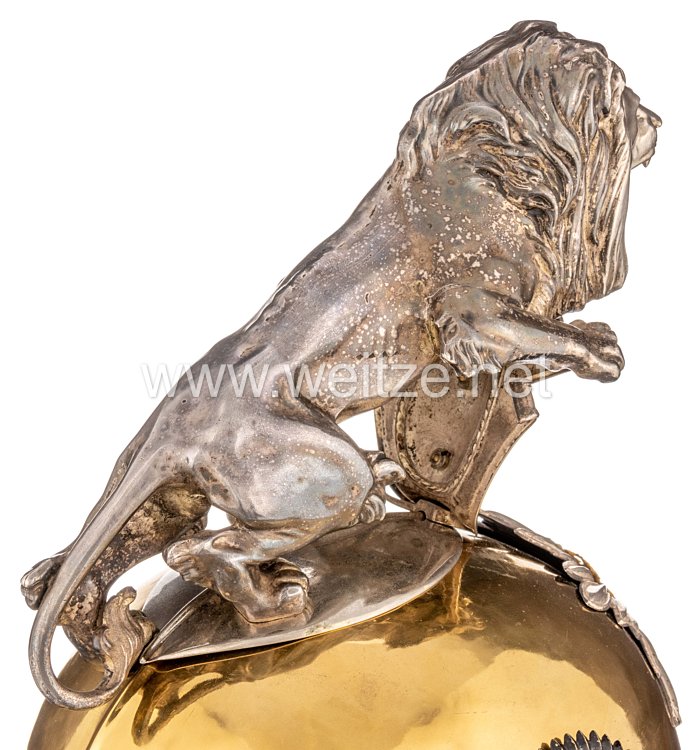
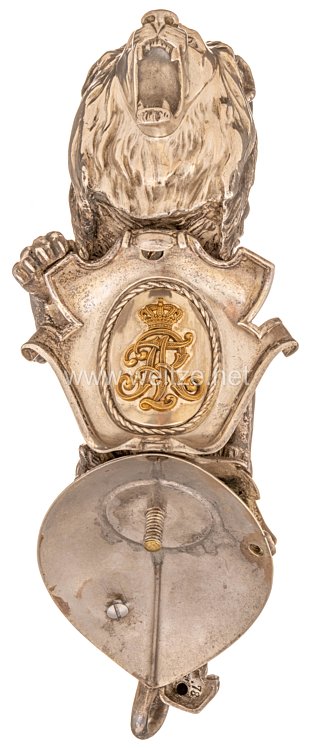
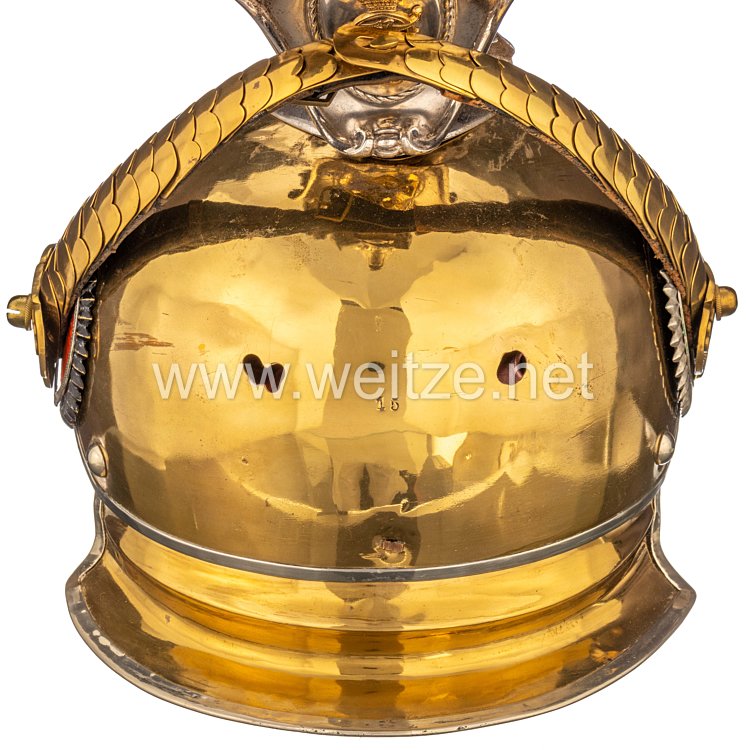
The officer's helmet of the Royal Saxon Garde-Reiter-Regiment with its distinctive Paradelöwe M/1907 (parade lion) represents the pinnacle of military splendor in the late German Empire. Manufactured around 1910 in Dresden, this headpiece combines technical sophistication with ceremonial magnificence, documenting the special position of Saxon guard units within the German Reich.
The Garde-Reiter-Regiment traced its venerable history back to 1680, when it was founded as the Electoral Saxon Lifeguard. Over more than two centuries, the unit developed into one of Saxony's most elite cavalry formations. Stationed in Dresden, the regiment fulfilled the prestigious task of guarding the Saxon royal house and participating in all court festivities. The regiment's military history was marked by significant combat engagements: from the Battle of Vienna in 1683 through the Napoleonic Wars to the Franco-Prussian War of 1870-71.
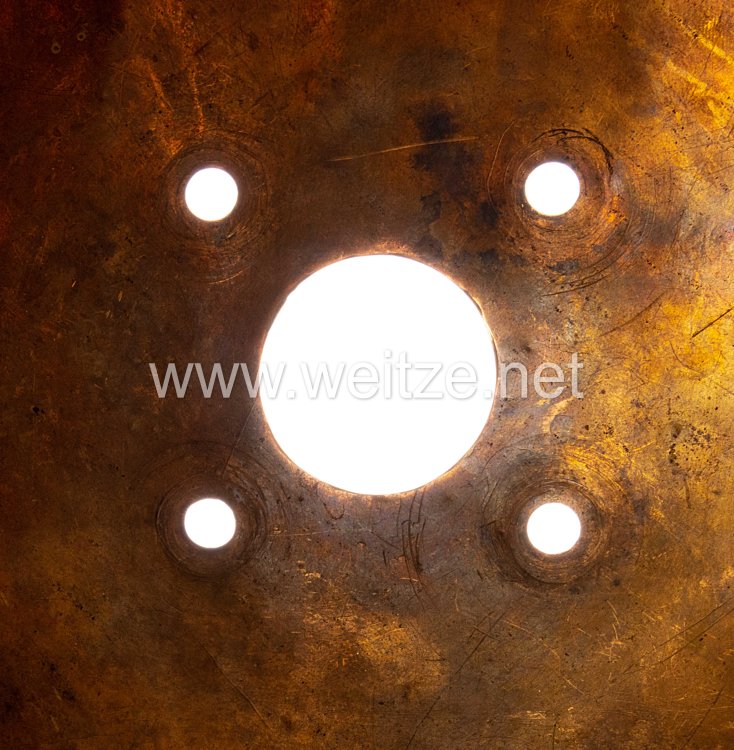
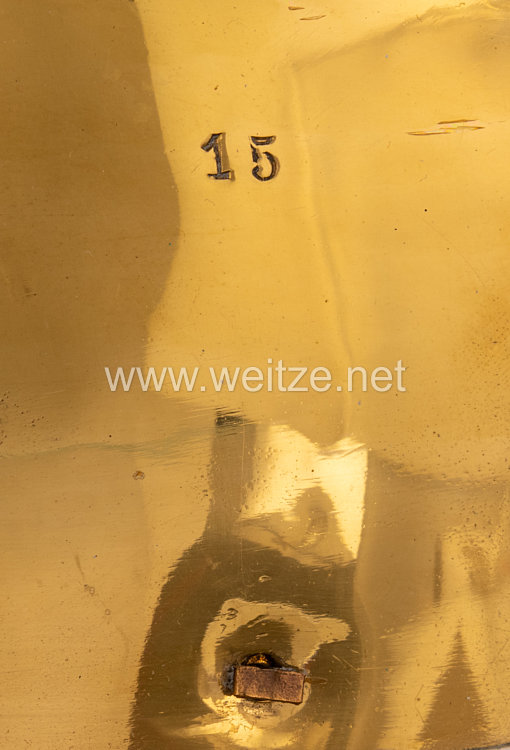
After the founding of the German Empire in 1871, the Kingdom of Saxony retained its own army as a federal state, though integrated into the Prussian-dominated military system. This integration manifested itself in uniform design as well. In 1876, the cuirassier-style helmet was introduced, following the Prussian model and reflecting military standardization reforms after the Franco-Prussian War. The lightweight helmet skull made of tombac—a copper-zinc alloy—with its copper-colored external shine characterized the officer version, while enlisted helmets were heavier in construction.
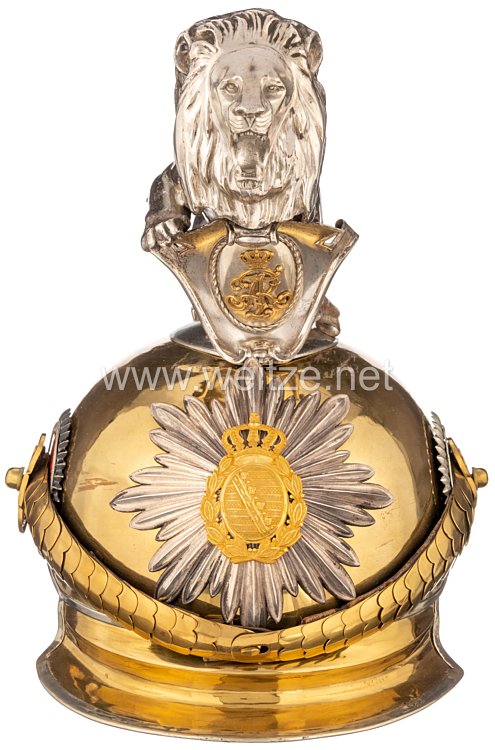
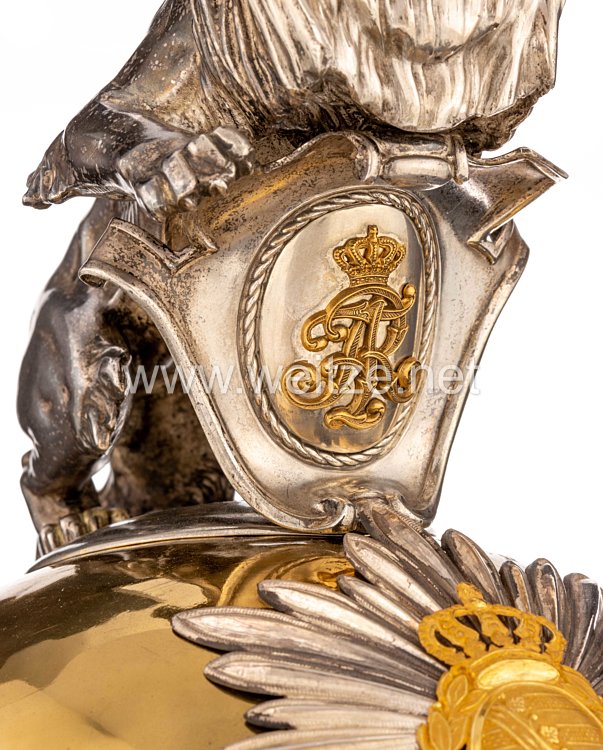
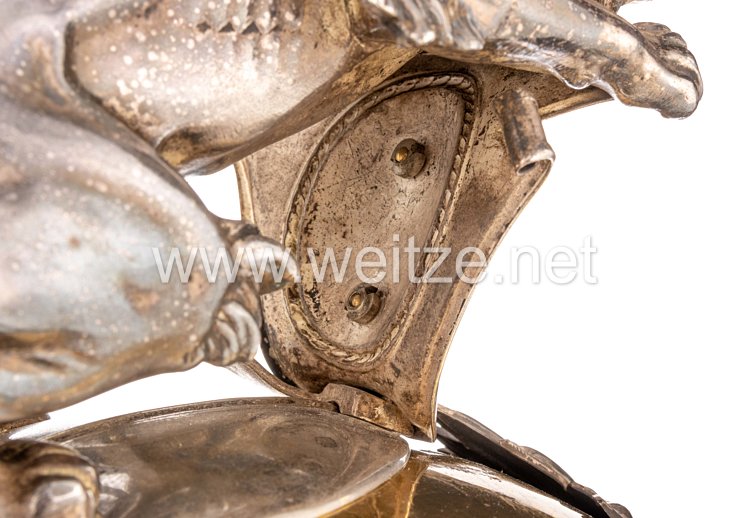
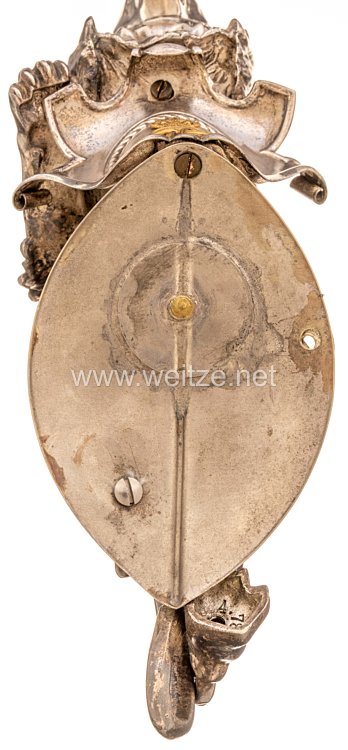
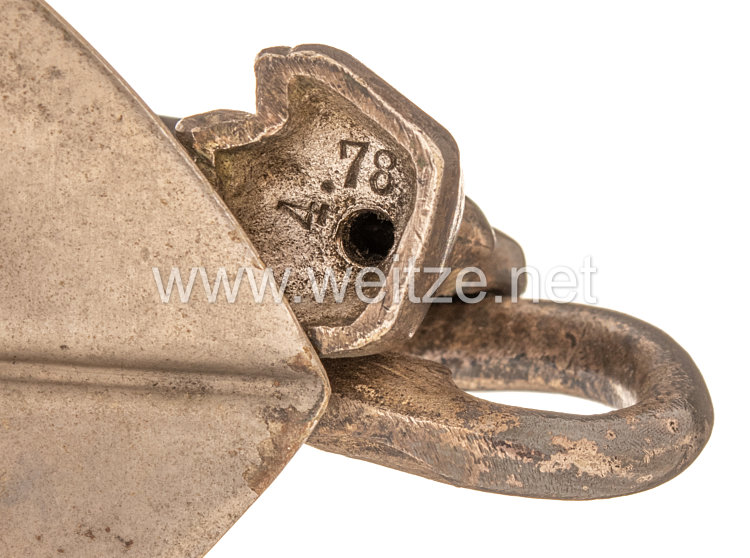
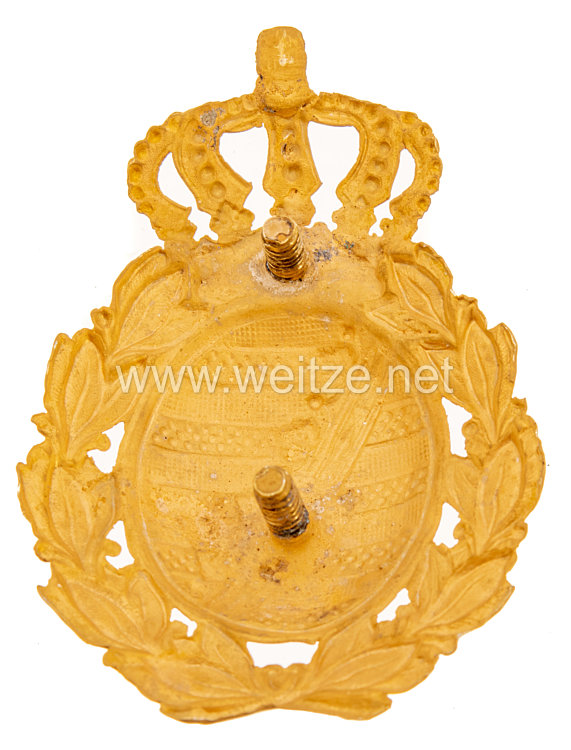
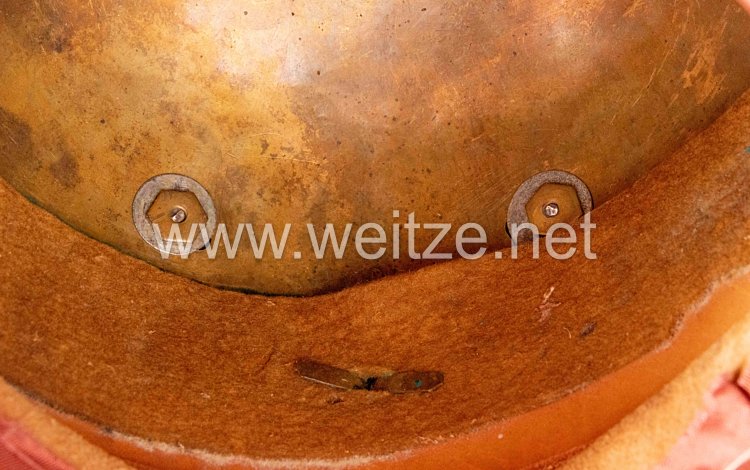
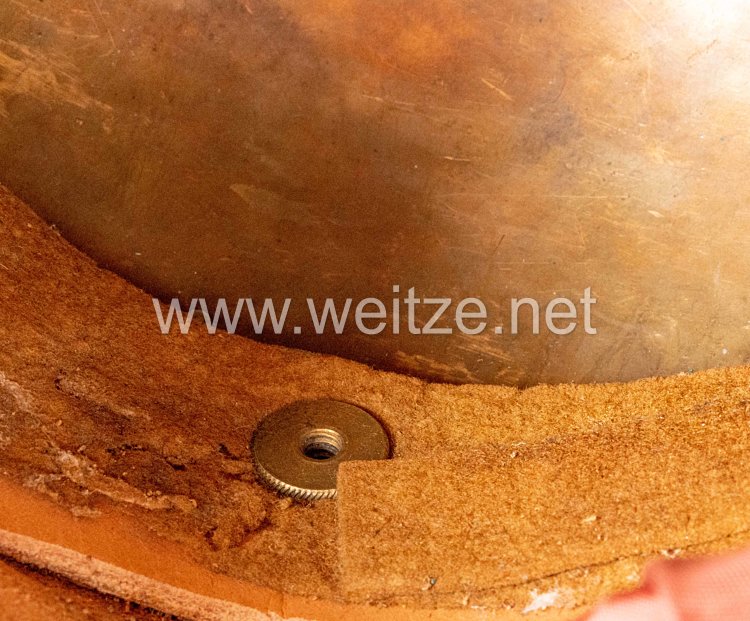
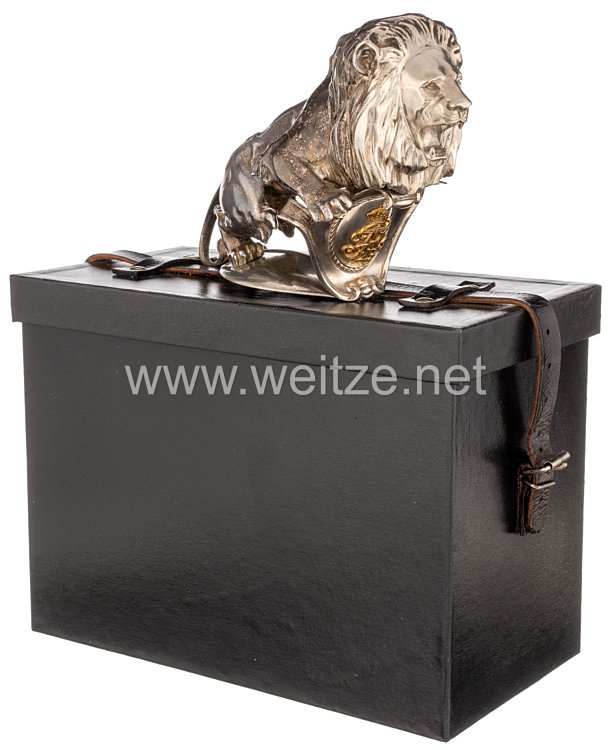
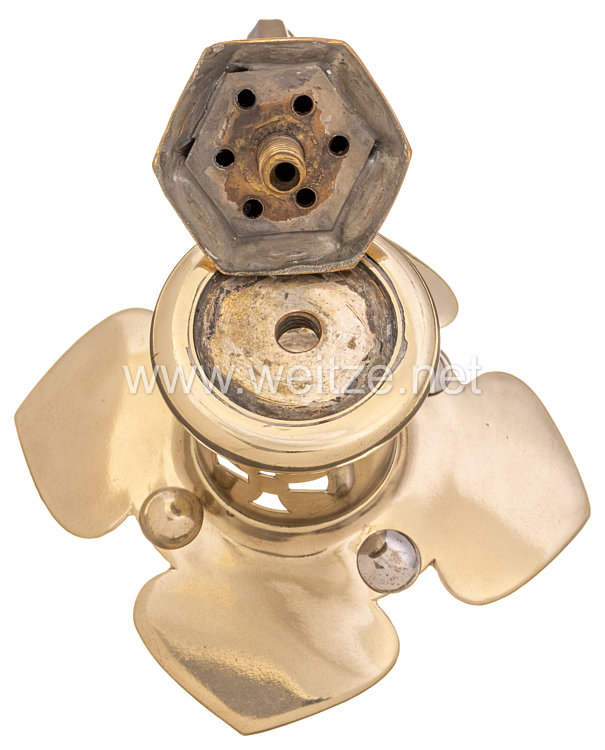
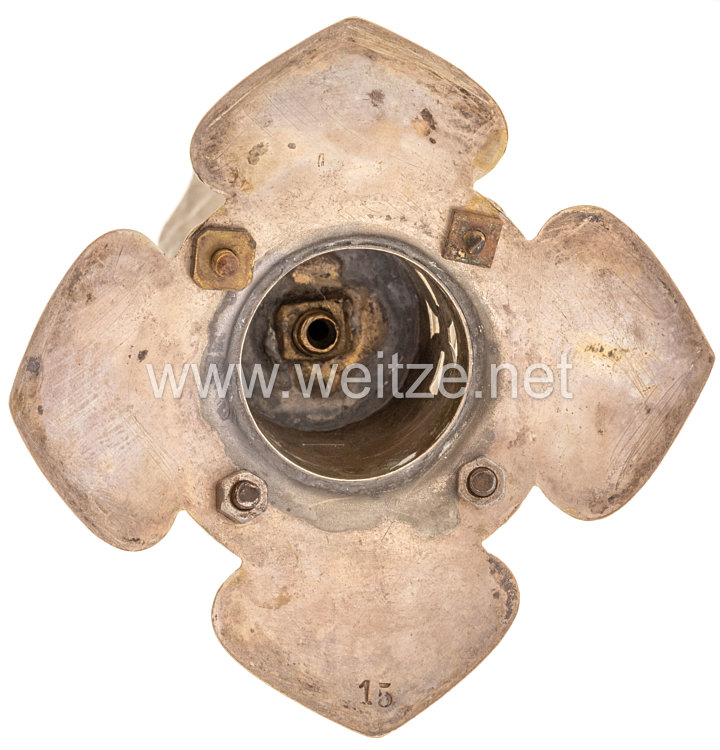
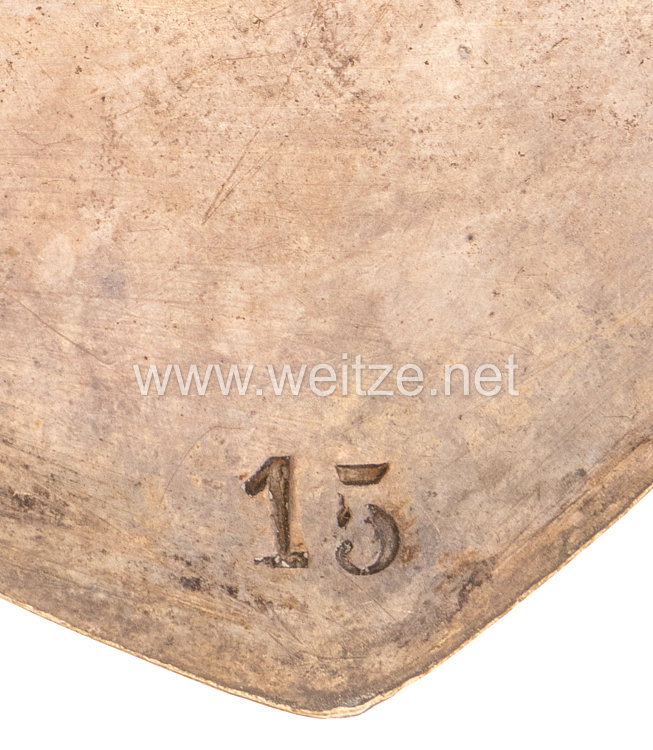
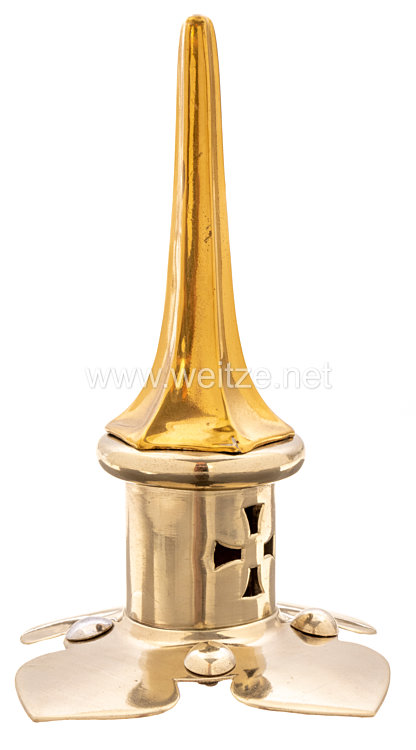
A significant innovation occurred in 1907 with the introduction of the parade lion, which replaced the previously used white hair plume. This silver rampant lion honored the old Margraves of Meissen, ancestors of the Saxon kings, and gave the helmet its unmistakable identity. The lion was crafted in the finest officer's execution and featured a gilded crowned cipher on the front. The rear paw of the lion bears the stamp "78", though its precise meaning could not be definitively verified. For regular duty, a tall fluted service spike was available as an alternative, mounted on a crosspiece with attachment screws.
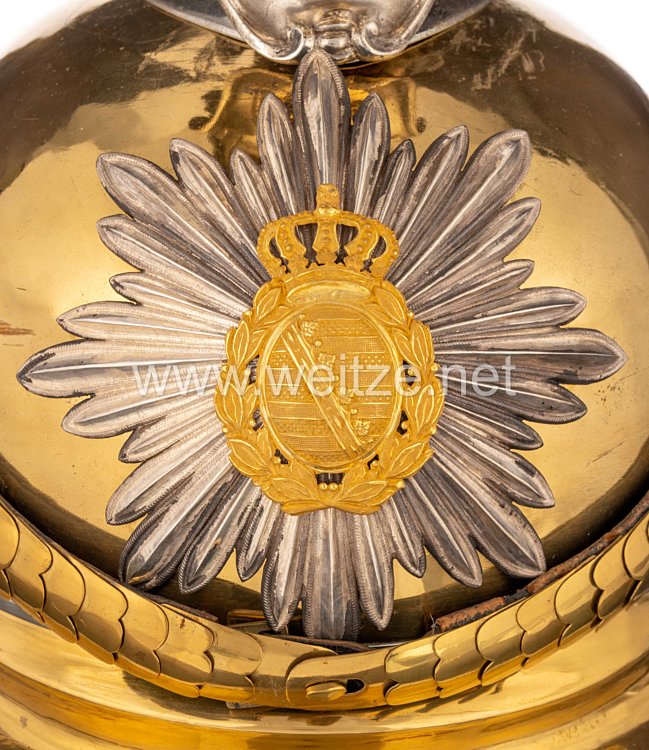
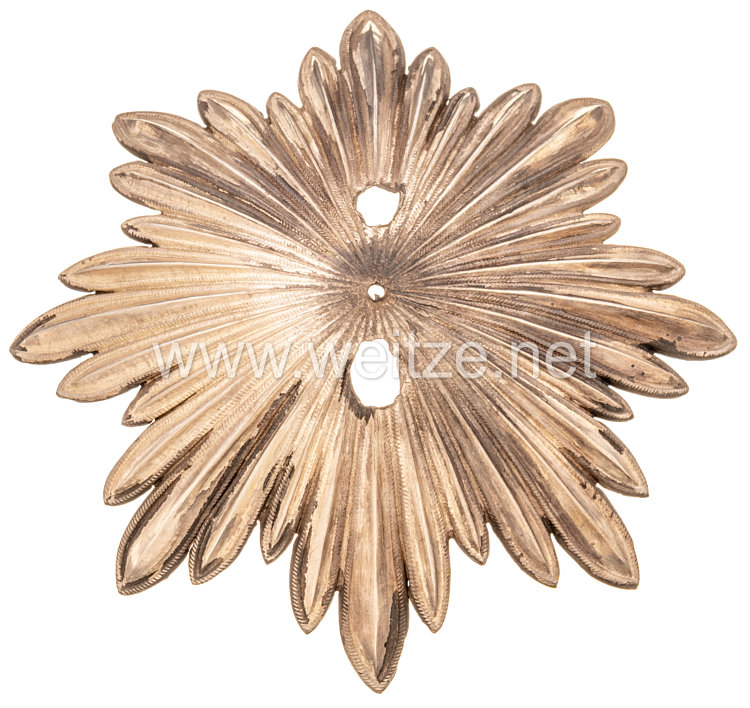
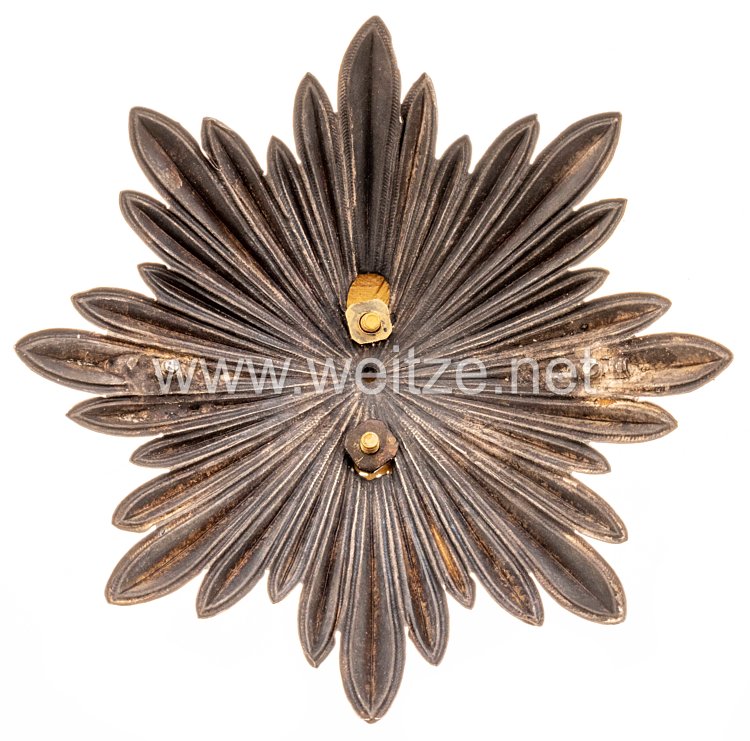
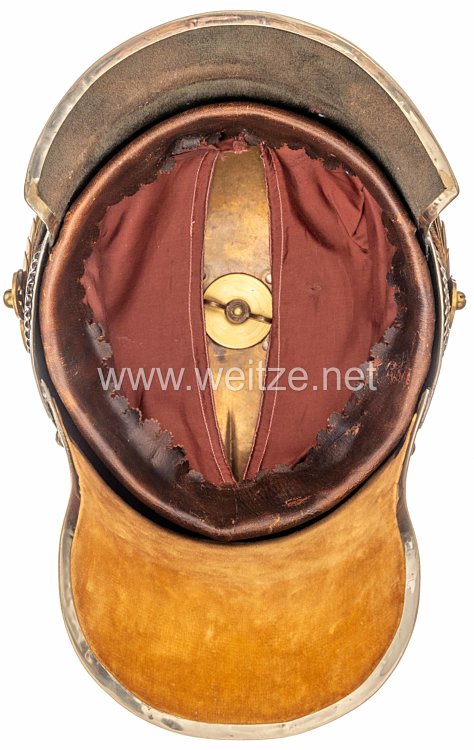
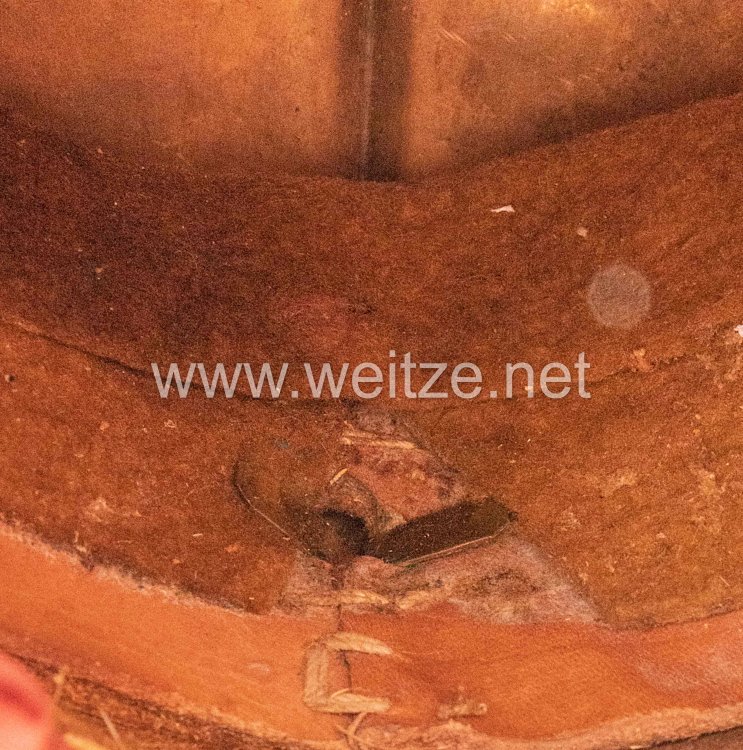
The helmet's appointments met the highest standards of craftsmanship. The large silver-plated star on the front bore the matte-gilded Saxon coat of arms. Domed scale chains were attached to cloverleaf fittings and screws, with both cockades appearing in large format. The interior featured dark brown sweatband leather and reddish-brown silk lining, while the front visor was lined with green velvet cloth and the rear visor with brown velvet cloth. Officers frequently acquired their equipment from specialized court suppliers in Dresden, which guaranteed individual quality and workmanship.
The manufacturing period around 1910 places this helmet in the last peacetime years before World War I, when the splendor of European military uniforms reached its peak. This era would end abruptly: the Garde-Reiter-Regiment participated in World War I, and from 1915 onwards, parade helmets were increasingly replaced by practical steel helmets that offered actual protection in trench warfare. After Germany's defeat and the abdication of Saxon King Friedrich August III in 1918, the regiment was dissolved in 1919.
This helmet type was worn by both the Garde-Reiter-Regiment and the Saxon Karabiner-Regiment (2nd Heavy Cavalry Regiment). Today, such helmets are significant military historical collector's items that document not only German military history but also Saxon identity and the social structure of the Imperial period. They are silent witnesses to a vanished monarchical order and the magnificent military culture of an era that met its end in the trenches.