Prussia WWI Ersatz Pickelhaube Made of Sheet Iron for Enlisted Men of Infantry Regiment Herzog Ferdinand von Braunschweig (8. Westfälisches) Nr. 57

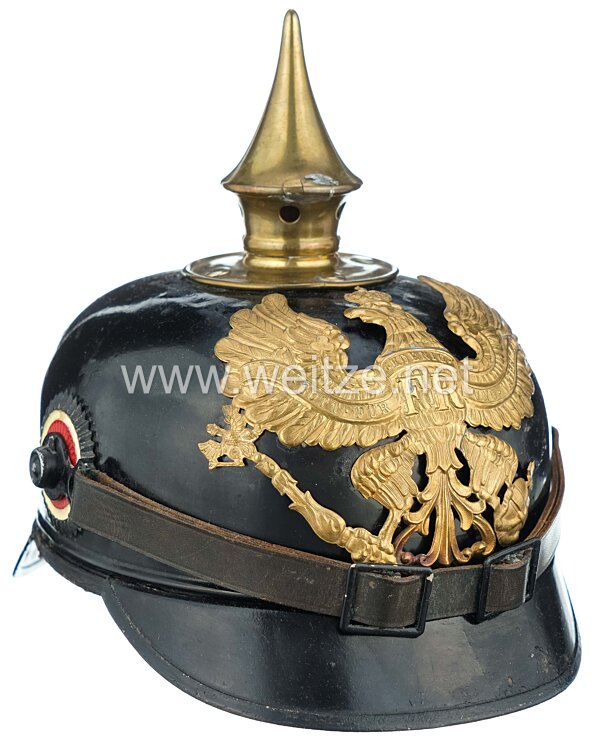
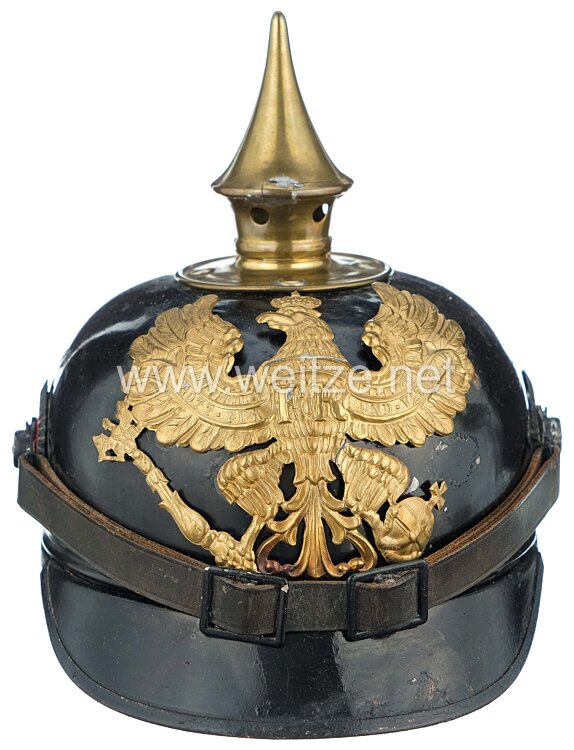
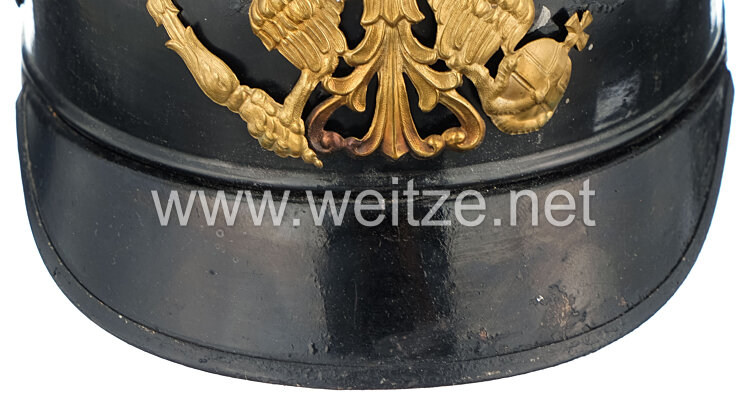
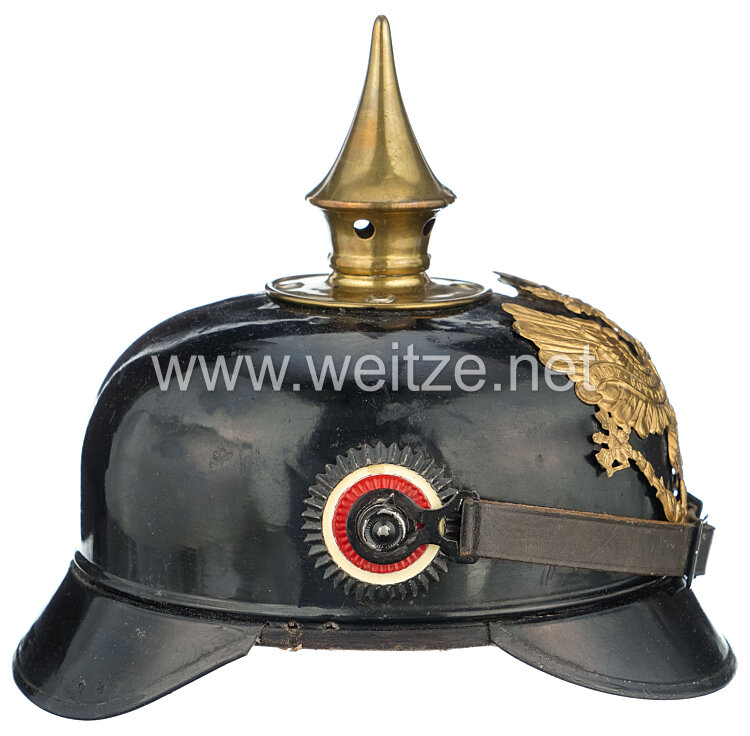
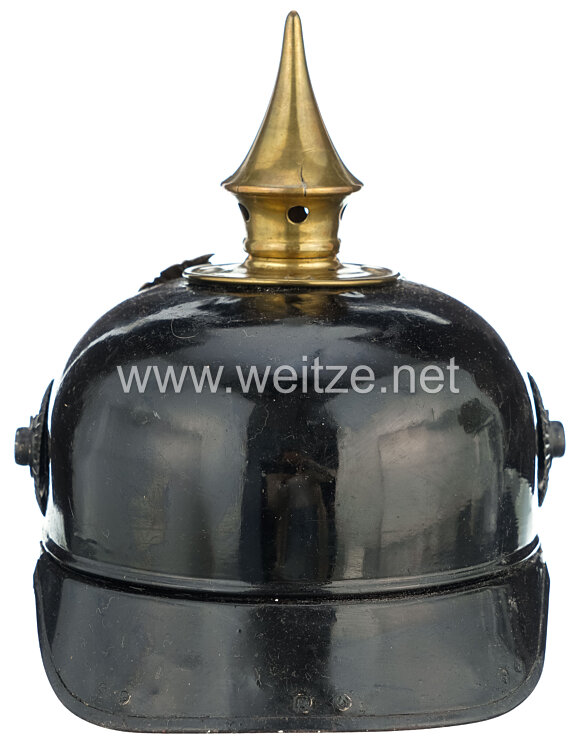
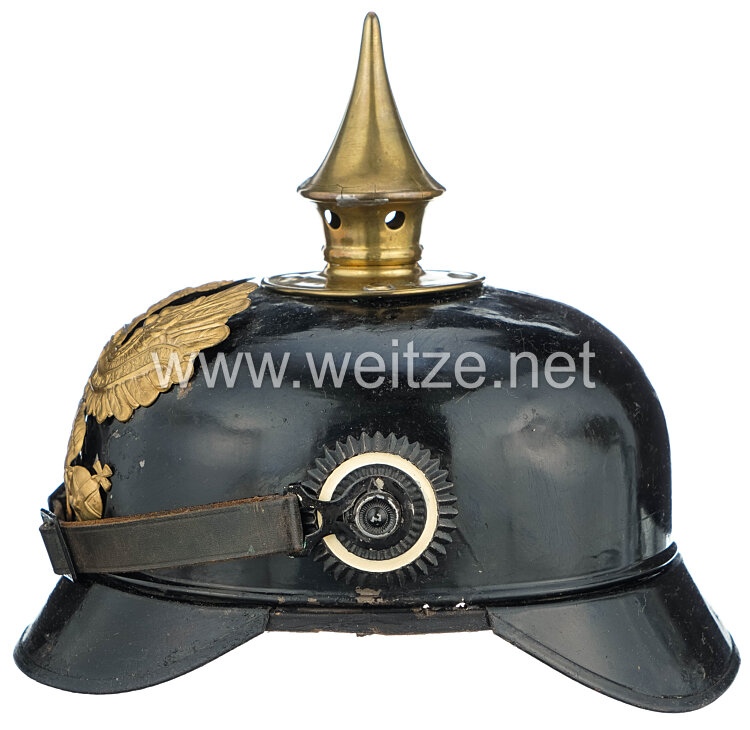
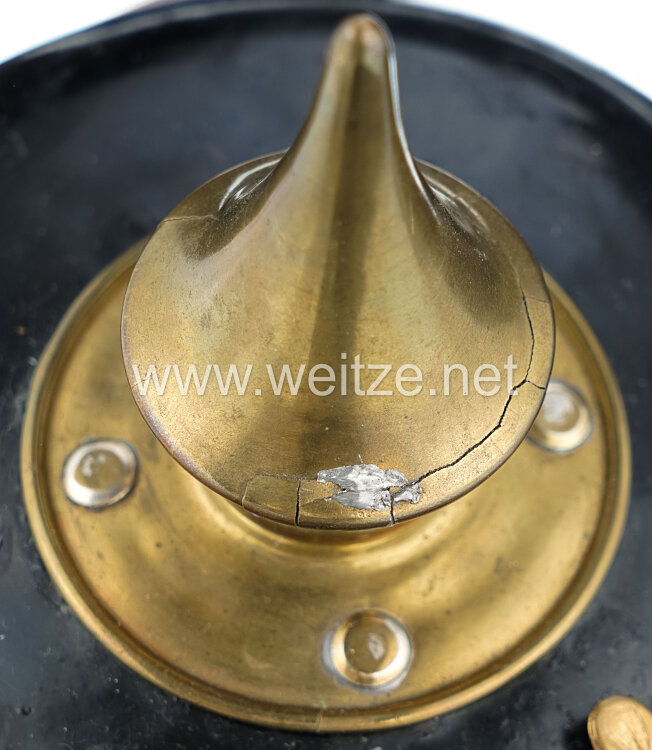
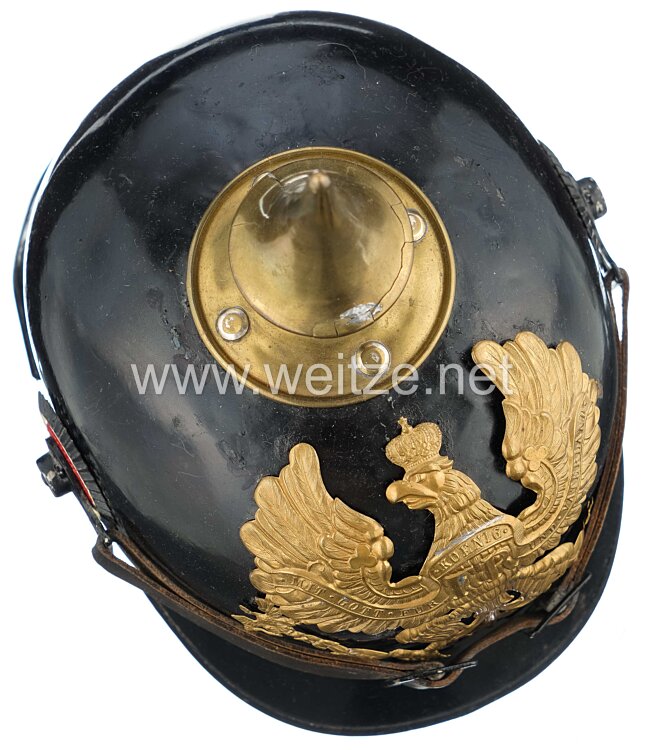
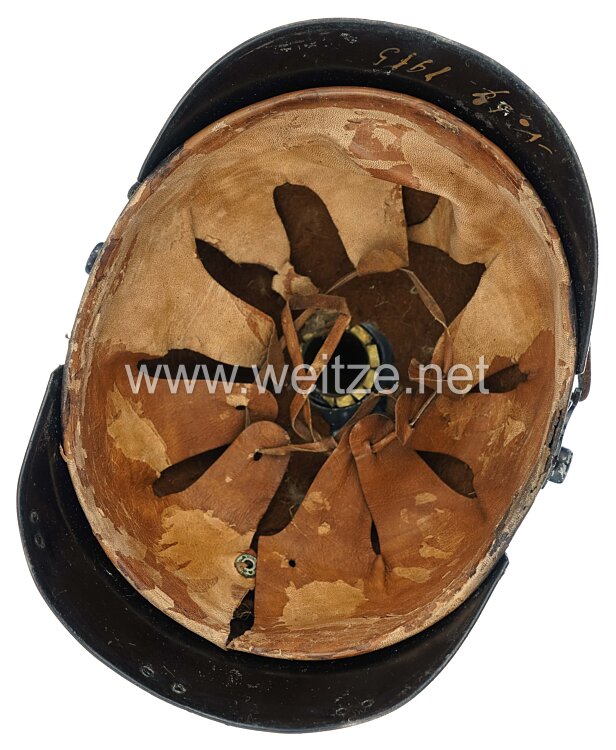
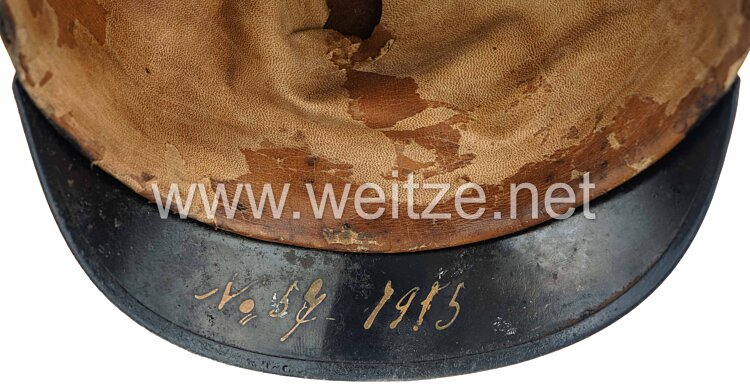
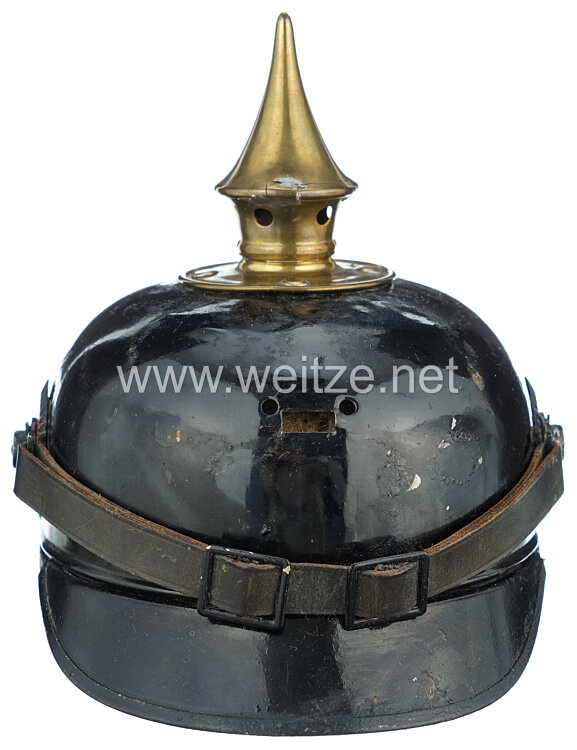
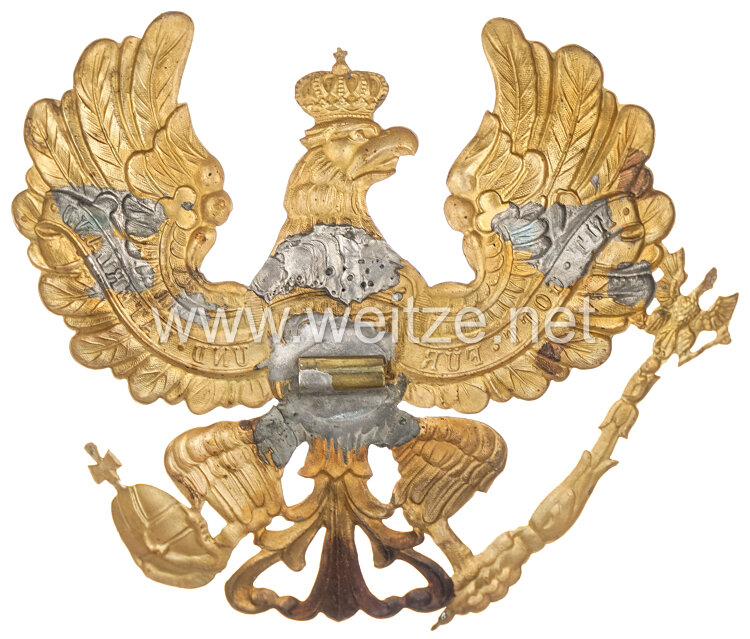
Peacetime garrison Wesel. Chamber piece 1915. The helmet shell made of black lacquered sheet iron, complete with all fittings in simplified brass construction. The helmet eagle attached with a single mounting tab, the base plate with simulated rivets, original leather chin strap on button 91, with both cockades. Interior with leather lining applied with tabs, the shell lined with a felt cover, the front visor marked with unit designation “No. 57 1915”. Size 58. The spike damaged and soldered in period. Condition 2.
460051
1.550,00

Prussia WWI Ersatz Pickelhaube Made of Sheet Iron for Enlisted Men of Infantry Regiment Herzog Ferdinand von Braunschweig (8. Westfälisches) Nr. 57

The ersatz pickelhaube made of sheet iron from the Infantry Regiment Duke Ferdinand of Brunswick (8th Westphalian) No. 57 represents a significant chapter in German military history during World War I. This specific example from 1915 documents the transition from peacetime equipment to wartime substitute solutions necessitated by increasing material shortages and the demands of modern warfare.

Infantry Regiment No. 57 was garrisoned in Wesel, an important fortress city on the Lower Rhine. The regiment was named after Duke Ferdinand of Brunswick (1721-1792), one of the most distinguished Prussian field marshals of the Seven Years' War. This traditional naming connected the regiment to Prussia's glorious military history and was intended to strengthen esprit de corps and fighting morale.

At the beginning of World War I, German infantrymen still wore the traditional leather pickelhaube, which had been the symbol of the Prussian and later German army since the 1840s. However, these helmets were labor-intensive to manufacture, resource-intensive, and offered virtually no protection against modern weapons. The prolonged war and enormous material requirements led to severe supply shortages as early as 1915.

The ersatz pickelhaube made of sheet iron, like the present example, was introduced as a Kammerstück - an equipment item for garrison and training duty. The marking “1915” in the front visor documents the year of manufacture and marks the beginning of the systematic introduction of these substitute helmets. The black lacquer finish imitated the appearance of traditional leather helmets, while the construction was significantly simplified.

The brass fittings demonstrate simplified wartime production: The helmet eagle, the central Prussian state emblem, was attached with only a single retention tab instead of the more elaborate peacetime construction. The base plate featured only suggested rivets, and other fittings were also functionally reduced. These simplifications enabled faster and more cost-effective production while maintaining traditional symbolism.

The two cockades on the helmet held high symbolic significance: The Reich cockade in black-white-red represented the German Empire, while the state cockade in Prussian colors of black-white indicated belonging to Prussia. These cockades were indispensable identification markers and were retained even on simplified ersatz helmets.

The leather chin strap with button 91 refers to the 1891 adjustment regulation that standardized the attachment and form of chin straps. Interestingly, the sheet iron helmets retained these details of peacetime production to maintain the external uniformity of troops and demonstrate connection to military tradition.

The interior construction with tongued leather lining and felt cap was intended to provide minimum comfort and wearability. The leather lining was assembled from individual strips (“tongues”) - another cost-saving measure that allowed the use of leather remnants instead of continuous pieces.

The size designation 58 corresponds to the German sizing system of the time, which indicated head circumference in centimeters. This size was above average and reflects the anthropometric requirements of military equipment.

By 1916, these sheet iron helmets were increasingly replaced by the revolutionary M1916 steel helmet (Stahlhelm), which provided actual protection against shell fragments and projectiles. The pickelhaube, whether made of leather or sheet iron, proved completely unsuitable for the reality of modern trench warfare. Nevertheless, ersatz pickelhauben remained in use throughout the war for garrison duty, training, and rear-echelon troops.

The present example thus documents the transition from the traditional warfare concept of the 19th century to the industrialized warfare of the 20th century. It shows how military traditions and symbolism collided with the harsh realities of material shortages and modern war requirements. As a collector's item, it offers authentic insights into the material culture, production methods, and military organization of the German Empire during World War I.

r