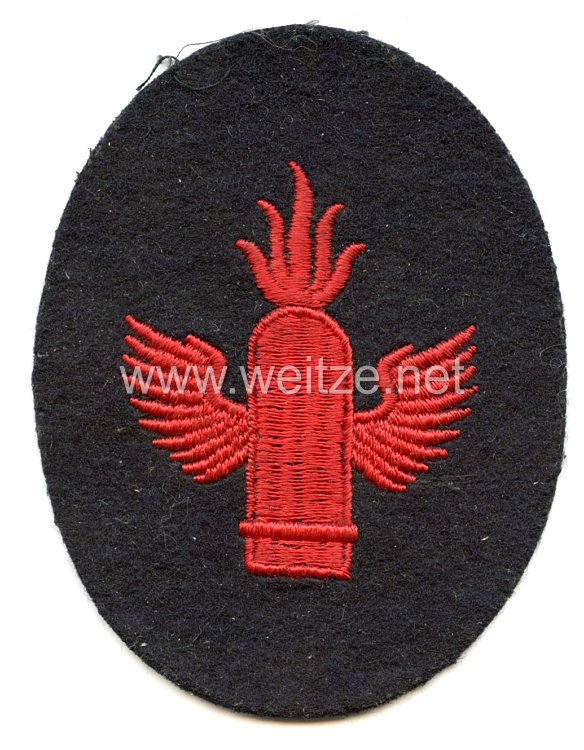
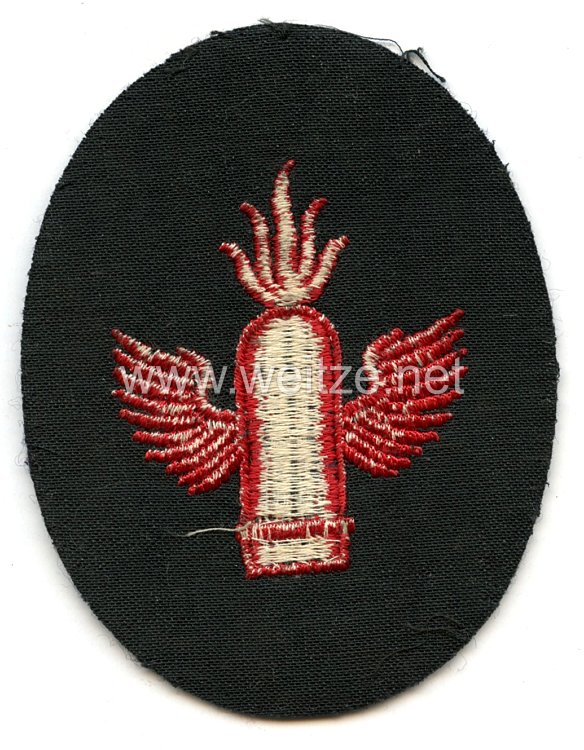
Kriegsmarine Sleeve Insignia Special Training Gunner or Observer of Light Flak Artillery

for blue uniform, machine-embroidered, condition 2.
436351
25,00

Kriegsmarine Sleeve Insignia Special Training Gunner or Observer of Light Flak Artillery

The Kriegsmarine sleeve insignia for special training as gunner or observer of light anti-aircraft artillery represents a significant example of the sophisticated decoration system of the German Navy during World War II. These machine-embroidered badges were worn on the blue uniform and identified naval personnel with specialized training in air defense.

The Kriegsmarine introduced a comprehensive system of career and specialist badges from 1935 onwards, reflecting the increasing specialization and technical complexity of modern naval warfare. With the growing threat from enemy air forces, air defense became an essential component of ship protection. Light anti-aircraft artillery, consisting of 2 cm and 3.7 cm caliber guns, formed the primary close-range defense against low-flying attacks and enemy bombers.

The sleeve badge for gunners and observers of light anti-aircraft artillery was awarded after successful completion of specialized training. This training encompassed theoretical and practical components, including the operation of various anti-aircraft weapon systems, target recognition, ballistic calculations, and team coordination. Observers received additional training in airspace surveillance, aircraft identification, and fire control.

The machine embroidery of these badges typically occurred on a dark blue cloth background, matching the uniform. Production was carried out by various authorized manufacturers who had to maintain strict quality standards. The badge usually displayed symbolic elements connected with anti-aircraft artillery, such as crossed gun barrels or stylized representations of weapon systems.

The wearing regulations were precisely defined in the dress regulations of the Kriegsmarine. Specialist badges were worn on the left lower sleeve of the blue uniform, at a specified distance from the cuff. The position and combination of various badges followed a hierarchical order that indicated the wearer's military rank and specializations.

During the war, the importance of anti-aircraft crews steadily increased. With growing Allied air superiority from 1943 onwards, German warships were increasingly exposed to massive air attacks. The Battle of the Atlantic, operations in the Mediterranean, and especially the evacuations in the Baltic Sea region in 1945 demonstrated the critical role of anti-aircraft crews. Well-trained gunners and observers could mean the difference between survival and destruction of a vessel.

The Kriegsmarine's training facilities, such as the naval anti-aircraft schools at various coastal locations, produced thousands of qualified anti-aircraft specialists during the war. Training was continuously adapted to new threats and tactics, particularly as Allied fighter-bombers and torpedo bombers developed increasingly sophisticated attack patterns.

From a collecting perspective, these sleeve badges are important documents of military history today. They illustrate the organizational structure and training system of the Kriegsmarine. The condition rating of “2” indicates a well-preserved specimen with minimal signs of wear, which is remarkable for textile badges from this period. Many of these badges were worn intensively during the war and show corresponding wear.

The historical significance of such objects lies not in the glorification of military conflicts, but in their value as material witnesses of a complex historical era. They enable researchers and historians to better understand the organizational structures, training systems, and daily life of naval personnel. At the same time, they remind us of the human destinies behind the military insignia – young men who served in a devastating world war.

These badges also reflect the technological evolution of naval warfare. The increasing sophistication of anti-aircraft defense responded to rapid developments in aviation technology. The specialization indicated by such badges demonstrates how modern warfare required highly trained personnel capable of operating complex weapon systems under extreme pressure.

r