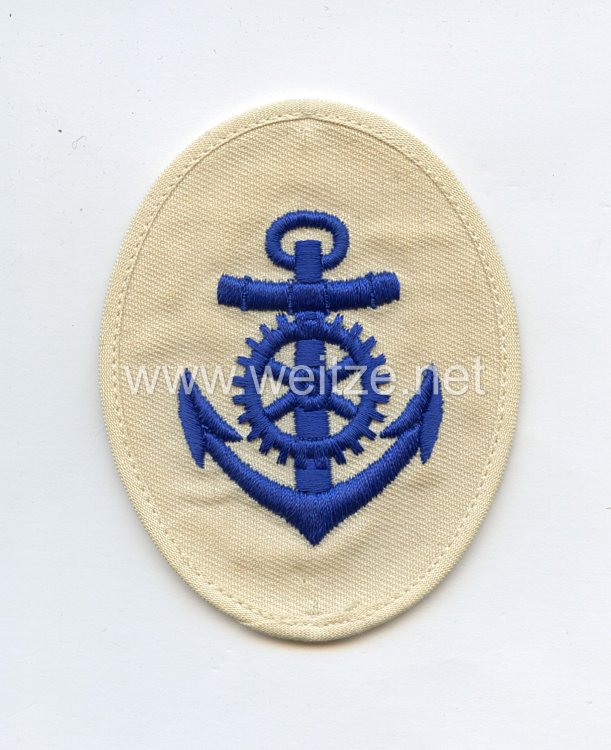
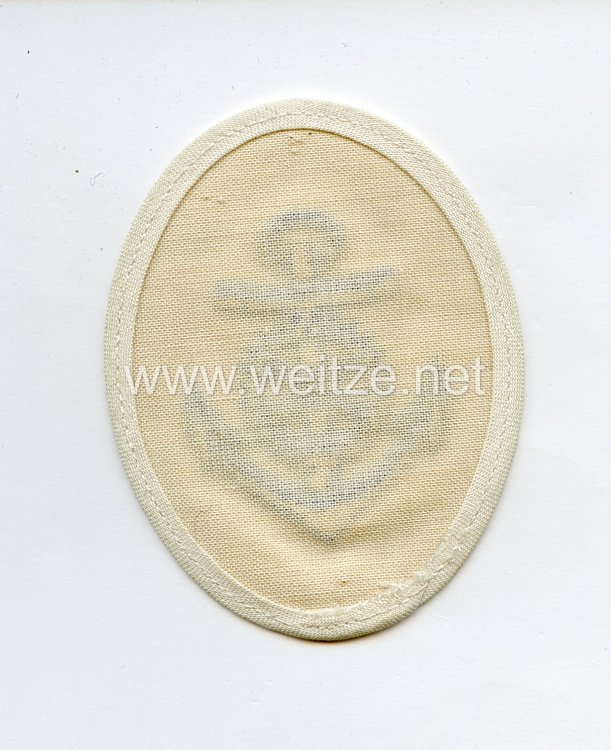
Kriegsmarine Sleeve Insignia Machinist's Mate

Machine-embroidered, for the white blouse. Condition 2.
403051
10,00

Kriegsmarine Sleeve Insignia Machinist's Mate

The Kriegsmarine sleeve badge for Maschinenmaat (Engine Petty Officer) represents a characteristic example of the rank insignia of the German Kriegsmarine during World War II. This machine-embroidered badge was manufactured for the white summer uniform, the so-called white blouse, and represents the rank of a non-commissioned officer in the engine room division of the navy.

The Kriegsmarine, which existed as the official naval force of the German Reich from 1935 to 1945, developed a complex system of rank insignia and career designation markings. The Maschinenmaat belonged to the non-commissioned officers without sword knot and served in the technical career path of ship engineers. This position required specialized knowledge in the field of ship engines, propulsion systems, and technical maintenance.

The rank structure of the Kriegsmarine was based on the traditional system of the Imperial Navy but was reformed and standardized after 1935. The badge of the Maat typically consisted of one or more chevron insignia on dark blue cloth for the regular uniform and correspondingly on white or light background for the summer uniform. The career designation “Maschine” (Engine) was marked by special symbols or colors that identified the wearer as belonging to the technical personnel.

The machine embroidery of these badges was standard for uniform insignia of the Wehrmacht and Kriegsmarine in the 1930s and 1940s. Unlike hand-embroidered officers' badges, which were often of higher quality and intended for personal purchase, machine-embroidered badges were produced in larger quantities and were more cost-effective. They were manufactured by both military depots and authorized civilian producers.

The white blouse or summer jacket of the Kriegsmarine was worn during the warmer months or in tropical deployment areas. It consisted of white cotton fabric and corresponded in cut and design to the dark blue standard uniform. The sleeve badges on these white uniform pieces were adapted accordingly, with the embroidery often executed in dark thread on a light background to create the necessary contrast.

The rank of Maat was the first non-commissioned officer rank in the Kriegsmarine and comparable to the Unteroffizier in the Army or Air Force. A Maschinenmaat had already completed several years of training and was responsible for operating and maintaining complex technical systems. In the hierarchy aboard a warship, Maschinenmaten were indispensable for the smooth operation of propulsion systems, auxiliary machinery, and electrical systems.

Training to become a Maschinenmaat typically began as a Maschinenobergefreiter or Maschinenhauptgefreiter (senior engine ratings) and required both theoretical and practical knowledge. Promotion to Maat occurred after passing examinations and completing the appropriate period of service. The Kriegsmarine placed great emphasis on the technical competence of its crews, as modern warships represented highly complex technical systems.

The uniform regulations of the Kriegsmarine were detailed in various service instructions and the Dress Regulations for the Kriegsmarine. These regulations specified exactly when which uniform was to be worn, how badges were to be attached, and what quality standards applied. Sleeve badges had to be attached at a specific height above the cuff, with precise measurements existing.

After the end of World War II, the uniforms and insignia of the Kriegsmarine were largely confiscated or destroyed by the Allies. Surviving pieces were often kept by former members as mementos or entered private collections. Today, such badges are the subject of military historical research and collecting activity, being regarded as contemporary witnesses to naval history.

The preservation of such military historical objects is important for historical research, as they represent material evidence of organizational structure, manufacturing techniques, and the everyday culture of military units. The described badge in condition 2 is in good used condition with slight signs of aging and wear, which is quite normal for an object over 75 years old.

r