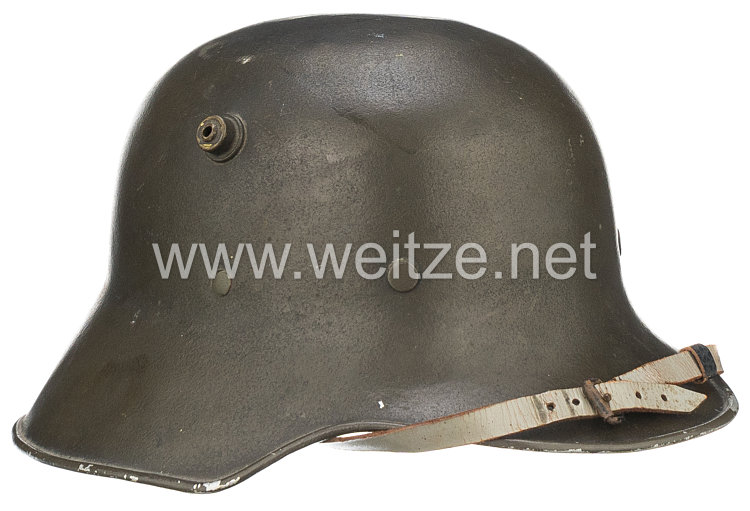
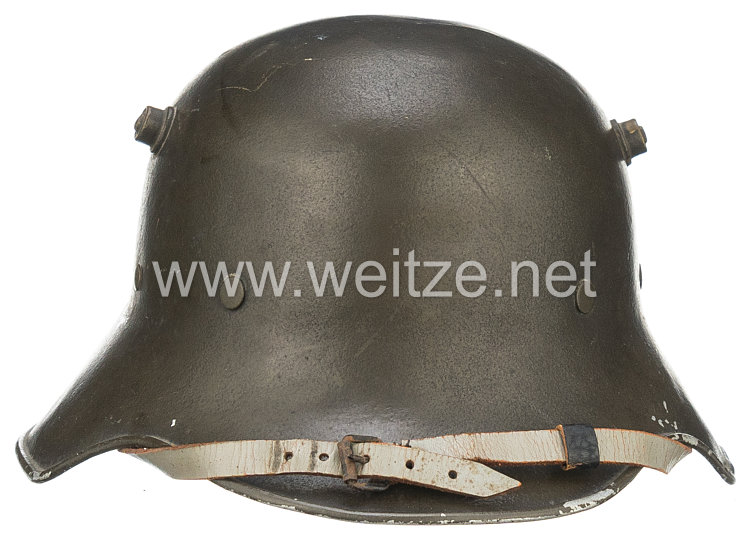
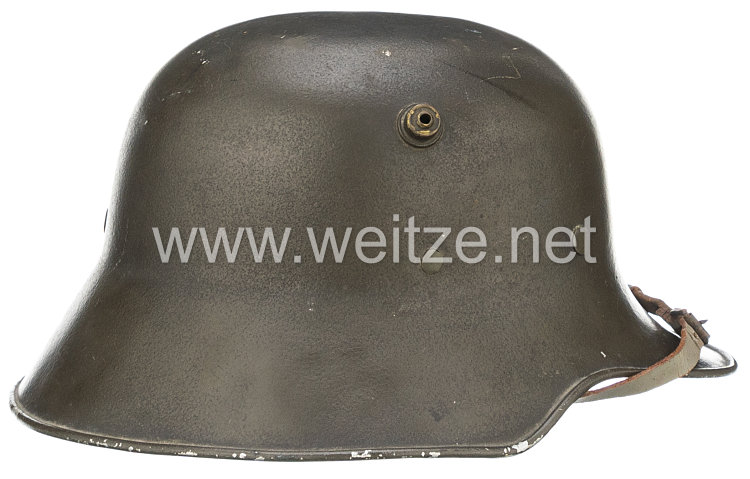
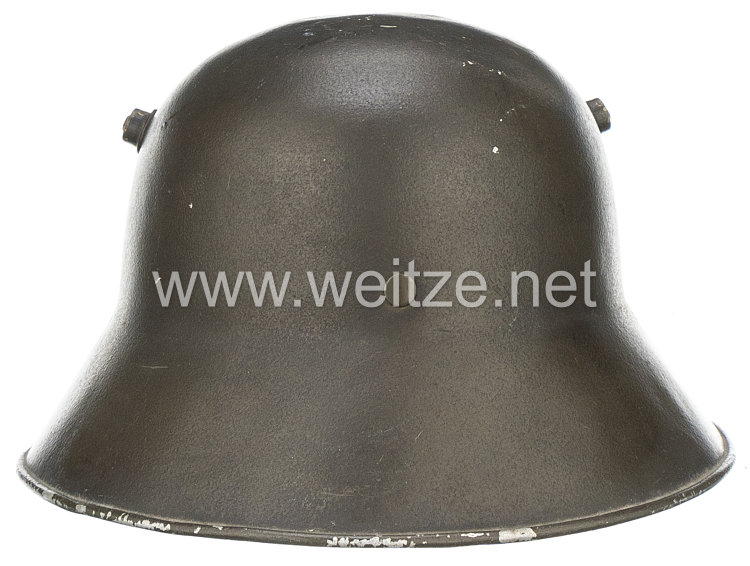
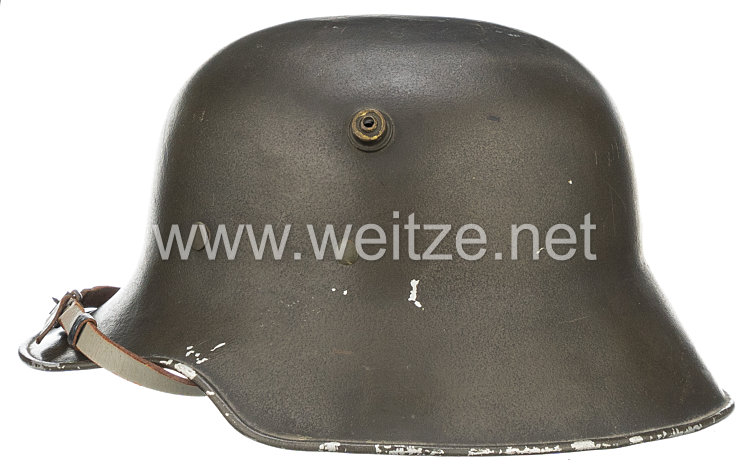
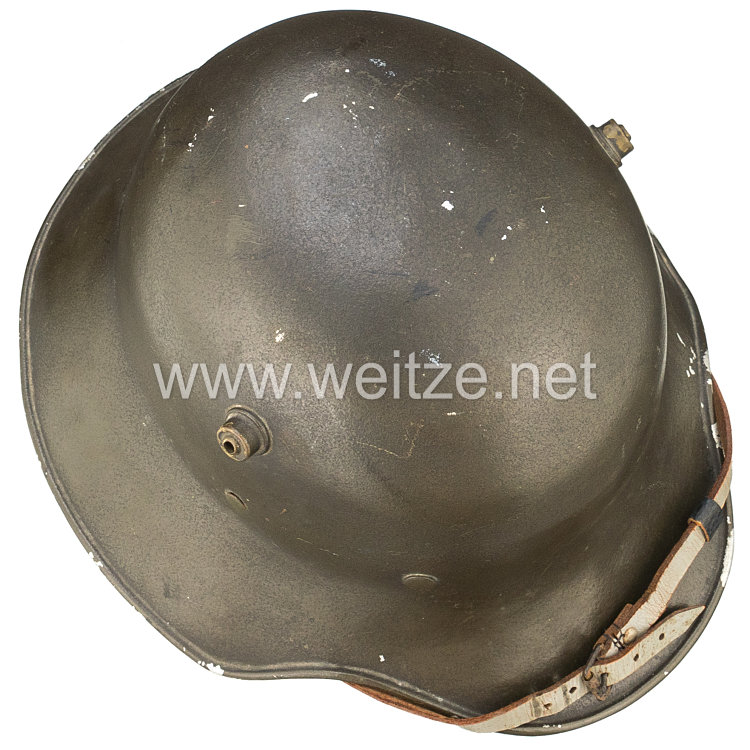
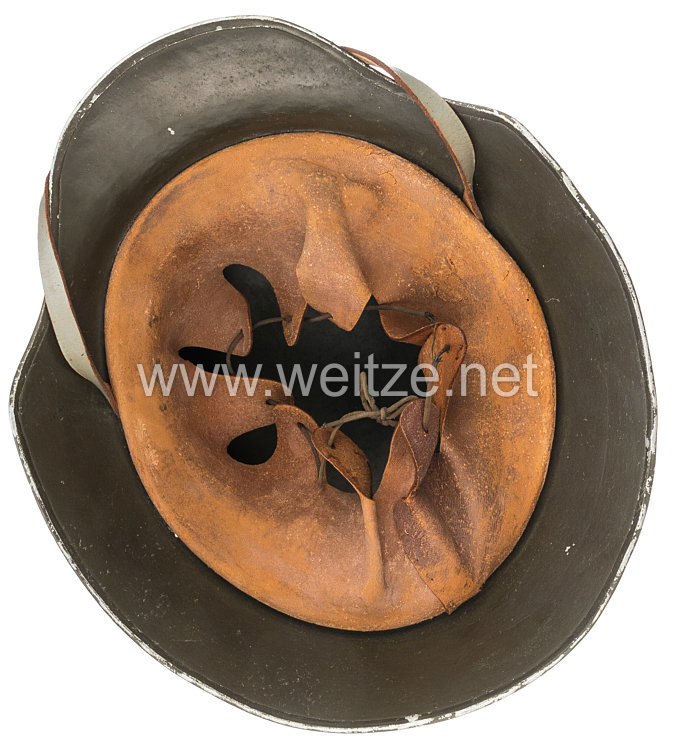
Reichswehr Parade Helmet M 18
The Reichswehr Parade Helmet M 18 represents a significant transitional model in German military history, symbolizing the turbulent period between the end of World War I and the Weimar Republic. This helmet combines technical innovations from the war years with the ceremonial requirements of a reduced post-war army.
The development of the Model 18 began in the final months of the war in 1918, when German military authorities attempted to supplement the proven Stahlhelm M 16 design with a lighter variant. The decisive difference lay in the use of aluminum instead of steel, which significantly reduced weight. This material choice was driven by both practical and economic considerations, as aluminum was more readily available in the post-war period than high-quality armor steel.
Following the Treaty of Versailles in 1919, the German Army was reduced to the Reichswehr, a professional army limited to 100,000 men. The treaty's military restrictions affected not only troop strength but also armament and equipment. In this context, the Reichswehr developed its own identity, which was reflected in uniforms and parade equipment.
The field-grey paint finish of the helmet is characteristic of German military tradition established during World War I. This coloration replaced the conspicuous pre-war uniforms and remained the standard color scheme throughout the Weimar Republic. Field grey symbolized modernity and practical warfare, even though in parade uniforms it held more traditional significance.
Around 1930, the presumed manufacturing date of this specimen, the Reichswehr was in a phase of relative stabilization. The political and economic turmoil of the early 1920s had subsided, and the army could focus on professionalization and tradition. Parade helmets like the M 18 were used for ceremonial occasions, honor guards, and official appearances where the Reichswehr presented its disciplined and tradition-conscious identity.
The interior fittings with leather liner and chin strap conform to period standards. The leather liner served not only for comfort but also for sweat absorption and padding. The chin strap, also made of leather, was a functional element ensuring secure helmet fit. The head size of approximately 60 corresponds to an average to large size and indicates this helmet was made for an adult soldier.
The aluminum shell of the M 18 represented a technological compromise. While significantly lighter than steel helmets and thus more comfortable for long parades, it naturally did not offer the same ballistic protection. However, this was unnecessary for a purely ceremonial helmet. The manufacture of aluminum helmets required specialized pressing techniques and tools available in German armament factories of the Weimar period.
The historical context of the Reichswehr is essential for understanding this object. The army of the Weimar Republic was a complex entity that was supposed to defend the democratic state on one hand, but was deeply rooted in monarchist traditions on the other. Many Reichswehr officers came from the old Kaiserreich and maintained its traditions. This was reflected in equipment that combined modern elements with traditional forms.
The use of such parade helmets ended with the Nazi seizure of power in 1933 and the subsequent transformation of the Reichswehr into the Wehrmacht. New uniform regulations and equipment were introduced, with many elements of Reichswehr tradition disappearing or being modified.
Today, Reichswehr parade helmets of Model 18 are sought-after collector's items representing a brief but significant epoch of German military history. They document the efforts of a democratic army to position itself between tradition and modernity, and symbolically stand for the Weimar Republic itself – a time of transition, innovation, and ultimate failure. For military historians and collectors, these helmets offer valuable insights into materials science, manufacturing techniques, and the complex identity of the Reichswehr.