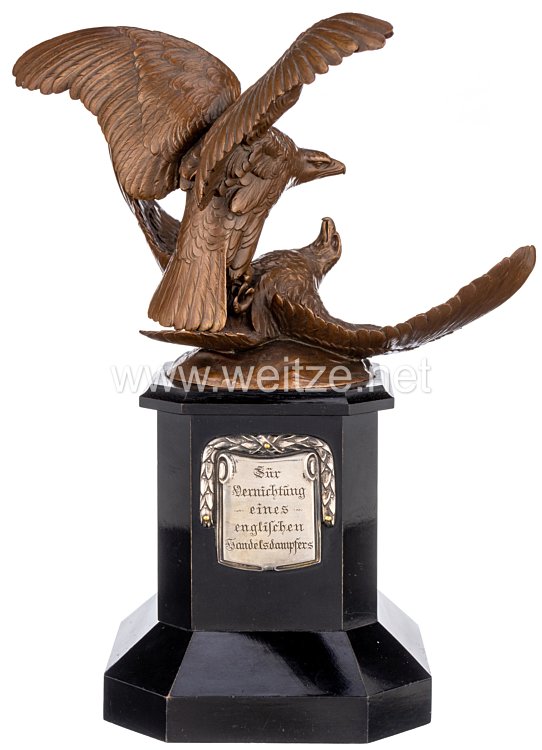
Bronzene Adlerstatue für Flugzeugführer der Kaiserlichen Marine "Ehrenpreis für erfolgreiche Sieger im Luftkampf"
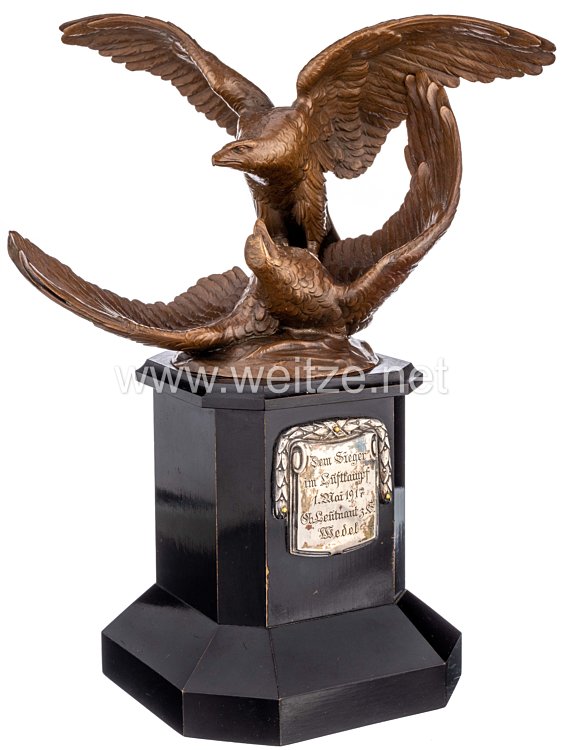
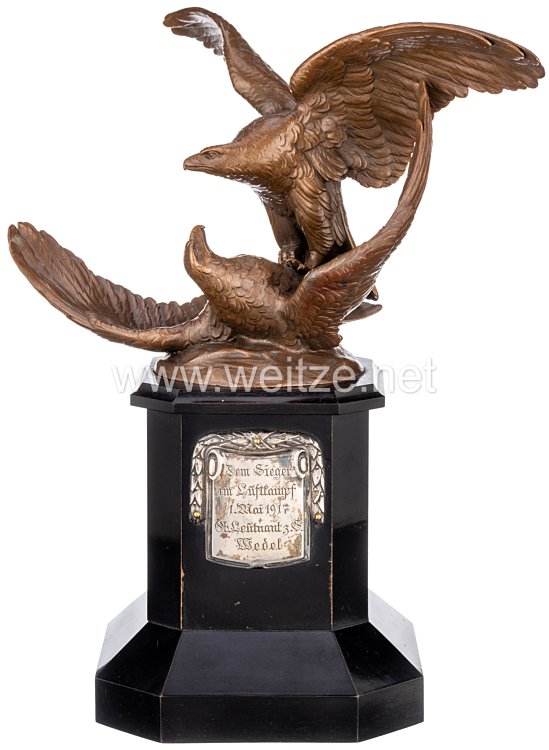
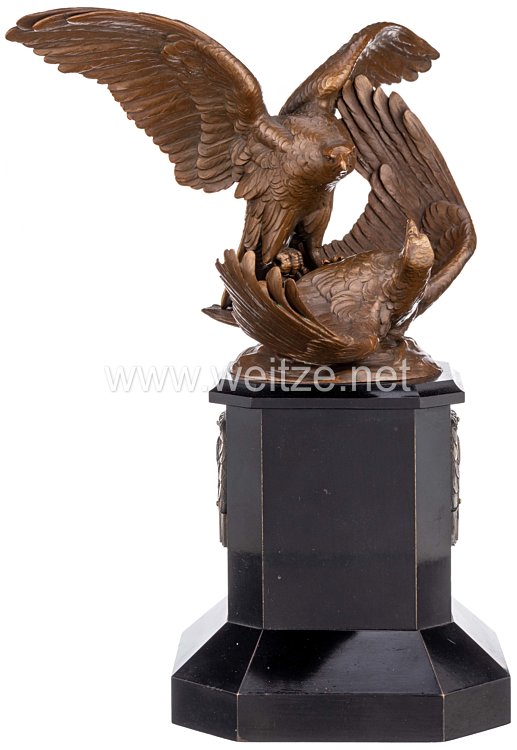
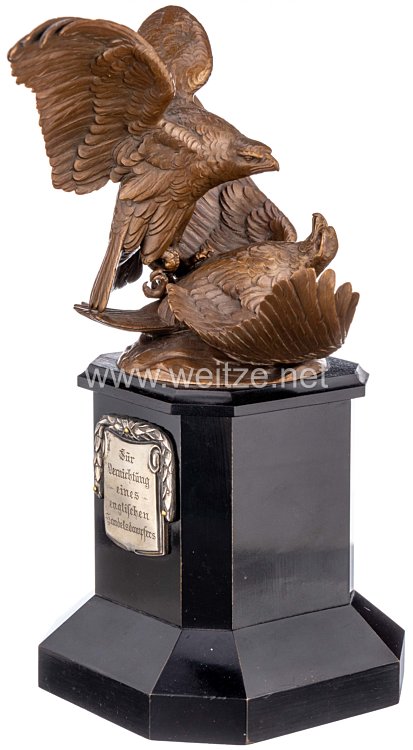
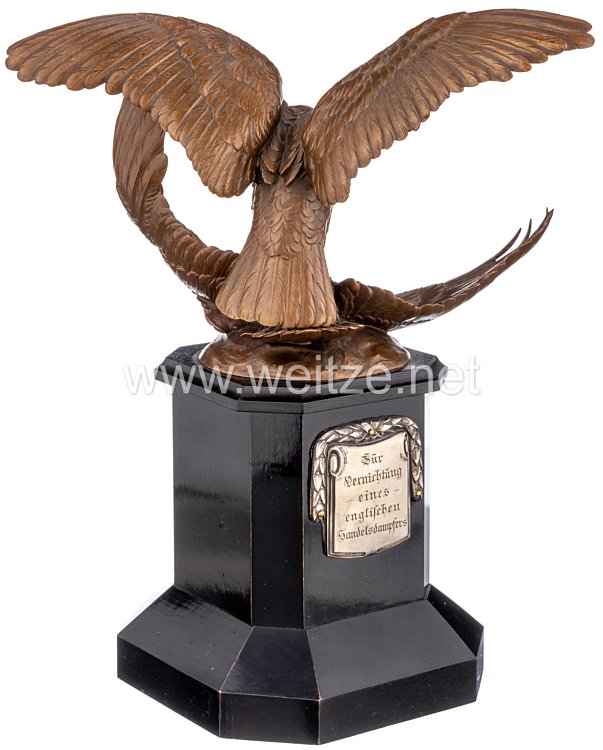
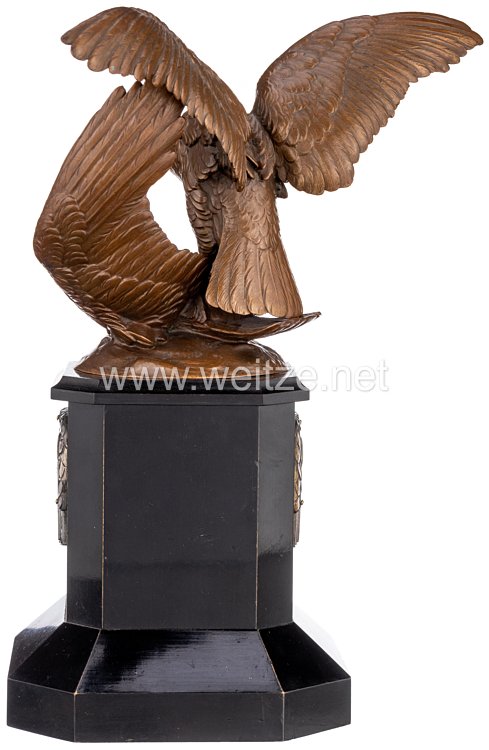
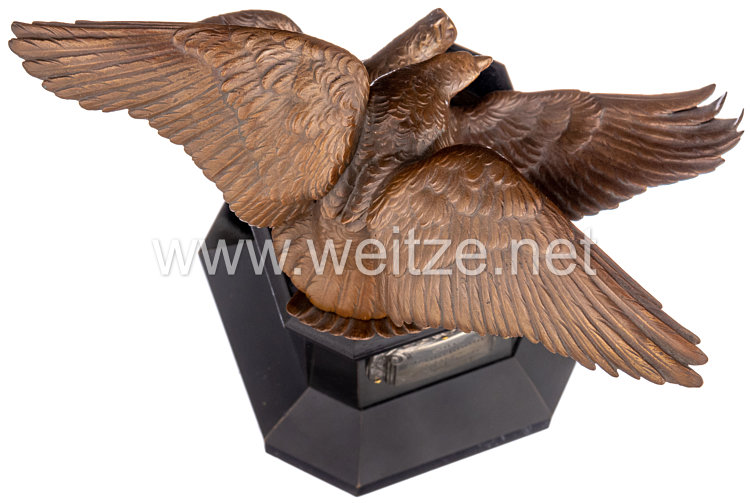
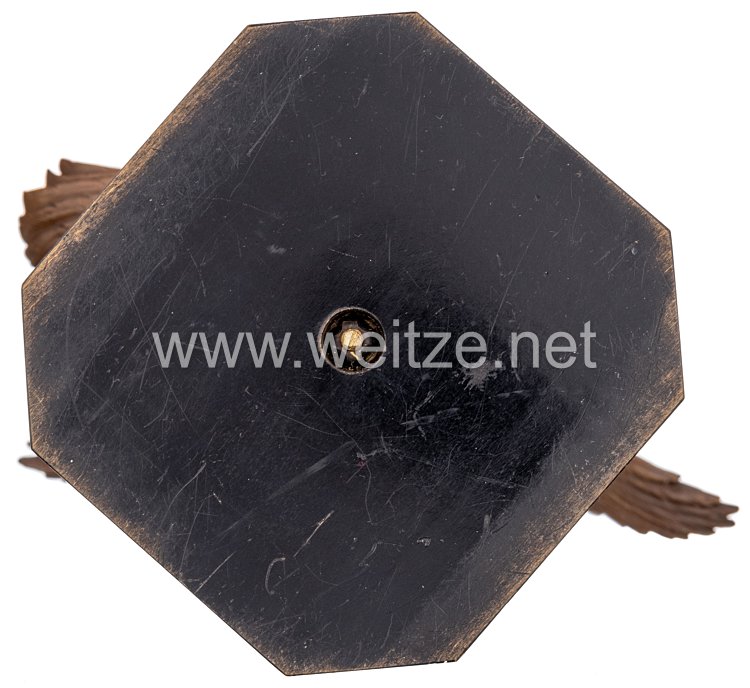
Plastische Bronzedarstellung der beiden kämpfenden Adler, wie auch auf dem Ehrenbecher abgebildet. Die 2-teilige Bronze ist montiert auf einem schwarzen 8-eckigen Holzsockel, auf der Vorderseite mit Widmungsplakette "Dem Sieger im Luftkampf 1. Mai 1917 Ob. Leutnant z.S. Wedel", rückseitig die Plakette "Für Vernichtung eines englischen Handelsdampfers".
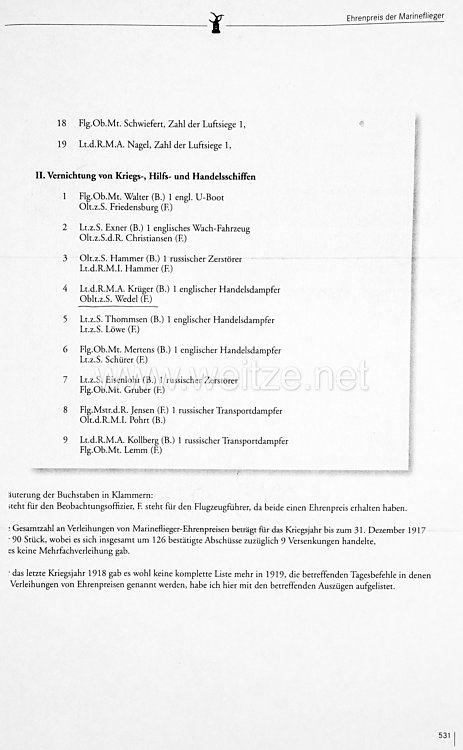
Gemäß der offiziellen Abschussliste von 1918 erzielte der Flugzeugführer Oberleutnant zur See Wedel gemeinsam mit seinem Beobachter Leutnant der Reserve M.A. Krüger am 1. Mai 1917 seinen ersten Abschuß eines feindlichen Flugzeuges, weiterhin einen englischen Handelsdampfer.
Gesamthöhe ca. 24,7 cm. Noch ungereinigt, die beiden montierten Adler wie üblich etwas locker, mit einer sehr schönen Patina.
Mit dem Tagesbefehl vom 3. Januar 1917 wurde der Ehrenpreis der Marineflieger gestiftet. Bis Kriegsende wurde von den deutschen Marinefliegern ca. 270 Flugzeuge abgeschossen, darüber hinaus 2 Luftschiffe, 1 Zerstörer 3 U-Boote, 4 Schnellboote und noch weitere Schiffe. Die tatsächliche Zahl der verliehenen Ehrenpreise lag aber mit Sicherheit deutlich unter 100 Stück aufgrund der fehlenden finanziellen Mittel.
Die Ehrenpreise für Flugzeugführer der Kaiserliche Marine sind extrem selten, in über 35 Jahren ist dies erst das 6. Stück, welches wir anbieten können.
Preis auf Anfrage.
Gemäß der offiziellen Abschussliste von 1918 erzielte der Flugzeugführer Oberleutnant zur See Wedel gemeinsam mit seinem Beobachter Leutnant der Reserve M.A. Krüger am 1. Mai 1917 seinen ersten Abschuß eines feindlichen Flugzeuges, weiterhin einen englischen Handelsdampfer.
Gesamthöhe ca. 24,7 cm. Noch ungereinigt, die beiden montierten Adler wie üblich etwas locker, mit einer sehr schönen Patina.
Mit dem Tagesbefehl vom 3. Januar 1917 wurde der Ehrenpreis der Marineflieger gestiftet. Bis Kriegsende wurde von den deutschen Marinefliegern ca. 270 Flugzeuge abgeschossen, darüber hinaus 2 Luftschiffe, 1 Zerstörer 3 U-Boote, 4 Schnellboote und noch weitere Schiffe. Die tatsächliche Zahl der verliehenen Ehrenpreise lag aber mit Sicherheit deutlich unter 100 Stück aufgrund der fehlenden finanziellen Mittel.
Die Ehrenpreise für Flugzeugführer der Kaiserliche Marine sind extrem selten, in über 35 Jahren ist dies erst das 6. Stück, welches wir anbieten können.
Preis auf Anfrage.