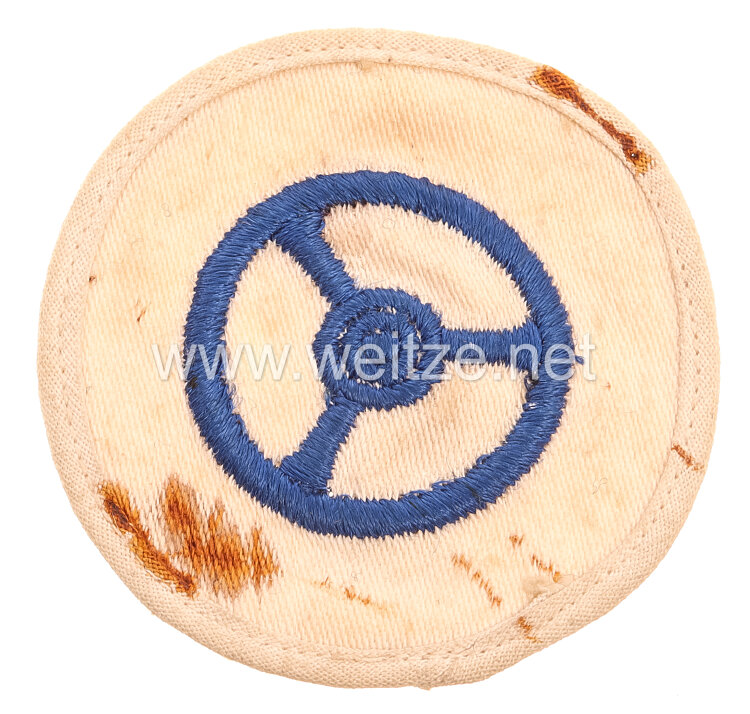
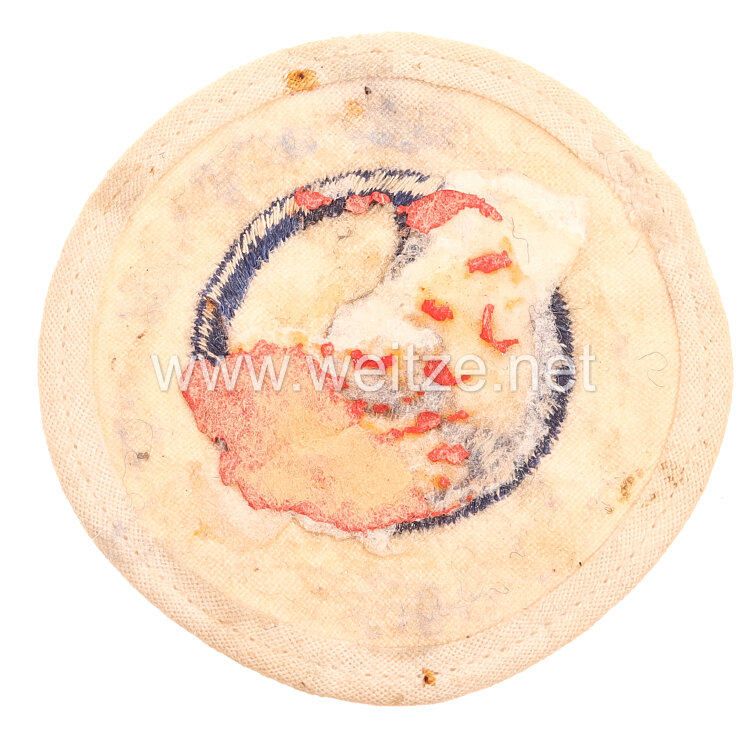
Kriegsmarine Enlisted Man's Sleeve Insignia for Motor Vehicle Driver

for the white blouse. Unissued condition, condition grade 2.
453649
35,00

Kriegsmarine Enlisted Man's Sleeve Insignia for Motor Vehicle Driver

The Kriegsmarine sleeve badge for motor vehicle drivers of enlisted ranks represents a fascinating example of the differentiated career insignia used in the German Navy during World War II to identify specialized functions. This particular badge was worn on the white blouse, a component of the Kriegsmarine's summer uniform.

The Kriegsmarine, as one of the three branches of the Wehrmacht of National Socialist Germany from 1935 to 1945, developed a complex system of rank insignia and career designations. Following the reintroduction of general conscription in March 1935 and the associated buildup of the Wehrmacht, the Kriegsmarine replaced the Reichsmarine of the Weimar Republic. Under the supreme command of Grand Admiral Erich Raeder (until 1943) and later Karl Dönitz, the fleet expanded considerably.

Sleeve badges for various career paths were introduced to make a soldier's specialized training and function immediately recognizable. The motor vehicle driver badge was part of this system and identified personnel responsible for operating and maintaining motor vehicles. In a modern navy that maintained not only ships at sea but also extensive land installations, port facilities, and coastal fortifications, motor vehicle drivers were indispensable for logistics, transport, and supply operations.

The design of such career badges followed the uniform regulations of the Kriegsmarine, which were detailed in various service regulations and uniform decrees. Badges for enlisted ranks were typically worn on the right upper arm and displayed symbolic representations of the respective activity. For motor vehicle drivers, this was usually a depiction of a steering wheel or stylized vehicle symbol, frequently in the form of embroidery on a dark background.

The white blouse on which this badge was worn was part of the Kriegsmarine's summer service dress. It consisted of white drill cloth or similar material and was worn during warmer months or in southern operational areas. The combination of white uniform and dark sleeve badge provided clear visual contrast and good visibility of career affiliation.

The production of such badges was carried out by various authorized manufacturers who had to comply with the Navy's uniform regulations. Quality varied depending on manufacturer and time of production. Toward the end of the war, as material shortages increasingly became problematic, the quality of uniform components also suffered. Unworn examples, like the piece described, are significantly rarer today than used badges and are of corresponding collector-historical interest.

The organizational structure of the Kriegsmarine included, in addition to sailors, extensive ground personnel. Motor vehicle drivers were deployed in various areas: with the naval artillery at coastal fortifications, in naval ports and shipyards, with supply units, and at various naval facilities on land. They transported personnel, equipment, ammunition, and provisions, thus constituting an important component of the military logistics chain.

Training as a motor vehicle driver in the Kriegsmarine took place in special training facilities, where technical instruction as well as basic military training was provided. Designation through the career badge occurred after successful completion of this training and documented the wearer's special qualification.

In the context of military history, such career badges represent the increasing mechanization and specialization of modern armed forces in the 20th century. The Kriegsmarine required not only sailors in the traditional sense but a multitude of technical specialists, from radio mechanics to electricians to motor vehicle drivers. This development continued in post-war navies and still shapes the organization of modern naval forces today.

For collectors and historians, such uniform components are important material witnesses to military history. They provide insights into organizational structure, hierarchies, and the everyday reality of military service. Unworn examples like the present one offer the particular advantage of documenting the original condition without signs of wear, thus allowing precise conclusions about manufacturing techniques, materials, and quality standards of the period.

The badge's design typically incorporated naval elements while clearly identifying the specific technical function. The systematic use of such insignia facilitated military organization and helped maintain order and clarity in the command structure, particularly important in a force that grew rapidly during the pre-war and war years and encompassed hundreds of thousands of personnel in diverse specialized roles.