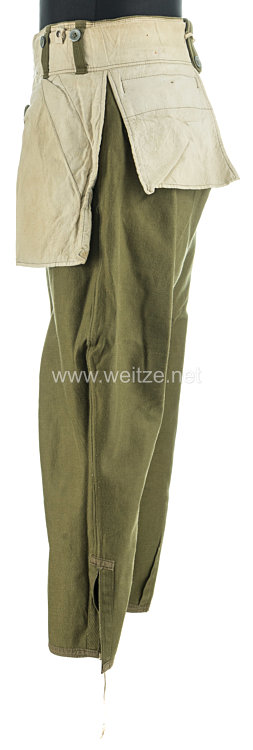
Wehrmacht Afrikakorps M 1942 Breeches for Enlisted Men

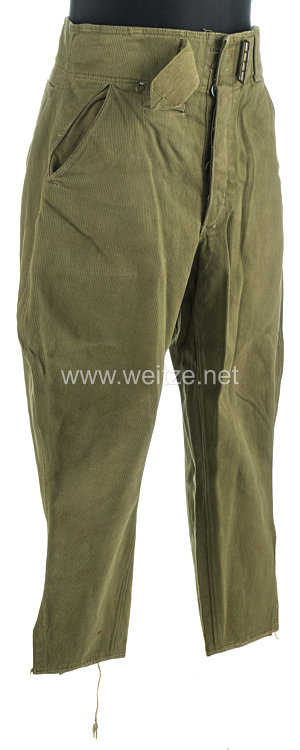
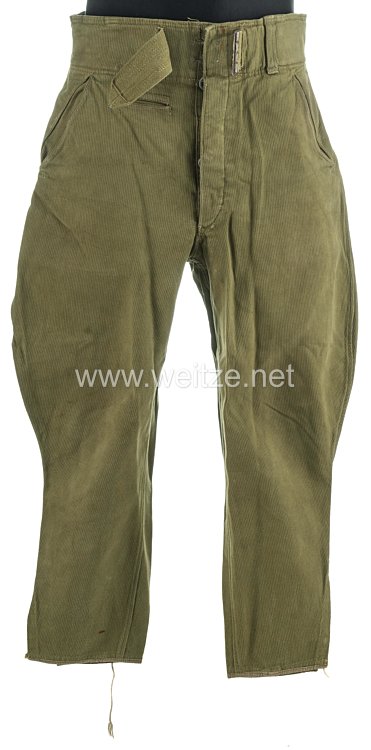
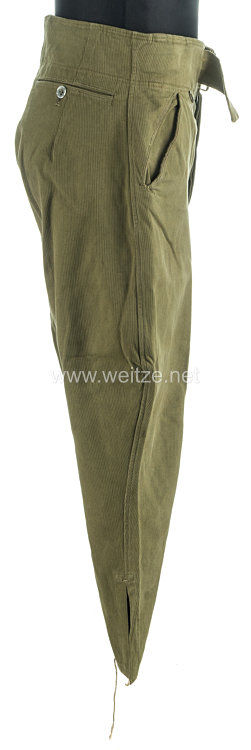
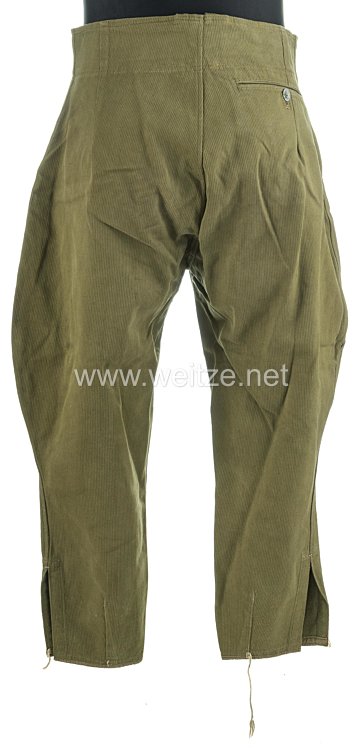
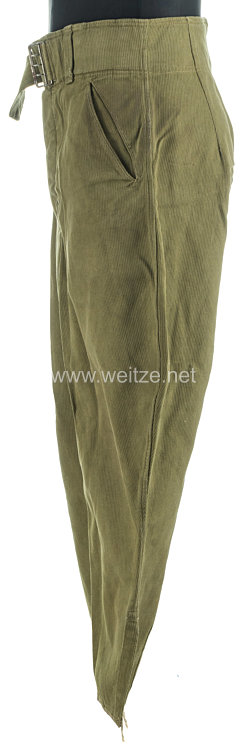
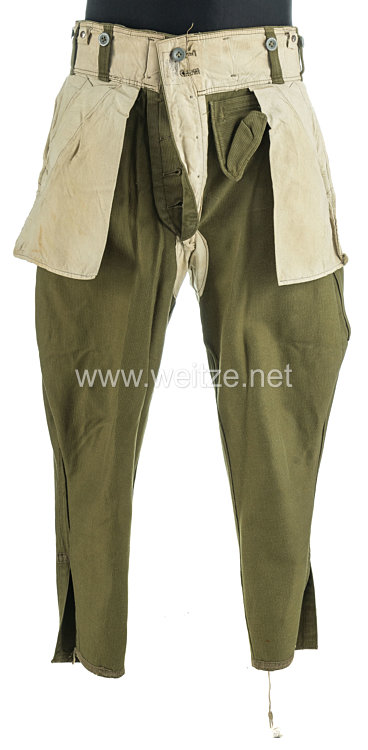
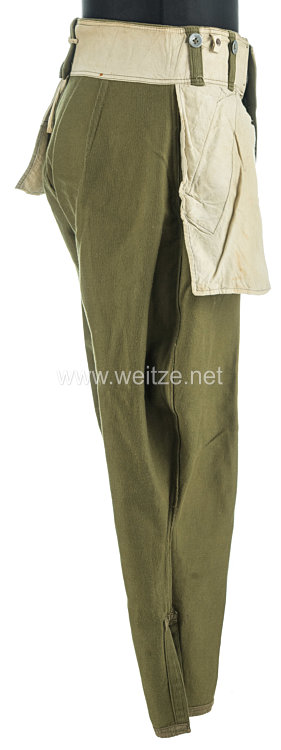
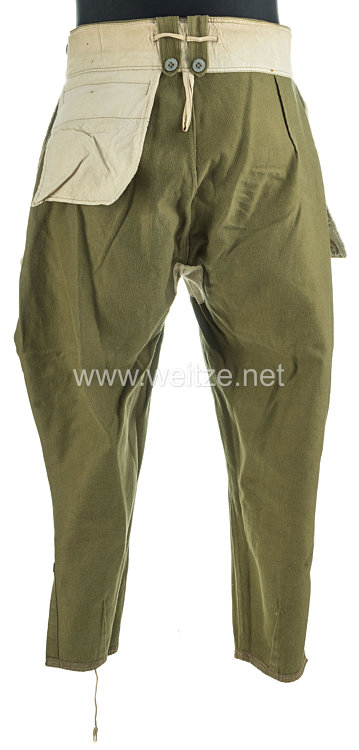
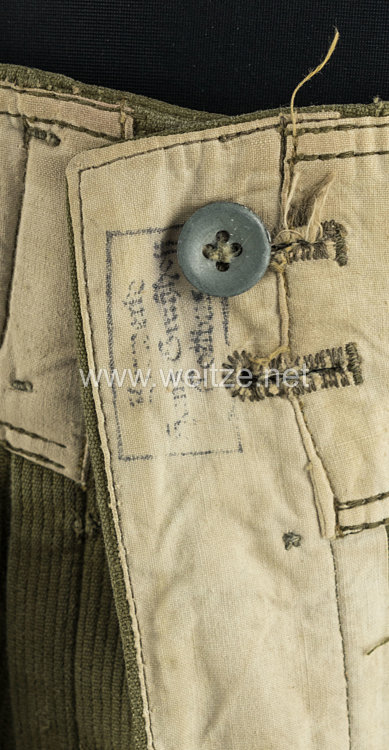
Chamber piece, circa 1942, manufactured from olive ribbed cotton cloth, web belt is present. Interior with chamber stamp ".. B 41..", waist circumference 78 cm, length 90 cm. Worn, condition 2-
394748
500,00

Wehrmacht Afrikakorps M 1942 Breeches for Enlisted Men

The Wehrmacht Afrikakorps M 1942 Boots Trousers for enlisted men represents a characteristic garment of the German troops who fought in North Africa between 1941 and 1943. This particular specimen, made from olive-colored ribbed cotton cloth, bears the depot stamp “B 41,” indicating 1941 as the manufacturing date.

The German Afrika Korps (DAK) was established in February 1941 under the command of Lieutenant General Erwin Rommel and dispatched to Libya to support the Italian forces fighting there. The extreme climatic conditions of North Africa necessitated the development of specialized uniforms and equipment that differed significantly from the standard Wehrmacht issue.

The Wehrmacht's tropical clothing was initially produced in limited quantities, as no one had anticipated an extended deployment in this region. The first generation of tropical uniforms consisted of lighter cotton fabric in an olive-green or sand-colored tone. The boots trousers, such as the present example, were part of the field uniform and were worn over the characteristic lace-up boots that reached to mid-calf.

The Model 1942 represented a further development of the initial tropical uniforms. The trousers were manufactured from robust, ribbed cotton cloth that was breathable yet provided sufficient protection against the abrasive effects of desert sand. The included web belt was an integral component of the uniform, serving to secure equipment and to better adjust the trousers to the wearer.

The depot stamp is an important authenticating feature. The “B” could refer to a specific army area or procurement depot, while the number “41” designates the year of procurement or issue. Such stamps were part of the military administrative system and served for inventorying and assigning equipment items.

The measurements of this specimen – a waist circumference of 78 cm and a length of 90 cm – correspond to an average size for enlisted men of that era. The boots trousers were designed to be tucked into the boots, which offered both practical and hygienic advantages: they prevented sand from entering and provided protection against insects and intense sun exposure.

The supply situation of the Afrika Korps was problematic throughout the campaign. The long sea route across the Mediterranean, constantly exposed to attacks by Allied air and naval forces, led to chronic shortages of supplies, including uniforms and clothing. This meant that many soldiers had to wear their uniform pieces for extended periods, which explains the preserved condition of many surviving examples.

The tropical uniform of the Afrika Korps became an iconic symbol of the North African campaign. The characteristic olive-green to sand-yellow coloring differed markedly from the field-gray standard uniform of the Wehrmacht and made members of the DAK visually recognizable. Beyond its practical function, the uniform also played an important role in troop morale and esprit de corps.

After the Battle of El Alamein in October/November 1942 and the Allied landing in Northwest Africa (Operation Torch) in November 1942, the Axis powers began their retreat. The final capitulation of Army Group Africa occurred in May 1943 in Tunisia, ending the North African campaign. Much equipment, including uniforms, fell into Allied hands or was surrendered by soldiers upon their capture.

Today, original Afrika Korps uniform pieces are sought-after collectibles that represent important material evidence of a significant chapter of World War II. They document not only military-historical developments but also textile manufacturing, logistics, and the everyday living conditions of soldiers under extreme climatic conditions. The present specimen, with its preserved web belt and authentic depot stamp, is a valuable historical document of this era.

The study of such artifacts provides insights into the practical realities of desert warfare, the Wehrmacht's adaptation to unfamiliar environments, and the material culture of the German military during this period. Each surviving piece contributes to our understanding of how armies equipped and sustained themselves in one of history's most challenging operational theaters.