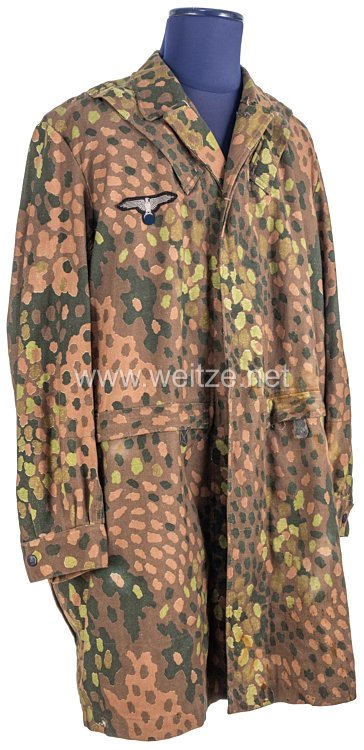
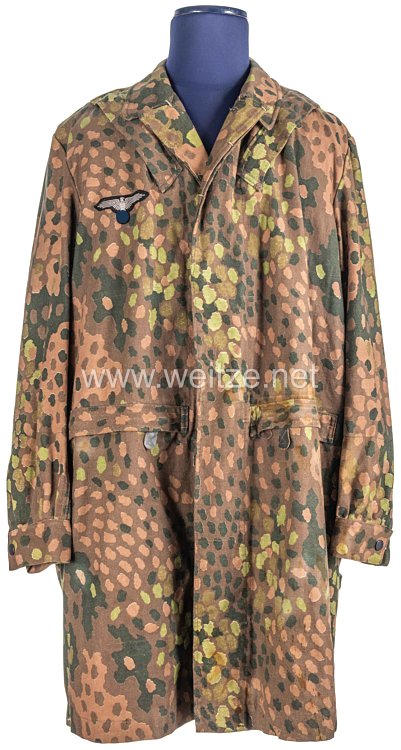
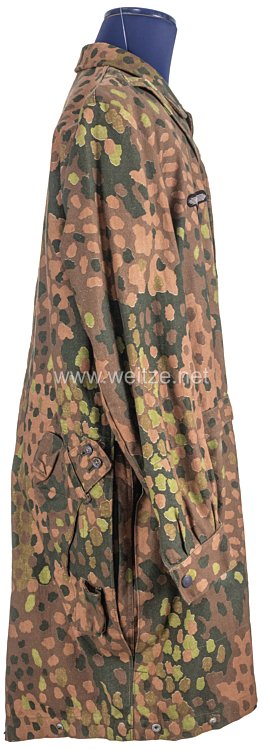
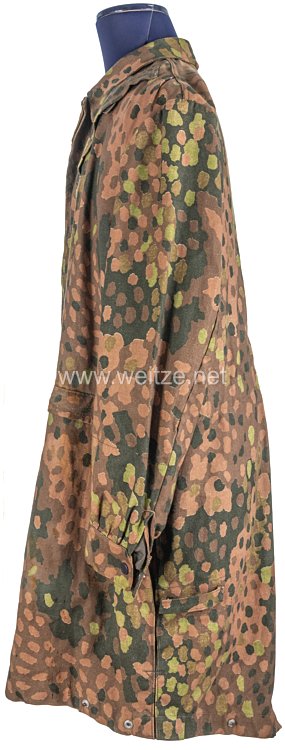
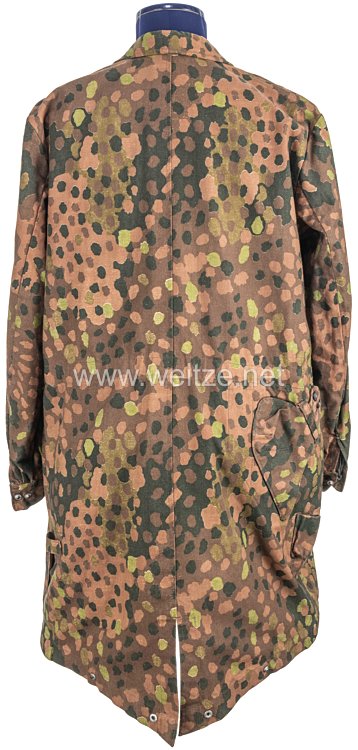
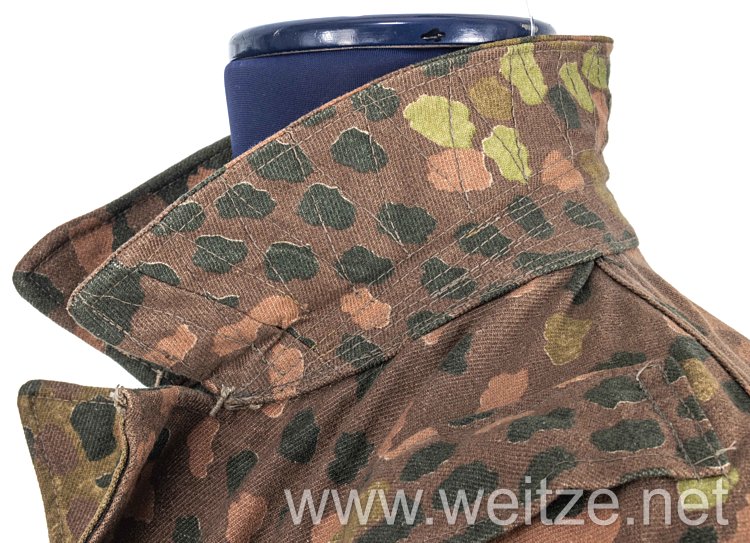
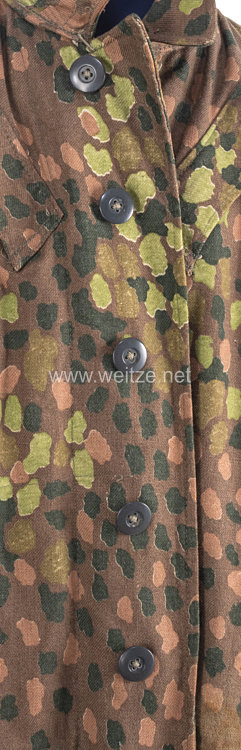
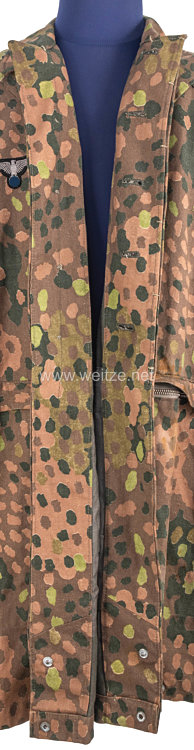
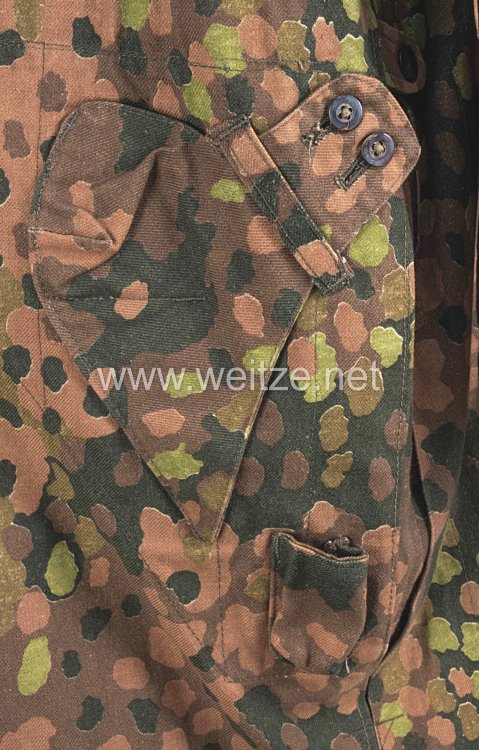
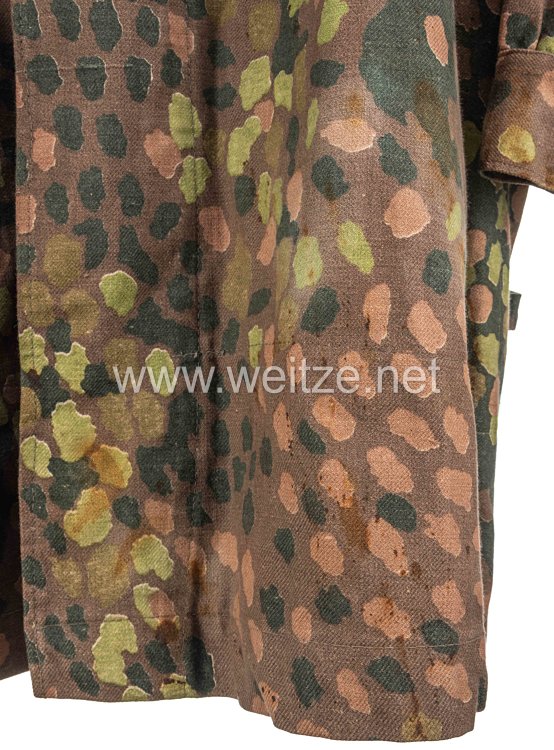
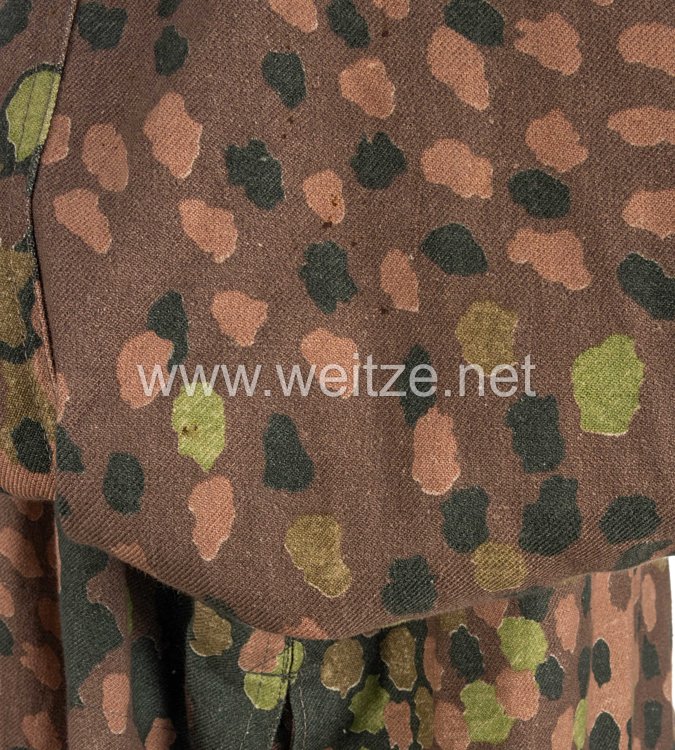
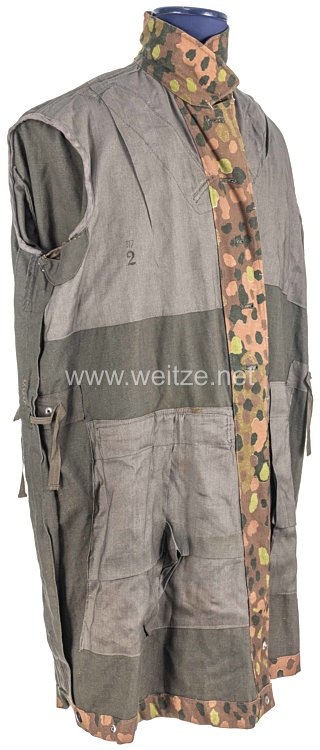
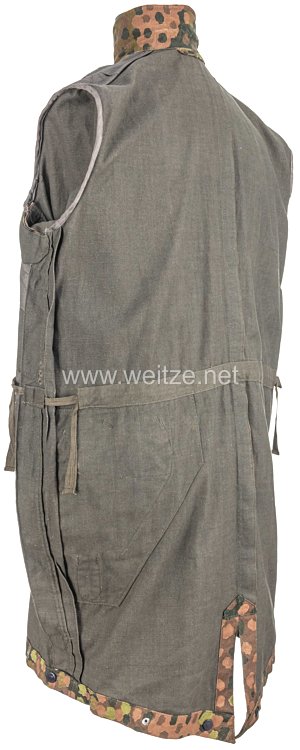
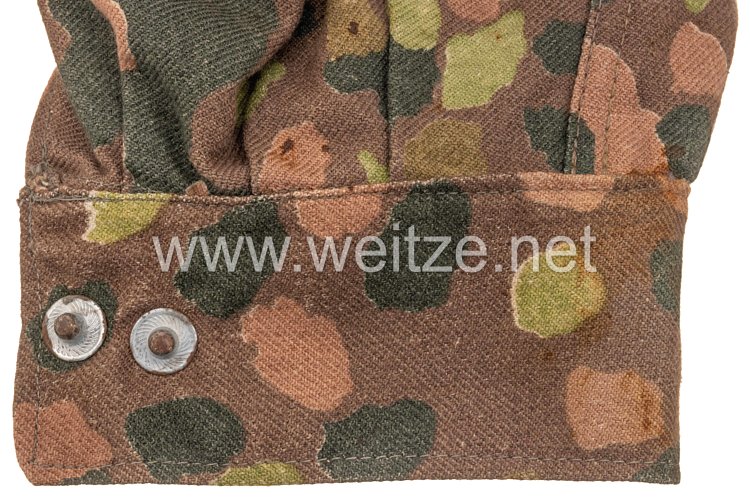
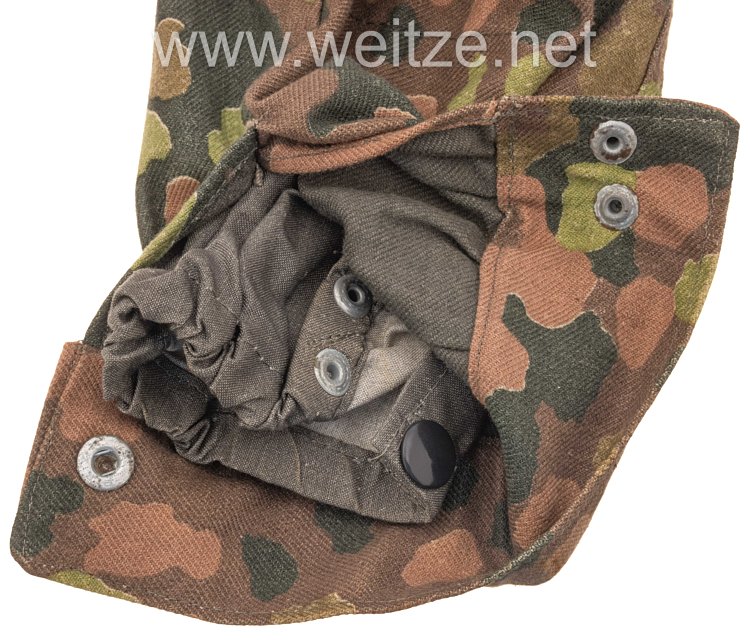
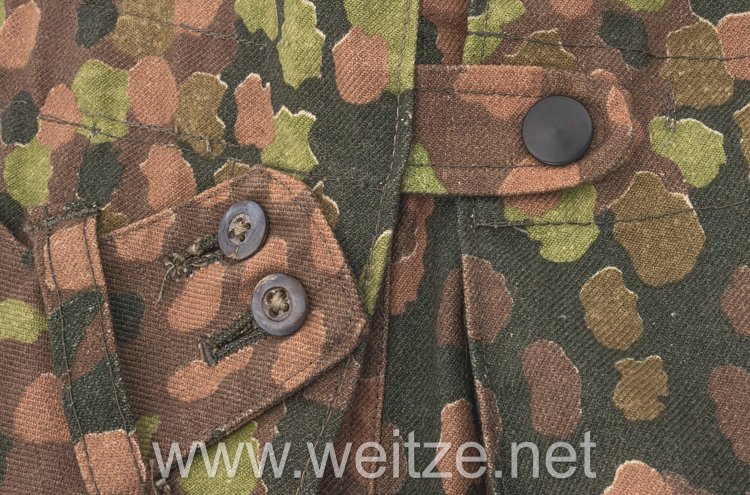
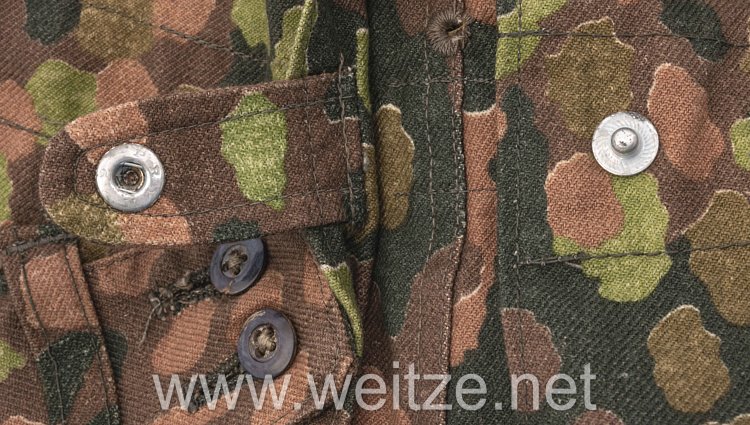
The Waffen-SS Fallschirmjäger Jump Smock in Erbsenmuster, colloquially known as the “Knochensack” (bone sack), represents one of the rarest camouflage uniforms of the Second World War. This extraordinary piece of equipment combines the late development of German camouflage technology with the brief but intense history of the Waffen-SS's only airborne unit.
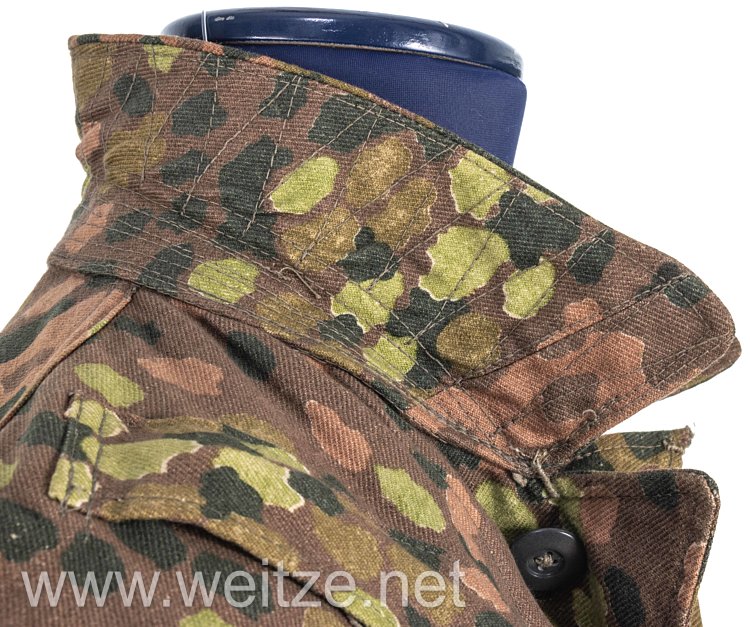
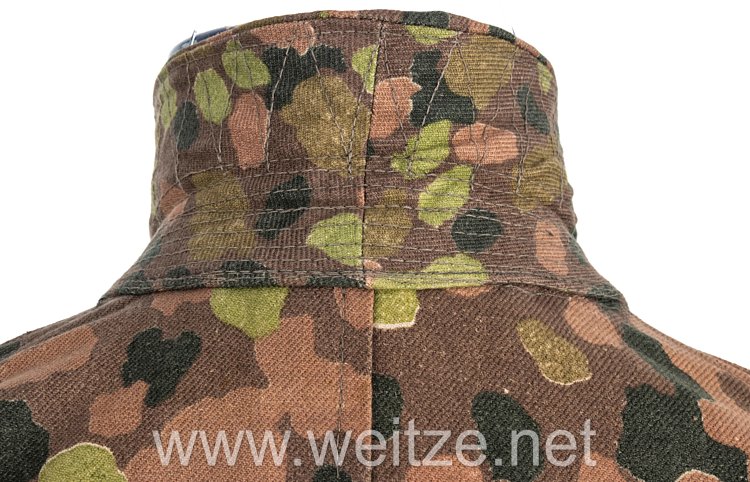
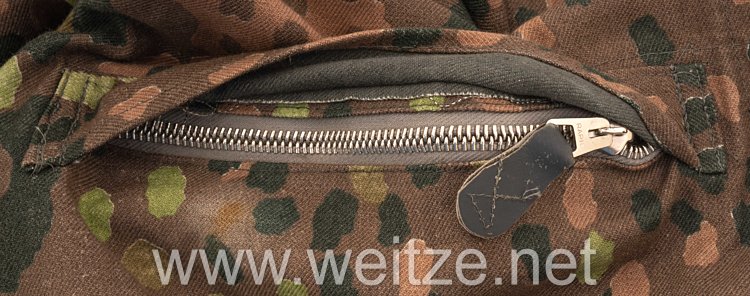
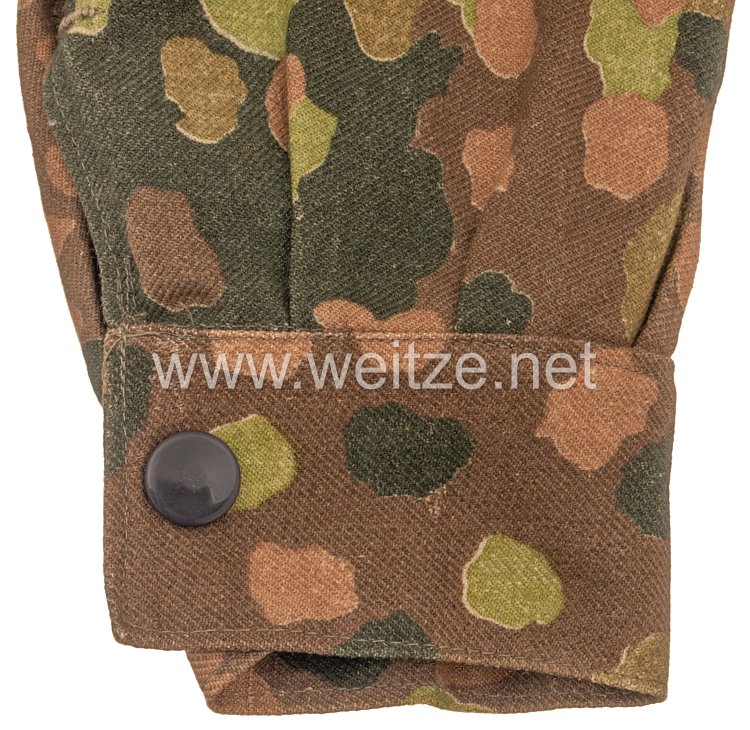
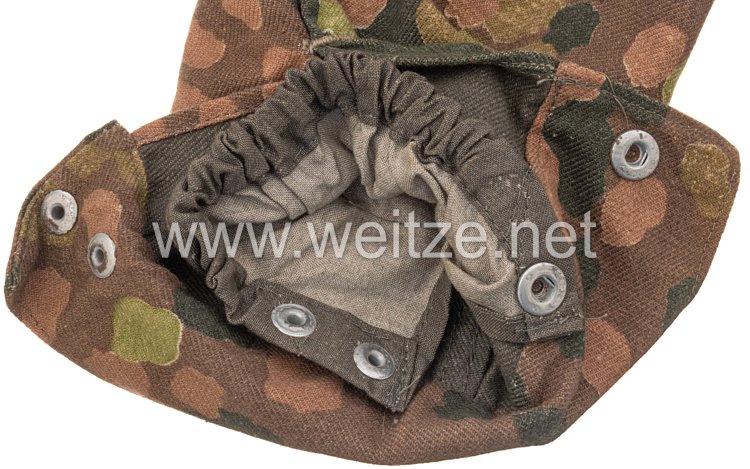
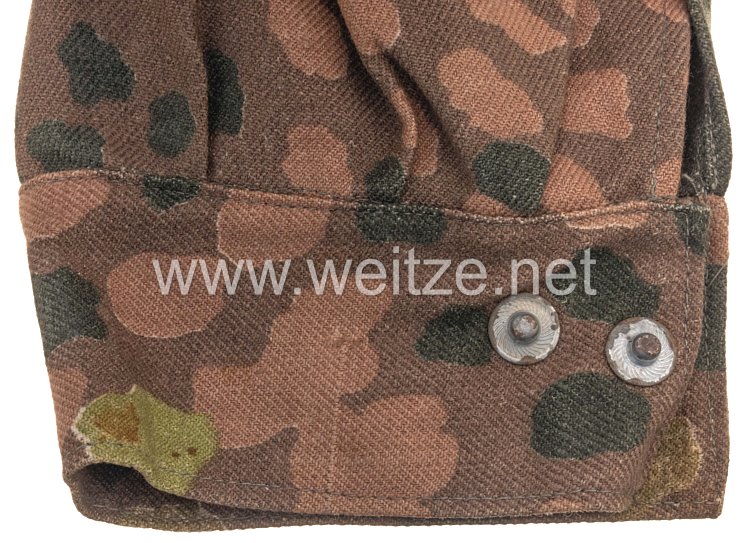
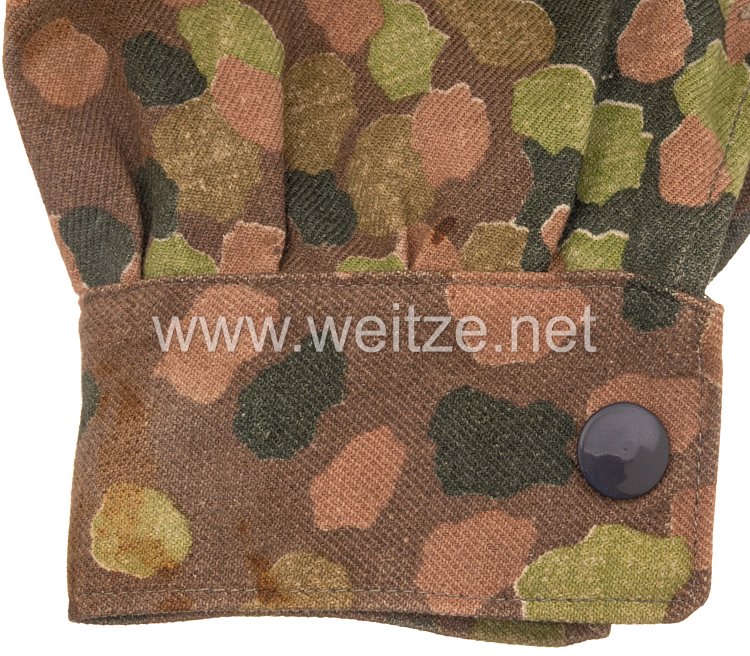
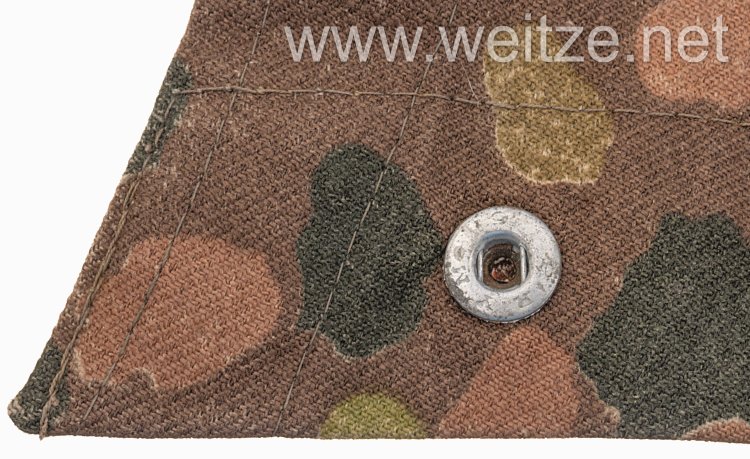
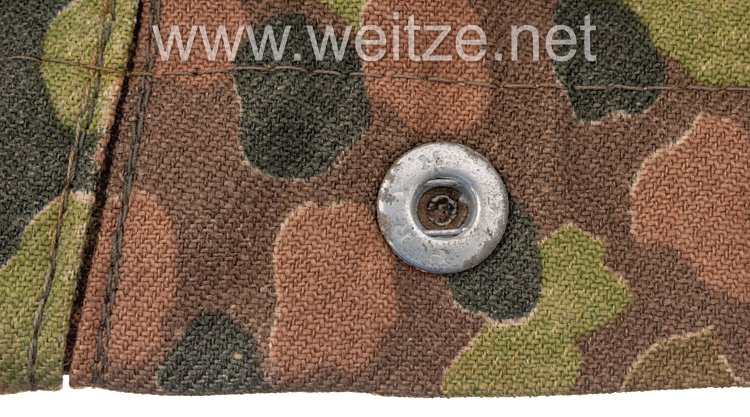
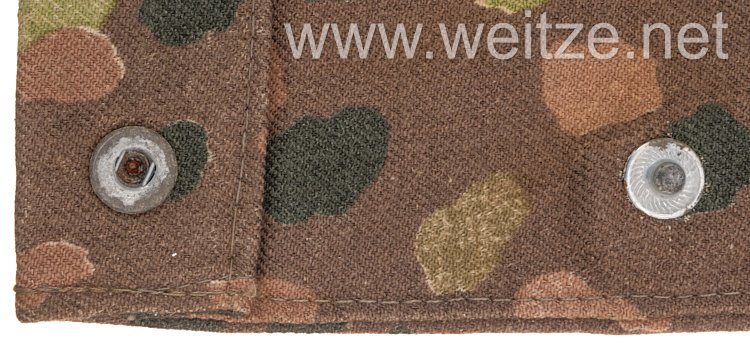
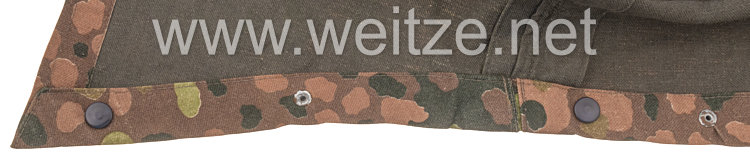
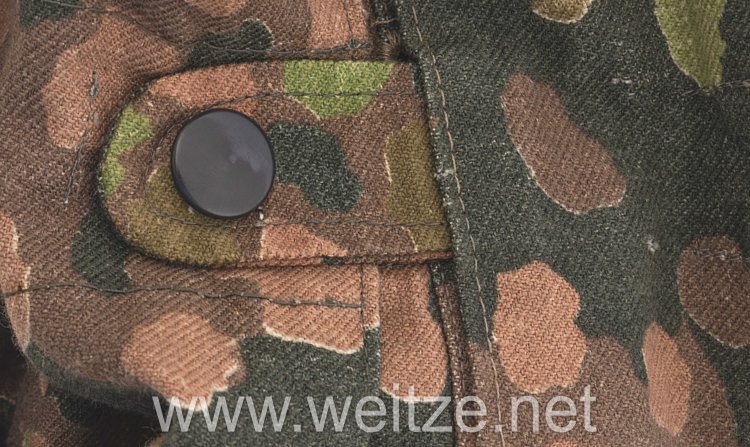
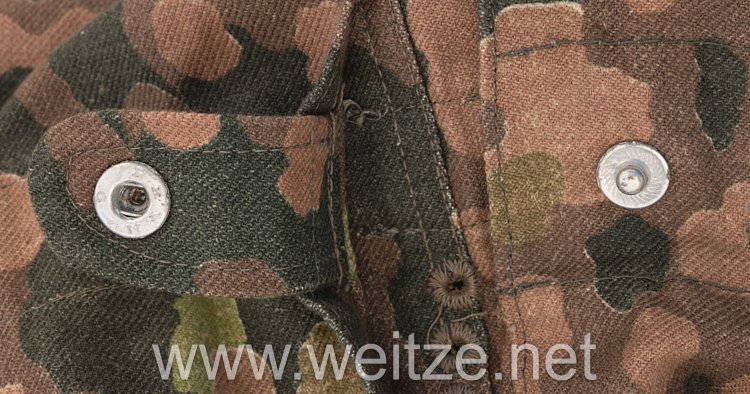
The Erbsenmuster (pea-dot pattern) was designed by Johann Georg Otto Schick and first issued to the Waffen-SS in 1944 to replace earlier patterns. This late-war camouflage, also known as Pea-Dot or Pattern 44, represented the final SS camouflage pattern produced in jump smock configuration. The pattern featured five colors: pale brown, dark brown, green, olive green, and black arranged as small rounded areas. Unlike earlier SS smocks, this pattern was not reversible. The jump smock was distinct from Luftwaffe Fallschirmjäger smocks by having SS breast eagle placement and SS-specific construction details.
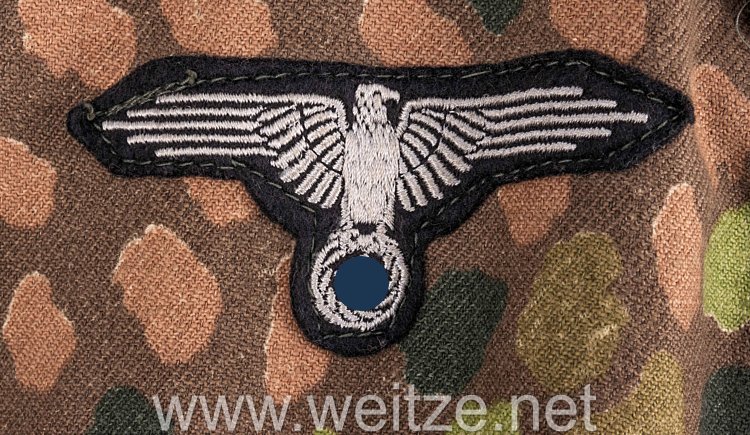
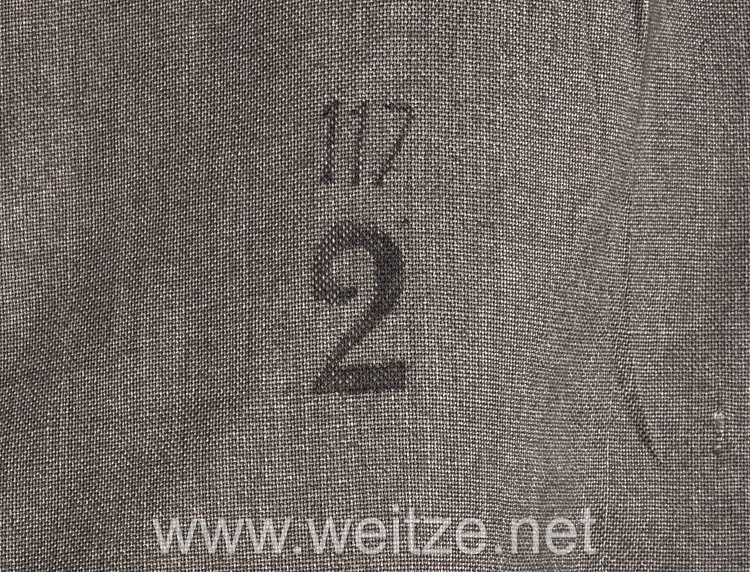
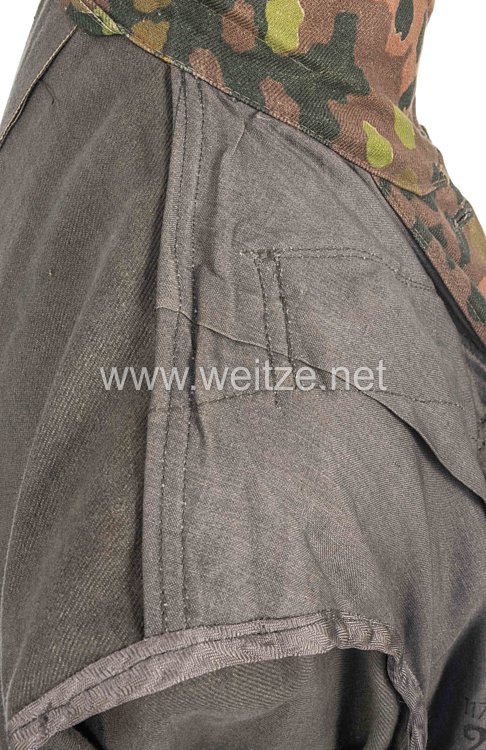
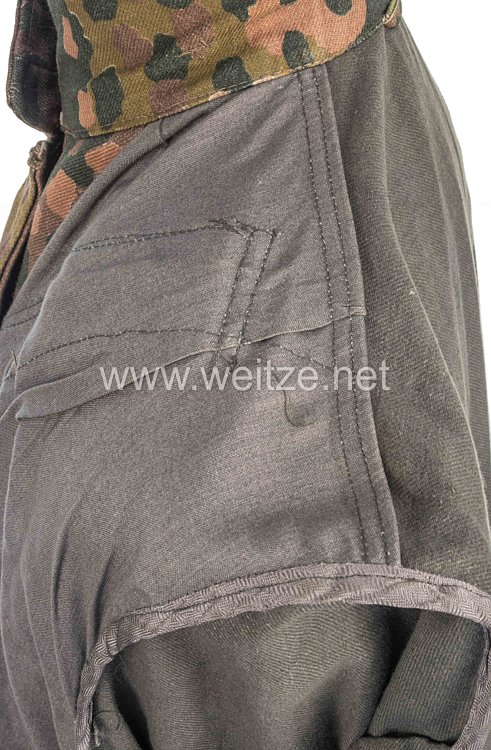
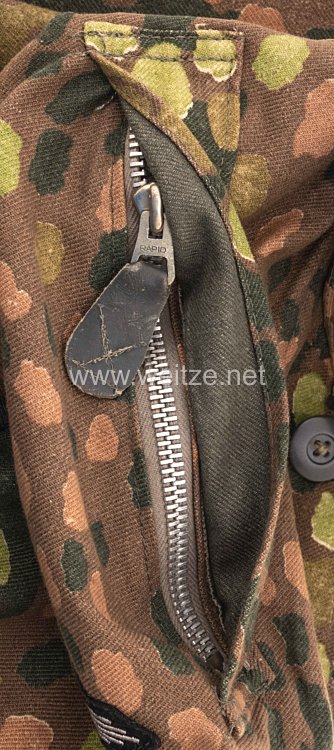
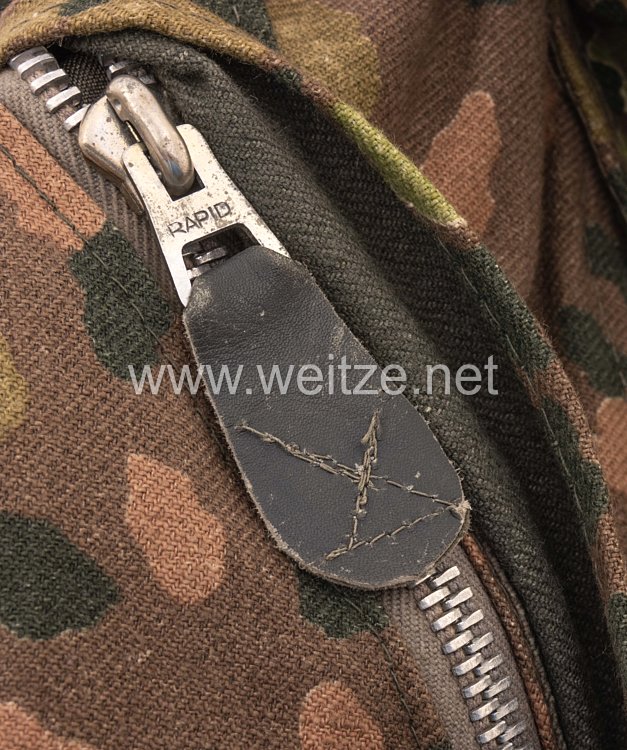
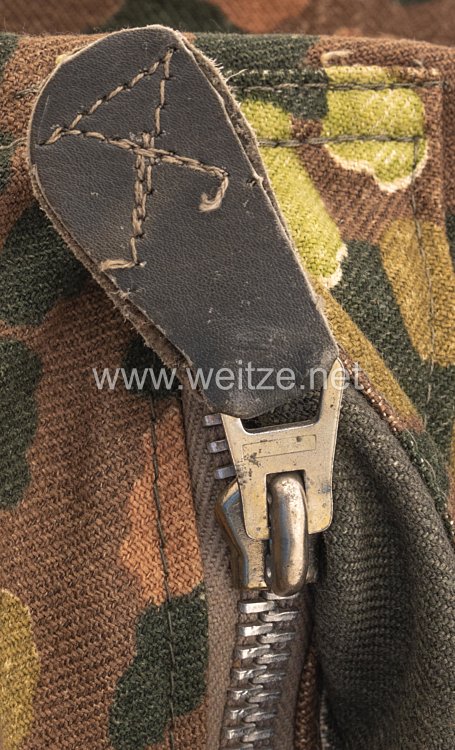
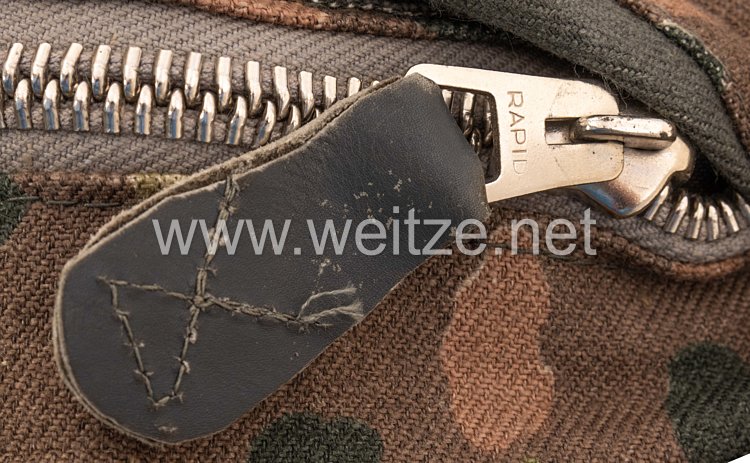
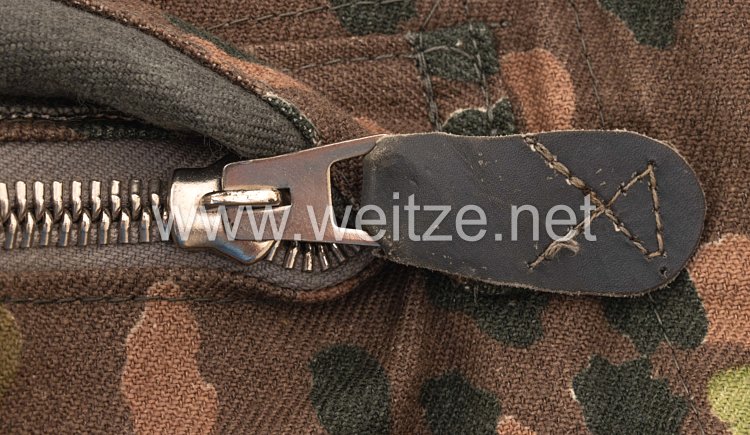
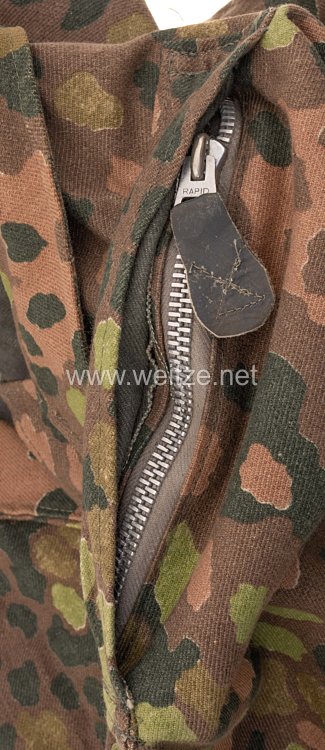
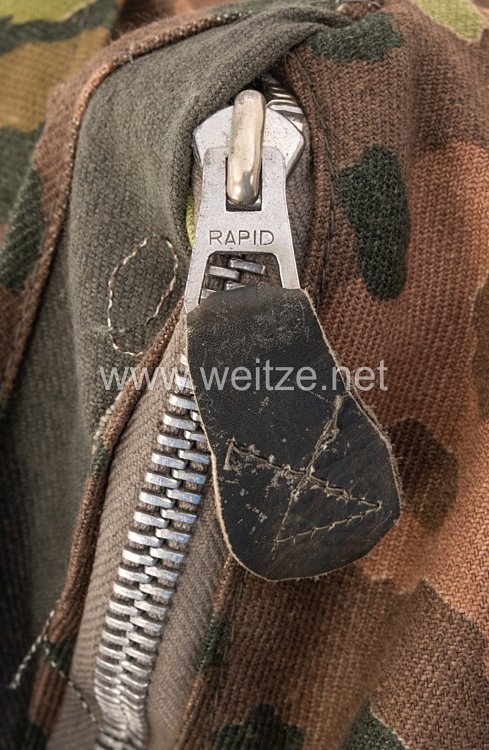
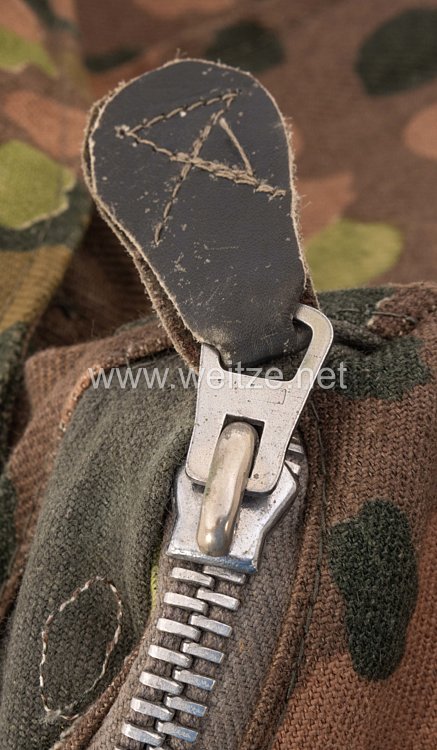
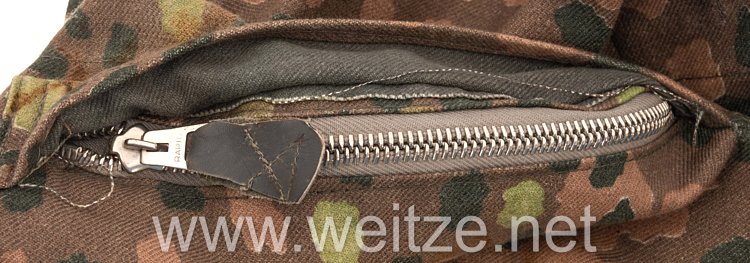
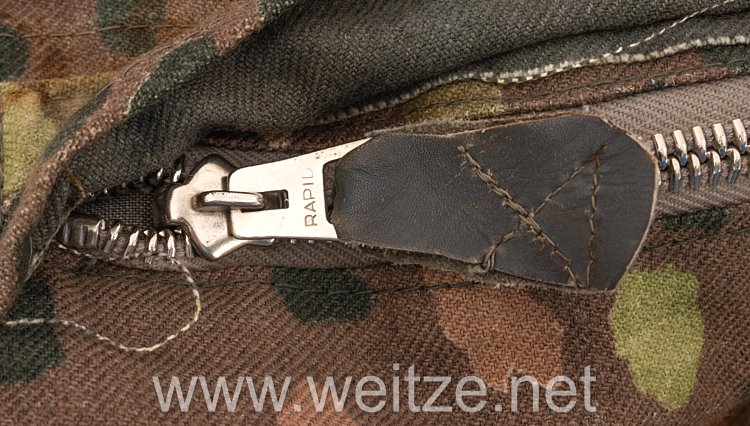
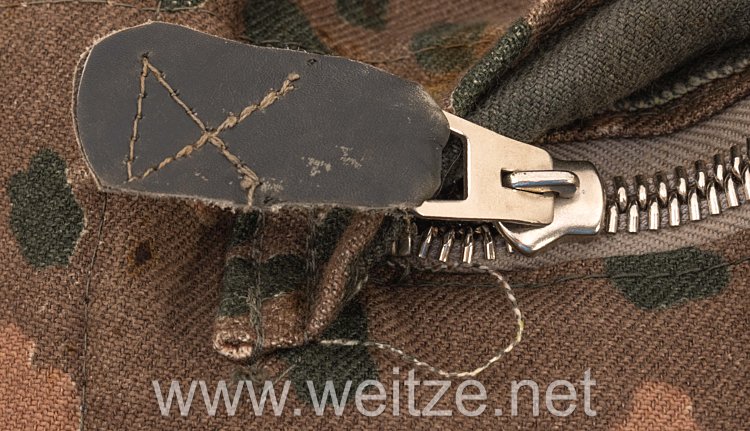
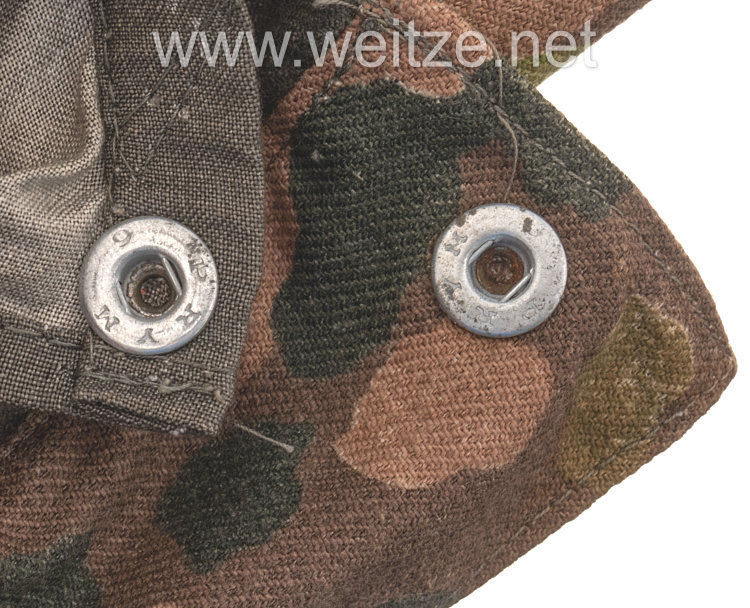
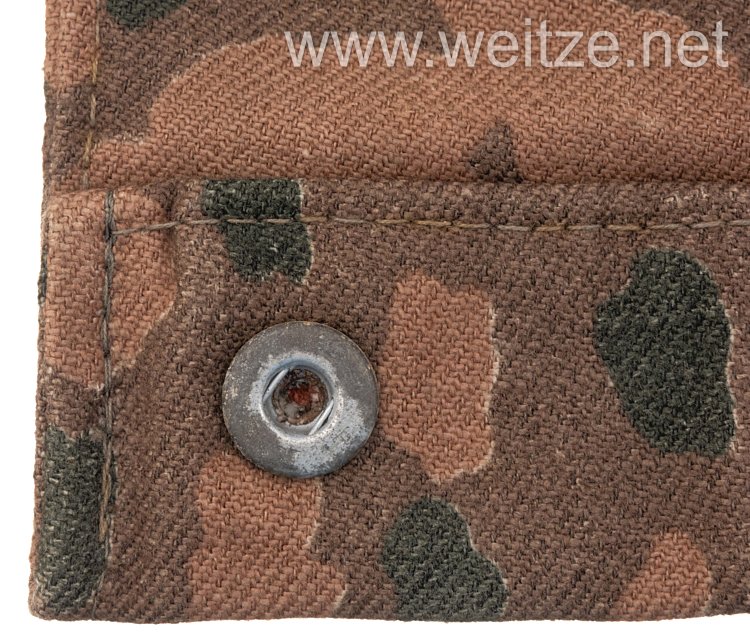
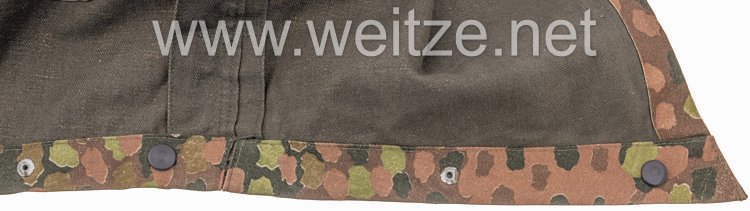
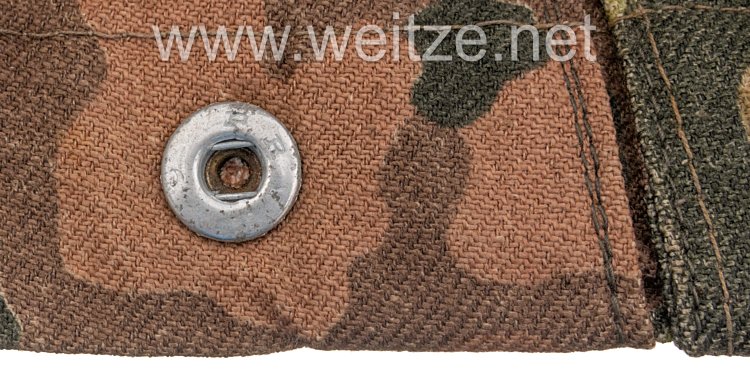
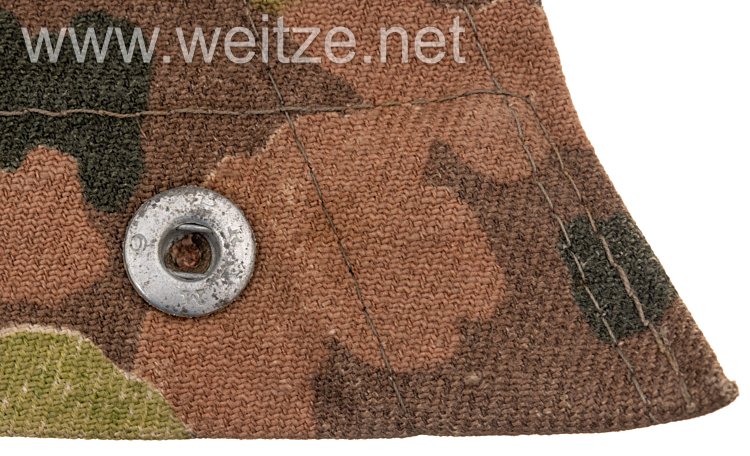
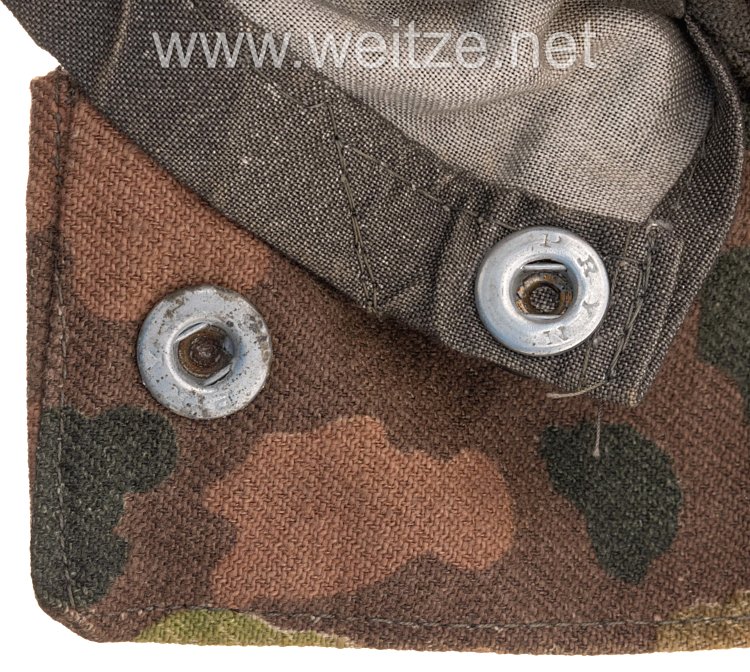
Production took place at SS-Bekleidungswerke facilities around 1944. The single-sided printed cotton fabric was lined in green on the interior, a robust construction typical of paratrooper equipment. The chest featured a machine-embroidered RZM breast eagle in SS pattern. Sheet iron snap fasteners bore the marking of manufacturer Prym, while zippers were manufactured by RAPID. The size marking “117 2” on the internal pockets made of stone-gray fabric indicates production at a sub-camp facility, as concentration camp labor was used for SS uniform production.
These jump smocks were intended for use by SS-Fallschirmjäger-Bataillon 500/600, the only Waffen-SS paratrooper unit, formed in 1943 under orders from Hitler and Himmler following Operation Eiche (the Gran Sasso raid). The battalion was initially a Bewährungsverband (probationary unit) composed of military convicts and disciplinary cases, later expanded with regular volunteers. Training was conducted by Luftwaffe Fallschirmschule 3 in Serbia. While the unit initially wore Luftwaffe splinter-pattern equipment, it transitioned to SS-marked items with the formation of Bataillon 600 in October 1944.
The battalion saw intensive combat operations: Operation Rösselsprung (the raid on Tito's headquarters in May 1944) led by SS-Hauptsturmführer Kurt Rybka, combat in the Baltic States, operations in Hungary, the Ardennes Offensive in December 1944, and final battles on the Oder Front and in northern Germany in 1945. The unit suffered devastating losses repeatedly, being reduced to just 90 men by August 1944 before being reformed as Bataillon 600. Unit commanders included SS-Sturmbannführer Herbert Gilhofer (first commander), SS-Hauptsturmführer Siegfried Milius (June 1944 to May 1945), and SS-Obersturmführer Fritz Leifheit (temporary command in April 1945).
Throughout its approximately eighteen-month existence, some 3,000 to 3,500 men served in SS-Fallschirmjäger-Bataillon 500/600, though actual strength varied dramatically due to heavy casualties. The battalion was virtually destroyed and surrendered to American forces at Hagenau, east of Hamburg, on May 2, 1945.
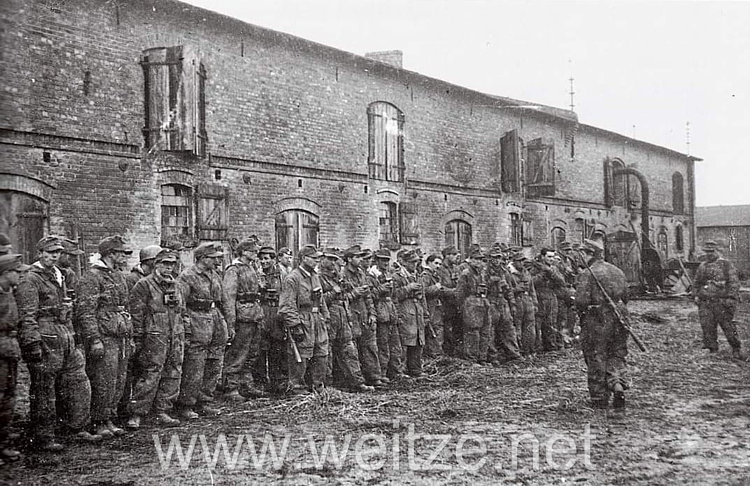
The extreme rarity of these jump smocks is explained by limited production and the devastating losses suffered by the unit. Unissued examples of these smocks stored at the Dachau depot were liberated by US troops of the 45th “Thunderbird” Division in the final months of the war and brought home as war souvenirs. One example was displayed for years at the Bastogne Museum. Recently, the first photograph emerged in specialist literature showing a company of SS-Fallschirmjäger-Bataillon 500 or 600 in the final battles of 1945, with some soldiers wearing this “Knochensack” – the first and only known photograph of this uniform in use.
Due to their extraordinary rarity, surviving original examples have become highly sought collector items. Modern reproductions are manufactured by specialty suppliers for collectors and reenactors, underscoring the continuing historical fascination with this rare piece of equipment.