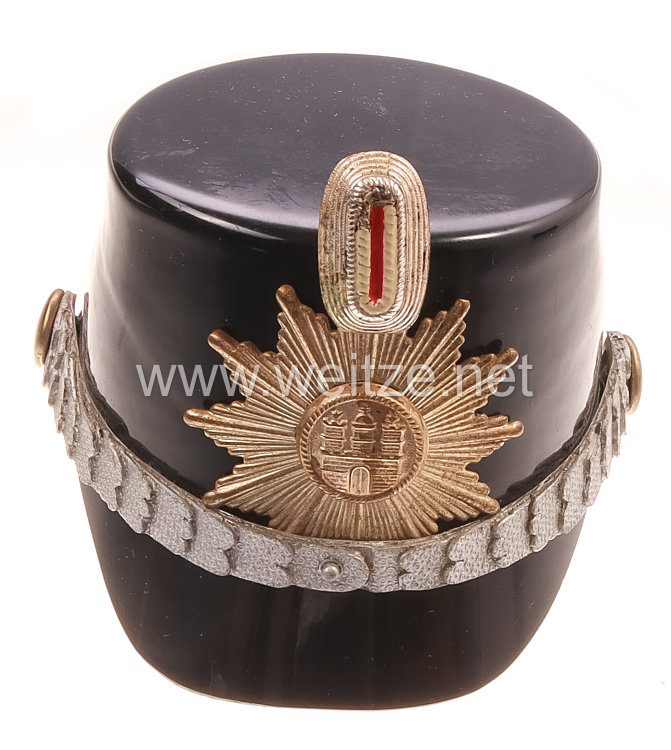
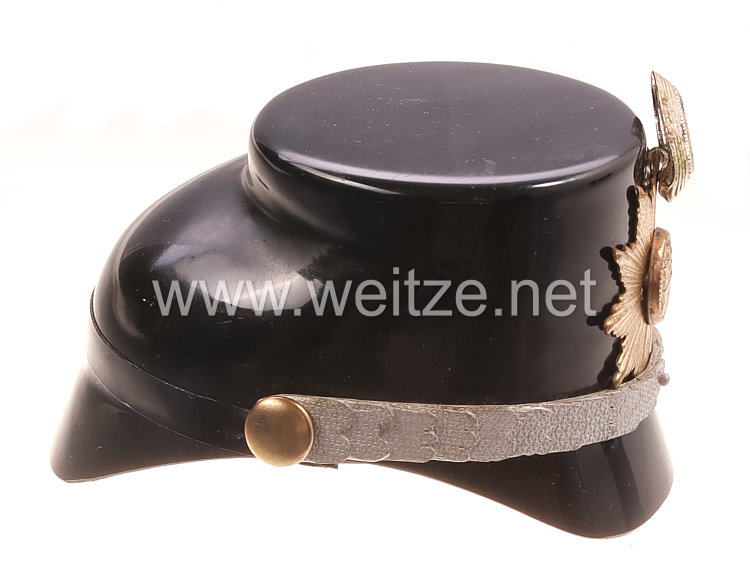
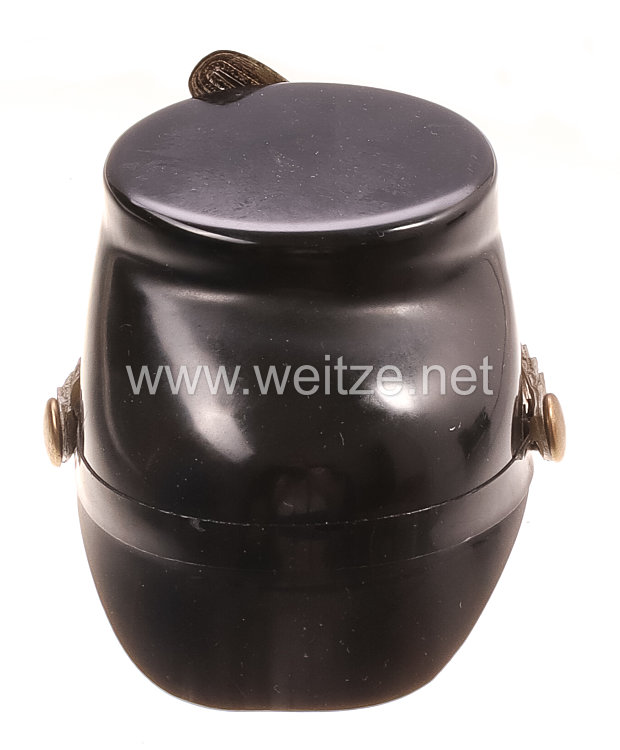
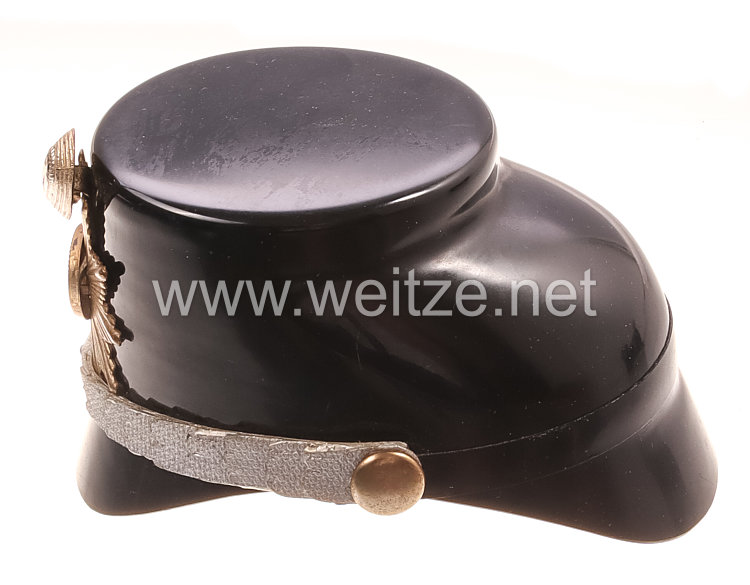
Hamburg Miniature of a Police Shako

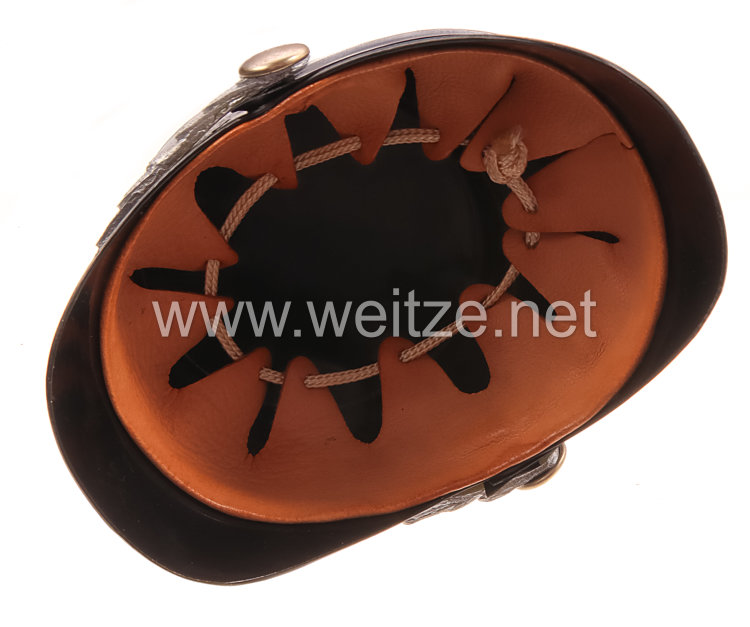
Circa 1950. Very fine miniature of a police shako, interior even features the laced leather lining. Dimensions approximately 9 x 11.5 x 7 cm. Condition 2+.
431748
200,00

Hamburg Miniature of a Police Shako

Historical Context: Miniature of a Hamburg Police Shako

This miniature of a Hamburg police shako from around 1950 represents a fascinating tradition of manufacturing military and police miniature helmets that served both as souvenirs and as guild symbols.

The Shako in German Police History

The shako (also czako) originated in 18th-century Hungarian military tradition and quickly spread throughout Europe. In Germany, this characteristic cylindrical helmet was introduced in the early 1800s for both military and police formations. The Hamburg Police adopted the shako as part of their official uniform in the 19th century, with specific designs and decorations reflecting the local identity of the Hanseatic city.

After World War II, a gradual reorganization of police forces took place in the West German occupation zones. Traditional shakos were replaced by more modern headgear in Hamburg and other German cities, though they continued to be used for ceremonial occasions. The period around 1950, when this miniature was created, marks a transitional phase in German police history.

The Tradition of Miniature Helmets

The production of miniature helmets had a long tradition in Germany, dating back to the 19th century. These small replicas were made for various reasons: as reservist gifts, as mementos of service, as promotional items for helmet manufacturers, or as collectibles for militaria enthusiasts.

Particularly noteworthy in the described miniature is the detailed execution with a laced leather lining on the inside. This indicates high-quality craftsmanship, where not only the external appearance but also constructional details of the original were reproduced. The lacing technique refers to the traditional method where leather strips are interwoven or sewn together to create a stable yet flexible inner lining.

Post-War Period and Culture of Remembrance

The creation of this miniature around 1950 falls into the early post-war period, an era of reconstruction and reorientation. During this time, a cautious examination of Germany's own history began, with military and police traditions being critically questioned. Simultaneously, there existed a need to connect with historical institutions like municipal police corps, which were considered less politically tainted than military formations.

Hamburg, as a city-state, had a particular police tradition. The Hamburg Police could look back on a history closely connected with municipal self-government and Hanseatic identity. Miniature helmets like the one described possibly served to honor and preserve this local tradition.

Artisan Manufacturing

The production of such miniatures required specialized knowledge in metalworking and leather crafting. Traditional helmet manufacturers, some of which survived the war years, resumed their activities in the post-war period. They often focused on producing miniatures and replicas, as demand for actual military equipment was initially low.

With dimensions of approximately 9 x 11.5 x 7 cm, the miniature corresponds to a scale of roughly 1:3 to 1:4 compared to an original shako. This size was typical for high-quality miniatures that served as display pieces or personal mementos.

Collector Value and Cultural-Historical Significance

Today, such police miniature helmets are sought-after collector's items that provide insight into the uniform history of German police forces. They document not only the external appearance of historical headgear but also artisanal traditions and the culture of remembrance in the post-war period.

The classification as “condition 2+” indicates very good preservation, which for an object over 70 years old suggests careful storage. This underscores the value that owners placed on such historical miniatures.

The miniature stands as an example of the complex history of German police uniforms and the tradition of militaria collecting in Germany, which continues to this day despite the historical ruptures of the 20th century.

r