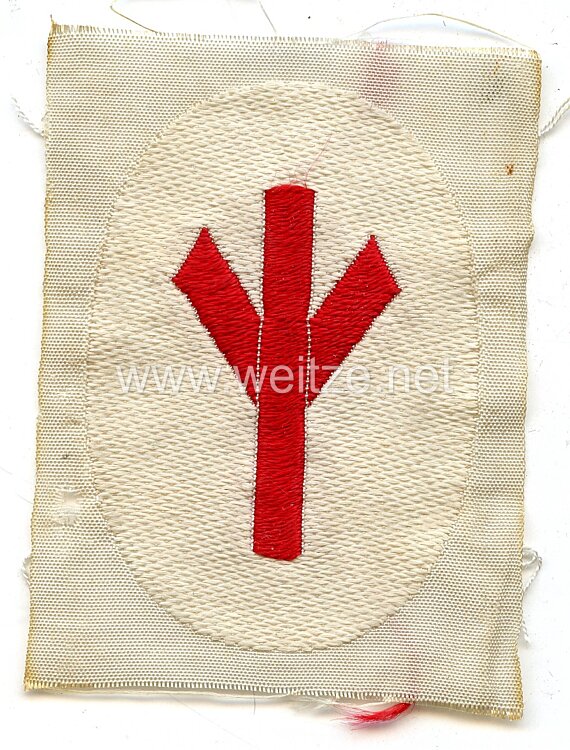
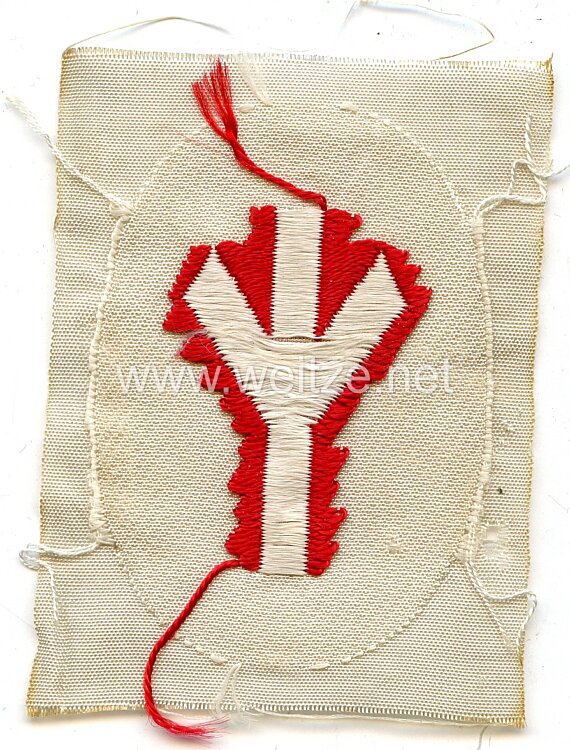
HJ - Sleeve Insignia HJ-Feldscher (Medical Orderly)
The HJ Sleeve Badge for Medic (Feldscher) represents a significant artifact documenting the paramilitary training structures within the Hitler Youth during the Third Reich. These special insignia identified youths who had completed medical training within the organization and served as first responders.
The Hitler Youth, founded in 1926 and elevated to the state youth organization of National Socialist Germany in 1933, developed a comprehensive system of ranks, functions, and specializations. With the Law Concerning the Hitler Youth of December 1, 1936, membership became virtually mandatory for all German youths between 10 and 18 years of age. By 1939, nearly all young people in the German Reich were integrated into the HJ.
The term Feldscher originated in the military sphere and historically designated a field surgeon or medic without complete academic training. In HJ terminology, the Feldscher referred to a youth with basic medical training who could provide first aid during field exercises, camps, and other activities.
The present Bevo-woven execution represents the standard manufacturing technique for HJ insignia. Bevo was the abbreviation for Bandfabrik Ewald Vorsteher from Wuppertal-Barmen, which developed a special weaving process. In this process, the badges were woven directly in one piece, ensuring high detail fidelity and durability. The Bevo technique enabled mass production of uniform insignia in consistent quality and was used not only for HJ badges but also for Wehrmacht and SS insignia.
Training as an HJ-Feldscher was part of the comprehensive Medical Service of the Hitler Youth, which operated under the supervision of the Medical Office of the Reich Youth Leadership. The training included basics of first aid, bandaging techniques, treatment of injuries, and transport techniques for casualties. These courses took place in special training sessions and were designed to prepare youths both for service within the HJ and for possible later use in the Wehrmacht or other organizations.
The wearing of such sleeve badges followed strict uniform regulations, which were detailed in various service regulations of the HJ. Special badges such as the Feldscher badge were worn on the left upper arm and identified the wearer's special function within the unit. They were clearly distinguished from rank insignia and other decorations by their specific position and design.
As the war progressed from 1939 onward, medical training within the HJ gained increasing importance. Many HJ members were deployed as air raid helpers, where basic medical knowledge was essential for rescuing and providing first aid to bombing victims. HJ medics also played an important role in caring for the increasingly evacuated Kinderlandverschickung (countryside evacuation of children).
From 1943 onward, HJ members were increasingly drawn into military auxiliary services, and medical training received an even more military orientation. Many former HJ medics later found themselves serving as medical personnel in the Wehrmacht, Waffen-SS, or the Reich Labor Service.
From today's historical perspective, such badges document the systematic paramilitary penetration of youth education under National Socialism. The HJ served not only for ideological indoctrination but also for practical preparation for military service. The medical service formed an interface between civilian auxiliary services and military training.
The preservation of such historical objects in museum collections and scholarly contexts today serves the historical processing and documentation of this era. They enable understanding of the structures and mechanisms of totalitarian youth organizations and contribute to educational work about the Nazi period.
Collectors and institutions handling such artifacts bear a special responsibility to present them in appropriate historical context, ensuring they serve educational rather than glorifying purposes. These objects are important witnesses to a dark chapter of German and European history that must never be forgotten.