Schutzstaffel (SS) Service Dagger M 1936

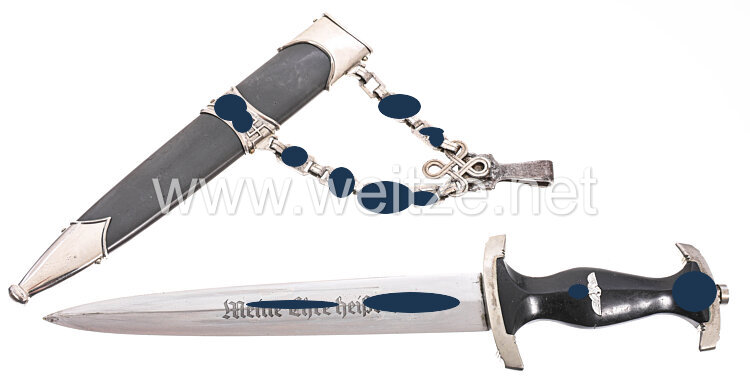
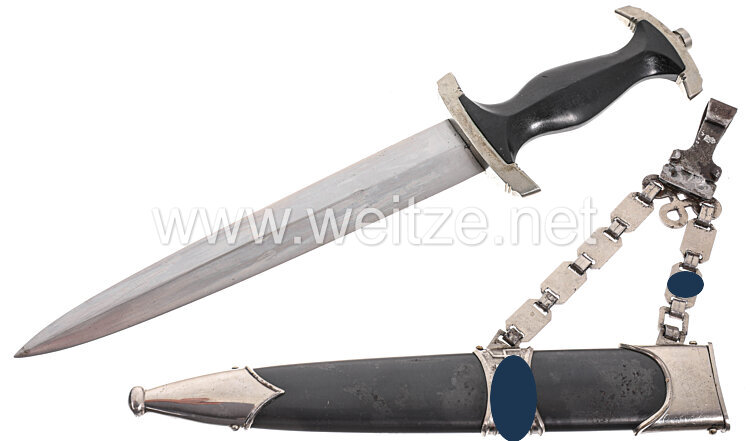
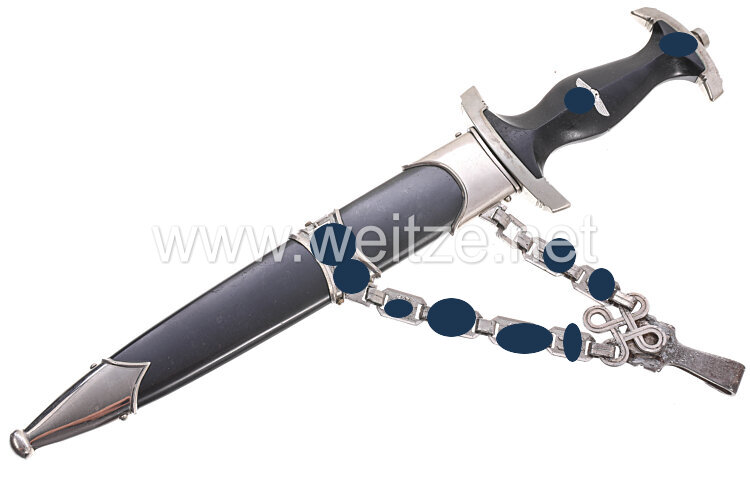
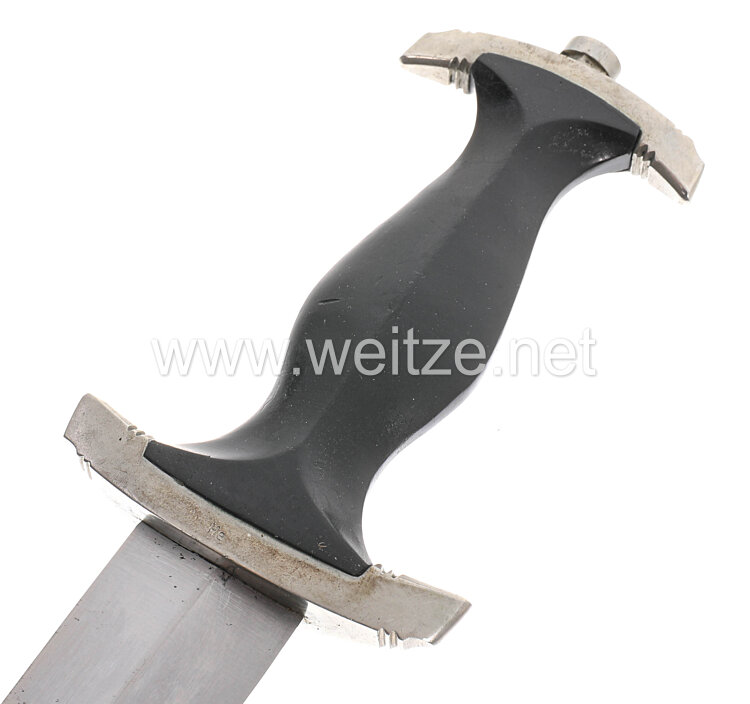
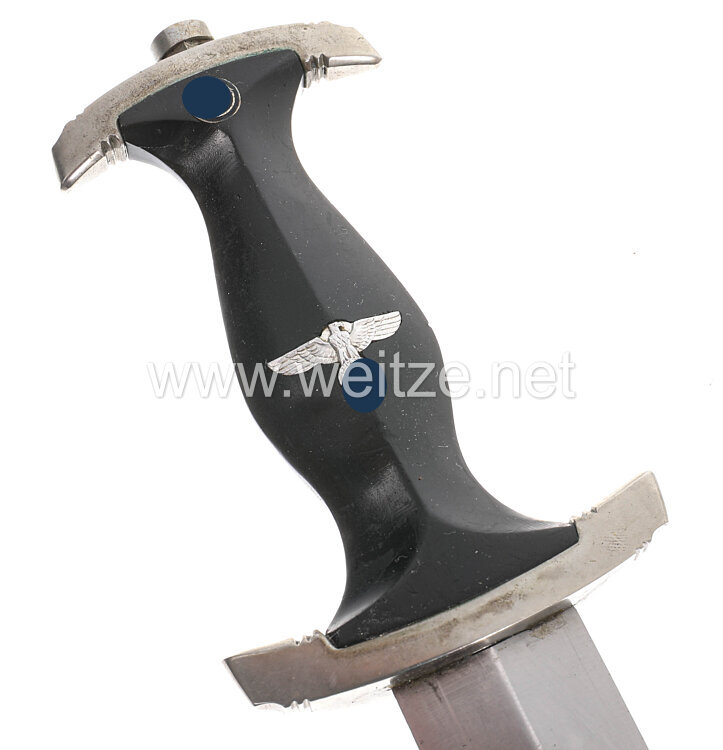
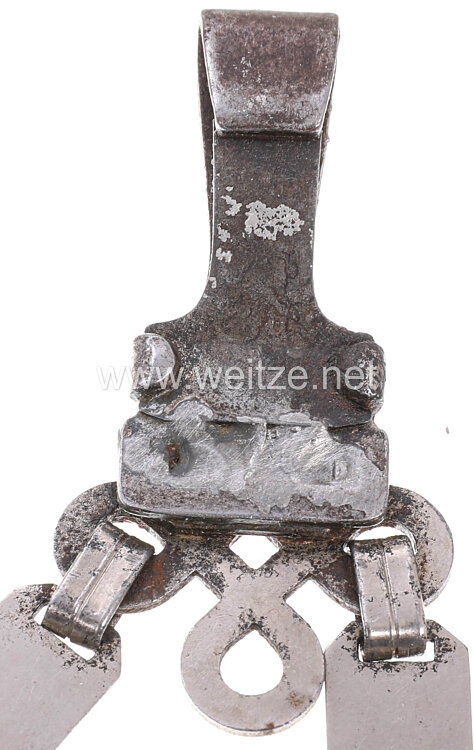
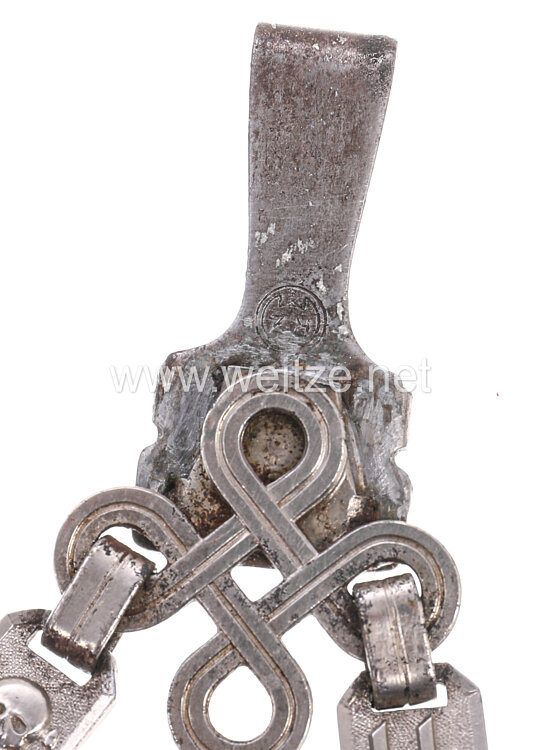
So-called chain dagger. Very clean blade with motto “Meine Ehre heißt Treue” (My Honor is Loyalty), regulation pattern without maker's mark, black wooden grip with nickel fittings, the crossguard stamped “He”, which is unusual but does occur occasionally, blued scabbard with nickel-plated iron fittings, Type-C suspension chain, upper hanger replaced. A well-preserved SS chain dagger. Condition 2


465547
8.200,00

Schutzstaffel (SS) Service Dagger M 1936

The SS Service Dagger M 1936, also known as the chain dagger (Kettendolch), represents one of the most characteristic pieces of equipment of the National Socialist Schutzstaffel. After the seizure of power in 1933, the SS under Heinrich Himmler evolved from a party organization into a paramilitary formation with its own traditions and symbols.

The introduction of the SS service dagger occurred on December 15, 1933, through a decree by Himmler. The Model 1936 represented a further development of the original design and became the standard version for all SS members from the rank of SS-Mann upward. The dagger served primarily as a parade and honor weapon and was an integral part of the SS uniform during ceremonial occasions.

The blade bears the characteristic motto “Meine Ehre heißt Treue” (My Honor is Loyalty), which became the watchword of the entire SS organization. This engraving was applied to both sides of the blade. The blades were manufactured from high-quality steel and had an average length of approximately 24 centimeters. Interestingly, from 1936 onward, it was regulation that blades were to bear no manufacturer's mark, which the described blade confirms.

The black wooden grip with nickel fittings was characteristic of SS daggers and distinguished them from other Wehrmacht daggers. The SS emblem (runes) was inset into the grip. The crossguard (hand guard) stamped “He” refers to a manufacturer or supplier, though such markings were not standard but did occur in practice, particularly on components from subcontractors.

The blued scabbard with nickel-plated iron fittings followed the official regulations of 1936. The scabbard featured two carrying straps for attachment to the chain. The carrying chain Type C was one of several approved variants. The chains differed in material and design: Type A consisted of chrome-plated chain links, Type B of silver-plated links, and Type C of nickel-plated or chrome-plated iron links. The choice of chain could depend on rank or usage.

Production of SS service daggers was undertaken by various manufacturers, including established Solingen blade smiths. After 1936, all manufacturers had to comply with standardized regulations, leading to a certain uniformity. Quality nevertheless varied depending on the manufacturer and production period.

The dagger was worn on a black leather belt on the left side. The carrying chain created a characteristic appearance during parades and official events. Wearing the dagger was strictly regulated and permitted only on certain occasions and in conjunction with the appropriate uniform.

As World War II progressed and material shortages increased, simplified versions were produced from 1940 onward. The quality of materials and workmanship declined. After 1943, production was largely discontinued as resources were needed for more war-critical purposes.

After 1945, SS memorabilia including service daggers were banned in Germany. Possession for military-historical collecting purposes is permitted under certain conditions but is subject to strict legal regulations. Criminal Code §86a regulates the handling of symbols of unconstitutional organizations.

From a military-historical perspective, these objects document the symbolism and self-presentation of totalitarian organizations. They serve as material witnesses to a criminal regime and have their place in museums and scholarly collections as teaching objects.