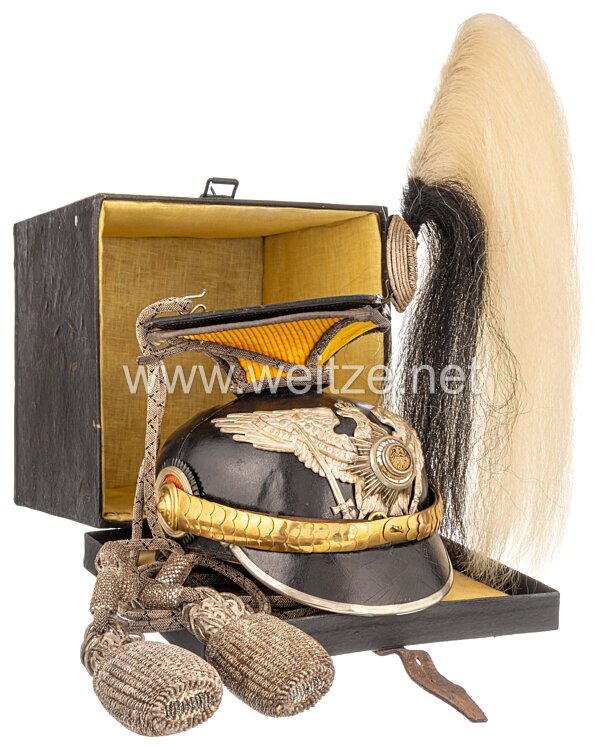
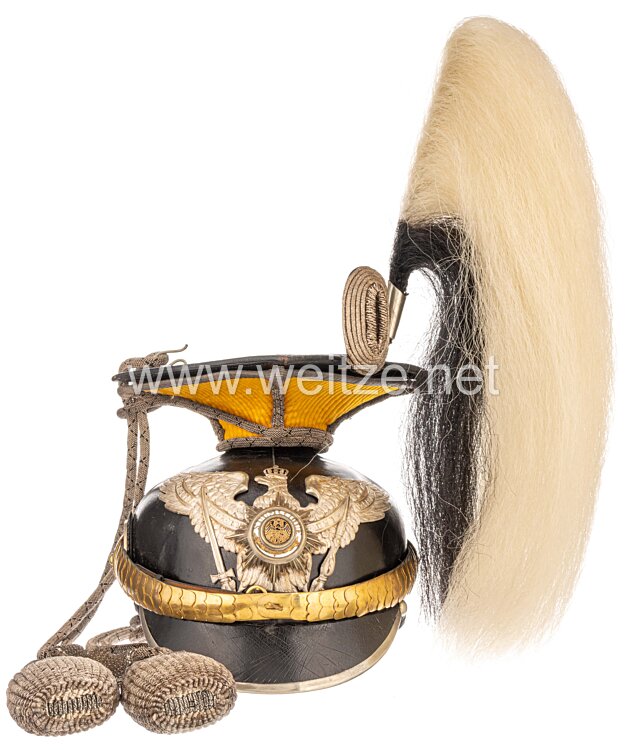
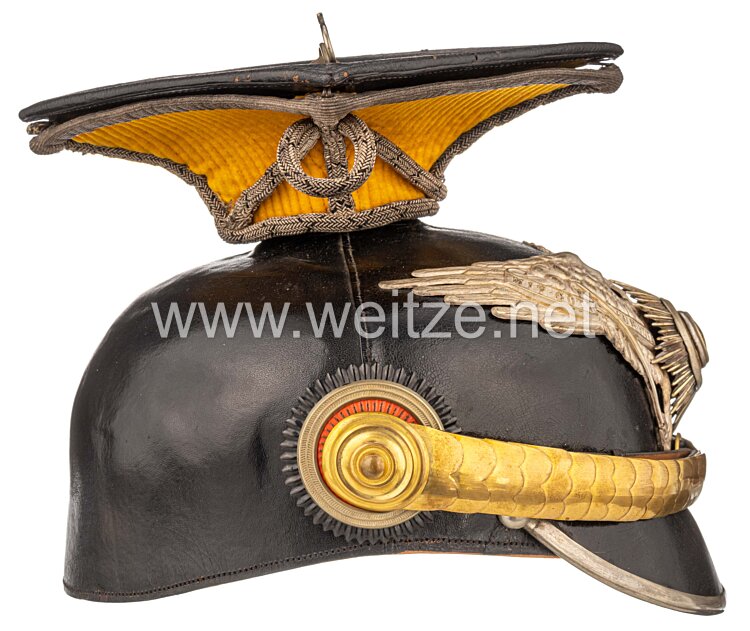
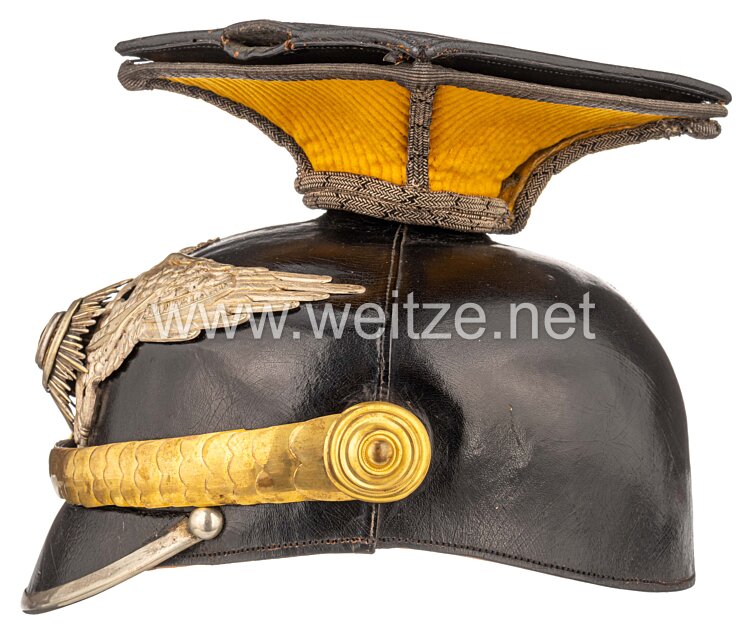
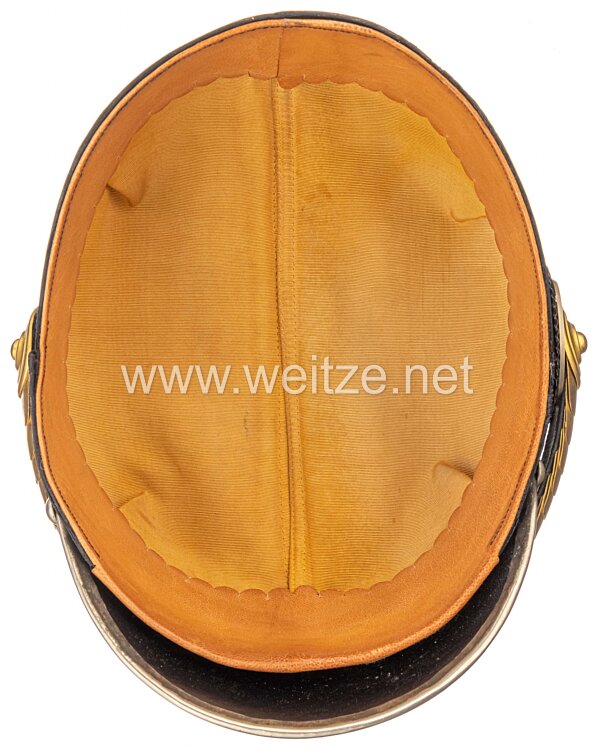
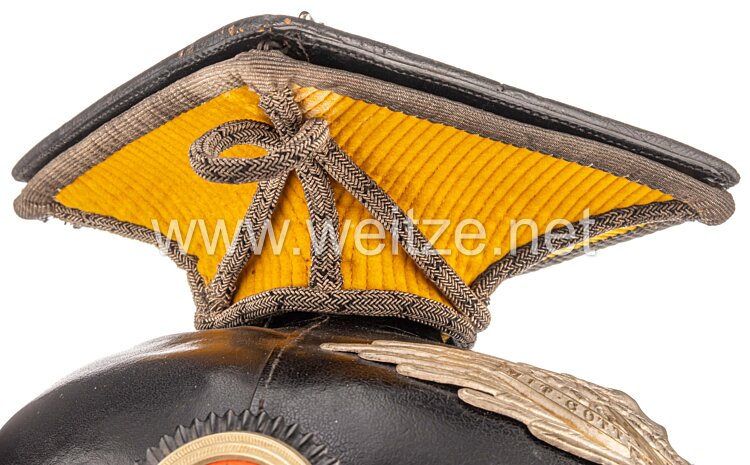
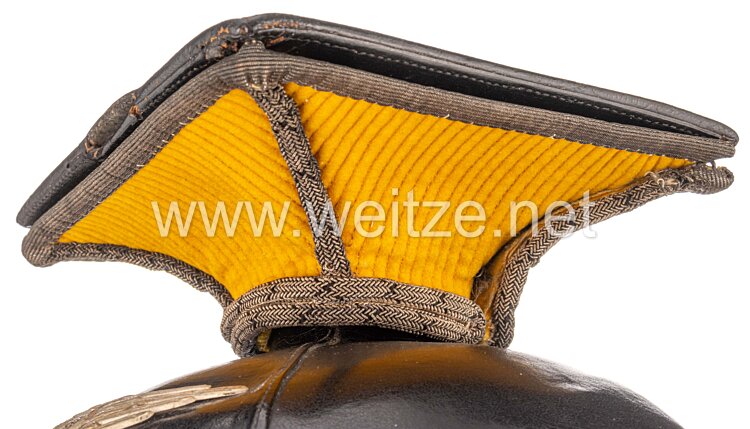
The Prussian Tschapka of the Guards Uhlans represents one of the most characteristic headpieces of the Imperial German cavalry. This particular parade version for an officer of the 3rd Guards Uhlan Regiment embodies the military splendor and tradition of the Prussian Army in the final years before the First World War.
The czapka itself is a 19th-century Polish cavalry headgear, consisting of a high, four-pointed cap with regimental insignia. This headdress developed initially as a square-topped variant of a shako. In its early, compact form from 1784 onwards the czapka was introduced by Austrian uhlans. Its use was spread from eastern Europe by the Polish Legion, fighting for the French in the Napoleonic Wars. Following the Treaty of Tilsit in 1807, lancer regiments designated as uhlans were reintroduced in the Prussian service. Initially, they were only three.
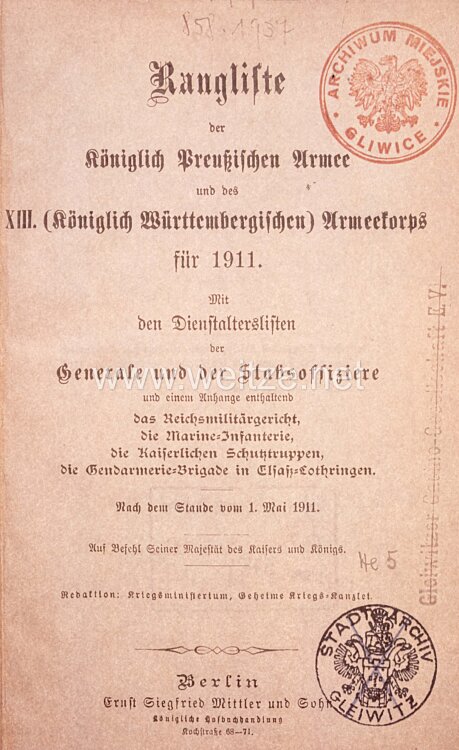
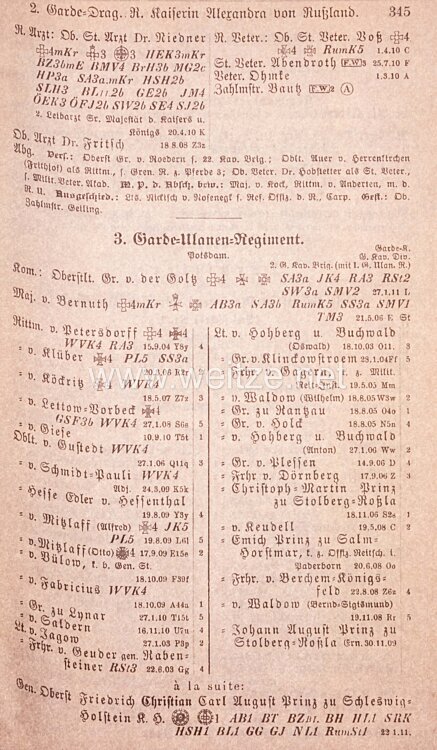
The 3rd Guards Uhlan Regiment was formed on 7 May 1860 from detachments of the Gardes du Corps, the Garde-Kürassiere and the 1st Garde-Ulanen-Regiment with a strength of four squadrons and was stationed in Potsdam. Until 4 July 1860 it was called the combined Garde-Ulanen-Regiment and then received its final designation as 3. Garde-Ulanen-Regiment. The regiment participated in the Austro-Prussian War of 1866, fighting at Braunau on 26 June 1866, the reconnaissance engagement at Czerwena-Hora, the engagement at Soor and the Battle of Königgrätz, and the Franco-Prussian War 1870/71 at Buzancy, Bar, Carignan, the Battle of Sedan, the bombardment of Montmédy, and the siege of Paris.
In 1914, the Imperial German Army included 26 uhlan regiments, three of which were Guard regiments. All German uhlan regiments wore Polish style czapkas and tunics with plastron fronts, both in coloured parade uniforms and the field grey service dress introduced in 1910. The parade czapka was used by cavalry officers of this elite guards regiment for ceremonial parade duties.
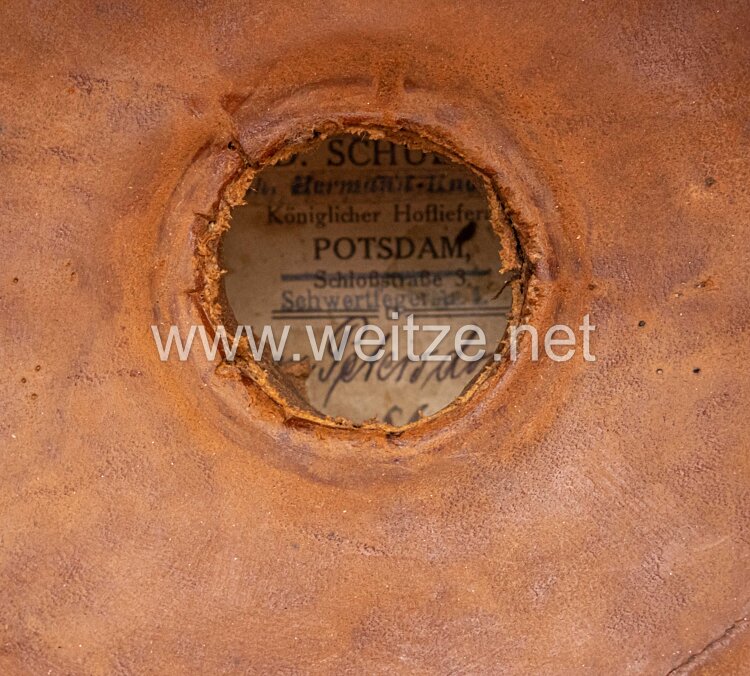
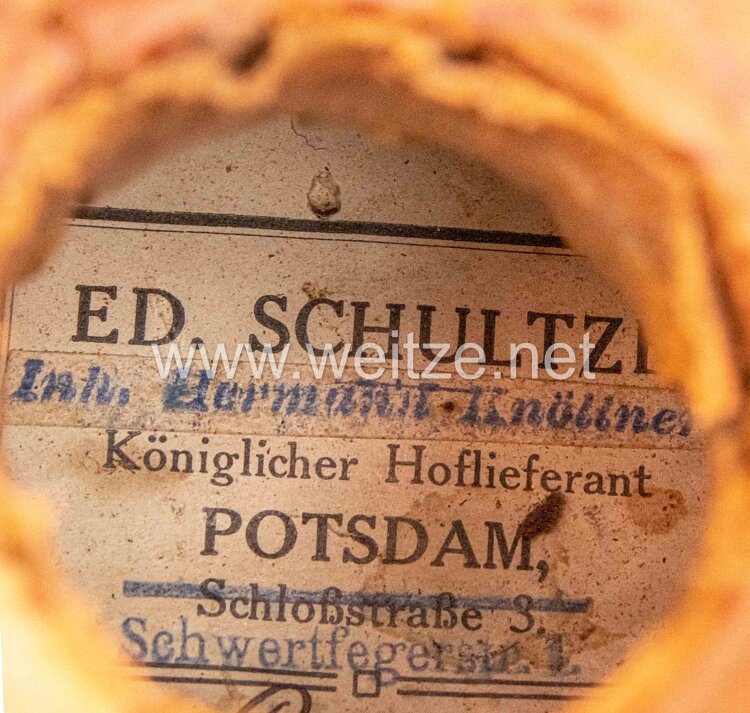
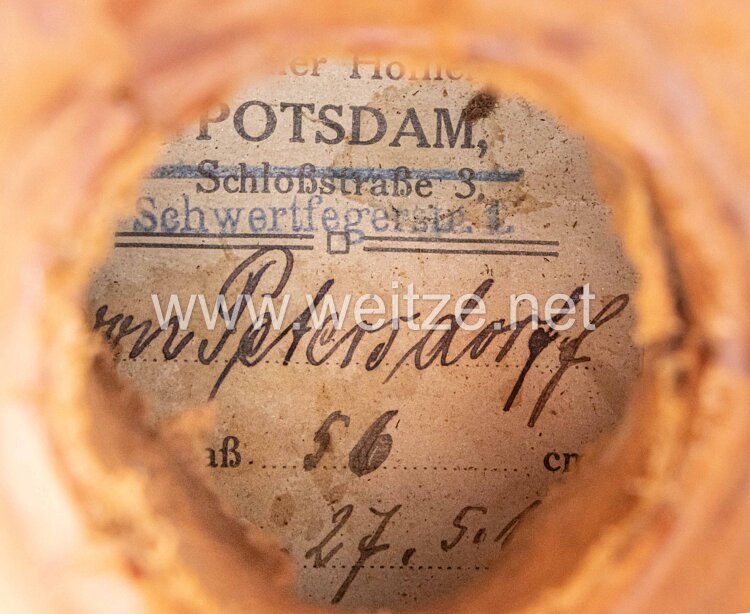
This particular example was manufactured by the Potsdam court supplier Ed. Schultze, whose proprietor was Hermann Knöllner. The label inside the crown reads “Ed. Schultze, Inh. Hermann Knöllner Königlicher Hoflieferant Potsdam von Petersdorff Kopfmaß 56 cm geliefert am 27.5.11”. The headpiece was thus delivered on 27 May 1911, three years before the outbreak of the First World War. Between 1860 and 1918, 2300 Hoflieferanten titles were awarded, of which 135 went to the residential city of Potsdam.
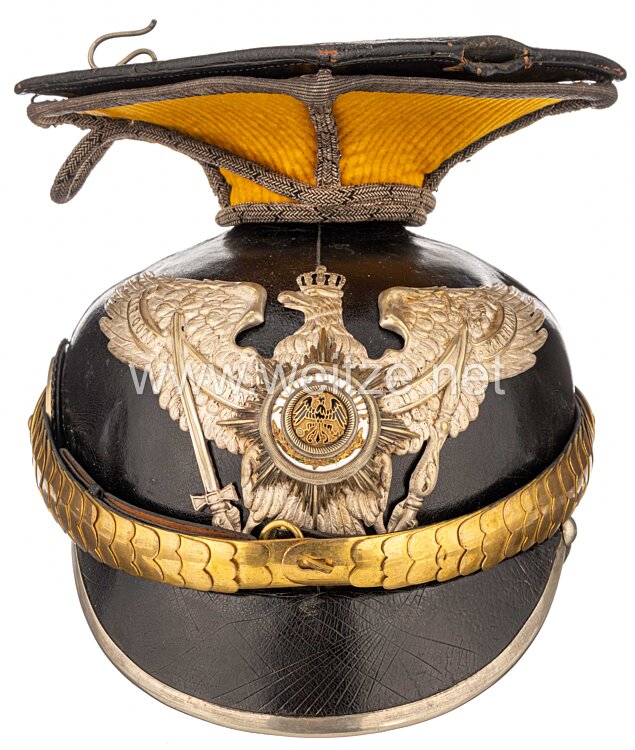
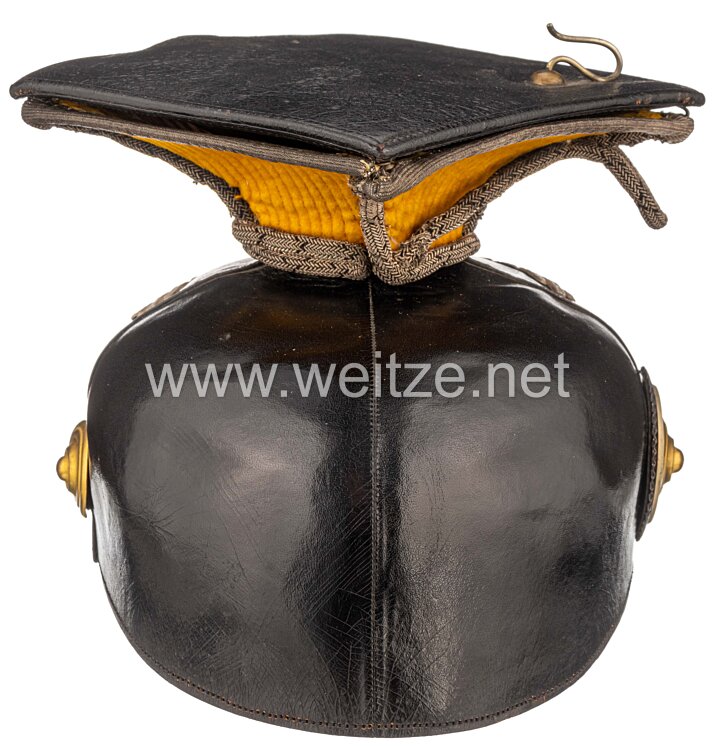
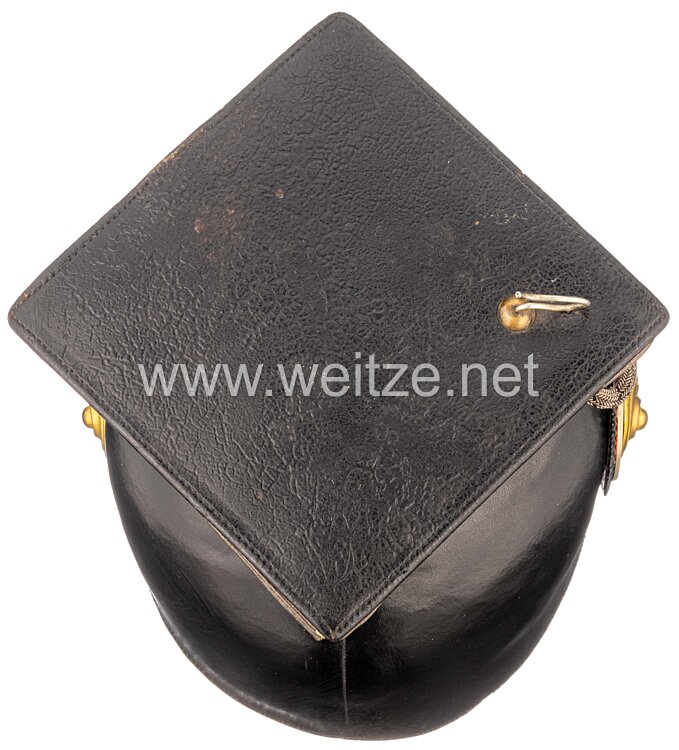
The characteristic form of the czapka consists of a four-sided top, resembling the mortar-board of academic dress, characteristic of all Prussian Uhlan regiments' box-shaped headgear. The body is made of pressed blackened leather with metal fittings. The Paraderabatten – the colored trim – were specific to each Regiment but were trimmed in white for Mannschaften (Other Ranks) and silver bullion for officers. The lemon-yellow color of the collar, Paraderabatten, and trim identifies this piece definitively as belonging to the 3rd Guards Uhlan Regiment, while the 1st Guards had white and the 2nd Guards had red.
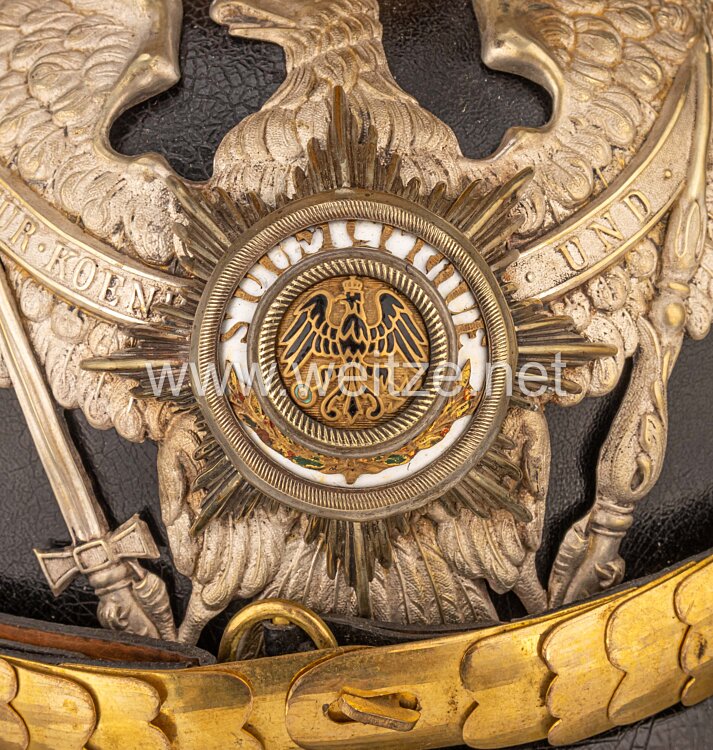
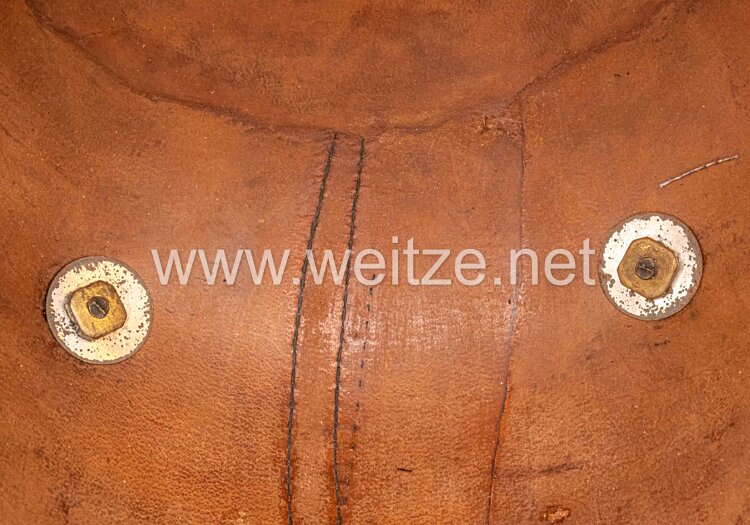
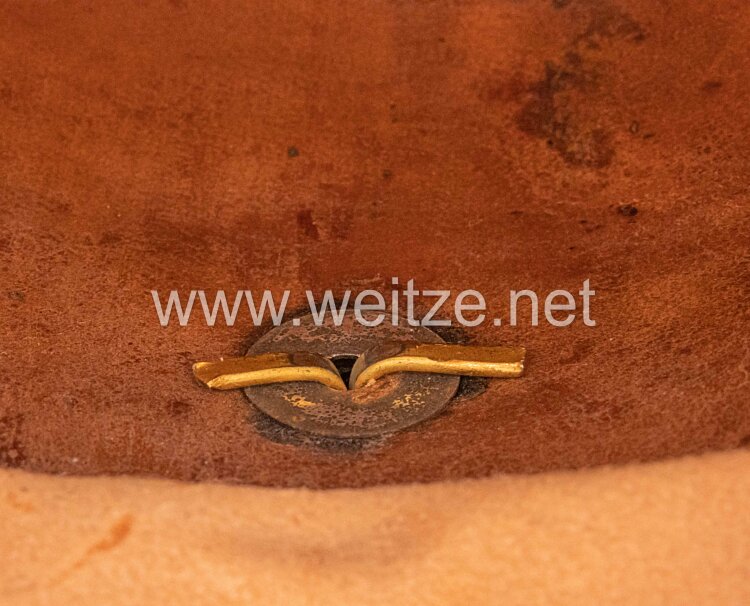
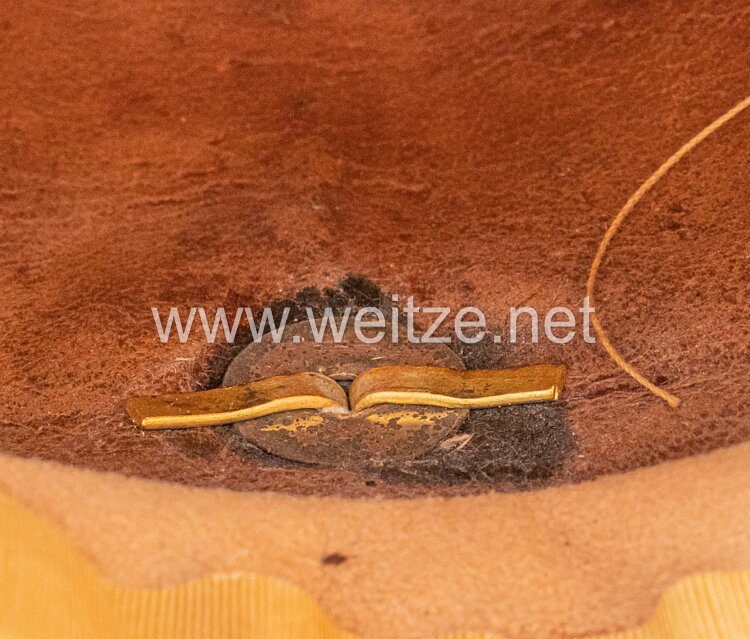
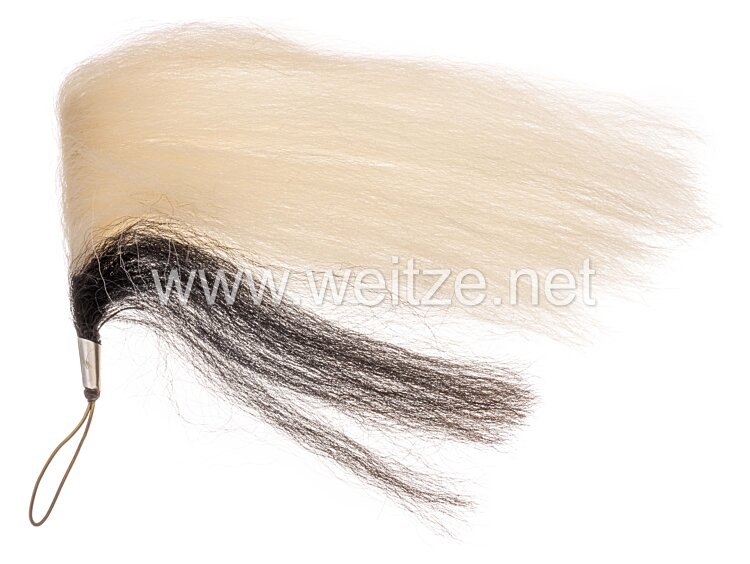
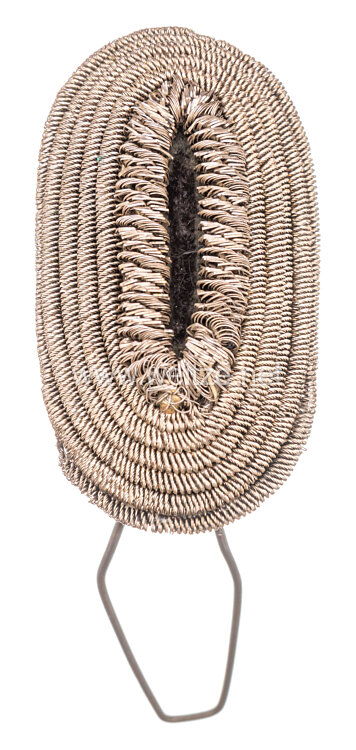
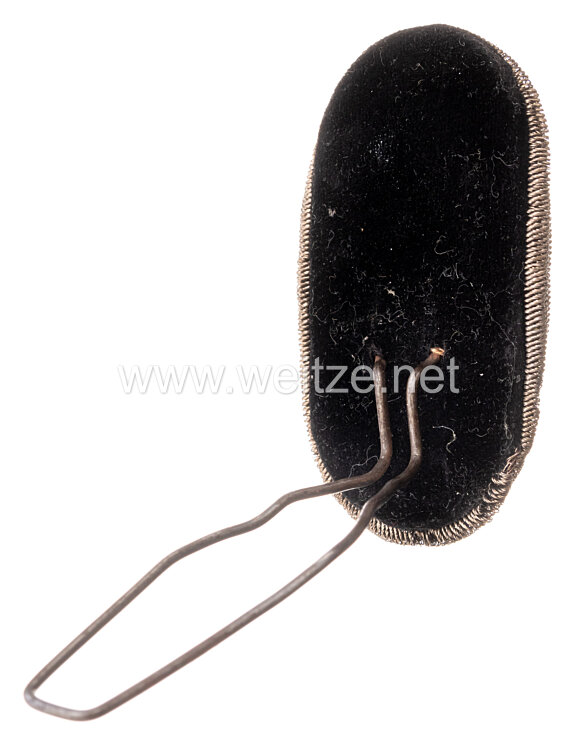
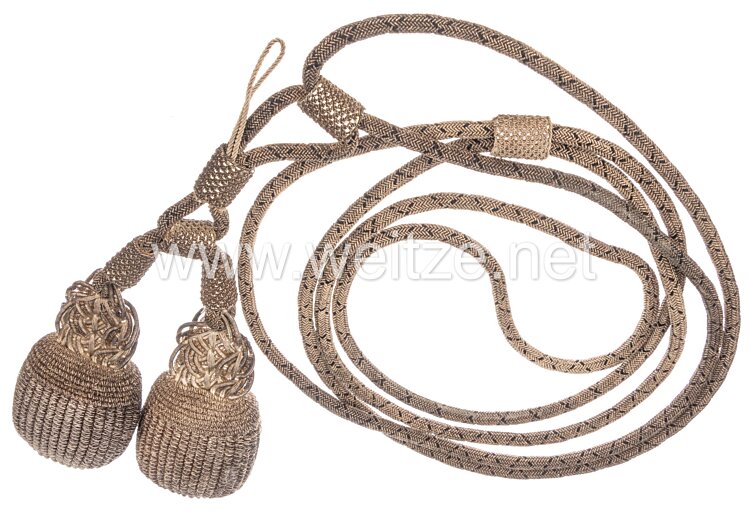
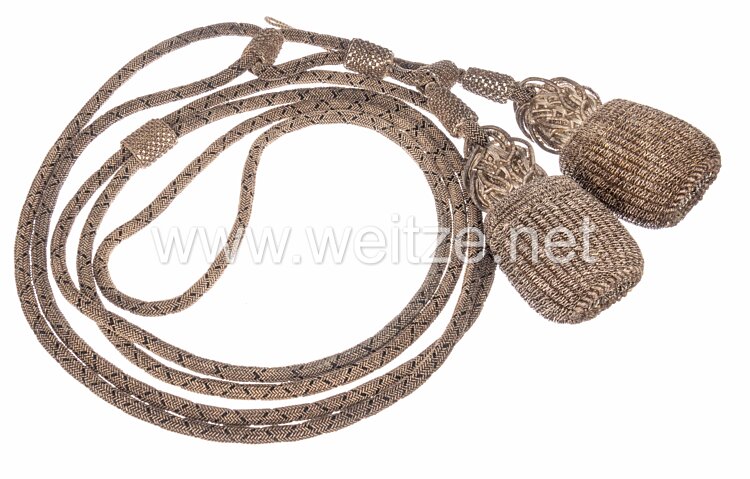
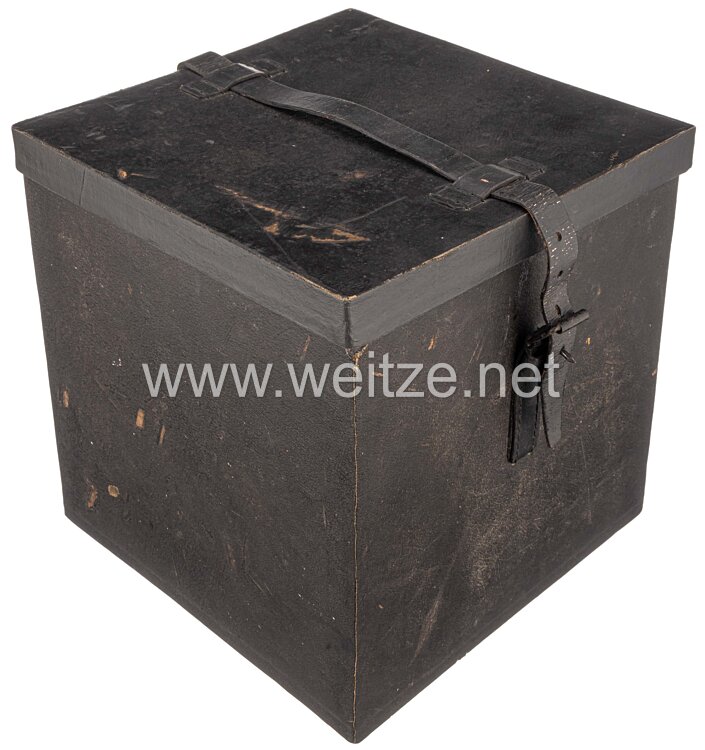
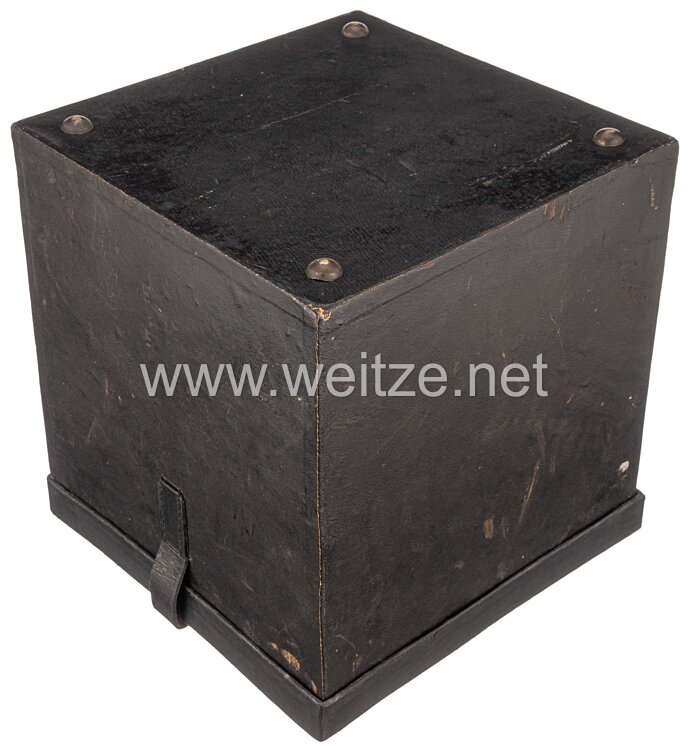
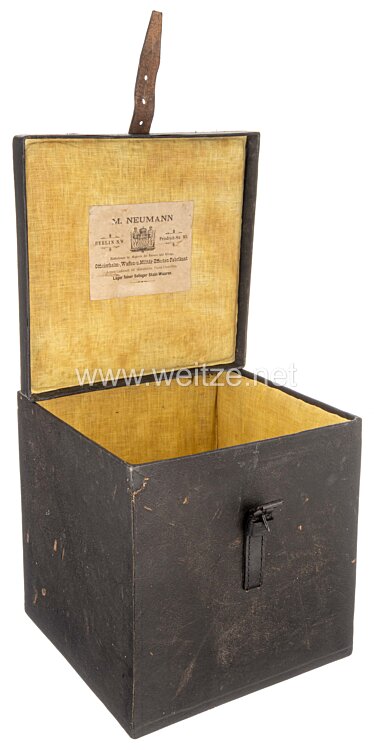
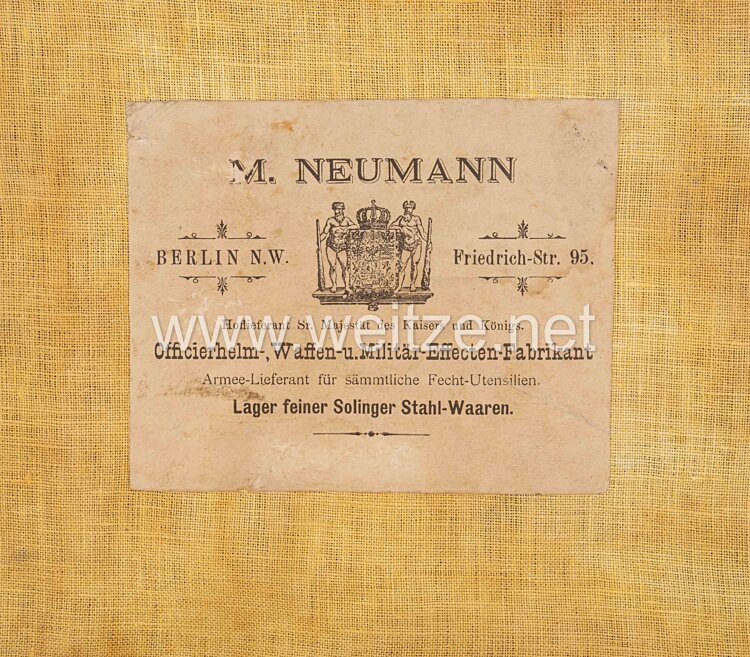
The front displays the frosted silver-plated Garde eagle with star, as well as the enamelled star of the Order of the Black Eagle. On the right side is the Reich cockade. The czapka is complete with field insignia, parade cord, and parade plume. The interior features a light leather sweatband and fine light beige silk rep lining. The original storage case bears the label of the Berlin firm M. Neumann, a manufacturer of officer helmets, weapons and military effects.
In World War I 1914/18 the regiment was subordinated to the Guards Cavalry Division and the Ostsee-Division. In 1914 czapkas were still worn in full dress by all Imperial German, Austro-Hungarian, British, Belgian, and Russian lancer (uhlan) regiments. Belgian, Austro-Hungarian, and German lancers wore their czapkas on active service during the opening weeks of the war, usually with dull coloured or waterproof covers. After the end of the war the regiment was demobilized in 1919 and then dissolved. The tradition was taken over in the Reichswehr by decree of the Chief of the Army Command General der Infanterie Hans von Seeckt of 24 August 1921 by the Training Squadron of the 4th (Prussian) Reiter-Regiment in Potsdam. After 1918, such parade uniforms became historical artifacts and entered private collections.