Hessian Infantry Officer's Saber

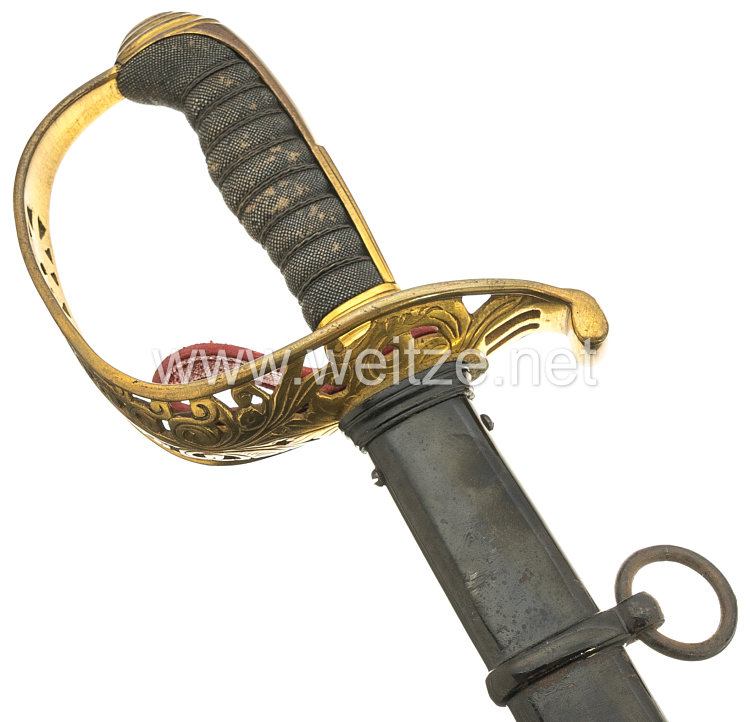
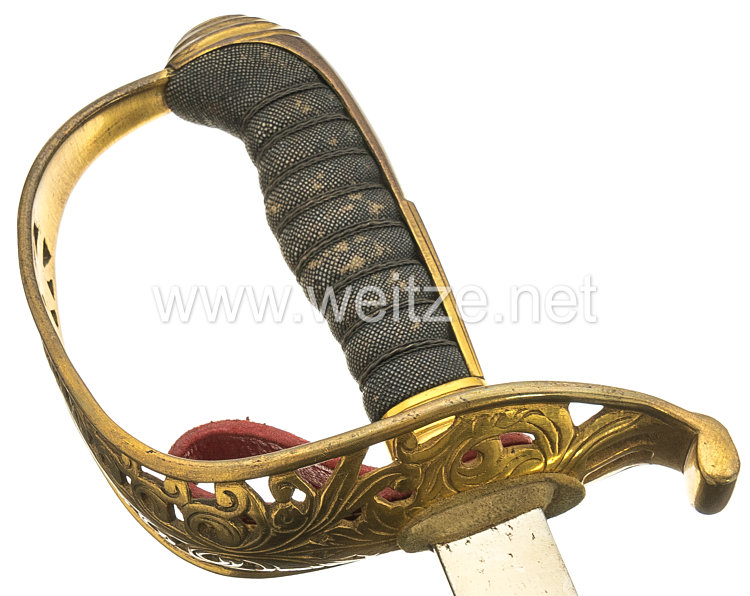
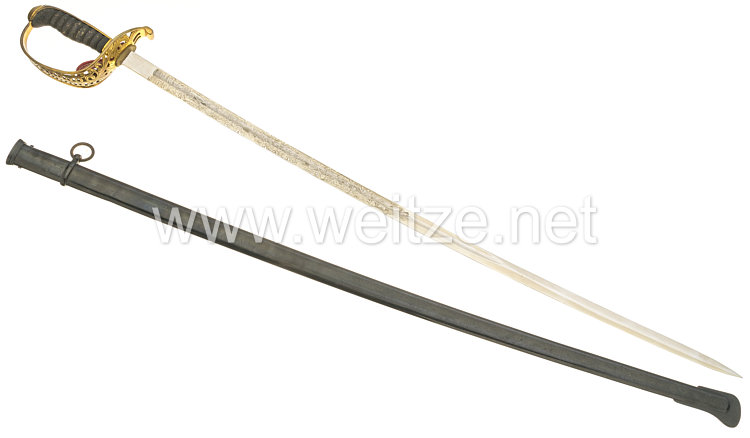
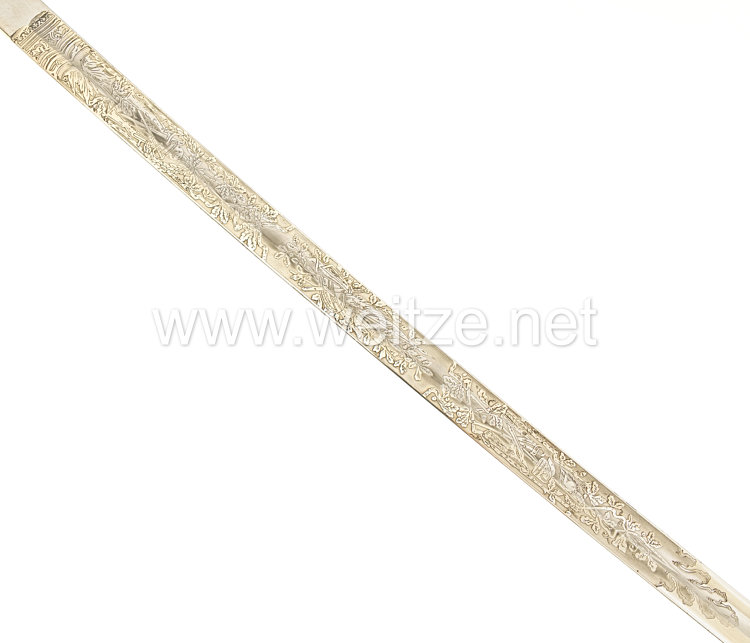
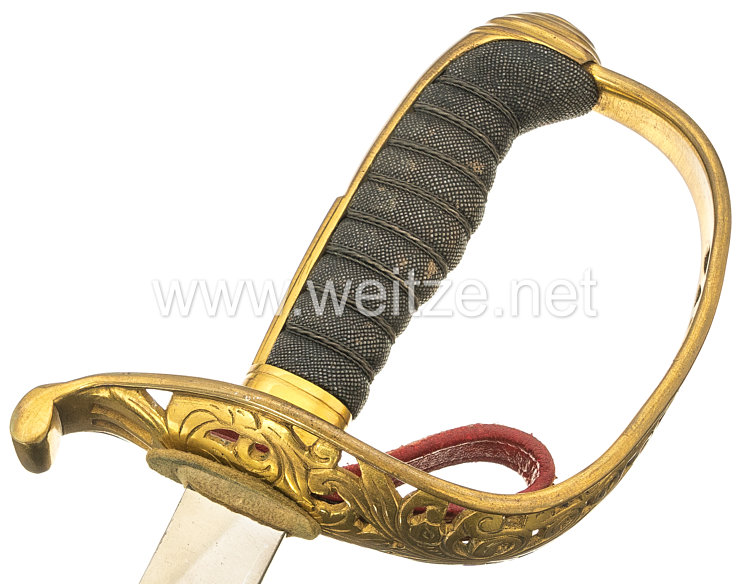
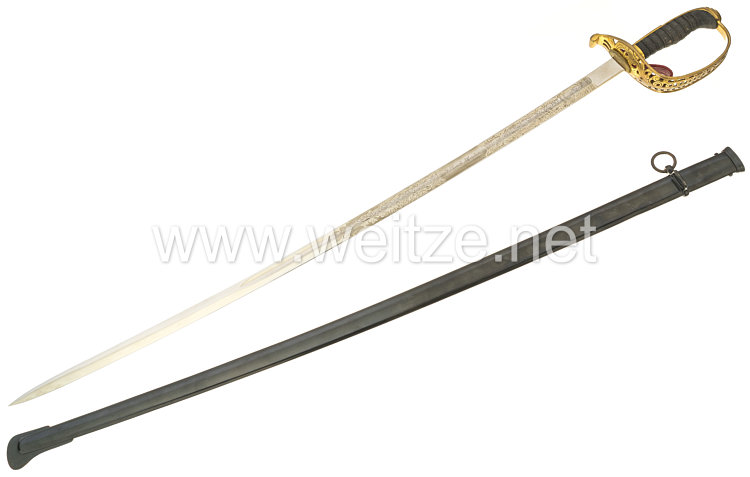
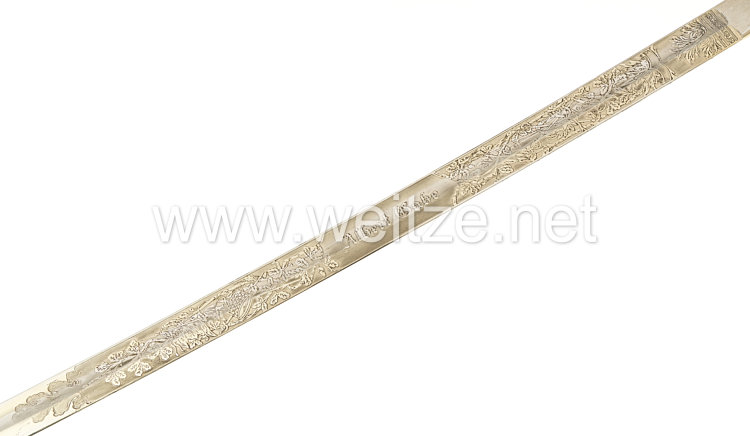
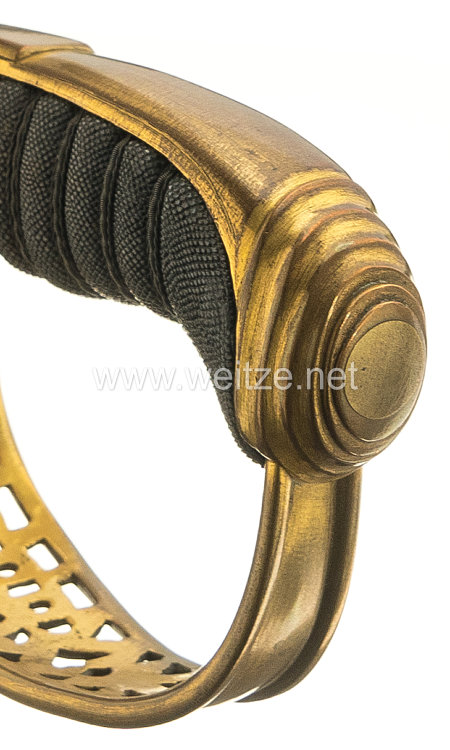
Slightly curved blade, etched on both sides with scrollwork and trophies, bearer's name “Albert Gabe”, on the blade spine the maker “Weyersber & Co. - Solingen”, fire-gilt and pierced brass hilt, ray skin grip with intact wire binding, with finger loop, black lacquered steel scabbard with one movable suspension ring, minimal signs of age and use, very well preserved. Condition 2+


Blade length approximately 820 mm
Overall length approximately 1010 mm
421047
1.200,00

Hessian Infantry Officer's Saber

The Hessian infantry officer's saber represents a significant type of military edged weapon from the German Empire and the German states of the 19th century. This specimen, manufactured by the renowned firm Weyersberg & Co. of Solingen, embodies the high craftsmanship of German blade manufactories and the military tradition of the Grand Duchy of Hesse.

The Grand Duchy of Hesse-Darmstadt maintained its own armed forces during the 19th century, which were integrated into the Imperial German Army after 1871 while retaining their regional characteristics. The equipment of Hessian troops largely followed Prussian regulations but featured distinctive elements. The infantry officer's saber was not merely a weapon but primarily a badge of rank and symbol of military authority. By the second half of the 19th century, the saber had largely lost its practical significance as a combat weapon and served primarily ceremonial purposes and rank identification.

The slightly curved blade of this saber, measuring approximately 820 mm in length, corresponds to the typical dimensions of German infantry officer sabers from the period between 1850 and 1918. The bilateral etching with scrollwork and trophies was characteristic of military edged weapon decoration during this era. Such ornamentation was applied through elaborate acid-etching processes and often subsequently gilded or silvered. The motifs typically included military symbols such as flags, cannons, drums, and laurel wreaths, as well as floral ornaments in the Historicist style.

The engraving of the bearer's name “Albert Gabe” on the blade was common practice that identified the saber as the officer's personal property. Officers were required to procure and finance their own equipment, which is why such sabers were often treasured as valuable family heirlooms. The name was usually applied by the manufacturer or a specialized engraver.

Weyersberg & Co. was among the most significant Solingen blade manufactories of the 19th and early 20th centuries. The firm was founded in the first half of the 19th century and developed into one of the most important suppliers of military edged weapons for German and international customers. Solingen had been the center of German blade production since the Middle Ages and enjoyed worldwide reputation for quality and craftsmanship. Solingen weapon forges supplied not only the German states but exported their products throughout the world.

The fire-gilded brass hilt with pierced work displays the characteristic design of German officer weapons from the late 19th century. The pierced work required the highest craftsmanship and made each saber a work of art. The brass used was fire-gilded, a process in which a gold layer was permanently bonded to the base metal through heating. This technique offered better protection against corrosion than later galvanic gilding methods.

The ray-skin grip (also referred to as sharkskin) was standard for high-quality officer sabers. The rough surface of ray skin provided optimal hold, even in wet conditions or with gloves. The wire wrapping, usually of silver-plated or gilt brass wire, was wound in regular spirals around the grip and served both secure handling and decoration. The finger loop on the hilt prevented loss of the weapon in combat and was obligatory on German military sabers.

The black-lacquered steel scabbard with movable carrying rings corresponds to the typical design for infantry officers. The black lacquering protected the steel from weather influences and provided an elegant contrast to the uniform. The movable rings allowed carrying on the sword knot and adapted to body movement. For cavalry and other branches, scabbards were often designed differently, perhaps of metal or with varying surface treatments.

The condition of this saber can be assessed as excellent. The intact wire wrapping, completely preserved gilding, and minimal signs of use testify that this weapon was carefully handled and stored. Many sabers of this period were intensively used and show corresponding wear. The classification “Condition 2+” according to military-historical collection standards confirms the exceptional quality.

Such officer sabers are today important witnesses to German military history and document not only weaponry craftsmanship but also the social position of the officer corps in the Empire. They provide insights into craft traditions, military hierarchies, and personal fates of their bearers. As collectible objects, they combine historical, artistic-craftsman, and cultural-historical value.