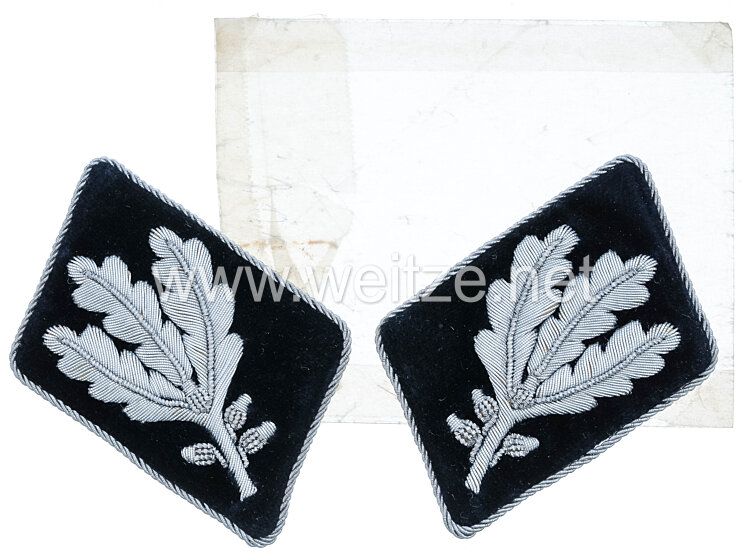
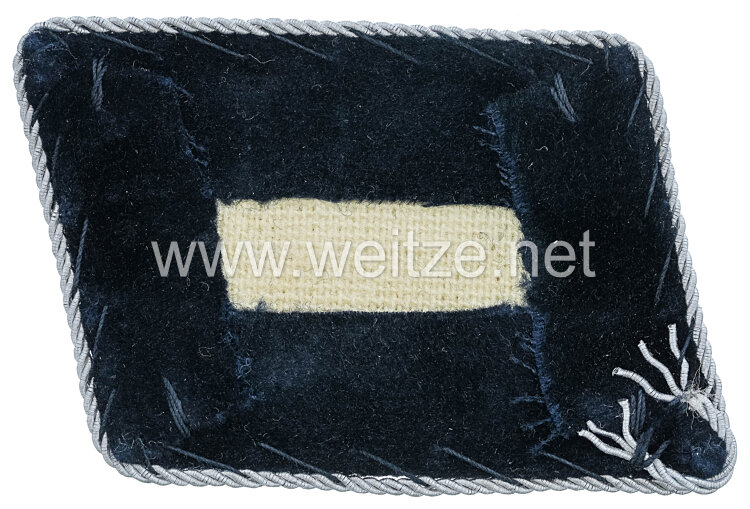
Waffen-SS Pair of Collar Tabs for an SS-Gruppenführer
Very rare, as many Gruppenführer wore the 2nd Model after 1941, or had already been promoted in the interim.
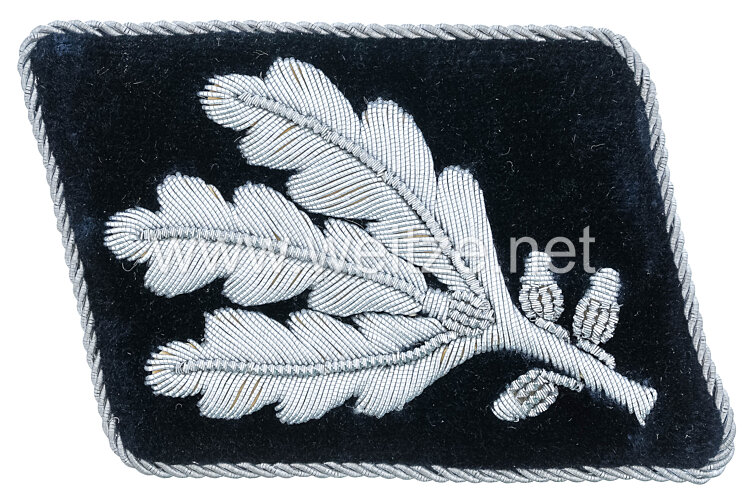
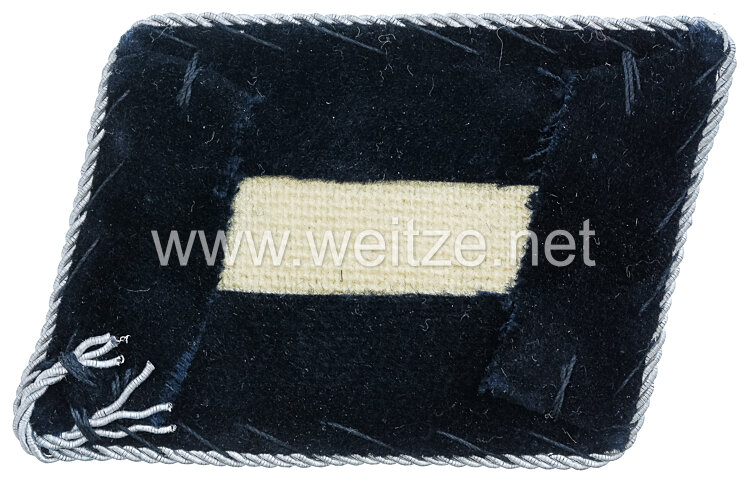
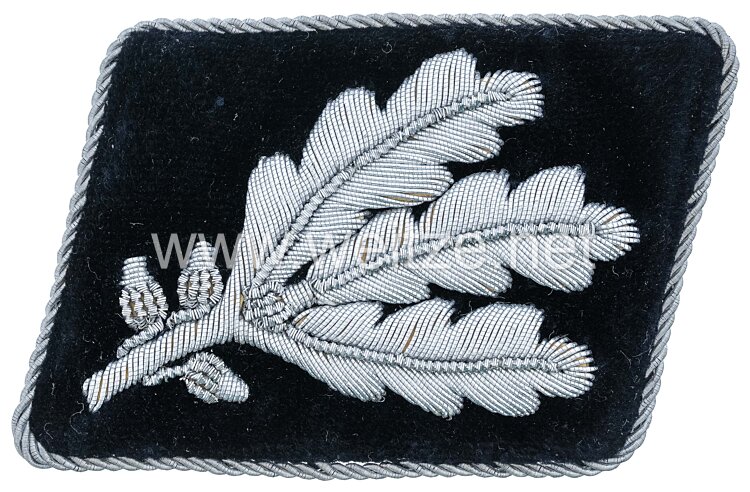
These collar tabs for an SS-Gruppenführer represent a significant artifact in the uniform history of the Waffen-SS and exemplify the first model used from 1929 to 1942. This particular version was manufactured circa 1939/40 and displays the characteristic hand embroidery with metal thread on black velvet cloth.
The rank insignia of the SS underwent a complex evolution closely tied to the organization's expansion and militarization. The rank of Gruppenführer was introduced in 1932 and initially corresponded to a Lieutenant General in the Wehrmacht. Over time, the rank system was adjusted multiple times, with Gruppenführer positioned in the hierarchy between Brigadeführer and Obergruppenführer.
The collar tabs of the first model were distinguished by their special manufacturing process. They were hand-embroidered with metal thread on black velvet cloth, making them high-quality and expensive rank insignia. The tabs displayed three stylized oak leaves in silver, marking the high rank of a Gruppenführer. The black velvet cloth formed the traditional background for all SS collar tabs and symbolized membership in the Allgemeine SS or later the Waffen-SS.
The manufacturing period around 1939/40 falls within a significant phase of SS history. At this time, the Waffen-SS was rapidly expanding and evolving from a small military formation into a substantial combat force. The quality and execution of the rank insignia reflected the high standards demanded for the uniforming of higher leadership levels. Specialized manufacturers such as LAUER from Nuremberg or Deschler & Sohn from Munich produced these exclusive rank insignia.
Particularly noteworthy is the rarity of these first model collar tabs for Gruppenführer. After 1941, a second model was introduced, characterized by modified proportions and sometimes the use of different materials. Many Gruppenführer switched to the new tabs at this time, or were already promoted to Obergruppenführer in the interim, making the old rank insignia unnecessary. This explains why unworn examples of the first model represent an extraordinary rarity today.
The uniform regulations of the SS were strictly controlled and defined in various service regulations. The SS-Verfügungstruppe and later the Waffen-SS largely adopted the rank insignia of the Allgemeine SS, though sometimes adapted them to military requirements. The collar tabs were worn on both sides of the uniform collar, with rank insignia on the right side and runes or unit insignia on the left side.
The unworn condition with the original sales bag is of considerable historical significance. It documents not only the quality of contemporary manufacturing but also provides important information about distribution channels and trade in uniform effects during the Third Reich. Officer effects were frequently distributed through specialized military equipment shops that used corresponding sales packaging.
The hand-embroidered version with metal thread differed markedly from later, simplified versions introduced during the war due to material shortages and production acceleration. Toward the end of the war, increasingly machine-made or even printed rank insignia were used, making the early hand-embroidered examples all the more valuable for historical documentation.
As a military-historical object, these collar tabs document not only the uniform history of a specific military formation but also the craft tradition of military effects manufacturing and the hierarchical structures and organizational developments within the SS. They are therefore important sources for scholarly examination of World War II and Nazi-era history.